An alarm clock app.
Not AI agents. Not some B2B SaaS with a fancy data moat. An alarm clock that makes you do push-ups before it shuts up.
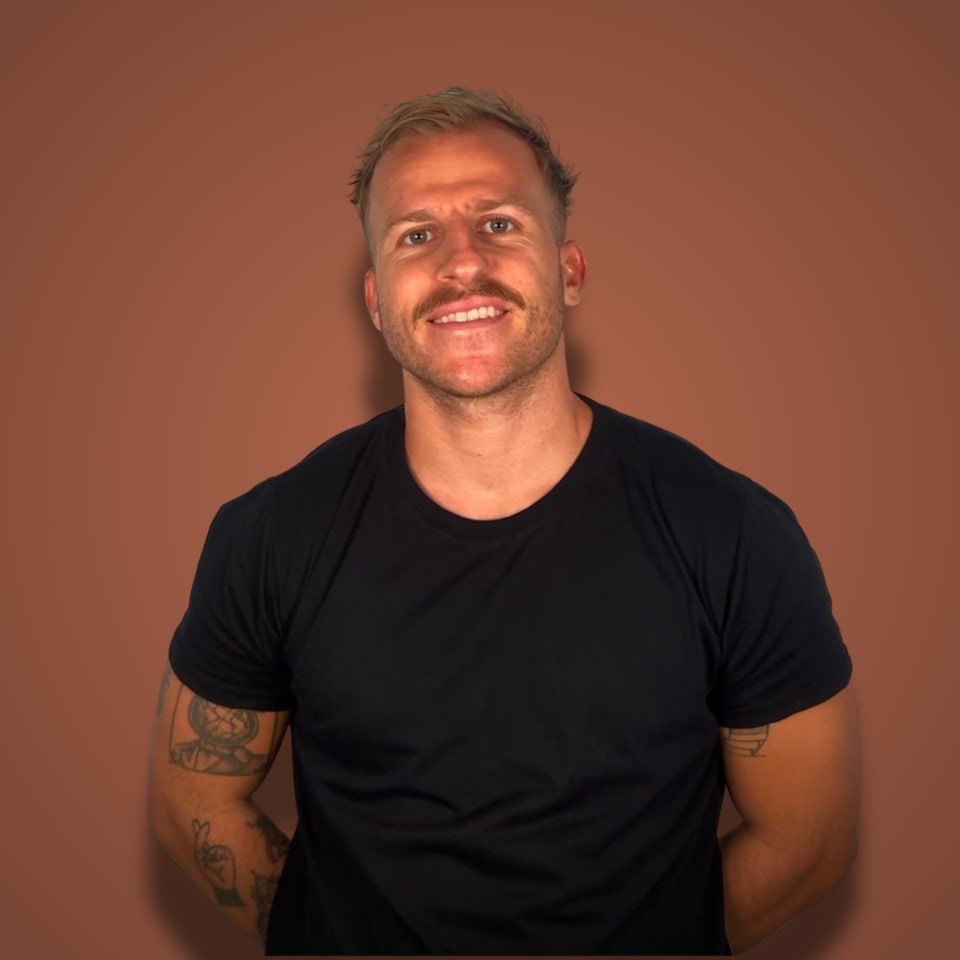
That app is called Early, it was built by a 24-year-old ex-accountant named Jake, and it went from zero to $50,000 a month in 4 months. Over 200,000 downloads in 2026 so far.
I watched his Starter Story interview twice, because the interesting part isn't the idea. It's that Jake decided marketing was the only thing that mattered, and built his entire process around that one belief.
He said it straight: "Building doesn't really matter so much. What really matters is marketing."
Here's the full interview, then I'll break down the playbook with all the numbers.
The idea came from a text message, not a brainstorm
Jake's background is about as un-startup as it gets. Four years of accounting undergrad, a master's, a CPA, a year at a Big Four firm. Self-taught coder on the side for 4 years, with a string of failed projects behind him.
The failures taught him one thing: he kept building products nobody heard about.
The idea for Early came from his own life. He couldn't wake up early, so he started texting a friend every night: "I'm going to send you a video of me doing push-ups by 6:00 a.m. tomorrow." Accountability by embarrassment. It worked.
So the first version of the app wasn't even an alarm clock. It was a simple accountability app to log your wake-up. No alarm feature at all.
Then he hit a wall: he didn't know how to make an accountability app go viral. So he took a full day, went walking, wrote out his options, and picked the alarm direction.
The timing detail matters here. iOS 26 had just shipped AlarmKit, an API that finally let third-party apps plug into the iPhone's native alarm system. Every alarm app before that was a gimmick built on workarounds and app sounds, which is a fatal flaw when the whole job of an alarm is reliability.
New API, short window, a slew of apps racing in. Jake got there early with the most shareable angle: push-ups that turn off your alarm.
→ Takeaway: watch platform API changes. When Apple exposes something new (alarms, widgets, screen time), there's a brief window where thousands of app ideas suddenly become buildable, and the early movers eat.
19 days from first commit to the App Store
Jake's build speed is the part most founders should copy.
→ 19 days from first commit to live on the App Store
→ Launched WITHOUT the alarm feature (just wake-up logging)
→ Alarm feature shipped 19 days after launch
→ First influencer video live 7 days after that
He shipped an incomplete version of an incomplete idea, on purpose. Because for him, the product wasn't the risky part. He knew he could build. The unknown was whether he could get views.
"I knew I could build the product, but I didn't know if I knew how to market it."
Most founders have this exactly backwards. They spend 6 months polishing features and treat marketing as the thing you figure out after launch. Jake treated views as the hypothesis to validate and the product as the formality.
The revenue curve that followed:
→ First $1,000 in revenue: 3 weeks after the first influencer video
→ First $30K month: month 3
→ First $50K month: month 4
Pricing is boring on purpose: free trial, then $29.99 a year or $9.99 a month. Standard consumer app playbook. No pricing innovation needed when distribution is working.
The influencer playbook: $2-3 CPM and a "win-win-win" pitch
Jake picked influencer marketing because other apps had already proven it works. No reinventing.
His targeting was specific: TikTok and Instagram creators doing "day in the life" or lifestyle content. Not because they're cheap, but because an alarm going off is already a scene in their videos.
That's the whole trick. The creator wakes up, the alarm rings, they knock out push-ups, the app flashes a green check: alarm turned off. It reads as a normal day-in-the-life video, not an ad. Viewers comment "what's the app?", the creator replies "Early, on the App Store", pins the comment, done.
Jake calls it a win-win-win: the creator keeps making their normal content and gets paid, he gets downloads, the viewer gets a solution without sitting through an ad.
The deal structure, in numbers:
→ 2 to 4 videos per month per creator
→ Paid on a view guarantee (you pay for views delivered, not for the post)
→ Around $2 to $3 CPM
→ Peak views hit within about a day, so you know fast if it worked
And the honest part most people selling influencer courses won't tell you: it's a power law. Most videos do okay. The money is made on the occasional 1M, 2M, 5M view outlier. You will lose money on individual creators and you often won't know which ones. Jake tracks it like a black box: put in $5K, get out $10K, watch for spikes where views and conversions jump together.
Early on it was brutal, by the way. Cold DMs, very few responses. He used mass email tools to scale the outreach. Nobody answers the first hundred messages, and that's the actual price of the channel.
If you're at this stage yourself, I wrote about the scrappier version of this in how to get your first 1,000 app downloads, and about the creator-content angle in UGC app marketing.
The $50K/month stack of a solo founder
Jake runs Early solo (with some help now). His stack is a nice snapshot of what a one-person consumer app looks like in 2026:
→ Firebase: database, auth, cloud functions
→ Superwall: paywall and subscription management
→ OpenAI API: the AI analysis (yes, it checks you actually did the push-ups)
→ Mixpanel: in-app analytics
→ Claude Code: how he actually builds the app
→ Instantly: mass email for influencer outreach
→ SideShift: UGC creator sourcing and payments
→ Google Sheets: the real operating system, as always
→ QuickBooks and 1Password: the boring essentials (the CPA in him shows)
Notice what's missing: there's no growth team and he never mentions paid ads. The product side is deliberately small so all the energy goes to the top of the funnel.
"Focus on top of funnel only"
When Starter Story asked Jake what advice he'd give his younger self, he didn't hesitate:
"Focus on top of funnel only. That is the most valuable skill right now. There's so many people that can build an app, but there's not so many people that know how to get views. If nobody knows about your app, it doesn't exist."
I keep hearing versions of this from every founder doing real numbers, and I've felt it myself building Profitable Founder. Building has never been easier. AI collapsed the technical moat. What's left is a distribution moat, and it's scary, which is exactly why it still works: most builders won't post, won't DM creators, won't put their face on camera.
Jake's formula, compressed:
→ Solve a painful problem in a simple way (his test: is it something people complain about at least once a day? He and his college roommate talked about waking up early every single night)
→ Make it inherently viral, or bolt on a novel twist that makes it viral (the push-ups)
→ Ship in weeks, not months
→ Spend the saved time on views
Simple to say. Almost nobody does it in that order.
FAQ
What is the Early app and how much does it make?
Early is an alarm clock app where you have to do push-ups to turn off your alarm (the app verifies them with AI). Built by Jake, a 24-year-old solo founder and former Big Four accountant, it launched at the end of 2025 and grew from zero to $50,000 a month in revenue in 4 months, with over 200,000 downloads in 2026.
How long did it take to build a $50K/month app?
Jake went from first commit to the App Store in 19 days, launching without the alarm feature. The alarm shipped 19 days later, his first influencer video went live 7 days after that, and he hit his first $1,000 in revenue 3 weeks later. First $30K month came in month 3, first $50K month in month 4.
How much does influencer marketing cost for an app?
Jake pays roughly $2 to $3 CPM on view-guarantee deals, usually 2 to 4 videos per month per creator. Returns follow a power law: most videos perform modestly, and the profit comes from occasional 1M+ view outliers. Expect to lose money on some creators without knowing exactly which ones.
Do you need a technical background to build an app like this?
No. Jake studied accounting, got his CPA, and worked at a Big Four firm. He taught himself to code over 4 years of side projects that mostly failed, and built Early with tools like Firebase, Superwall, and Claude Code. His view: building is the easy part now, marketing is the skill that's scarce.
Get the next playbook before everyone else
Stories like Jake's are why I run the Profitable Founder Podcast. Real founders, real revenue numbers, and the exact playbooks behind them, every week.