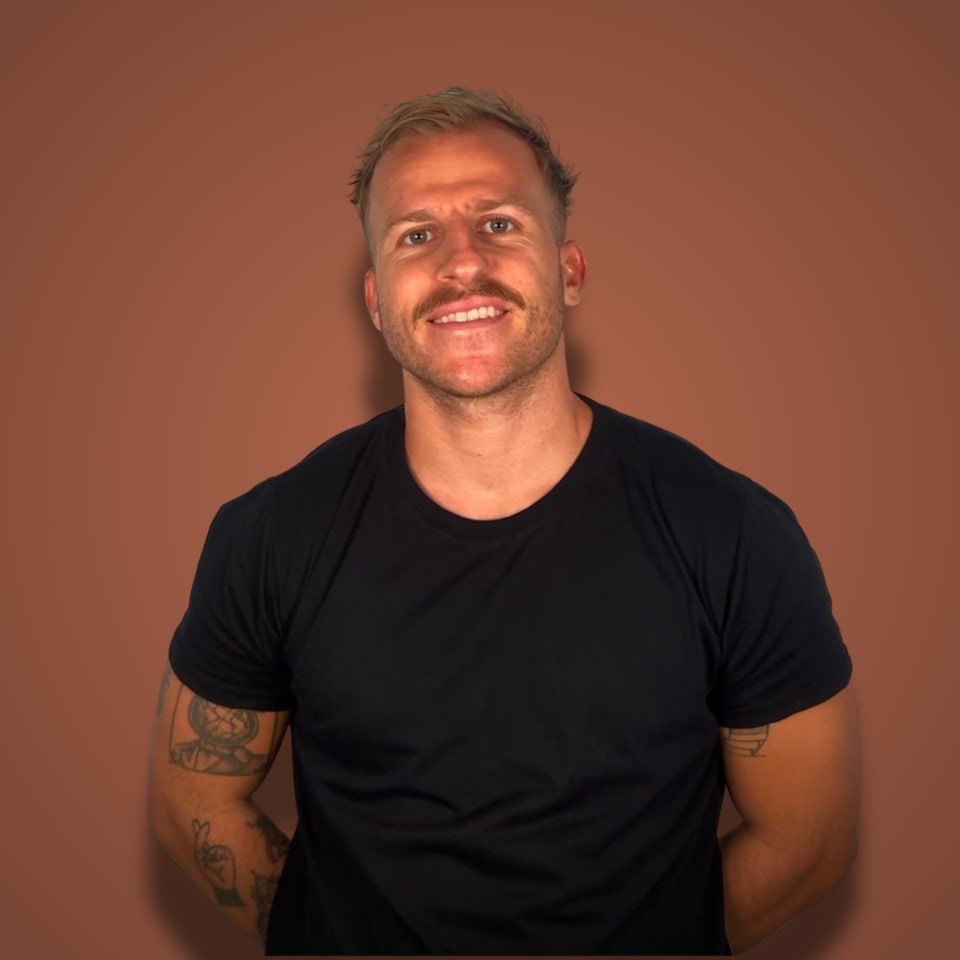
At 22, Iman Gadzhi had $10 million liquid.
He didn't own a car.
That detail tells you more about how Iman Gadzhi made his money than any Lake Como b-roll ever will. Everyone sees the villas and the Porsches. Almost nobody sees the 65-person clipping department, the $2 million distribution budget, or the guy watching YouTube at 4x speed while eating lunch.
Brett (The Brett Way) just sat down with Iman for a long one. Brett now runs marketing at Whop, Iman just came in as co-owner, and because they're actually friends, Iman said the quiet parts out loud.
I pulled out the playbook. Here's how a kid who started shooting music videos on the street got to roughly $100 million in sales by 25, and what's actually worth stealing if you're a bootstrapped founder.
The numbers first
Because the numbers are the story.
- Documented his journey publicly from age 14
- $10 million liquid by 22
- Around $100 million in total sales by 25, mostly digital products and education
- 200 to 300 million views a month across accounts he owns
- Roughly $2 million spent on his clipping department over two and a half years
- Now a co-owner of Whop, where the marketplace pushes $3 to $5 million a month in sales to its users
Brett put it well on the show: Iman documented the whole run from 14 to $100 million by 24, in public, before there was anyone to copy.
Now there are Gadzhi clones in every niche. Which is exactly why the surface-level stuff (the aesthetic, the villas, the "sell a course" advice) is worthless to copy.
The machine underneath is not.
He built a media company, not a personal brand
Around April 2022, Iman stopped treating content as an afterthought and started running it like a business unit.
The clipping department is the wildest part. In 3 months he went from zero to 65 full-time, in-house short-form editors.
Sixty-five. Full-time. Just for clips.
His own words: "I wouldn't recommend that for anyone."
At that point his accounts were doing 100 million views a month. Since then the team got smaller and more efficient, and the views went up: 200 to 300 million views a month across owned accounts. He says he doesn't know anyone else on earth with that much owned distribution.
The moat wasn't editing talent. It was supply. He had 10,000 to 15,000 people apply to work in that department. You can't hire 65 good clippers if only 40 people apply.
Brett's estimate for copying this in-house: $100K to $200K a month in overhead before you get real short-form distribution at scale. Which is why Whop turned the whole model into a marketplace (creators post bounties, clippers get paid around $1 per 1,000 views, you pay after the views happen). I broke that system down in my piece on the content rewards app economy if you want the mechanics.
→ The lesson isn't "hire 65 clippers". It's that Iman treated distribution as a department with a budget, staffing, and sub-teams (thumbnails, Twitter, LinkedIn, clips), while everyone else treated it as posting when inspired.
The podcast trick: get the clips, skip the podcast
This one is sneaky good.
Iman noticed people going on five podcasts a week and asked why. The episodes themselves would do maybe 14,000 views. Nothing, for someone with a big audience.
They didn't care about the podcasts. They cared about the clips.
So he asked the obvious question nobody asks: what if I could get the clips without doing the podcast?
Now when you see a "podcast clip" of Iman, there's usually no podcast. He sits down with Alex or Amara (people he actually lives with or has known for 10 years), talks for 30 minutes, and the team cuts 10 to 12 clips out of it. The full episode never gets released.
All of the output, none of the travel, none of the two-hour sets with hosts he doesn't vibe with.
→ Founder translation: stop asking "should I start a podcast". Ask "what's the cheapest way to produce the asset that actually converts". Sometimes that's a 30-minute conversation with a friend and a good editor.
Packaging, and the ladder out of your niche
The first lever Iman pulled when he got serious wasn't more videos. It was thumbnails and packaging.
He'd bullet-point for 10 minutes, hit record, and a 20-minute rant would do a million views. But the title and thumbnail were afterthoughts. Fixing packaging alone changed the channel's trajectory.
The deeper idea is what I'd call his market ladder. His words, roughly: you can have the best video in the agency space, but the agency space has a small total addressable market. Online business is a bigger market. Self-help is bigger than that. And "people just knowing you" is the biggest of all.
So the content strategy deliberately climbs: niche expertise → online business → self-help → mainstream attention. Three separate channels (main, business, vlog) serve different rungs.
The vlog channel is a good example of how he thinks. In 2022, polished sit-down videos were crushing. Instead of milking it, he told his team the pendulum would swing back to raw vlogs within 18 months, and spun up a vlog channel early. Then vlogs came back, and he was already there getting millions of views.
"Everything's a pendulum" is doing a lot of work in his strategy. He's already predicting the current raw, unedited meta will fade in the next year too.
He watches YouTube at 4x speed
My favorite detail from the whole episode.
Iman watches about two hours of YouTube a day. At 4x speed. With captions, using a speed-controller Chrome extension, usually while eating lunch.
Not for fun. He's studying. He claims he knows basically every creator online, including tiny ones with 300 views, because YouTube's algorithm now surfaces small channels.
And he's asking one question on repeat: why did this specific video outperform? Not the title in a vacuum. Not the thumbnail in a vacuum. Maybe the feeling in a vacuum.
Most founders I know spend zero structured hours studying what's working in their space. The guy with 5 million subscribers spends 14 hours a week on it.
That gap should bother you. It bothers me.
The money habits are boring on purpose
Here's the part the lifestyle content hides.
No debt. At all. His rich friends tell him he's crazy, that he should take Lombard loans against his assets and make the money work. He refuses. He likes the peace of mind more than the leverage.
No supercars either, because he thinks most of them are badly built (he's a Porsche guy for the dullest possible reason: the car always works).
And remember: $10 million liquid at 22, no car. He says he's never once bought something to look successful on camera. You can believe that or not, but the pattern fits. Calculated risks in the business, zero risks that could wipe him out personally.
He does have one contrarian spending rule: spend more in your 20s, not less. His exchange rate: $10K a month in your 20s buys you the quality of life that $200K a month buys you in your 50s. So he deliberately assigns a chunk of income to living, and keeps the rest boring.
(Advice from people in their 40s telling you to save everything in your 20s, in his view, is mostly projection.)
What he looks for in founders now
Iman invests seriously now, and his filter is brutal.
He walked away from one sizable investment because the founder showed up in Louis Vuitton shoes and a Louis Vuitton shirt. His read: if you're thinking that hard about clothes at that career stage, you're not thinking hard enough about the company.
His actual words: "I invest in autism." Meaning obsession. One thing, obsessed over for years, ignoring everything else including how you look.
It's the same reason he joined Whop as a co-owner. He tells a story about Steven, Whop's CEO, getting agitated at a 10:30pm dinner because of a one-star review about a small bug, then getting up mid-meal to go fix it himself.
That's the archetype. Product obsession over founder aesthetics.
(Also, everyone at Whop is required to run a real business on the platform. Including the office dog, Poncho, who makes $200 a month recurring. I have no notes.)
What I'd actually steal from this
You're probably not building a creator empire. Most people reading this are building SaaS or a service business toward $100K MRR. So here's the transferable stuff:
→ Make distribution a department, even if the department is one person. A budget, a weekly cadence, and one owned channel beats "posting when I ship something". The founders behind Quittr did a scrappy version of this with $3 CPM creator deals, and it took them to $250K a month (full breakdown here).
→ Fix packaging before volume. Your landing page headline, your pricing page, your titles. Iman 10x'd output value by fixing thumbnails, not by recording more.
→ Schedule study time. Two hours a week reverse-engineering why specific competitors, launches, or posts in your niche outperformed. At 4x speed if you have to.
→ Produce the asset, skip the ritual. The clips-without-the-podcast move applies everywhere. You want case studies, not a case study "program". Demos, not webinar series.
→ Keep the personal side boring. No debt and low personal burn is what lets you take real swings in the business. The founders who blow up usually blow up at home first.
The $100M wasn't one genius move. It was a distribution machine, built early, run like a real company, by a guy whose personal finances are so boring they'd put you to sleep.
That combination is rarer than talent.
FAQ
How did Iman Gadzhi make his money?
He started as a teenage videographer, built a social media marketing agency (IAG Media), then scaled education businesses teaching agency owners. On the podcast, Brett cites just under $100 million in sales by age 25, powered by a massive owned-media machine doing 200 to 300 million views a month. He's since become a co-owner of Whop.
What is Iman Gadzhi's net worth?
He doesn't publish a number, and most articles guessing at it are made up. What he has said publicly: $10 million liquid by age 22, and roughly $100 million in cumulative sales by 25. Sales are not net worth, so treat every "Iman Gadzhi net worth" headline as a guess.
How big is Iman Gadzhi's clipping team?
At its peak, 65 full-time in-house clippers, hired in about 3 months from a pool of 10,000 to 15,000 applicants. He estimates he spent around $2 million on the department over two and a half years. Today the team is smaller and more efficient, and his owned accounts do 200 to 300 million views a month.
What is Iman Gadzhi's role at Whop?
He invested and came in as a co-owner after being a user first. Whop is an all-in-one platform for selling digital products: payments, checkout, community, and distribution through its marketplace (which drives $3 to $5 million a month in sales for users) and content rewards, where clippers get paid per 1,000 views.
Want the unglamorous version of this every week?
Iman's story is fun, but the numbers are so big they're almost useless.
On the Profitable Founder Podcast I interview bootstrapped SaaS founders at $100K to $10M a year about the exact same things: distribution, packaging, and the boring decisions that compound. Real numbers, from people one or two steps ahead of you.