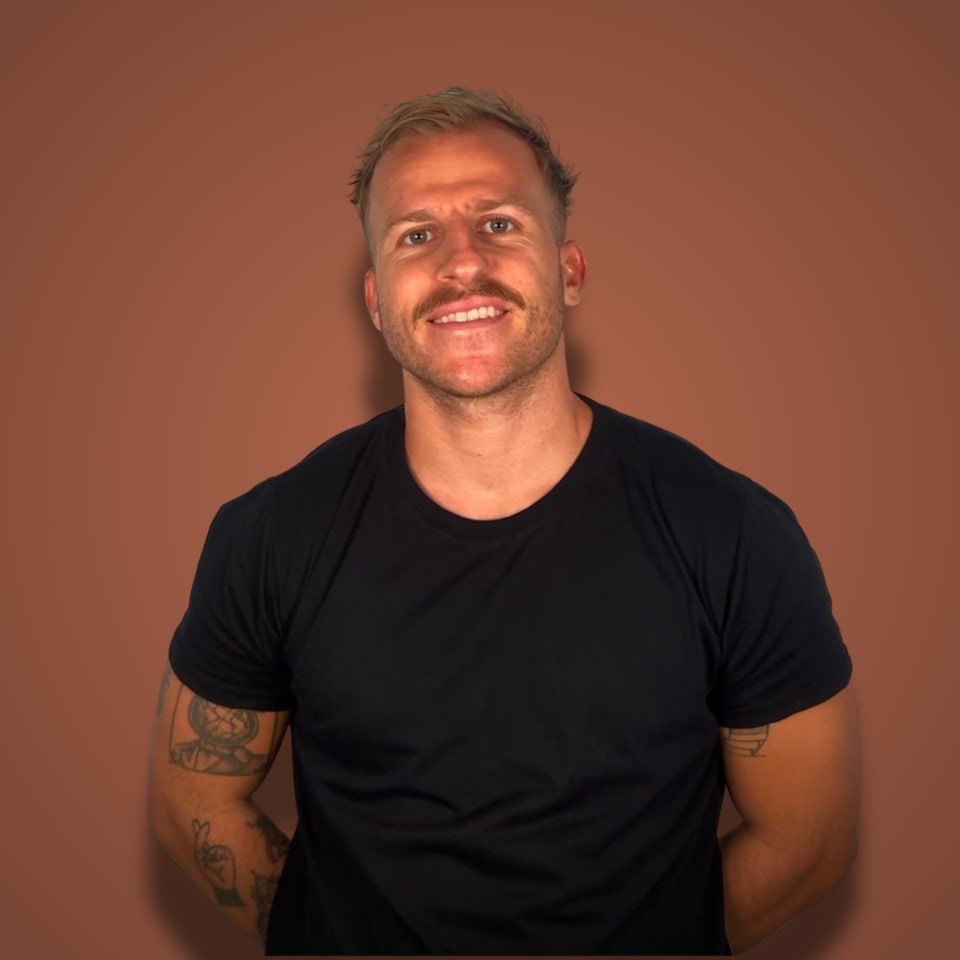
Jordan Bown gives his best product away for free.
It's an 18 and a half hour dropshipping course on YouTube. No email wall, no "book a call" button. Just 18 hours of scripted teaching, free.
And it makes him around $200,000 a month in profit. That's $2.4M a year, at 26 years old.
When Brett Malinowski asked him how, the answer was one word: affiliates.
I've watched a lot of course creators build funnels. Most charge $997, then burn half the revenue on ads and a sales team. Jordan flipped the whole model, and his numbers say he was right to.
Here's the full interview. Below it, the entire free course funnel broken down piece by piece.
The Free Course Funnel, Explained
The model is stupidly simple once you see it:
- → Make short form videos that call out one specific person ("if you're 16 and want to make your first $1,000 online...")
- → Every call to action points to a free 18-hour course on YouTube
- → Inside the course, students need tools to actually do the thing (Shopify, mainly)
- → Jordan's affiliate links pay him when they sign up
- → A $100/month community catches the serious ones
No sales calls anywhere in that chain. Nobody ever sees a $3,000 checkout page.
The course took him a year to build. Every video scripted. He built his own course platform on top of the YouTube version, and his team cost about $20K a month while he made basically nothing.
His own words: money got low. It was a shot in the dark.
Then the course did 1.6 million views in its first two months. Today it sits at 5.2 million views, and his channel jumped from 70K to 150K subscribers within two months of launch (he's at 379K now).
About 600,000 people have signed up on his course platform. Which means he owns 600,000 emails he can market to forever.
The Shopify Math: $150 Per Signup
The main money driver is the Shopify affiliate program, and the mechanics matter.
Shopify runs a $1/month promo for the first three months. If someone stays through all three months and converts to a paid plan on month four, the affiliate gets a $150 commission.
Most funnels would die on that three month delay. A lot of people fall through.
Jordan's funnel survives it because the course is the retention asset. You're not going to churn from Shopify in month two when you're on hour nine of a course teaching you how to use it. Community support tickets, live streams, guest specialists on Facebook ads and email, all of it keeps people building long enough for the commission to clear.
He doesn't force anyone to use his link either. The pitch is pure goodwill: "I sat down and made this for you. If you appreciate that, please use the links."
It works so well that he says he's basically the top affiliate for every company he promotes.
One more layer: he's not just a Shopify affiliate. A dropshipping store needs a whole stack of tools, and the course sends traffic to all of them. Shopify is just the biggest check.
Why Free Beat a $3,000 Course
Jordan ran the numbers before launching.
Option A: sell the course for $3,000 to $5,000 with a community and live streams. People who took his free course and paid $5K elsewhere told him his was more impactful, so the price was defensible. Maybe a couple hundred buyers. But now you need salespeople, commissions, a whole structure. (That's the machine guys like Luke Alexander run, and it works. I broke his version down in high ticket closing.)
Option B: give it away, monetize with affiliate links, and let 18 free hours on YouTube become the credibility engine for his whole personal brand.
He picked B because free means everyone enters the funnel (even a $10 price tag slashes signups), because an 18-hour course sitting publicly on YouTube is verifiable in a way a paid course behind a checkout never is (you can scroll the timeline and see there's no dead air), and because "the guy who gave away what others charge $5K for" is a position nobody can attack.
The funny stat: 5% of viewers make it past the first hour. Zero percent have watched the whole thing, per his YouTube analytics.
Doesn't matter. The funnel needs signups, trust, and clicks on tool links, not completions.
The $100 a Month Backend
Free course, free community hub, and then one paid tier: $100 a month on Discord, with Whop handling payments.
The paid tier gets live streams from Jordan, calls every other day with specialists in Facebook ads or email marketing, support tickets, and student success managers for accountability.
He layers the pitch into the course itself. Across all 18 hours he repeats one line: if you need help, me and my team are in the community group.
The pieces reinforce each other. The course sells the community, and the community keeps students active through Shopify's three month window, which protects the affiliate commissions.
The DM machine matters here too. He uses ManyChat: end a video with "comment COURSE and I'll DM you the link", and the automation fires instantly. Open rates are huge because a verified account is DMing you personally. His team then works those conversations toward the community.
He avoids link-in-bio entirely. Says it kills account health on TikTok.
Look at what's actually carrying the load: a comment trigger, an instant DM, an email list on autopilot. If you're building anything similar, mapping out your business automations before you scale distribution is the difference between a funnel and a full inbox you'll never dig out of.
One Video, 20 Accounts
The distribution side is where it gets industrial.
Jordan runs what he calls batches: 4 platforms (TikTok, Instagram, YouTube Shorts, Facebook), 4 accounts each, 16 accounts per batch. He's adding 2 to 3 new batches a month.
One winning 30 second video gets re-edited 20 times and posted across every account. A million views on the main account becomes 200K here, 80K there, 50K somewhere else. Same hook, same DM keyword, same free course, same Shopify link at the end of it all.
His editors pull from a Google Drive asset folder with about 300 pre-recorded short form videos and 12 terabytes of raw footage going back to his 2014 Snapchat memories. They don't wait for him to record. They remix.
It's the same multi-account playbook the big consumer apps run (I covered how Locket and CoupleJoy do it in TikTok app marketing), applied to a personal brand instead of an app.
And each account can run a different emotional angle. His broke-to-rich story clips (the 1997 Chrysler LeBaron with the broken radiator, filling a milk jug with water just to make it to high school) hit one audience. Pure tactical dropshipping clips hit another.
"The Algorithm Is Gus Fring"
Best mental model in the whole interview.
Jordan's theory: the algorithm is a drug distributor. Every video transfers an emotion (motivation, sadness, curiosity, discipline), and the platform's job is to match each drug to the users who crave it.
So be Heisenberg. Make one hyper-specific product, consistently, so the algorithm knows exactly where to insert you.
The tactical version of that is the hook. His formula: call out exactly one person in the first three seconds.
"If you get headaches from a sore neck and bad posture, this is what you need."
Everyone else swipes away in under three seconds, and that's good. The algorithm reads fast skips as "not for them" and forgives you. What kills a video is a loose hook that keeps the wrong people watching for 10 seconds before they bail.
He calls it product-audience fit: your content is the product, the hook is the bridge, and the pool has to be big enough to matter.
Steal This: The Free Course Funnel in 5 Steps
You don't need to be a dropshipper. You need expertise plus a tool people genuinely have to buy anyway.
- Find the affiliate anchor. What does your audience have to sign up for to succeed? Shopify for e-commerce, hosting for web dev, supplements for fitness. That's your revenue line.
- Build the definitive free course. Not a lead magnet PDF. The genuinely best resource in your niche, public and verifiable. Jordan spent a year on his. That's the moat.
- Add a paid layer for the serious. $100/month for access to you and real support. The course does the selling for you, on repeat.
- Run comment-to-DM automation. One keyword per video, instant delivery, humans in the DMs after the bot.
- Scale horizontally. One winning video, re-edited across batches of accounts. New pockets of followers, same funnel.
One caveat from Jordan himself: this dies without authenticity. He'd been making content since 2017 and had eight years of dropshipping behind the course. You have to earn the right to teach first. After that, the free course is your proof, sitting in public where anyone can check it.
FAQ
What is a free course funnel?
A free course funnel is a business model where you give away a full course for free and make money from what students need to buy to apply it. Traffic comes from short form content, the free course builds trust at scale, and revenue comes from affiliate commissions plus an optional paid community. Jordan Bown's version makes about $200K a month.
How do free courses actually make money?
Three ways: affiliate commissions on the tools taught inside the course (Jordan's main one is Shopify at $150 per converted signup), a paid community upsell ($100/month in his case), and the email list, since every course signup is an email you can market to later. His platform has collected around 600,000 of them.
How much does the Shopify affiliate program pay?
Shopify pays a flat commission (Jordan cites $150) when a referral converts to a paid plan. The catch is timing: referrals go through a $1/month promo for three months first, and the commission only pays if they're still around after it ends. You need volume and a reason for people to stick, which is exactly what the free course provides.
Do I need a big audience to start a free course funnel?
No, but you need proof. Jordan had roughly 70K subscribers at launch and eight years of e-commerce results behind him. The course itself became the growth engine and more than doubled his channel in two months. Start with real expertise, make the best free resource in your niche, then distribute it with hyper-specific hooks.
Steal More Playbooks Like This
Jordan's funnel is one conversation's worth of numbers.
Every week on the Profitable Founder Podcast I sit down with bootstrapped founders doing $100K to $10M a year, and they hand over their playbooks just like this.