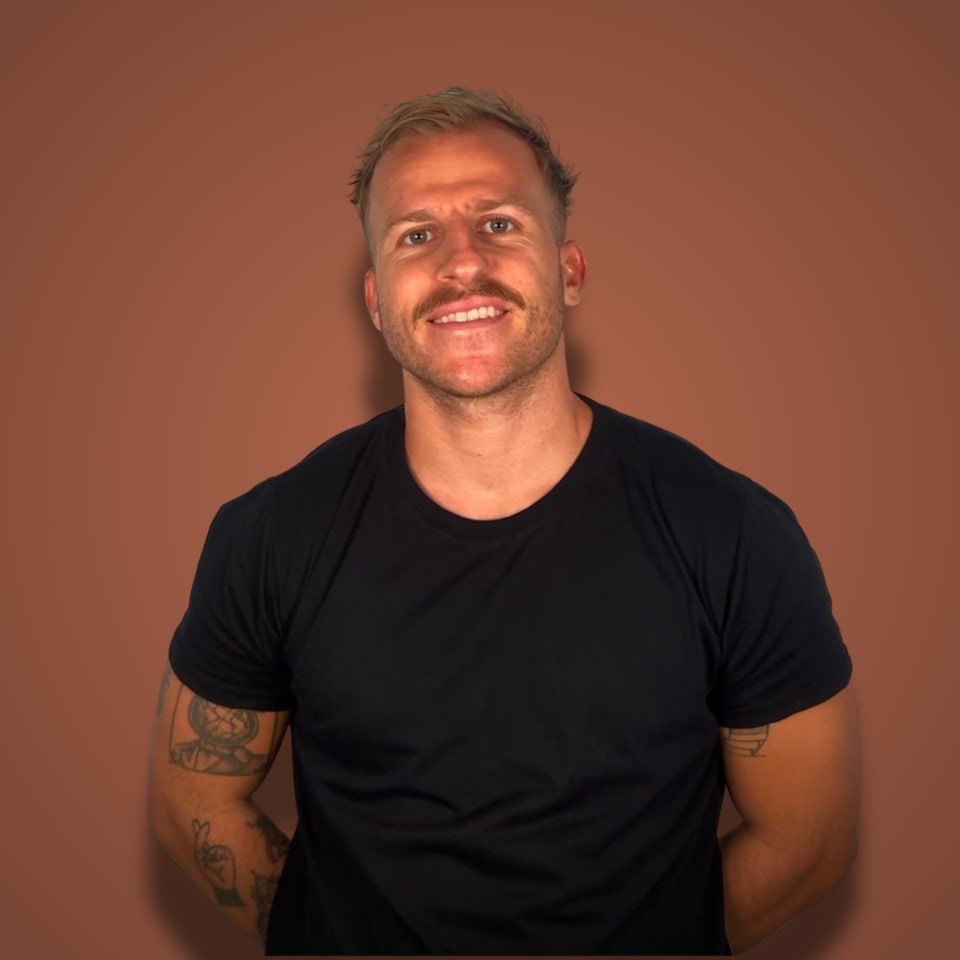
Luke Alexander did not have internet at home until he was 17.
No wifi. No phone until 16. His first car cost $500.
By 21 he was a millionaire. By 23 he was making a couple million a year (the video title pins it at $2.3M) teaching one skill: high ticket closing.
Brett Malinowski sat him down for an hour on The Brett Way, and the episode is basically a free sales course wrapped in a rags-to-riches story.
I pulled out the numbers, the frameworks, and the parts that matter if you are a founder who has to sell your own product (that would be all of us).
Here is the full breakdown.
No internet until 17, then college for the wifi
The title says trailer park. Luke calls it "the sticks."
Either way, the setup is the same: rural nowhere, no internet growing up, no phone until 16 or 17.
Senior year of high school he watched a Sebastian Ghiorghiu video and realized people were making money online. One problem: he had no internet to even try.
So he enrolled in college, took out a student loan, and moved into the dorms. Not for the degree. For the wifi.
His own math: "I got 8 months of flunking class basically before they kick me out of internet."
He got a laptop, started learning sales at 18, and never looked back. First six figures at 20. Around $30K a month as a closer by 21.
That is the whole origin story. No rich parents, no network, no code. One laptop and one skill, stacked on repeat for five years.
What high ticket closing actually is
Strip the Instagram flexing away and the model is simple.
A creator or coach sells a $3,000 to $16,000 program (Alex Hormozi's Gym Launch ran $16,000 programs with dozens of salespeople). Nobody impulse-buys at that price. Someone has to get on the phone.
Two roles run that machine:
→ Appointment setters filter the leads. They qualify three things: is this person a fit, can they afford it, and do they want it now. Pay is 2 to 5 percent commission, sometimes a $50 base per booked call. Luke paid his Instagram DM setter around $7,000 last month just for answering DMs.
→ Closers take the booked calls and sell. Standard is 10 percent of the deal. On a $5,000 offer that is $500 a call. Luke pays his own guys 12.5 to 15 percent.
The ceiling is real: Luke personally peaked at $30K a month closing, and he has seen students do $60,000 in a single month riding one influencer's launch.
His team's close rate on booked calls: 80 percent. Their bottleneck is not closing. It is eyeballs.
Sound familiar? That is every bootstrapped SaaS at $10K MRR. Product works, retention fine, pipeline empty. Distribution is always the bottleneck.
From $30K months to a couple million a year
In June 2021 Luke moved to Miami with his closing income and launched Closer Cartel, a program teaching kids the exact skill he had just monetized.
Six months later he had made about $700,000 in profit.
Millionaire at 21. The morning of the recording he paid off an $80,000 Amex bill like it was a phone bill.
The business behind the flex is more interesting than the flex:
→ 4 sales coaches plus Luke still running live calls himself ("people sign up for me")
→ Accountability coaches who are basically therapists. Luke says the biggest failure point in any course is not skill or work ethic, it is self-belief. So he staffed for it.
→ A sales team of exactly 2 closers and 1 setter selling the program itself
→ 10+ people total, coaching plus course plus community, sold through his personal brand on Twitter and Instagram
The training itself is drills, not lectures: role plays he calls sparring partners, recorded call reviews treated like game film, and a curriculum cut down to 20 hours of no-filler video.
At recording he had just launched a $997 low ticket version (planned to rise to around $1,500) after years of being "the high ticket guys."
And it stuck. In 2026 Closer Cartel claims 3,000+ students, and the flagship program now runs under the name Remote Protocol.
The sales frameworks worth stealing
This is where the episode earns your hour. Luke teaches the actual mechanics on camera.
Dig past the surface answer. A lead says "I hate my job." Rookies accept that and move on. Luke keeps digging until he hits the real reason (in his example: a kid who cannot take care of his mom). People only move when they feel the gap between where they are and where they want to be.
Every answer is ammo. He tells students to picture discovery as loading a magazine. Each answer the prospect gives you is a bullet you will use later to connect the offer to their actual problem.
Confirm, isolate, redirect. His entire objection framework. Confirm you heard the objection, isolate whether it is the only one, then redirect with a simple analogy. No NLP tricks, no "Jordan Belfort word play."
The girlfriend analogy. His go-to for "I got burned by a course before": you got cheated on, did you stop dating? One bad experience does not cancel the goal. Simple analogies close deals because they reframe without arguing.
Intangibles beat tactics. He can teach the process to anyone. What he cannot teach is drive and composure under pressure. And no, you do not need to be extroverted. Some of his best closers are quiet. "Room temperature IQ and reading people and you're going to make money."
If you like watching sales systems get dissected like this, I did the same teardown on Hunter Dickinson's sales playbook, and on a founder who sold his SaaS door to door with an iPad.
The next move: turning a course into a SaaS
Here is the part most people will skip, and it is the most founder-relevant section of the whole interview.
Luke knows info products have a ceiling. His words: "I know I need an exit, I need some sort of liquidity event. What has a higher multiple than software? Not a lot."
So he built Closify: a marketplace where trained closers pay around $50 a month to get matched with businesses hiring sales reps. Think Upwork, but only for vetted sales talent.
Built entirely no-code on Bubble.
He is honest about the hard part too: marketplaces are two businesses at once. You are selling closers on paying for access while selling companies on trusting your talent pool. Chicken and egg, every day.
By 2026, Closify got integrated directly into Closer Cartel, which fixes the cold start problem in the most obvious way possible: the course produces the supply side.
The course funds the software, the students become the supply side, and if Closify gets big enough he sells at a software multiple. That is the actual plan, and it is a smart one.
What this means for you
You are probably not going to become a high ticket closer. Fine.
But if you are a bootstrapped founder, you are already the closer for your own product. Every demo call is a high ticket sale.
Three things worth taking:
→ Qualify before you demo. Fit, budget, urgency. Luke's setters ask about income on the first touch. You can at least ask about team size and timeline before burning 45 minutes.
→ Treat your sales calls like game film. Record them, review them, find the objection you fumble every time, and build one simple analogy for it.
→ Emotion closes, logic justifies. Nobody books a call with you because everything is going great. Find the pain behind the pain.
I paid $13,000 for a mastermind when I was making $15K to $20K a month. Someone closed me on that call using half these techniques. Six months later I was at $75K a month, so honestly, I am glad they did.
Selling keeps everything else in your business alive. Might as well get good at it.
FAQ
What is high ticket closing?
High ticket closing is selling expensive offers ($3,000 to $16,000+, usually coaching, consulting, or agency services) over the phone on commission. A setter books qualified calls, a closer runs the sales conversation. Closers typically earn 10 percent per deal, so one $5,000 sale pays $500.
How much do high ticket closers actually make?
Standard commission is 10 percent of each deal. Luke Alexander peaked at $30K a month as a closer, one of his 19-year-old reps made $24,000 in a month, and he has seen students hit $60,000 in a single month on a big launch. Those are outliers. A steady closer on a good offer doing one or two deals a day at $5,000 a deal makes a strong full-time income, but it depends entirely on the offer's lead flow.
Is high ticket closing still legit in 2026?
The skill is legit, the space is noisy. The model only works when the underlying offer is good and the leads exist. Luke's own advice cuts through the hype: as a new closer you are a role player, not a savior. Join a business that already has leads. Closer Cartel itself is still active in 2026 with 3,000+ students and its Closify marketplace built in.
Do you need to be extroverted to be good at sales?
No. Luke says some of the best closers he has trained are introverts. What matters is reading people, empathy, and staying calm under pressure. Charisma is not an outward loud thing, it is understanding the person across from you and showing them their problem gets solved.
Want more stories like this, straight from founders who actually did it? I interview bootstrapped SaaS founders making $100K to $10M a year every week on the Profitable Founder Podcast.