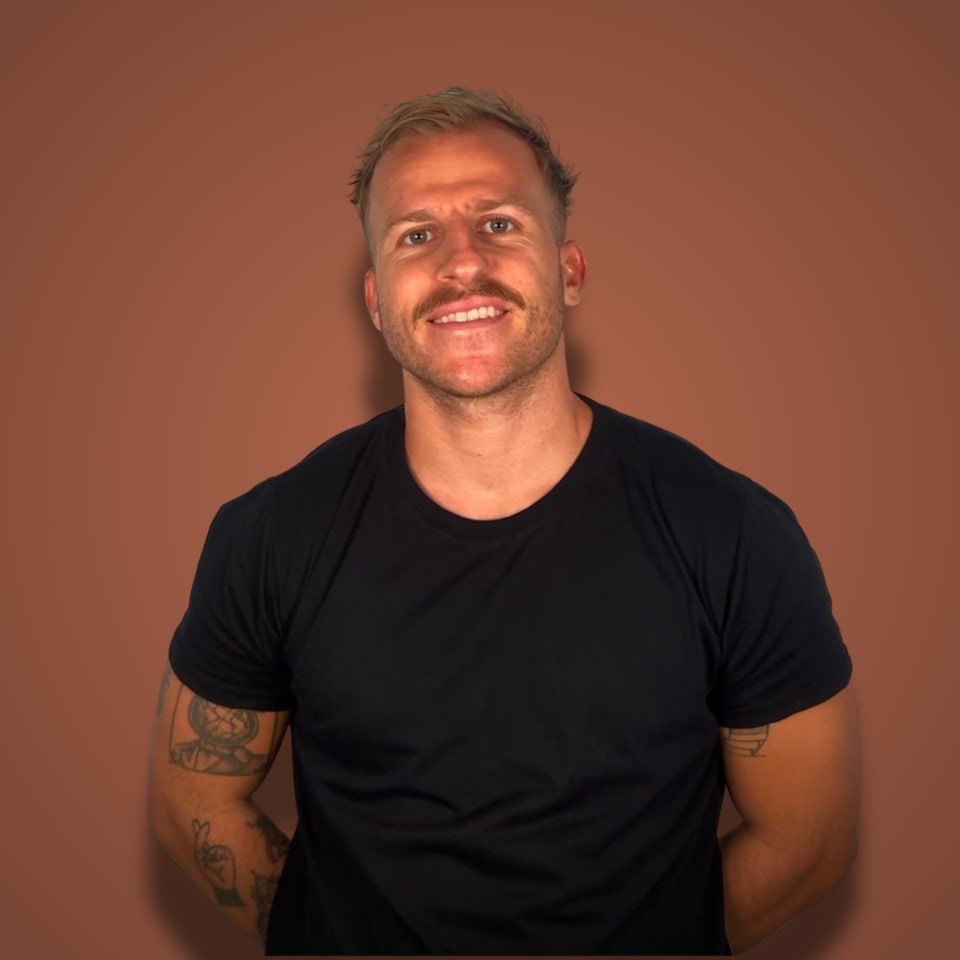
Most founder stories I share are about people grinding 12-hour days.
This one is the opposite.
Will builds iOS apps "the lazy way". Two of them now make him over $10,000 a month combined, and he spends a few hours a week on them. The rest of his time goes to the gym, his friends, and (his words) Roblox.
He calls his approach lazy maxing: find the easiest possible path to the outcome, and refuse to do anything that doesn't need doing.
Pat Walls had him on Starter Story to break down the whole playbook. I pulled out every number and tactic worth stealing.
Two apps, $10K a month, a few hours a week
Will's portfolio is small on purpose.
Glowly is a looksmaxing app. You scan your face, get a rating, and get told exactly how to improve your appearance. It does around $10,000 a month.
Overlow is a simple fitness app. You log your reps and sets, and the main feature is a body scan that scores your physique. It brings in about $800 a month, basically passive.
Notice the pattern: both apps are scan-yourself-get-a-result products. Same concept, different niche.
He didn't land here by accident. At 16 he was trying dropshipping and selling likes and followers. After uni he worked on a crypto NFT project. Then he found freelance web design, and that skill paid the bills while he placed bet after bet on apps until one worked.
No investors, no runway. Just a freelance skill funding small experiments until one stuck.
What lazy maxing actually means
"Lazy maxing to me is just finding the easiest possible way to get what I want done."
That sounds like a meme. It's actually a filter he runs every decision through.
Example: growth channels. Will tried UGC creators and influencer deals first. Managing creators, chasing payments, and guessing which video drove which subscription was exactly the kind of hands-dirty work he hates. Attribution was a mess.
So he went all in on paid ads instead.
"The thing I like about ads is that I can just make a few winning ads, throw them out, and basically live on them for the next four or five months."
A few winners. Four to five months of revenue. That's the whole channel strategy.
I've seen founders run the influencer route brilliantly (Tomer scaled to $80K a month with one rev-share deal). Both work. The difference is Will optimizes for his hours, not just his revenue.
The unit economics: $16 subscriptions, $30 to $35 LTV
Will runs TikTok subscription campaigns. His cost per subscription sits around $16. His lifetime value per paying user is $30 to $35.
Pay $16, collect $30 to $35. Roughly 2x on every dollar in.
And in 2026, the creative side is nearly free. "You can just make content for practically free. I can create 10, 20 different videos and start them into the mixer." All variants of the same format, all fighting for the best CPA.
The ones that win get scaled. The ones that lose get killed. He treats it like a lottery where you can buy unlimited tickets for pennies.
→ The lazy method isn't low effort everywhere. It's high effort on the 20% that matters (creative testing) and zero effort on everything else.
How he picks app ideas: the one-screenshot rule
Will has a hard filter for what he'll build:
"I will not work on an app unless it has a clear viral feature that explains itself in essentially one screenshot."
Scan your face, see your rating. Scan your body, see your score. One screenshot, instant understanding, instant curiosity.
His second rule: sell a transformation, not a tool. Nobody pays for "log your workouts". People pay for "here's exactly how to look better".
And he doesn't invent. He comes from design, and designers improve things that already work instead of creating from scratch. Fitness apps and looksmaxing apps were already proven categories. He just shipped a cleaner take.
Pat's producer Gus made a sharp point about this at the end of the episode: Will never used ads to validate his ideas. The categories were already validated by the market. Ads only had to validate his creative.
That's the part most first-time founders get backwards. They invent something new (unvalidated) and then blame the ads when nobody converts.
The funnel: 12 to 15 onboarding steps before the paywall
Getting the install is half the job. Will splits his funnel in two:
→ The ad someone sees on TikTok.
→ What happens inside the app before the paywall.
His onboarding runs 12 to 15 steps. That sounds insane (most advice says shorten your onboarding), but every step collects information about the user. By the time they hit the paywall, the app shows them a personalized insight based on their answers.
"Conversion rates increase massively because the user feels that the app is actually working for them at that point."
It's the same principle behind every good lead nurturing strategy: don't pitch cold. Warm the person up, learn about them, show them you understand their situation, then make the offer.
The paywall isn't the start of the sale. Step 1 of the onboarding is.
The TikTok ad playbook, step by step
Will's ad approach is specific enough to copy:
1. Make it native. His ads clone what already works organically on TikTok: memes, talking-to-camera videos. If it looks like an ad, it dies.
2. Don't mention the app for 3 to 4 seconds. Hook first. The app comes in later, and subtly. He weaves the core viral feature into the story of the video instead of demoing it.
3. Spray variants. 10 to 20 videos per format, made with AI for almost nothing, all thrown into the mix to find the winner.
4. Scale winners 20% every 3 days. Once a video hits a good CPA, he bumps spend by 20% every three days until the ad caps out. No hero budgets on day one.
I broke down a similar system in my piece on TikTok ads for apps, and Will runs almost the same system: native creative, cheap variant testing, slow scaling. His version just has fewer moving parts.
Build to sell, then do it again
Here's where Will really breaks from most indie hackers: he has zero attachment to his apps.
"The goal for me is to sell them to somebody that can scale it far higher than I can, maybe with a UGC program. All I want to do is validate that something works, get it to enough revenue that I can sell it, and then continue doing that same process over and over."
Validate. Grow. Sell. Repeat.
He's not trying to build a forever company. He's running a factory that produces small, profitable, sellable assets. The $800-a-month app and the $10K-a-month app are both inventory.
If that idea is new to you, I wrote about the mechanics of exiting small apps in how to sell your app. Small apps with clean ad-driven revenue are exactly what micro-acquirers look for.
The stack: three tools, that's it
Will's entire tool stack:
→ RevenueCat for subscription tracking.
→ Claude CLI for building.
→ AppsFlyer as his mobile measurement partner for ad attribution.
Three tools. He builds with Claude, tracks money with RevenueCat, and tracks ads with AppsFlyer. Everything else would be work for the sake of work.
His advice for anyone starting: start simple, stack small wins, and be loud about it. "It's never been a more important time to build a personal brand. It's the only thing that AI can't really come for."
He learns from Twitter, posts his wins there, and treats his audience as the one moat no model can copy.
Gus closed the episode with the Bill Gates line that sums the whole thing up: "I'll choose a lazy person to do a hard job, because a lazy person will find an easy way to do it."
FAQ
How much does Will make from his apps?
Over $10,000 a month across two iOS apps. Glowly, a looksmaxing face-scan app, does around $10,000 a month. Overlow, a fitness app with a body-scan feature, does about $800 a month almost passively. He spends a few hours a week on both combined.
What is lazy maxing?
Will's term for finding the easiest possible way to get a result. In practice: paid TikTok ads instead of managing influencers, AI-generated ad variants instead of filming content, proven app categories instead of new inventions, and selling apps instead of scaling them forever.
Do paid ads work for validating an app idea?
No, and Will doesn't use them that way. He only builds in categories the market already validated (fitness, looksmaxing). His ads validate one thing: whether the creative converts. If you're using ads to test a brand-new concept, you're paying to answer the wrong question.
What conversion tactics does he use at the paywall?
A 12 to 15 step onboarding that collects user answers, then a personalized insight right before the paywall. The user feels the app already works for them, so conversion jumps. Cost per subscription lands around $16 against a $30 to $35 LTV per paying user.
Steal playbooks like this every week
Will's numbers aren't the impressive part. Plenty of apps make $10K a month.
The impressive part is the hourly rate. A few winning ads, a tight funnel, three tools, and a portfolio he's happy to sell. That's a system, not a grind.
Every week on my podcast I sit down with bootstrapped founders doing $100K to $10M a year and pull out exactly this kind of playbook: the real numbers, the real channels, the decisions behind them.