A barbershop just paid $850 for a website that took two minutes to build.
Not two weeks. Not two days. Two minutes.
The person who sold it wasn't a developer. It was his third cold call ever. He didn't write a line of code. He let Claude build the whole site, dropped the link in a message, and the shop owner said yes.
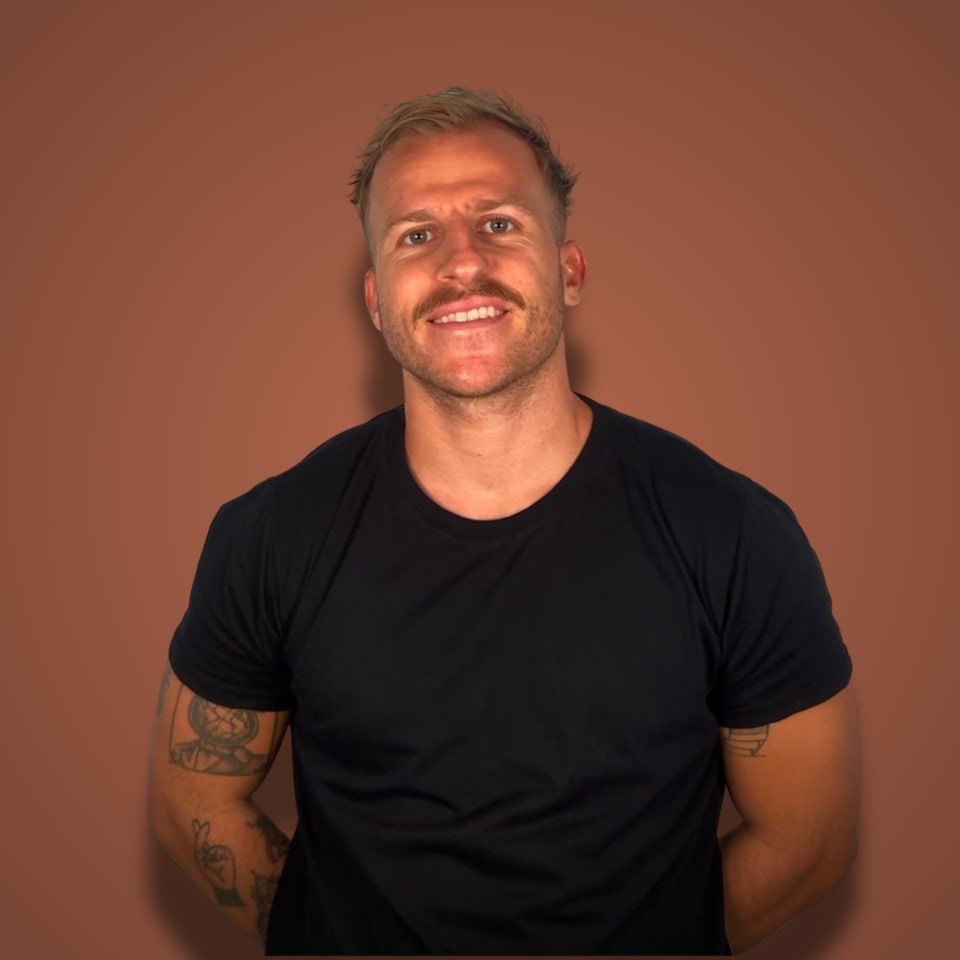
I watched Brett (@TheBrettWay) break this down on his channel and my first reaction was the same one you're probably having right now: this feels unfair. Which is exactly why I want you to see it before everyone else does.
Here's the full video. Watch it, then let me walk you through what actually matters for you as a founder.
The most profitable AI business isn't software
I've spent years building SaaS. I love SaaS. But I'll be honest with you about something most software founders don't want to say out loud.
Selling software means you're one model update away from being obsolete.
You ship a tool. Then OpenAI or Anthropic ships something next month that does 80% of what you do, for free, inside their app. You're constantly running to stay in the same place.
Selling the outcome is different. When the AI gets better, your business gets better. You keep the margin. You keep the client.
Sequoia put real numbers on this. They wrote that "services are the new software," and their argument is simple: for every $1 spent on a software tool, roughly $6 gets spent on the service that delivers the exact same outcome.
Read that again. The service layer is a 6x bigger pie than the software layer. And AI just handed you the tools to eat it.
What "arbitrage" actually means here
Arbitrage is a fancy word for a simple thing: a new tool changes how work gets done, but the market hasn't caught up on price yet.
A restaurant website used to cost $3,000 and take three weeks. An agency, a designer, a developer, revisions, the whole circus.
Now one person builds it in minutes. But the restaurant owner still thinks it costs $3,000 and takes three weeks. That gap between the old price and the new cost? That's your money.
It won't last. It never does. The people who move early get paid. The people who wait read about it in a thread six months from now and think "I could've done that." You've felt that feeling before. Don't feel it again.
Why the local business will happily pay you
The obvious pushback: "Why doesn't the owner just do it themselves?"
Because they own a restaurant.
Their day is hiring, managing a kitchen, keeping ingredients stocked, running payroll, dealing with customers, chasing the promotion they promised on Instagram. The last thing they're doing at 11pm is learning how to prompt an AI to build a website.
Business owners pay to make problems disappear. They do not care how the problem gets solved. If you hand them a finished site that looks better than what they have, they'll pay you and thank you.
That's the whole game. You're not selling AI. You're selling "this is handled."
The actual playbook, start to finish
Brett walked through the entire build using the Claude desktop app plus the Claude Chrome extension. Here's the skeleton so you understand the shape of it.
Step 1. Pick a target. Local service businesses with bad websites. Roofers, HVAC, barbershops, cleaners, medspas, restaurants. Ask Claude for a list of 100 local business types if you're stuck. Avoid big chains. They don't need you.
Step 2. Build a prospecting skill. Inside a Claude project, he told it the goal ("sell website services to local restaurants in Kansas City, automate prospecting, build, and outreach") and had it create a scoring system and a lead spreadsheet. The ideal lead: a bad website or no website at all.
Step 3. Automate the lead gen. One scheduled task: every morning at 7am, find 25 local restaurants with bad sites, drop their name, Instagram handle, phone, and email onto the sheet. You wake up to 25 fresh leads. Every day. Without touching the keyboard.
Step 4. Auto-build the sites. Another skill that scrapes each business's menu, photos, and branding, then builds a custom site. His pro tip here is worth the price of admission: grab a brand-guidelines template from Canva, export it as a PDF, and tell Claude to design to that PDF. The difference between the default output and the brand-kit output was night and day. It looked like a real designer made it.
Step 5. Host it. Push each site to Vercel (free, about 20 seconds) so you get a shareable link that's literally restaurantname.vercel.app.
Step 6. Outreach. The Claude Chrome extension opens Instagram, finds each lead, sends the site link, then follows up with a calendar link. In theory it runs while you sleep and you wake up to booked calls.
Step 7. Get paid. A checkout link, a price, done. Charge anywhere from $500 to $3,000 for the site alone.
The part everyone skips: it's a system, not a tool
Here's where I want to slow you down, because this is the lesson that actually transfers to your SaaS.
The people making money with AI right now are not the ones using the most tools. They're the ones who can take a messy job, break it into steps, and wire those steps together into something that runs on its own.
Prospecting is a step. Building is a step. Outreach is a step. Payment is a step. Brett staggered them across 7am, 8am, and 9am so each one had room to finish before the next kicked off. That's not an AI trick. That's systems thinking.
That skill is the same skill that turns a founder who's drowning in manual work into one who has actual leverage. Once you start seeing your own business as a stack of automatable steps, you stop being the bottleneck.
I learned this the hard way. For years I was the person doing every step by hand. The single biggest jump in my income came the month I stopped asking "how do I do this faster" and started asking "how do I make this run without me."
Where founders get this wrong
Two traps. Watch for both.
Trap one: thinking it's fully hands-off. It isn't. Brett said it himself. AI is very good at lying to you. His first auto-built site only pulled five menu items when the restaurant had forty. If you send a client a site with fake or missing info, you've torched the relationship before it started. Cross-check your first sites against the real menu. Every time.
Trap two: thinking the AI is the moat. It's not. The moat is taste. AI removes the three years it used to take to memorize a website builder. It does not give you an eye for what actually converts. A hundred people can run this exact playbook with the exact same model, and one of them will crush the other ninety-nine, purely because they cared more about the craft. Care more.
The math that should make you take this seriously
Let's be concrete, because vague opportunities are worthless.
One site: $500 to $3,000. Say you land at $1,000. Cost to build: a Claude subscription and maybe 20 minutes of real attention once you cross-check it. That's not a business idea. That's cash flow.
And the site is just the door. Once you're in, you upsell. SEO. Google reviews. Online ordering for DoorDash. A monthly retainer to keep it maintained. One happy client refers three more, because local owners all know each other.
That's how a "$1,000 website" quietly becomes a $10k/month service business. Not because any single deal is huge, but because the delivery cost collapsed to near zero and the referrals compound.
If you like this flavor of low-overhead, high-margin play, I've written before about boring business ideas that quietly make money and the broader world of building an AI services business. Same DNA: sell the outcome, keep the margin, let the tool do the labor.
A word of caution on the outreach
One honest note, because I'm not going to pretend the automated-DM part is risk-free.
The rules around AI-driven outreach are murky and they change by platform. Blasting hundreds of Instagram DMs a day is how you get your account banned. Brett flagged this too. If you're going to automate outreach, keep the volume human and the message actually personal. Better yet, the highest-converting founders in that video did plain cold calls, because almost nobody has the nerve to. The tech is optional. The willingness to do the uncomfortable thing is not.
FAQ
Do I need to know how to code?
No. The entire build runs through Claude. Your job is judgment and quality control, not writing code. What you do need is an eye for a website that looks good and actually converts.
How much can I charge?
$500 to $3,000 for a single site right now, depending on the business and the polish. The bigger money is in the upsells and retainers after you're in the door, not the first invoice.
Isn't this market going to get saturated?
Yes, eventually. That's the whole point of arbitrage. It's a window, not a forever thing. The early movers get paid, the late ones read about it. If it interests you, the move is to start now, not to wait until it's obvious.
What tools did he use?
Claude desktop app plus the Claude Chrome extension for prospecting, building, and outreach. Canva brand-guideline PDFs to level up the design. Vercel to host the sites for free. A simple checkout link to collect payment.
Is it really automated end to end?
Mostly, but not blindly. Treat the automation as a first draft that still needs your eyes. The founders who win cross-check every early site against real client info before anything goes out.
Is this better than starting a SaaS?
It's different. A services business gives you cash flow fast with almost no build risk. A SaaS gives you leverage and enterprise value over time. Plenty of founders use the services cash to fund the software. There's no wrong answer, only the one that matches where you are right now.
The real takeaway
The website thing is cool. But it's not really the point.
The point is that the cost of delivering almost any service just fell off a cliff, and the market hasn't repriced it yet. That's true for websites. It's true for a dozen other services you could sell tomorrow. The founders who win the next year are the ones who see a job, break it into steps, and let AI run the steps.
You don't need permission. You don't need a technical co-founder. You need to pick one service, do it well for one real client, and get paid.
If you want to be in a room with founders who are actually building this stuff and pushing each other forward instead of grinding alone, that's exactly why the Profitable Founder Podcast exists. Every episode is a real operator walking through the real numbers.
Listen to the Profitable Founder Podcast →
Story and numbers sourced from Brett (@TheBrettWay), "The Most Profitable AI Business Isn't Software." Watch the full breakdown above.