Your app probably looks like everyone else's app.
Purple gradient. Same hero section. Same rounded cards. Meng To has a name for what that does to your business: it cuts your perceived value by 10 to 100X.
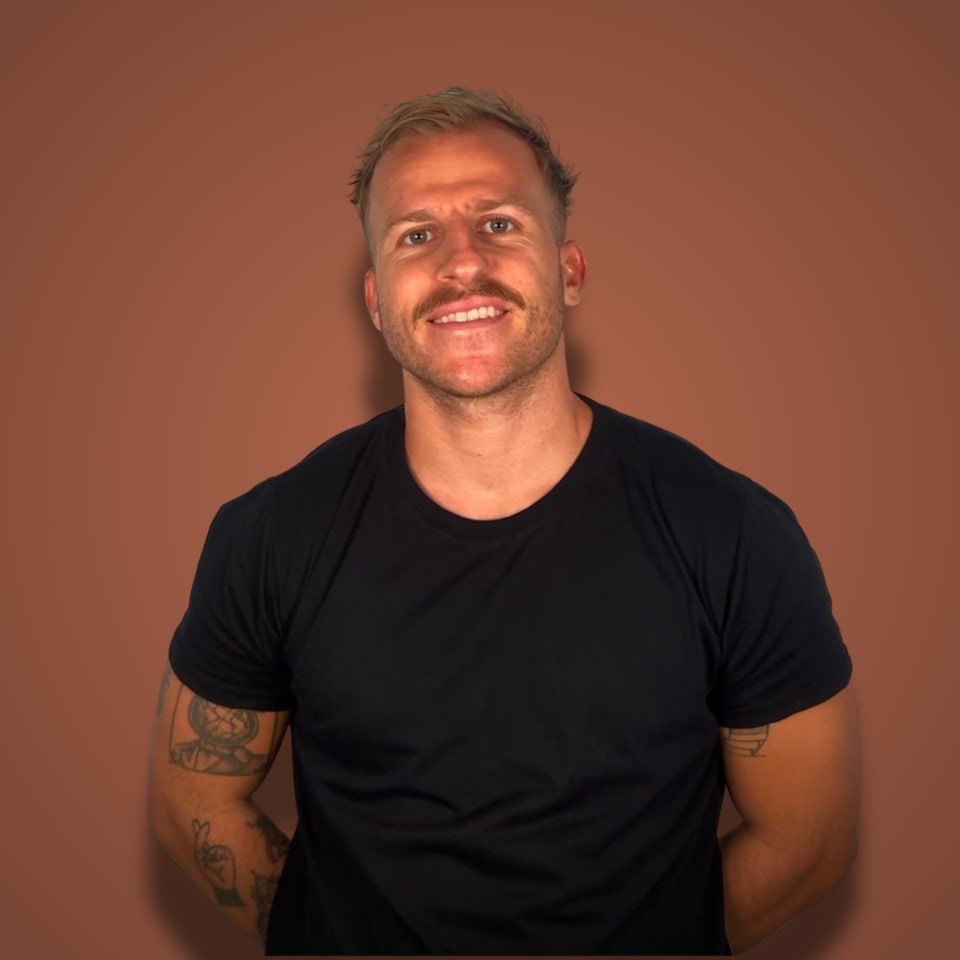
Meng is one of the best product designers alive. He dropped out of college, got his first design job at 18, started his first company at 22, and built Design+Code into the place where thousands of designers learned to ship. Right now he's building 4 products at the same time. Alone.
He went on Greg Isenberg's podcast and gave away his entire AI design workflow. The one he's spent roughly $500,000 in tokens refining.
I watched the whole 51 minutes so you don't have to. Here's the playbook.
The problem: design drift
You've felt this if you've ever vibe coded anything.
The first screen comes out great. You one-shot a landing page, it looks incredible, you're convinced you're a designer now.
Then you build the second page. And the third. And suddenly everything looks generic. Different spacing, different buttons, the soul is gone.
Meng calls this design drift. The first screen is not the hard part. Consistency is the hard part.
And the fix is not better prompting. It's a file.
What design.md actually is
Google open sourced a concept called design.md. Same idea as agents.md or skills, but for design.
It's one markdown file that holds your entire design system: typography, colors, spacing, button styles, sometimes even the WebGL code that powers animations. You attach it to your prompt, and the agent stops guessing what your product looks like.
Meng's analogy is the best I've heard:
→ The HTML is the finished dish.
→ The design.md is the recipe.
→ Skills are the ingredients.
You bring all three to your agent, and you get a consistent design. Every time. On every page.
The killer feature: it transfers. Start in Lovable, move to Figma, finish in Codex or Claude Code. The design.md travels with you because it's just structured text. Meng calls it "design memory."
One tactical note from the episode: don't stuff your design system into agents.md. It costs more tokens and it's too general. Meng keeps design.md per project and skills per workflow. Nothing design-related lives in his agent config.
The full workflow, step by step
This is the actual process Meng walked through:
Step 1: Start with a reference. Every designer copies first. Nobody starts from a blank page, not even the guy who taught half the industry. Grab a design.md from a community, a template you love, a screenshot.
Step 2: Remix until something clicks. Meng uses tools like Variant: click remix, click remix, click remix. You're not designing yet. You're hunting for a direction that feels right.
Step 3: Download the design.md AND the HTML. The markdown holds the foundation (type, color, spacing). The HTML holds the stuff markdown can't fully capture, like the WebGL running that laser animation everyone clicks on.
Step 4: Attach both to your prompt. Then describe your product. The agent builds your landing page on top of a system a real designer already sweated over.
Step 5: Iterate. A thousand times. Not a typo. Greg guessed Meng used "a couple dozen" prompts per product. The real answer: at least 1,000. Sometimes 10,000.
Step 6: Remix into other formats. Once you're happy, the same design.md generates your slides, promo videos, Instagram assets, mobile screens. Same DNA, every medium.
Meng's split: 90% iteration, 10% remix. Iteration is small improvements to something you like. Remix is spinning up a new product category.
Skills are your moat against generic
This is the part most people miss.
Typography and colors get you from 0 to 50. Skills get you from 50 to 80.
A skill here is just a saved prompt for one specific effect. Meng has 63 of them in Newform, and they're weirdly specific:
→ A laser skill (his words: "whenever I create a landing page with lasers, everyone clicks on it")
→ A skeuomorphic skill for realistic, embossed, Steve-Jobs-lickable buttons
→ A 3D skill for floating globes and depth
→ A copywriting skill that rewrites your page text
People love special effects. You go to a movie for the Avengers moments. Your landing page works the same way.
Generic ages fast, too. What counted as "wow" five years ago is wallpaper today. Meng sees a purple gradient and stops scrolling. Your visitors do the same, they just don't tell you.
The numbers behind the method
Quick proof this isn't theory from a guy selling a course.
Meng is building Aura, Newform, Dream Cut (a Mac app), and a full Design+Code rebuild. Four products, one person, agents doing the pixel-pushing.
He's spent around half a million dollars on tokens.
And my favorite number from the episode: the first time Meng went on Greg's podcast, he was at $3,000 MRR. That single episode took him to $15,000 MRR. A 5x from one distribution decision.
(That's the other lesson hiding in this episode. Product is half the game. Getting in front of the right audience is the other half. I've written before about how an app with zero audience still needs a distribution wedge.)
"Judgment per minute" is the new design skill
My favorite idea from the whole conversation.
Designers used to move rectangles. Now the agent moves the rectangles, and your job is judgment: is this good? Is this on-brand? Ship or iterate?
Meng calls it judgment per minute. How many quality decisions can you make in an hour? That's the skill now. Not Figma shortcuts.
He also said something that killed the "AI makes you lazy" argument for me:
"I've never worked more in my entire life. AI is not making me lazier. AI is making me work more."
A thousand iterations per product is not lazy. It's obsession with better tooling.
If you want to see what this looks like from the building side, I broke down how a founder designed and built a full app with AI in 18 minutes. Same philosophy, compressed.
Taste is the only moat left
Meng's closing argument, and it's worth sitting with.
Big companies have hundreds of millions in the bank. You can't out-resource them. Your edges are speed (adopting new tools the week they drop) and taste.
Taste isn't just design taste. It's the barista who's pulled 10,000 shots and knows by smell. It's pattern recognition from consuming the best work in your niche, on purpose, every day.
His prescription:
→ Use every app in your niche
→ Follow every maker and creator in your niche
→ Build a second brain for design inspiration (when something stops your scroll, capture it)
→ Look for good design, don't just wait to be served it
And niche is the keyword. If your product looks like another product, you just discounted yourself 10 to 100X without touching your pricing page.
FAQ
What is design.md?
An open source concept from Google: a single markdown file that stores your design system (typography, colors, spacing, component styles, animation specs) so AI agents can reproduce your design consistently. You attach it to your prompt like a recipe, and it works across tools like Lovable, Figma, Cursor, Codex, and Claude Code.
How is design.md different from agents.md?
Agents.md configures how your agent behaves globally. Design.md carries one project's visual system. Meng To keeps them separate on purpose: design.md per project, skills per workflow, because stuffing design rules into agents.md costs more tokens and produces generic results.
Do I need to be a designer to use this workflow?
No, and that's the point. You start from a design.md made by a real designer (many are free), attach it to your prompt, and iterate. Meng's claim is that this workflow puts you ahead of 99% of what's shipping right now, because most people one-shot a template and stop.
How many iterations does good AI design take?
Meng To uses at least 1,000 prompts per product, sometimes 10,000. The one-shot result is your starting point, not your product. His split is 90% iteration (small improvements) and 10% remix (new formats or directions).
What are design skills?
Saved prompts for specific visual effects: lasers, skeuomorphic buttons, 3D elements, copywriting passes. They're the "ingredients" you layer on top of a design.md so your product doesn't look like every other agent-generated site.
Steal workflows like this every week
This episode is exactly the kind of thing I hunt for on the Profitable Founder Podcast: real operators opening up real playbooks, with numbers attached.
I interview bootstrapped founders making $100K to $10M a year and get them to share what actually worked.