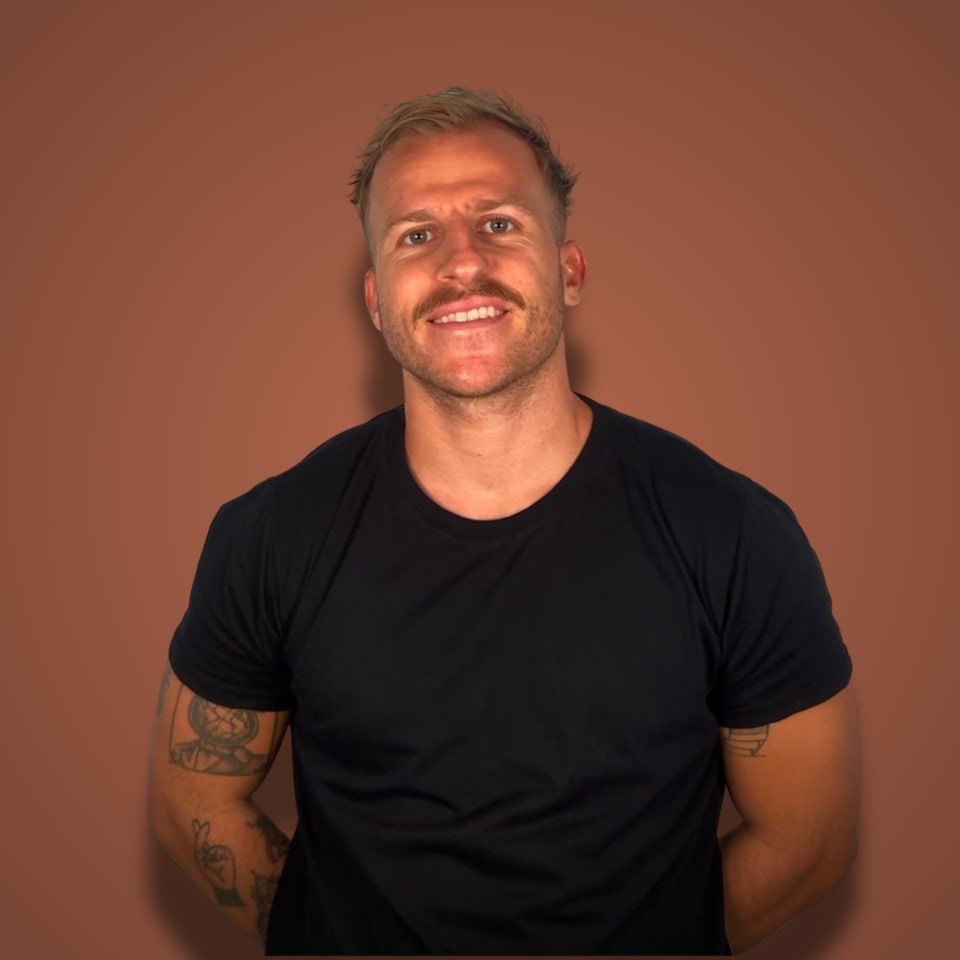
Everyone tells you to find an original idea.
Tomer ignored that advice completely. He took the most copied app concept of the decade, the AI calorie tracker, and built it for one market nobody was serving: Israel, in Hebrew.
Launched June 2025. $1,000 in month one. $81,000 a month by April 2026.
No original idea. No coding background. He'd never shipped an app in his life.
Pat Walls had him on Starter Story to walk through exactly how he did it, and if you want to localize a proven app instead of gambling on a brand new idea, this is the cleanest playbook I've seen. Watch the episode, then I'll break down every number below.
The idea: take a proven winner, change the country
In March 2025, Tomer was doing marketing for other people's businesses and hating it. Then he heard a podcast with Zach Yadegari, the founder of Cal AI, talking about scaling the app past $1 million per month.
Most people hear that and think "too late, the market's taken."
Tomer heard something else: Cal AI didn't exist in Hebrew.
His words: "It doesn't matter that the app already exists if no one knows about it in my local market."
That's the whole thesis. The app already worked. The demand was already proven at $1M+/month in the US. All he had to do was be first in a market Cal AI would probably never prioritize.
One rule he added, and I think this is the part most people would get wrong: if the market is small, the niche has to be huge. Israel has around 9 million people. You can't take a tiny vertical there and expect real money. Fitness and nutrition is one of the biggest niches on earth, and Tomer happened to know it well personally. That's why the math worked.
(I wrote a full breakdown of the original Cal AI playbook and its roughly $50M ARR exit here, if you want the source material he was copying.)
Building it with no dev background: 2 weeks to a working app
Tomer is not a developer. He had a bit of high school coding and that's it.
Cursor had just come out, and he wanted to test whether you could really build software by prompting. Two weeks later he had a working version of the app: point your camera at a meal, get calories and macros in seconds. Same core experience as Cal AI, in Hebrew, with small changes for how Israelis actually eat and talk about food.
From first line of code to live on the App Store: about 2 months.
And here's the detail every app founder I've talked to confirms: the coding wasn't the slow part. Waiting for Apple was. Getting accepted into the developer program, then passing App Store review, ate most of the timeline. If you're building right now, submit early. The back and forth with Apple can cost you a month on its own.
The product itself isn't the moat, and Tomer is refreshingly honest about that. His actual quote: "Almost anyone can build an app with Cursor in 2 weeks." His edge is somewhere else entirely.
$1K to $20K a month: paid ads in a cheap market
Tomer's unfair advantage was his boring marketing job. He came in knowing how to run ads.
His take on channels stuck with me: every channel works. Influencers, paid ads, SEO, all of it. The only question is which channel is most efficient for your specific market.
For Israel, that was paid ads, because CPMs there are far lower than in the US. You can run profitable campaigns without a huge testing budget. So he studied the most viral creatives from US calorie apps, studied the most viral Israeli fitness content, and made ads that merged the two.
That alone took him to about $20K per month within 4 months of launch.
Think about his cash flow logic here, because it's the sharpest line in the episode: if you can acquire a user for half of what your competition pays, you have more cash flow than they do. More cash flow means you can outspend them on growth. Localization isn't a language trick, it's a customer acquisition cost advantage. (If you're building this kind of ad-to-retention machine yourself, TwiLead has a good breakdown of the business automations that keep it running without a team.)
The rev-share influencer deal that took it from $20K to $80K
At $20K/month, Tomer did the thing he'd planned from the start: he went after the biggest fitness influencers in Israel.
Normally that costs a fortune. A single story or reel from a big name can burn your whole month's profit.
So he didn't pay per post. He offered a percentage of revenue instead.
The influencer gets a cut of everything coming from Israel. The more money the app makes, the more they make. Incentives aligned. And because they have real skin in the game, they don't just post the one contracted reel. They mention the app on TV, in interviews, wherever they show up.
Two details that make this repeatable instead of lucky:
- He waited until $20K/month to negotiate. With traction and social proof, he could push for much better terms than the 50/50 split you'd get pitching from zero.
- The agreement is built on deliverables. It specifies how many pieces of content and how many filming days per month the influencer owes. No vague "promotion" promises.
That deal is what took the app from $20K to over $80K per month. It also built the thing he says actually matters: a brand with two well-known faces attached, which is much harder to copy than the app itself.
The stack: about $355 a month to run an $80K/month app
Tomer listed his whole stack on the show:
- Claude for coding and AI agents across the business: $200/month
- Expo for builds and in-app updates: $100/month
- Supabase for database and storage: $35/month
- PostHog for product analytics: $20/month
- RevenueCat for subscription management
Call it $355 a month plus RevenueCat's cut. Running an app doing $80K+ monthly. A solo non-developer maintains all of it.
Five years ago this business needed a technical co-founder and a seed round. Now it needs a Cursor subscription and someone who understands distribution.
How to run the localization playbook yourself
Pulling the steps out of Tomer's story:
→ Find a proven app, not a promising one. Look for apps already doing $500K+/month in the US. The revenue is the validation. You're not guessing whether demand exists, you're checking where it hasn't been served yet.
→ Check your home market. Does the app exist in your language? Not "is there a bad translation," but is there a real localized product with local marketing? If yes, move on. If no, that's your window.
→ Only pick huge niches. Small market times small niche equals hobby. Small market times massive niche (fitness, dating, money, food) can still be $80K/month.
→ Localize the distribution, not just the strings. Tomer's app wins because the creatives, the influencers, and the food database are Israeli. Pat's comparison in the episode was good: a plumber in the US and a plumber in Israel do the same job, but they're completely different businesses.
→ Buy your brand with revenue, not cash. Get to real traction on ads first, then trade rev-share for famous faces instead of paying their rate card.
And to the "it's just a clone" objection: there are thousands of calorie trackers on the App Store, and nobody calls them clones of each other. Being first to serve a market in its own language, with its own food culture, is a real edge. The founders I see stuck at zero are usually the ones still hunting for an idea nobody's had. Meanwhile the founders shipping copies of proven products into open markets are the ones sending me revenue screenshots. I covered three more of them here, all past $10K/month with no audience.
FAQ
Is localizing an existing app just stealing the idea?
You can't copyright an app concept, and calorie tracking has hundreds of competitors already. Tomer didn't copy code or branding. He built his own product around a proven behavior (photo-based calorie tracking) for a market the original ignores. Different language, different food culture, different marketing. Same reason a local plumber isn't "stealing" from plumbers abroad.
How much money do you need to start something like this?
The stack costs about $355/month. The real budget is ads, and that's the point of picking a market with cheap CPMs: Tomer could test creatives profitably in Israel without the capital a US launch demands. A few thousand dollars of ad budget goes a lot further in a small market than in the States.
Do you need to be a developer to build an AI calorie tracker?
Tomer wasn't. He had high school level coding knowledge, used Cursor, and had a working version in 2 weeks. The full journey to the App Store took about 2 months, and most of that was Apple's developer program approval and review process, not engineering.
Why did the influencer rev-share deal work so well?
Because both sides make money from the same outcome. A paid post gives an influencer no reason to care after publishing. A share of local revenue makes them promote the app everywhere, indefinitely. Tomer also negotiated after hitting $20K/month, so he was pitching from strength, and the contract locks in content volume and filming days per month.
Steal playbooks like this every week
Tomer built an $80K/month app by copying what worked and executing where nobody was looking.
That's basically the thesis of my podcast. Every week I sit down with bootstrapped founders doing $100K to $10M a year and pull out the exact playbooks they used: the numbers, the channels, the deals.