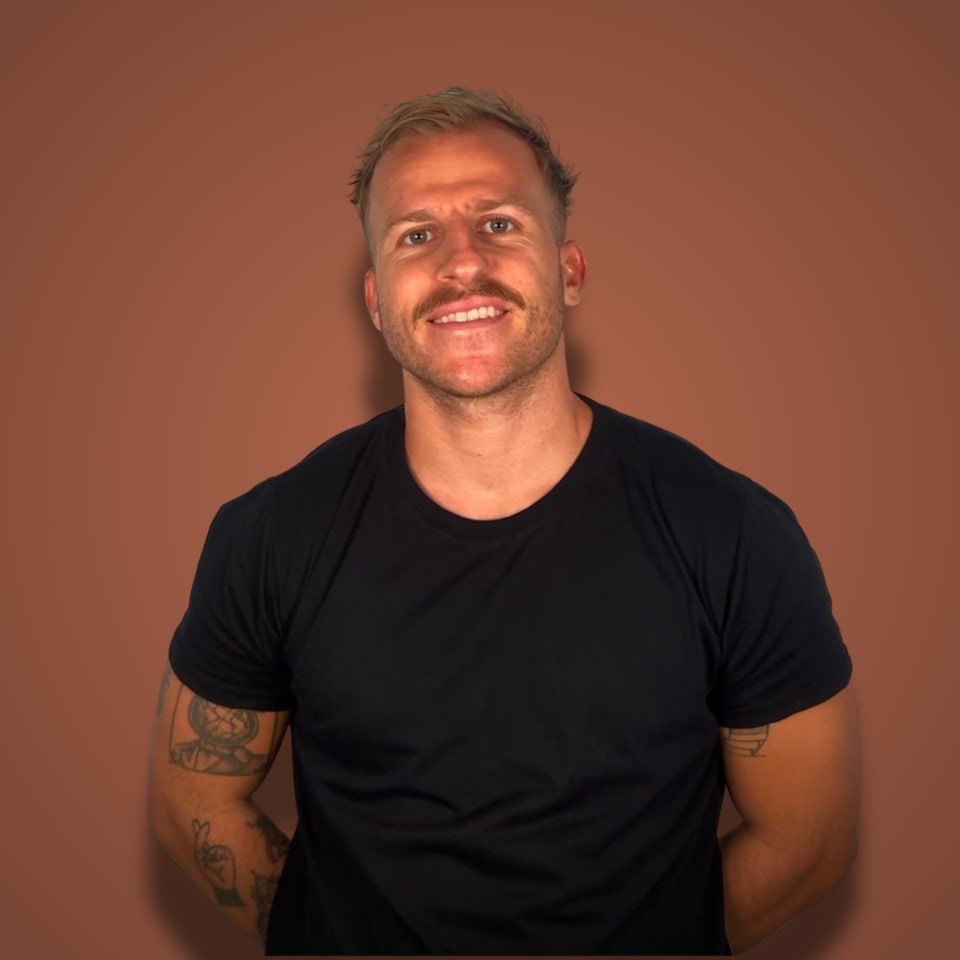
From 2022 to 2025, Brett ran a software development agency doing over $1 million a year.
Every client MVP took a project manager, a designer, and a developer about 6 weeks.
Then he spent one week with Claude Code and realized one person could now deliver the same project in under an hour.
Not "an hour with a senior engineer driving." An hour with someone who has no technical background.
I watched his full breakdown so you don't have to. Here's the model, the numbers, and the exact workflow.
The agency model: build apps for creators, take equity
Brett's agency built software for creators with an audience. Two ways he structured deals:
→ A monthly subscription, usually around $6,000/month, to build the client's app.
→ Equity in the app instead of cash, when he really believed in the idea.
The monthly clients paid the bills. The equity clients were lottery tickets with good odds.
One of those equity deals was Atlas AI. It now does over $500,000 per month.
Brett is quick to say he's not on the day-to-day team anymore and can't take credit for that number. But the deal structure is why he has exposure to it at all.
Why creators are the perfect software clients
The Atlas AI founder is Sebastian Georgeu, an e-commerce YouTuber with over a million subscribers. Brett points at three unfair advantages he had:
- He was his own customer. Years of e-commerce meant his product intuition was sharp.
- Built-in distribution from his channel.
- A network of peer creators. The main growth channel wasn't even his own audience, it was sponsoring other YouTube channels in his niche. Peers reply to peers, give favorable rates, and move fast.
Here's the part almost nobody talks about.
Everyone pitches creators short-form editing, growth operating, or course funnels. Almost nobody offers to build them software their audience would actually use.
Brett's advice if he were starting from zero: pick a niche, find educational creators in it, and send a DM like "I'd be down to build you a custom VFX marketplace. I'm a software developer and I'd be happy to build it in exchange for equity. Worth a quick chat?"
And yes, big creators see your DMs. Brett has 500,000+ YouTube subscribers and gets maybe five DMs a day. He reads all of them. He's hired people from cold DMs.
The three deal structures (keep it simple)
→ Monthly build fee: $2,000 to $6,000/month depending on your skill, the scope, and your proof.
→ Pure equity: build it in exchange for ownership if you believe in the creator.
→ Hybrid: smaller monthly fee plus upside. Brett's favorite. You're not broke while building, and you still own a piece if it works.
Creators bring the problem, the audience, and the distribution. You bring the software and the execution.
The 1-hour MVP workflow, phase by phase
The old way took a three-person team 6 weeks across three phases: write the PRD, design the app, code the backend. Here's how Brett compressed each one.
Phase 1: The PRD writes itself
A PRD (product requirement document) is just a clear list of what the app is, who it's for, and what v1 needs.
Brett's automation: get on a call with the creator, record it with an AI note-taker (he uses Fellow), pipe the transcript through Zapier to Claude with a "senior product manager" system prompt, and save the output as a markdown file in Google Drive.
Pro move: he bakes his preferred tech stack into the prompt. So every PRD already specifies the backend, database, auth, payments, and hosting he wants. Client call ends, build-ready PRD appears.
Phase 2: Design that doesn't look vibe-coded
Brett uploads the PRD to Claude Code and asks for the app with a localhost preview. A few minutes later, working marketplace.
But here's his honest take: most AI-built apps look AI-built. Generic, low-quality, toy-like. And if you're charging $6,000/month, it cannot feel like a toy.
His fix costs almost nothing:
→ A brand kit: grab a brand guidelines template from Canva, customize it, export the PDF.
→ A component library: pick a free one on Figma that matches the vibe.
Then one prompt: "Redesign the app using this brand kit and this component library." A few iterations later it feels like a real product. Reuse both on every future project and that becomes your agency's signature look.
Phase 3: Don't build hard infrastructure, plug it in
This is where most people get burned with AI coding.
Claude Code can scaffold an app fast, but ask it to build payments or a real-time chat system from scratch and you'll drown. Notifications, file uploads, permissions, moderation, performance at scale. Those are infrastructure problems, not features.
Brett's move: tell Claude to embed pre-built components instead. For his demo (a VFX marketplace for a cinematography creator) he used Whop's SDK for embedded checkout, pay-ins and payouts, plus their chat and OAuth for buyer-seller DMs and account creation. Supabase for the database. Vercel for hosting.
For onboarding, he didn't guess. He pulled screenshots of a top marketplace's onboarding flow from Mobbin and told Claude "build a similar structure with my design." The biggest apps have spent millions optimizing those flows. Borrow the structure, keep your own skin.
The margin math
Brett's agency ran at roughly 55% profit margins. The main expense was headcount.
Think about what happens to that number when a 6-week, 3-person project becomes a 1-hour, 1-person project. The whole workflow got compressed: PRD, design, infrastructure, deploy.
And because his stack is now baked into every PRD, each new client project starts with the same design system and the same infrastructure. Get on a call, hang up, and Claude builds v1 with everything already wired.
That's what an AI-first service business actually looks like. One person delivering what used to take a team.
If you run any service business, the same playbook applies: record how you deliver the work today, then automate the repeatable middle and keep the judgment calls for yourself. (I've written before about starting an AI services business if you want the outreach side.) For a deeper look at wiring automations across a whole business, this guide to business automations covers the systems side well.
My take: everyone has the tool, almost nobody has the positioning
Every founder I interview on the podcast is playing with Claude Code or Cursor right now. The tool stopped being an edge months ago.
What Brett actually found is an underserved client: creators with real audiences who want their own software. They already have distribution and product intuition, and the people pitching them are all selling clipping services.
You don't even need to code. If you can write a decent DM and follow the steps Claude gives you, you can build apps without writing code and charge real money for it.
Six weeks to one hour. 55% margins about to get fatter. Pick a niche this week.
If I were starting this from zero
Here's how I'd run it, based on what worked for me when I was grinding from $15K to $75K a month:
→ Week 1: pick ONE niche you actually understand. Fitness, finance, filmmaking, whatever. Then list 30 educational creators in it with 50K to 1M subscribers. Big enough to have an audience, small enough to reply.
→ Week 2: send 30 DMs with a specific build offer. Not "can I help you with software?" but "I'd build you a coaching tracker your audience pays $19/month for, in exchange for a small monthly fee plus equity."
→ Week 3: for whoever bites, run Brett's exact workflow. Record the call, generate the PRD, build v1 with your brand kit and component library, plug in payments.
One yes at $3,000/month plus 10% equity and you have a business. Three yeses and you have an agency.
The founders I know who move fastest don't wait until they've "learned to code properly." They ship the ugly v1, charge for it, and let the client's audience tell them what to fix.
FAQ
Who is Brett from The Brett Way?
Brett ran a software development agency from 2022 to 2025 that built apps for creators, doing over $1 million a year at roughly 55% margins. One of his equity deals, Atlas AI, now does over $500K/month. He now runs The Brett Way YouTube channel (500K+ subscribers) teaching AI-powered service businesses.
Can you really build a client-ready MVP in an hour with Claude Code?
A first version, yes. Brett's demo built a VFX marketplace with payments, chat, auth, database, and hosting in under an hour. The catch: he plugs in pre-built infrastructure (Whop, Supabase, Vercel) instead of asking AI to build payments or chat from scratch. Polish and edge cases still take longer.
How much should I charge to build apps for creators?
Brett's ranges: $2,000 to $6,000/month as a build fee depending on skill and proof, pure equity if you strongly believe in the idea, or his favorite, a hybrid of a smaller monthly fee plus equity upside.
Do big creators actually read cold DMs?
Yes. Brett has over 500,000 subscribers and gets around five DMs a day. He reads every one and has hired from them. Low volume, high signal. A specific offer ("I'll build you X in exchange for equity") stands out because almost nobody sends it.
Steal playbooks like this every week
I interview bootstrapped founders doing $100K to $10M a year and get them to hand over the exact numbers and systems behind their growth.
If this breakdown was useful, the podcast goes deeper.