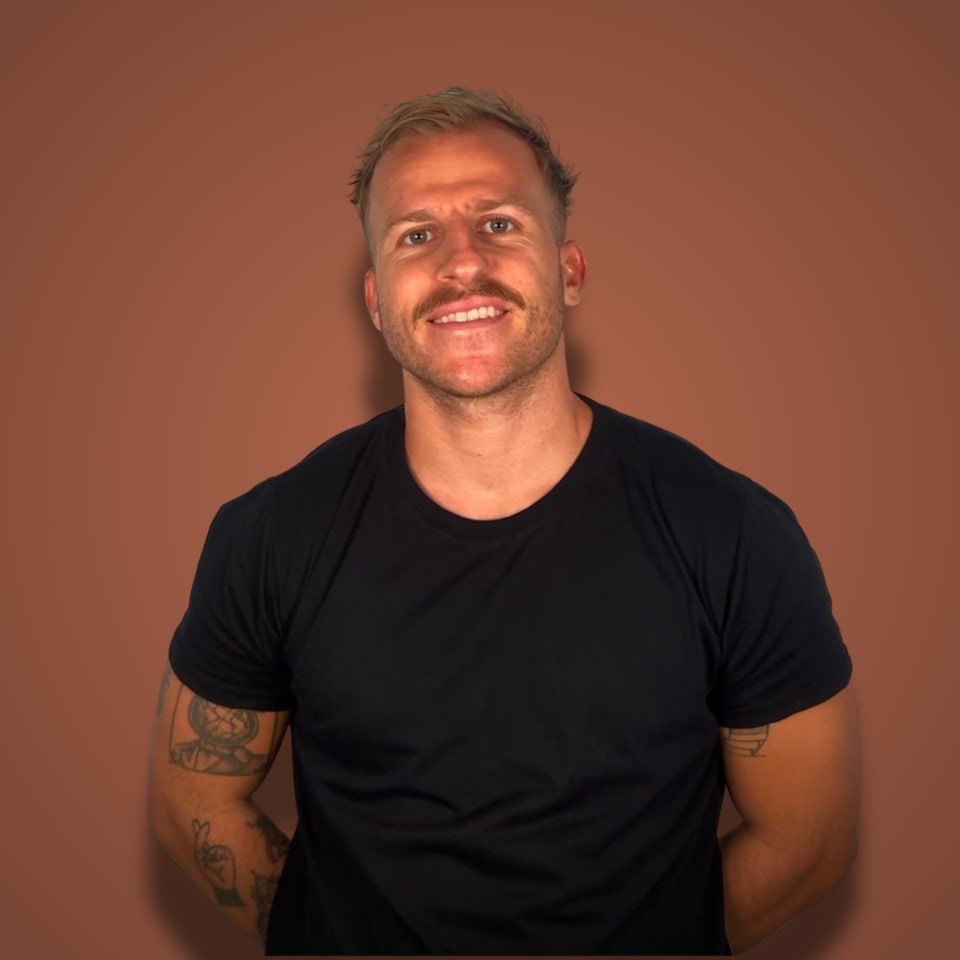
A college student scrolled TikTok, spotted a trend his roommate wouldn't shut up about, and built an app around it in 2 weeks.
Seven weeks after launch: $50,000 in revenue.
His name is Cedric Roberge. The app is Pep AI, a tracker for peptides (the weight loss and recovery compounds half your feed is suddenly obsessed with). He's at $11K MRR with almost 2,000 active subscribers, and he found the whole thing by doing what most people call wasting time.
I've watched a lot of founders hunt for trending app ideas. Most of them look in the wrong places: brainstorming docs, "SaaS idea" listicles, ChatGPT prompts. Cedric found his on his For You page, moved fast, and beat everyone who saw the same trend but hesitated.
He broke down the entire playbook with Pat Walls on Starter Story. Full episode here, my notes below.
The numbers, because the numbers are the point
Cedric showed his RevenueCat dashboard on camera, unblurred.
→ $51K total revenue, 7 weeks after launch
→ $33K of that in the last 28 days
→ Almost 2,000 active subscriptions
→ $11K MRR and climbing
Pricing is simple: $10 a month or $45 a year, with a 3-day free trial. That's the entire pricing page.
And he's a college student. This isn't a serial founder with an audience and a Stripe account full of scar tissue. This is a guy who built one failed app before this one.
His first app made $0 (and that failure did the work)
In October, Cedric built a student marketplace app for the University of Oregon. He walked around campus telling people about it and got 800 users.
Revenue: zero.
Classic first-founder move. Almost everyone's first idea is a marketplace, and almost nobody can monetize one. Two-sided liquidity is brutal even for funded teams.
But the failure taught him the thing that made Pep AI work: pick a niche so specific that the people in it feel like the app was built just for them.
800 users and $0 taught him more than any course would have. (Expensive tuition is fine when it's paid in time, not cash.)
The idea came from a roommate and a TikTok
Here's the actual sequence. No genius required.
His roommate said "we should take peptides." Cedric had no idea what that meant. A week later, a peptide video showed up on his For You page.
Two signals, same week. So he dug in.
Peptides were huge on social media. Big creators were posting about them constantly. And when he searched the App Store, there was no successful app for tracking them. A couple of old ones existed, sitting there for years with mediocre reviews and no traction.
That gap is the whole opportunity: massive attention, zero winning product.
He'd seen this pattern before. Remember looksmaxxing? One builder turned that TikTok trend into an app that rates your face and tells you what to fix. Same move: trend on social, no dominant app, ship fast.
Cedric's take: if multiple creators you follow are suddenly talking about something you've never heard of, that's not noise. That's a window.
Built in 2 weeks with Replit and Claude
The build was the easy part, which still feels weird to say out loud.
His stack:
→ Replit for the app itself (describe what you want, iterate)
→ Claude as his "senior developer" for everything he didn't know how to do
→ Firebase for the backend
→ RevenueCat for subscriptions
→ Resend for emails
Two weeks from idea to working app, as a non-professional developer, while in college.
The hard part was Apple. The App Store rejected Pep AI over and over because peptide tracking smells like medical advice, and Apple hates that. Cedric studied how similar apps positioned themselves, adjusted the framing, and got approved after about a week of back and forth.
One trick worth stealing: Apple has an expedited review request. Instead of waiting 2 days per review cycle, he got reviews back in about 2 hours. Most builders never find that button.
If a weekend build sounds more your speed, I broke down three founders who did exactly that in Build an App in a Weekend: 3 Real Apps That Hit $10K+ a Month. Same energy, same lesson: shipping speed is a feature.
The 5-step playbook for finding trending app ideas
This is the part to bookmark. Pat asked Cedric: if peptides peaked tomorrow and you started from scratch, what exactly would you do? His answer, step by step.
Step 1: Live on social media (with intent)
Scroll TikTok and Instagram every free second. Not for entertainment, for pattern recognition.
You're looking for one thing: a topic multiple big creators are all suddenly talking about, ideally something you've never heard of. When new vocabulary spreads that fast, a new market is forming underneath it.
Most people brain-rot through the same feed and see nothing. The difference is watching with a magnifying glass instead of a thumb.
Step 2: Check if apps already exist (competition is a green light)
Search the App Store for the trend. Existing apps aren't a reason to quit, they're validation. It means people want this and someone's already paying to solve it.
Zero apps can still work. But a few mediocre apps with downloads and bad reviews? That's the sweet spot. Demand is proven and nobody has won yet.
Step 3: Mine every review, then feed it all to Claude
Cedric went through every single review on every competitor app. What do users like, what do they hate, what do they wish existed. Then he handed the whole pile to Claude and had it help shape the product.
Pat added a wild data point on this: a founder he talked to dumped all their app reviews, Stripe cancellation reasons, and support tickets into Claude, rebranded the entire app based on what came back, and grew about 350% after the rebrand.
Your competitors' unhappy users have already written your product spec. For free.
Step 4: Get niche influencers posting before you launch
Before Pep AI shipped, Cedric reached out to peptide creators he personally trusted and asked them to post. He also seeded Reddit threads. Result: a 300-person waitlist before day one.
Then the launch numbers got silly:
→ One Instagram story from one creator: about $1,000 in revenue
→ That creator's first real post: 50,000 views and roughly $4,000 in a single day
→ Total attributed to that one post over time: about $10,000
His logic was simple. When he was learning about peptides, he believed everything these creators said. So if one of them said "this is the tracker I use", their audience would download it. He just got there before any competitor did.
Early-trend influencers are underpriced because they don't know how much power they have yet. That window closes fast.
Step 5: Don't build anything without a distribution plan
Cedric's most repeated line in the whole episode: marketing and distribution matter more than the idea, more than the app, more than how polished it is.
His rule: if you can't confidently explain how you'll market the thing (influencers, ads, organic, whatever), don't build it at all.
There's an old line that fits: first-time founders think about product, second-time founders think about distribution. Cedric got to second-time thinking on app number two. Most people need five.
I've seen the other path too. You can grow an app with no audience, but it's slower and you need the trend's organic pull working for you.
Why riding a trend beats a "better" idea
Pep AI gets downloads from people typing "peptide tracker" into the App Store. He ranks #3 for it. That's free demand he never had to create, because the trend created it for him.
Even the copycats help. Competitors launched apps literally called "Peptide AI" after he took off. Then a post about peptide apps blew up on X, people searched the term, and his app was the top result. His competitors' noise became his installs.
That's the unfair advantage of building on a rising trend: a mediocre app on a growing wave outperforms a great app in a dead market. You get what Pat calls free juice, and Cedric's version of it was worth $50K in 7 weeks.
The flip side: trends have expiration dates. Cedric won because he moved inside the window. Two weeks to build, a week to get approved, influencers lined up before launch. Speed was the strategy, not a bonus.
He's not done either. His stated goal is a $1M per month app. His friends still make fun of his ideas. (No shade to them, but the RevenueCat screenshot settles the argument.)
I interview bootstrapped founders every week about exactly this: spotting demand, shipping fast, and getting to $100K MRR without funding. Listen to the Profitable Founder Podcast here.
FAQ
How do you find trending app ideas?
Watch social media like an analyst, not a consumer. When multiple large creators start talking about the same unfamiliar topic within a short window, search the App Store for it. If demand is visible but no app has won the category, you've found a candidate. Cedric Roberge used exactly this process to find the peptide niche and hit $50K in 7 weeks.
Is it too late to build if competitor apps already exist?
Usually no. A few existing apps with downloads and weak reviews is validation, not saturation. It proves people pay for the solution while leaving room to win on product and marketing. Read every competitor review, list what users hate and what they're begging for, and build that version.
How much did it cost Cedric to build Pep AI?
Close to nothing in cash. He built it in about 2 weeks using Replit for the app, Claude as his coding guide, Firebase for the backend, RevenueCat for subscriptions, and Resend for email. The real costs were time and the week of Apple review back and forth. The influencer posts came from relationships, not a media budget.
How fast do you need to move on a trend?
Weeks, not months. Trends create a window where search demand exists but no app owns it. Cedric went from idea to launched app in under a month and had a 300-person waitlist ready on day one. If your build timeline is 6 months, pick a different idea or cut scope until it fits inside the window.