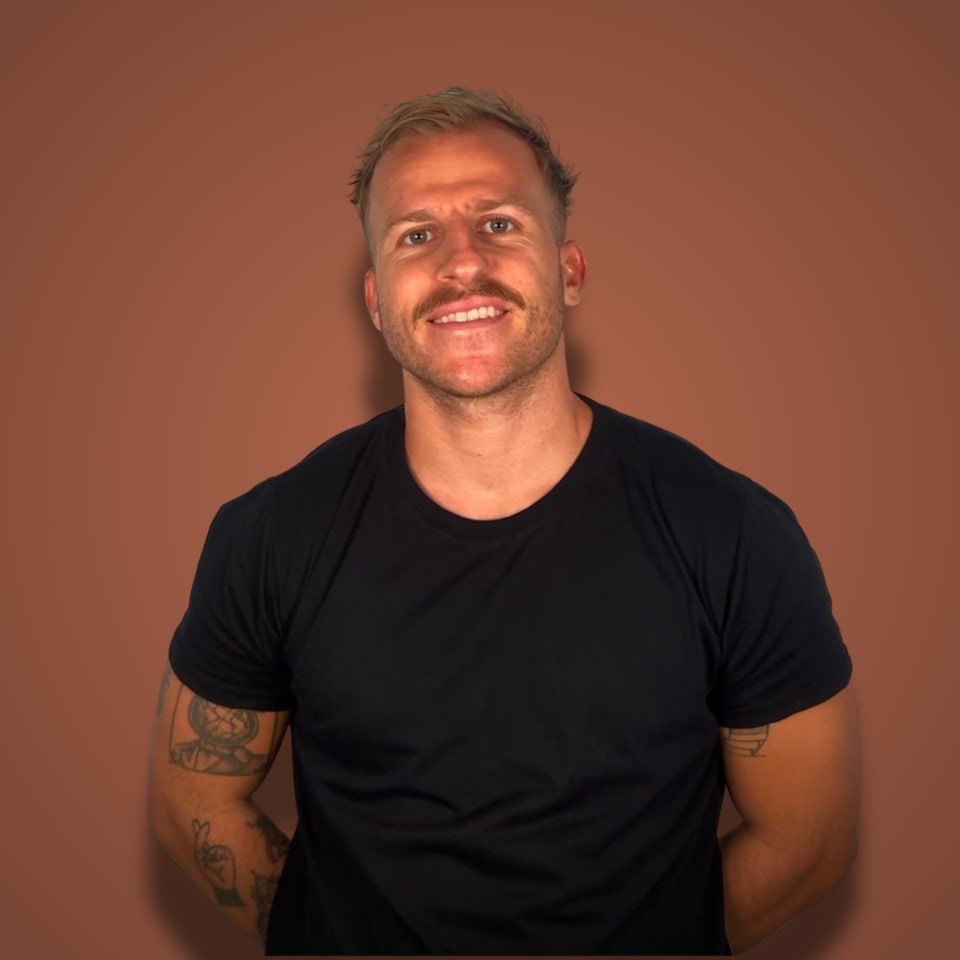
A million users in six months. For her first app.
Then a second app to $250K MRR in eight months. Then two more, still in stealth, already at $200K MRR combined after 90 days.
Nicole is not lucky four times in a row. She runs a UGC creator system: a repeatable machine for sourcing, training, and managing content creators that pumps out 400 to 500 million views a month across TikTok, Instagram, and YouTube Shorts.
Pat Walls found her the same way most people do. She posted "my app hit $3M ARR in 8 months" on X, he DMed her, and she said yes to coming on Starter Story and opening the whole playbook.
I pulled it apart step by step, with the real numbers.
The numbers behind the two apps
Nicole has shipped four apps in two years. She handles everything that isn't code: design, distribution, growth. Her co-founder Aaron builds.
- Glam Up: a glow-up app for women. You upload a selfie, it scans your face, and paying users get color analysis, glow-up guides, makeup looks, and product recommendations. 1 million users in the first 6 months. Around 2 million total downloads. Peak $150K MRR.
- Sprout (previously Prepear AI): a job app for college students and new grads. Swipe right on a job and it auto-applies on the company website for you. Tailored resumes included. $250K MRR eight months in, holding steady around $200K MRR.
- Two stealth apps: three months old, roughly $200K MRR combined and growing. Built on the exact same system.
Every app is hard-paywalled with weekly or monthly subscriptions. She skips freemium tiers and ads entirely.
And the distribution numbers are the part I had to reread. At Glam Up's peak she was doing 40 to 50 million monthly views on TikTok plus around 200 million on Instagram, all faceless UGC. Sprout averaged 100 million monthly views late last year, with one 7-day stretch that hit 400 million views. Right now the portfolio does 400 to 500 million views a month.
At the height of it, she was managing 200+ active creators at the same time.
She started with a TikTok podcast and an existential crisis
Nicole's backstory is short and a little chaotic, which I respect.
Sophomore year of college, existential crisis. She went backpacking solo through Europe. During the trip she started a podcast on TikTok and got 10K followers in her first 10 days.
Most people would ride that into influencer land. She didn't want it.
Instead she moved to SF and took a marketing job at a tech startup. That's where she met Aaron, who was going through YC at the time. They became close friends. When she went back to LA to finish college, they hopped on a call.
The call lasted 10 minutes. They decided to build an app together. That app became Glam Up.
(A 10-minute call. I've spent longer choosing a domain name.)
The idea was borrowed, not invented
Nicole knew nothing about apps at the time. She was headed toward real estate and consulting.
But Aaron's YC batch had founders building consumer apps, and one of them was Umax, the looksmaxing app for guys. Nicole and Aaron looked at it and asked one question: where's the version for women?
There wasn't one. No glow-up app for makeup and skincare existed on the App Store yet. So they built it.
Sprout came from a colder calculation. They wanted out of the beauty space, and they picked college students and post-grads on purpose: higher purchasing power, and a burning problem (getting a job) that people will pay weekly for.
→ Neither idea was original. Both had proven customers and a proven playbook one adjacent niche away.
If you're sitting on zero ideas, this is the move. Find an app that's printing money and ask who else has the same pain in a different wrapper. I broke down the same pattern in 3 apps making $10K+ a month with zero audience.
Step 1: find your viral format, then milk it dry
Nicole's playbook starts before any creator gets hired. First you have to find the one distribution strategy that actually moves for your app.
Her list of things to test:
- Reddit marketing
- Faceless TikTok and Instagram content (slideshows, videos, different CTA variations)
- Face UGC (real creators on camera, or AI UGC)
- Paid ads and influencer marketing, if you have capital
The rule: test each strategy for 2 to 3 weeks at a time, and milk every format inside it before moving on. Faceless content alone contains slideshows, video formats, and a dozen CTA structures. Most founders try one video, get 200 views, and declare TikTok dead.
Nicole keeps iterating inside a category until she finds the winner. Then she stops testing and starts scaling.
Step 2: the UGC creator system
This is the part that took her from viral moments to 500 million views a month. One important rule sits on top of everything: you need to understand your app and your content better than your creators do. Either be your own first UGC creator, or onboard 2 to 10 creators and train them until one goes viral. Only then do you build the machine.
The machine has four parts.
1. Sourcing
Match creators to the format. Talking-head content needs people who are good at yapping. Reaction videos need good facial expressions. Sounds obvious, almost nobody filters for it.
Inbound: application forms posted in UGC group chats, on Instagram, on Reddit, and on UGC recruiting sites. Outbound: VAs doing outreach to micro-influencers all day.
2. Onboarding
Two sub-steps. First, an interview: vibe-check every creator and make sure they take the campaign seriously.
Then the part I'd steal first: Nicole built a full creator course for each app. Typeform intake, video modules walking through the content bank, and a quiz at the end of every module to make sure creators actually finished it.
More than 50% of the creators who complete the course go viral within their first 2 weeks.
Read that again. She turned "going viral" into a training outcome with a pass rate.
3. Management
At 200+ creators you need structure. Nicole's options: manage everyone through Discord chats, run bi-weekly or monthly feedback calls, or promote your top UGC creators into full-time managers who run the rest.
4. Optimize
Once the system is big enough: referral programs so creators recruit creators, and dashboards to track growth and analytics per creator. It's the same muscle as building business automations for any service company. Document the thing that works, then make it run without you.
Her line on all of this stuck with me: it might be luck to get one viral video, but staying viral is not luck. You can always maximize the surface area of your luck.
I wrote a longer tactical breakdown of this exact model in how to market a viral app with UGC if you want the version with scripts and pay structures.
Your app design IS your distribution
One thing Nicole said that most app founders skip: you have to design the app itself to be innately viral.
The welcome screens, the onboarding questions, the scan-your-face moment in Glam Up, the swipe-right-to-apply mechanic in Sprout. Those screens are the content. A creator films a 15-second clip of the app doing its thing, and that clip is the ad.
Onboarding does the second job: priming users to convert. Welcome pages and question flows are designed so that by the time the hard paywall shows up, paying feels like the obvious next step.
Build a boring app and no UGC system on earth will save it. Build a filmable one and every creator you train gets easier.
The stack behind $300K+ a month
Nothing exotic here, which is the point:
- React Native for the apps
- RevenueCat for subscription and revenue tracking
- Superwall for paywalls
- PostHog for analytics
- Attio as the CRM for managing creators
Plus custom portals where needed. The moat is the trained creator network and the course that trains them. Any of us can sign up for these five tools tomorrow.
What I'd steal from Nicole
Pat's producer Gus said it best at the end of the episode: there are levels to this game. A beginner struggles to post one TikTok a week. Nicole has hundreds of people posting for her, with training, quizzes, and dashboards.
That gap is not talent. It's system design. Here's what transfers even if you're a solo SaaS founder at $5K MRR:
→ Test distribution channels in 2-3 week sprints, and exhaust every format inside a channel before calling it dead.
→ Become the best content creator for your product before you hire any. You can't train what you haven't done.
→ Turn your winning content into a course with quizzes. A 50% viral rate from trained creators beats any agency.
→ Make the product itself filmable. If a stranger can't make a 15-second video of your product being impressive, fix that first.
→ When something works, don't get creative. Do it again on the next app. Nicole is on app number four with the same system.
Her final advice on the episode wasn't about growth at all: enjoy the journey instead of the results. There's always a bigger number to chase. The builders who last are the ones who like building.
FAQ
What is a UGC creator system?
A UGC creator system is a repeatable process for sourcing, onboarding, and managing user-generated-content creators who promote your product on TikTok, Instagram, and YouTube. Nicole's version has four parts: sourcing (inbound applications plus VA outreach), onboarding (interview plus a creator course with quizzes), management (Discord and feedback calls), and optimization (referral programs and analytics dashboards). It took her apps to 400-500 million monthly views.
How many views does it take to make $100K a month with a consumer app?
Based on Nicole's numbers: a lot more than most founders think. Glam Up hit peak $150K MRR doing 40-50 million monthly TikTok views plus around 200 million on Instagram. Sprout held $200-250K MRR on roughly 100 million monthly views. Plan for tens of millions of monthly views, not thousands, and a hard paywall to convert them.
How do you get UGC creators to go viral consistently?
Train them. Nicole builds a creator course for each app: a Typeform intake, video modules that walk through the app's content bank and winning formats, and a quiz after every module. More than half the creators who finish the course go viral within two weeks. Before the course, she went viral herself first, so the training is based on proof, not theory.
What apps does Nicole run and what do they make?
Glam Up, a glow-up and beauty analysis app for women (1 million users in 6 months, peak $150K MRR), and Sprout, formerly Prepear AI, a swipe-to-apply job app for students (around $200-250K MRR). She also has two unreleased apps at roughly $200K MRR combined after three months, built with the same playbook.
Want more playbooks like this, straight from the founders?
Every week on the Profitable Founder Podcast I sit down with bootstrapped founders making $100K to $10M a year and pull out the exact systems they used to get there.