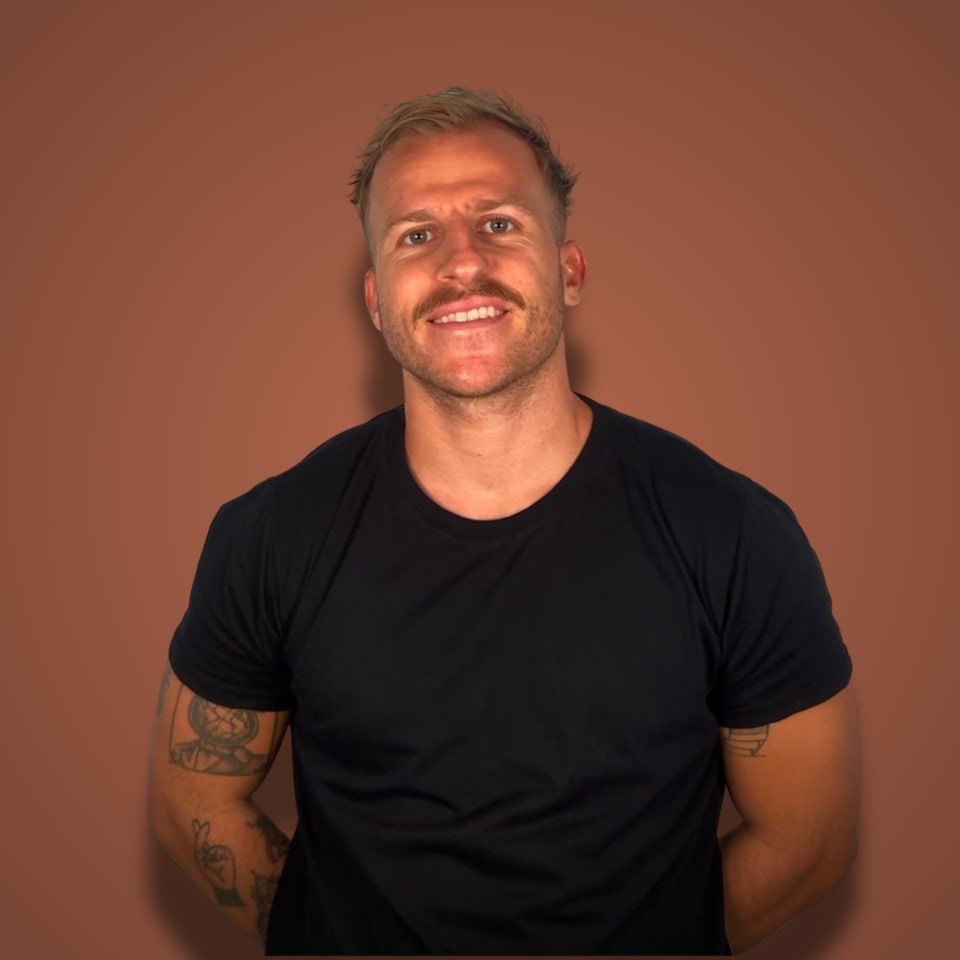
Everyone's hunting for the perfect app idea.
Scrolling X. Watching "10 SaaS ideas" videos. Buying idea databases.
Kyle Fowler did none of that. He looked at the shoebox of sports cards in his closet and asked one question: "what's this card worth?"
That question became CardStock. Six years later, CardStock plus its Pokémon sibling Scanemon pull in $120,000 a month. That's $1.5M a year, split between five friends who travel the world while the apps run.
If you want to turn your hobby into an app, this is the cleanest playbook I've seen on Starter Story in a while. Real numbers, real stack, and a marketing channel most founders still ignore.
Here's the full interview with Pat Walls:
Now let me break down what actually happened, because the story is better than the thumbnail.
The numbers: two apps, one hobby, $120K/month
Kyle didn't build one lucky app. He built the same app twice, for two different card collections.
- CardStock (sports cards): launched in 2019, now at roughly 15,000 active subscriptions, $75K MRR, and about 13,000 downloads a month.
- Scanemon (Pokémon cards): launched in 2025, already at 3,400 subscriptions and $17K MRR, pulling around 16,000 new customers a month. More new customers than CardStock gets, one year in.
Both apps do the same thing: point your phone's camera at a card, the app identifies it, shows you the market value with recent sales, and adds it to a digital collection you can track over time.
That's the whole product. A camera, a card database, and a subscription. There's no AI agent swarm behind it and no sales team.
The team started as three guys in a basement making a few hundred bucks a month. Today it's five guys making $1.5M a year.
The idea was sitting in his closet the whole time
Kyle collected cards since he was a kid. His actual problem: he wanted to catalog his collection, and realized that no matter how well he sorted the physical cards, he had no way to know what he owned unless he was standing in front of the binder.
So he searched the App Store for a card scanner.
Nothing.
That's the whole validation story. He had the problem, he checked if a solution existed, it didn't, so he built one.
His line from the interview stuck with me: if you're not noticing slow, repetitive tasks in your own life, you're not paying attention.
Most founders skip this and go idea-shopping in markets they don't understand. Kyle went the other way: build for the hobby you already know, because you already know what collectors care about (in his case: recent sale prices, not some abstract "estimated value").
→ Your unfair advantage isn't a growth hack. It's the 15 years of context you have in your own hobby.
He taught his friends to code so they wouldn't work at Kohl's
This part doesn't show up in most "how I built a $1M app" stories.
When CardStock started making its first few hundred dollars a month, Kyle's friends were about to take jobs at Kohl's and a restaurant. So he asked them to join and split the revenue three ways.
They barely knew how to code. There was barely any revenue to split.
He taught them anyway, and they spent two to three years grinding on it together.
Stupid decision on paper, right? Give away two thirds of nothing to people who can't code yet.
Six years later that "nothing" is $1.5M a year and he has a team of five people who've been in the trenches with him since day one. Try hiring that loyalty on Upwork.
2019 build vs 2025 build: 6 months vs 1 day
The gap between Kyle's two apps is the clearest before-and-after picture of AI coding I've seen.
CardStock, 2019: Swift and SwiftUI, Core Data for storage, an AWS EC2 server for the card database, RevenueCat for subscriptions. Built with Stack Overflow tabs open. Around six months from idea to finished app (with a three-month gap in the middle where life happened).
Scanemon, 2025: he pointed Cursor's agent at the problem and had an MVP in a day.
One day. For an app now doing $17K MRR.
The current stack behind both apps: Codex, Cursor, Claude, Supabase, Railway, Framer for the website, RevenueCat for payments, Code Rabbit for code review, plus Notion, Slack, Granola and WhisperFlow for the day-to-day.
Kyle's take on building in 2026: most people overestimate how hard apps are to build, and AI just exposes that. Even the monetization setup (he recommends RevenueCat or Superwall) is something an AI agent can mostly walk you through now.
If you've been telling yourself you can't ship because you can't code, that excuse expired in 2025. I wrote a full breakdown on how founders build apps without coding if you want the tactical version.
The marketing engine: TikTok slideshows
Kyle's growth doesn't come from ASO tricks or paid ads. It comes from TikTok slideshows: simple, repeatable image posts that are cheap to produce and easy to test.
His process:
- Come up with a slideshow format
- Find out which versions get views
- Find out which versions convert to downloads
- Double down on the overlap
Then he scales it with Noise, a platform that distributes your slideshow templates to creators. They post, you pay based on the views they get. No negotiating with 50 influencers one by one.
And if you have more time than money? Post the slideshows yourself. Make a few accounts, test formats, see what sticks. That's validation and marketing in one motion.
This rhymes with what Jake did with his push-up alarm app (zero to $50K/month in 4 months on influencer content). I broke that one down here: how Jake built Early to $50K/month.
→ Consumer apps in 2026 live and die on short-form distribution, not on the App Store search box.
Kyle's 4-step playbook if he started over in 2026
Pat asked him for the step-by-step. Here's Kyle's answer, compressed:
Step 1: Keep a problem list. A notes doc on your phone. Every time you catch yourself doing a slow, repetitive task, write it down. Your hobbies are the richest hunting ground because you actually understand the pain.
Step 2: Define the minimal solution. Not the platform. Not the ecosystem. The quickest version that kills the problem.
Step 3: Build it with AI. Cursor, Codex, Claude. If the MVP takes more than a week or two in 2026, you're building too much.
Step 4: Monetize with RevenueCat or Superwall, then test TikTok slideshows. Subscriptions from day one. Distribution from week one.
And his advice to his younger self: people are usually happy to help. Successful founders love talking about how they did it. Don't worry about bothering them (they'll let you know if you are).
That last one is literally why the interview exists. Kyle gained almost nothing from sharing his numbers. He did it anyway.
What I'd steal from Kyle's story
Three things, if you're a founder somewhere between $0 and $50K MRR:
1. Niche down to a collection with a price attached. Cards work because every card has a market value people obsess over. Sneakers, watches, vinyl, stamps, coins: same dynamic. "What's it worth?" is one of the strongest search intents that exists.
2. Clone yourself before someone else does. Scanemon is CardStock with a different card type, and it's growing faster than the original. When you find a model that works, the laziest smart move is running the same play in the adjacent niche.
3. Solve your own problem so losing still pays. Kyle's framing: even if the app never makes a dollar, you solved a problem you actually had. You won either way. That mindset is what lets you ship without the paralysis.
FAQ
What is CardStock and how much money does it make?
CardStock is a sports card scanner app that identifies cards with your phone camera and shows their market value and recent sales. Launched in 2019, it makes about $75K in monthly recurring revenue from roughly 15,000 active subscriptions, with around 13,000 downloads a month.
How did Kyle Fowler validate the idea?
He was the customer. He wanted to catalog his own card collection, searched the App Store for a scanner app, found nothing, and built it. First users came from a single Reddit post announcing the finished app. No landing page tests, no surveys.
How fast can you build an app like this in 2026?
Kyle's first app took about six months in 2019, hand-coded in Swift with Stack Overflow. His second app, Scanemon, had a working MVP in one day in 2025 using Cursor's AI agent. The build is no longer the bottleneck. Distribution is.
What are TikTok slideshows and why do they work for apps?
Slideshows are image-based TikTok posts. They're faster to produce than video, easy to A/B test, and platforms like Noise let you distribute a winning template to many creators and pay based on views. Kyle credits them as the main growth channel for both apps.
Do you need a technical co-founder to copy this playbook?
No. Kyle taught two non-technical friends to code back in 2019, and by 2025 he built an entire MVP in a day with AI tools. With Cursor, Codex or Claude plus RevenueCat for payments, a solo non-technical founder can ship a paid app in weeks.
Want more stories like this?
I interview bootstrapped founders like Kyle every week on the Profitable Founder Podcast. Founders making $100K to $10M a year, walking through their real numbers and how they actually got there.