Discord has over 200 million monthly active users.
Almost none of them came from ads.
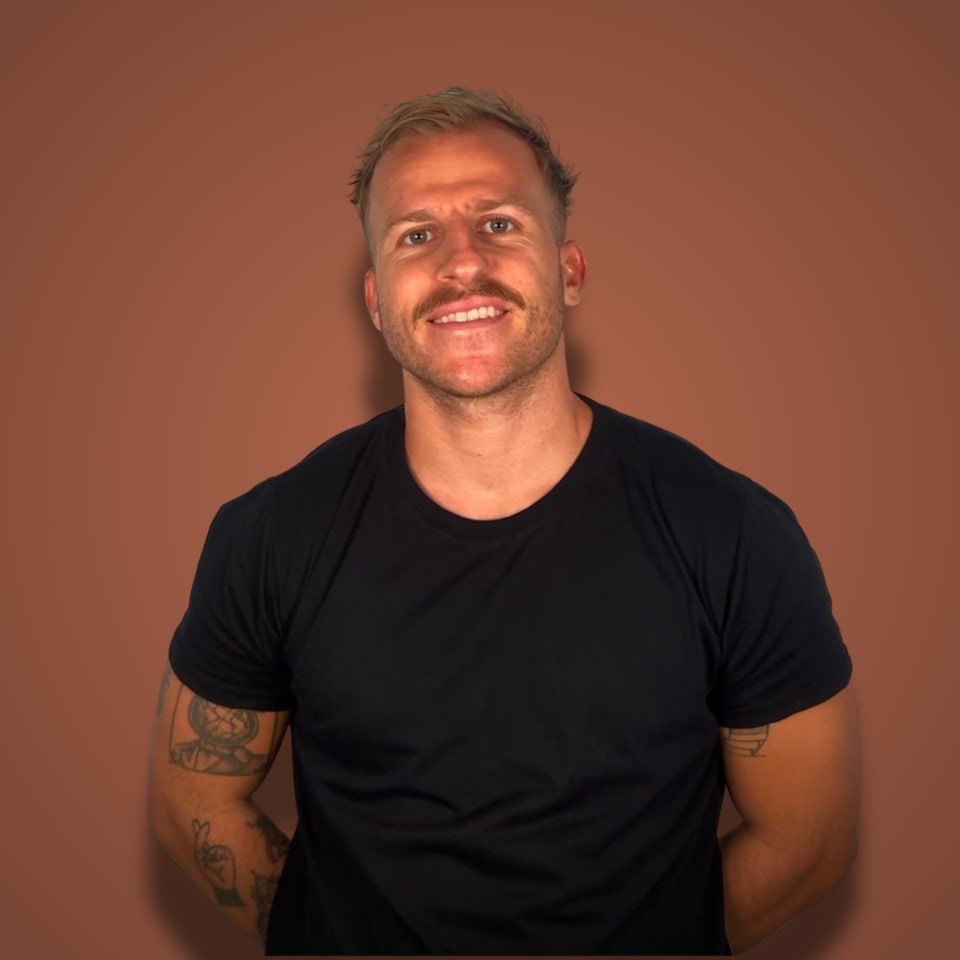
Sergei Sorokin spent 8 years inside the machine. He was Discord's early Head of Product, built Nitro, and built the business model that keeps the whole thing free.
He sat down with Brett Malinowski for almost an hour and walked through the entire Discord growth playbook: how they found their first users manually on Reddit, why they paid the bottom half of Twitch streamers instead of the top 20, and how their real business model started as a glorified donation button.
If you're building anything with a community attached (a SaaS, an app, a paid group), this is one of the best breakdowns I've heard. Here's the full thing, with my notes below.
Find the super node, ignore everyone else
Sergei kept coming back to one idea for the whole hour.
In every group of humans, there's one person who organizes everything. Sergei calls them the super node. In your friend group, it's the one setting up trips and sending the "we're doing this Saturday" message. In gaming, it's the guild leader organizing 40-person raids.
Discord didn't market to gamers. It marketed to that one person.
Here's the part most founders miss: the features that convince the super node are features nobody else will ever touch. Roles, permissions, moderation tools, priority speakers. Complicated stuff. Their members never open any of it.
Doesn't matter. The super node needs to feel the tool was built for them, because they bring the entire group with them.
Sergei points out that Whop runs on the exact same logic: build tools for the creator, and the creator brings their audience. The audience never touches the dashboard. (I broke down that story in how Cameron built Whop.)
→ Stop marketing to "users". Find the one person who brings 50 of them.
Build generic, market specific
Early Discord went game by game. Final Fantasy first (partly because the founders played it), then World of Warcraft, Overwatch, League, Eve Online.
For each game, the team went into the subreddits and forums where guild leaders lived and manually asked them: "Hey, come check out this app. What do you think?"
One person at a time. No ads. No launch.
The discipline was in what they refused to do: the product itself was never game-specific. Their philosophy was to build primitives: general features that solved a specific need but worked everywhere.
Example: Eve Online commanders need to talk over their fleet. So Discord built priority speaker. Generic feature, works for any server. But the marketing said "this is for you, Eve commanders."
Build once, pitch it 20 different ways to 20 different niches.
The streamer sieve that found super nodes on autopilot
Manual Reddit outreach got them off the ground. Around 5 million monthly actives, they needed a machine.
The machine was Twitch.
But not how you'd think. They mostly skipped the top 20 streamers. Instead they built a partner program for mid-tier streamers: help setting up their server, a few exclusive features, some swag, and the Discord partner hoodie to wear on stream. Only the biggest names got paid deals.
Viewers would join their favorite streamer's server to hang out. Then the key move: every user who joined through that funnel got shown an easy button to create their own server.
Most never touched it. But the ones who did were, by definition, super nodes. The whole funnel was a giant sieve for finding the people who organize their friends.
That's the underrated lesson: awareness wasn't the goal. The goal was capturing the right people on the other side of the click and moving them to "created a server with 10 friends in it." If you run a SaaS, this is the same muscle as lead nurturing strategies: the money isn't in the traffic, it's in what you do with it after.
Sponsoring dorm room LAN parties
Below the streamers, Discord went even grittier.
The HypeSquad program: high school and college kids applied on the website, got a swag box and a small budget, and in exchange hosted an event. Usually a LAN party or a League tournament in a dorm.
Then Discord's team showed up at PAX, TwitchCon and Comic-Con with booths, invited the local HypeSquad kids to hang out, and ran promos with them.
Sounds small. It wasn't. It made the exact demographic they wanted (people who play games in high school and college) feel like Discord was their brand, before anyone spent real money on marketing.
You can't buy grassroots. You can sponsor it for the cost of a hoodie.
The one-click invite beat TeamSpeak, not the features
I always assumed Discord beat TeamSpeak because it was free.
Sergei says that's not what users told them.
It was the invite link. TeamSpeak made you copy-paste an IP address into a client. Discord let you send one link; your friend clicks it, types a username, and they're in voice chat with you.
Context makes it obvious: you're between Counter-Strike matches with 40 seconds on the clock to get a random teammate into voice. Paste one link in the game chat. Done.
Sergei says he spent a huge amount of time perfecting that one flow.
→ Your growth loop probably isn't a feature. It's the 40 seconds of friction you removed from an existing behavior.
Nitro started as a buy button, not a business model
This is my favorite part of the interview.
For years, people kept asking "how is Discord free?" So the team built Nitro, at first, just to have an answer. A way for fans to hand them money. Not a donation (weird for a for-profit company), so they attached a few cosmetic perks. $10 a month.
That was it. A buy button.
The real business model they pitched investors was a game store. Get all the gamers on the planet in one app, then sell them games and take a cut, like Steam.
They built it. It took most of the company more than a year.
It flopped. People who could buy a game on Steam bought it on Steam, because that's where their library lived. Nobody wants 10 app stores. Discord was better at a few things, but it wasn't a 10x better Steam, and users didn't want it to be.
So they shut it down (that took another year) and went all-in on the buy button.
The insight that made Nitro work: if you hang out somewhere 12 hours a day, you don't want to look like everyone else. Nearly every Nitro feature is social status: custom emoji, profile decorations, high-res streaming your friends benefit from. Server boosting is literally chipping in with friends to deck out your shared treehouse.
Sergei's line: you're spending money to be selfless. Almost no product is built that way.
→ Your first business model is a guess. Watch what people actually pay for, then rebuild around it.
You can't predict the wave, you can own the surfboard
Every single year of Discord's existence, something blew up that nobody planned for.
The summer of Pokémon Go: hundreds of servers appeared in basically every US city so players could coordinate raids in their neighborhoods.
Crypto. AI. And the biggest one: Midjourney, which ran its entire product as a Discord bot and grew into a server with over 15 million members. The bot functionality Midjourney used had existed for 8 years before Midjourney did.
Discord's servers were hard-capped at 1 million members. Midjourney kept smashing the cap, so both infrastructure teams worked together to raise it.
Discord never predicted any of these. What they did instead: build primitives and keep invites frictionless, so that whenever a wave showed up, Discord was already the easiest place to ride it.
Same reason the best apps today grow inside platforms instead of fighting for attention outside them. (More on that in how to grow an app with zero audience.)
Ship the API, let the community build the rest
Discord exposed its API early with zero documentation and zero promotion.
People found it anyway. A community server called Discord Developers sprung up, libraries got built, and thousands of bots appeared. The person who created that server later joined Discord as one of its earliest engineers.
Sergei's take: a team of 20 could never build all the functionality the community needed. And they didn't have to.
Even flagship features came from watching users hack things together. Go Live (screen sharing) exists because people were streaming on Twitch just to show their friends their screen while talking on Discord. Invite competitions, server rules, engagement games: all invented by moderators, not the company.
The pattern: watch the behavior, then build the paved road for it.
The AI take: narrow wins, general is a party trick
Discord built an AI chatbot called Clyde, in collaboration with OpenAI, before most companies had shipped anything.
Then they killed it.
It was hilarious for about a week, then it went stale, then it got cringe. Worse: servers using Clyde saw people spend less time actually talking to their friends. It ate the human connection Discord exists for. So they shut it down.
What did work: narrow AI. An LLM answering support tickets could look up obscure hardware conflicts no human on the team could, and users rated its answers higher than the support team's.
An AI moderator prototype, though? One server had a rule "we don't talk about cats." Good luck, general-purpose agent.
→ Boring, narrow, repeatable use cases with real reasoning inside them. That's where AI pays off today.
Steal this playbook
The Discord growth playbook, compressed:
→ Market to the super node, the one person who brings the group.
→ Build generic primitives, market them niche by niche.
→ Turn your funnel into a sieve that surfaces organizers, not just signups.
→ Kill the 40 seconds of friction in an existing behavior.
→ Treat your first business model as a guess. Nitro was a buy button for 2 years.
→ Ship the API. Watch the hacks. Pave the roads people are already walking.
None of this needed an ad budget. It needed 8 years of obsessive attention to how groups of people actually behave.
I interview bootstrapped founders every week about exactly this kind of playbook: distribution, pricing, and getting to $100K MRR without funding. Listen to the Profitable Founder Podcast here.
FAQ
Who is Sergei Sorokin?
Sergei Sorokin spent 8 years at Discord as its early Head of Product. He built Nitro, Discord's premium subscription, and shaped the business model behind it. He's since left Discord and now advises Whop, the marketplace where creators sell access to paid communities.
How did Discord get its first users?
Manually. The team picked specific games (Final Fantasy was first), went into the subreddits and forums where guild leaders hung out, and asked them one by one to try the app. The product stayed general-purpose, but every pitch was tailored to one game's specific pain.
How does Discord make money with no ads?
Nitro, the $10/month premium subscription, plus server boosting. Almost everything in Nitro is social: custom emoji, profile decorations, high-quality streaming. It works because people who spend hours a day somewhere will pay to stand out there. The original plan, a Steam-style game store, was built for over a year and then shut down.
Why did Midjourney launch inside Discord instead of its own app?
Because generating images in public is a loop. You see someone's prompt, copy it, riff on it, and your friends react in the same channel. Sergei compares the Midjourney server to a Paris café full of artists drawing together. A plain website UI kills that. The server grew past 15 million members, and Discord had to re-architect its infrastructure to support it.
What's the fastest lesson a SaaS founder can steal from Discord?
Find your super node. One organizer brings 50 users with them. Build for that person, remove every second of friction from their invite flow, and design your funnel to surface more people like them.