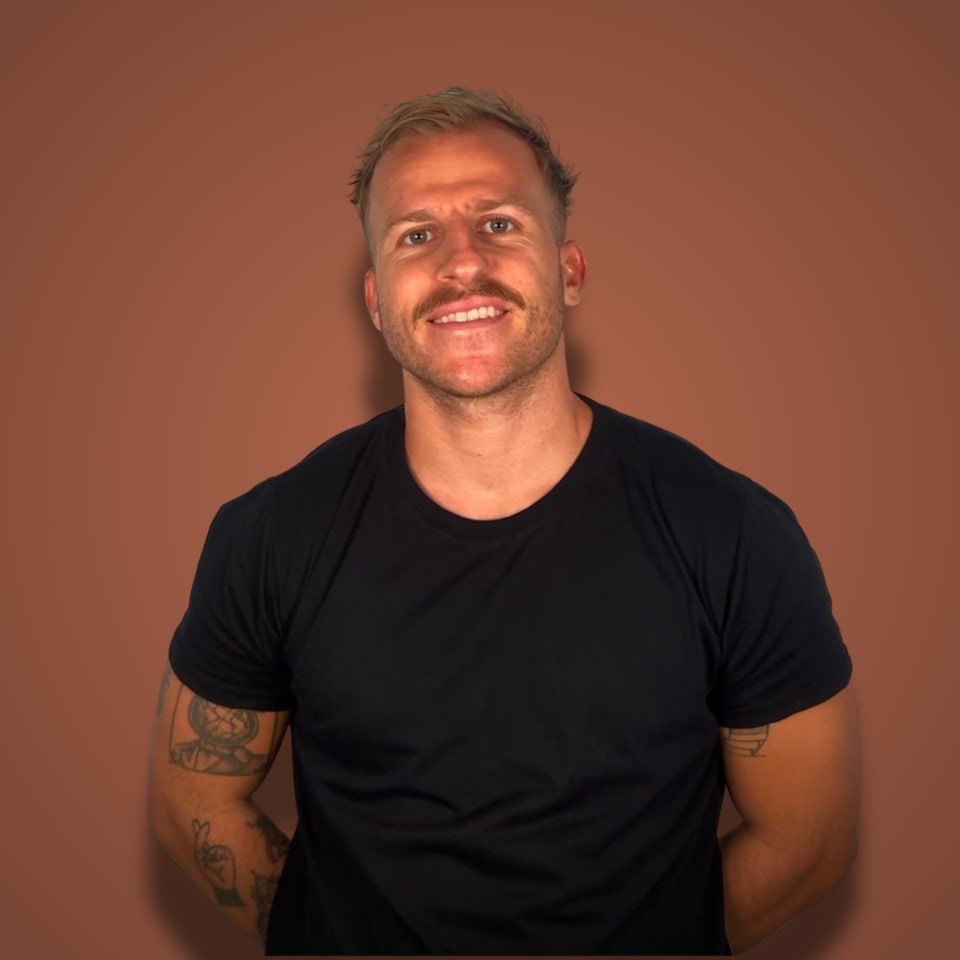
Sam Parr's companies generate over $10 million a year.
His big productivity secret? He gets one or two things done a day.
That's it. Not a 4:30am cold plunge into a 14-step morning stack. One or two things, picked carefully, done with full force.
Starter Story just published a "How I Work" episode where Sam walks through his entire day: the phone he physically locks in a box, the "zebra calendar" he uses to brute-force companies from zero to $10M, and why he reads five to ten books on serial killers before switching topics.
I took notes so you don't have to. Here's the full breakdown, with the video.
Who Sam Parr is (in case you've been living under a rock)
Quick context, because his routine only makes sense once you know the track record:
- Built The Hustle, a business newsletter, and sold it to HubSpot in 2021 (the price was never officially disclosed, reports put it around $27 million)
- Co-hosts My First Million with Shaan Puri, one of the biggest business podcasts in the world
- Founded Hampton, a vetted community for founders doing $3M+ in revenue, at $8,500 a year (I ranked 7 Hampton alternatives this morning, funny timing)
- Runs Sam's List and a couple of other projects on the side
He says the combined revenue across his companies is north of $10 million a year.
And here's the line from the video that got me: when he started the newsletter, successful people would ask him "okay, but what do you actually DO?" His friends asked if he had a real job.
A newsletter looked silly in 2015. A podcast looked silly in 2019. Cool things always look silly at first. Remember that next time someone laughs at what you're building.
The morning: gym first, phone locked in a box
Sam wakes up between 6:00 and 6:30.
Black Nespresso coffee with whole milk, then he's at the gym within 20 to 30 minutes of waking up. Weights or sprints, 6 days a week. Rest days are stretching days.
And no matter what: breakfast with his kids.
Now the part I actually want to talk about. Sam doesn't sleep with his phone in the bedroom, and he doesn't touch it until after his workout.
Not because he has iron discipline. The opposite. He openly admits he's addicted to his phone.
His first solution was a KitchenAid container with a timer lock. One day he wanted his phone so badly he broke the container to get it out. (A grown man, running $10M/year in companies, smashing tupperware to check Twitter. I feel seen.)
He tested Opal, then landed on Brick, a physical device that locks apps until you tap your phone against it. He's been on it for over a year.
The lesson isn't "buy a Brick". The lesson is: he didn't try to out-willpower his addiction. He built a physical system that makes the bad thing hard. More on systems in a second.
The 5-year journal that calls his bluff
Sam keeps a 5-year diary. One entry a day, and each page shows you what you wrote on that exact day one year ago, two years ago, and so on.
Here's why it matters. Several times he's caught himself complaining about something, looked one line up, and seen the exact same complaint from a year earlier. Same day, same problem, zero progress.
His conclusion is brutal and correct: if you're complaining about your fitness but you haven't hired a trainer, you're not actually trying to change anything. You're just narrating.
I've been journaling on and off for years and this reframe hit me. The journal isn't for reflection. It's for catching yourself lying about what you're "working on".
One or two things a day (seriously, that's the whole system)
Sam calls himself lazy. Says he procrastinates constantly and only ships when there's a deadline and a specific, written-down task.
So every morning he does active planning:
→ Write down the handful of things that need to happen (say, "come up with 3 podcast ideas")
→ Put each one on the calendar with an actual time slot
→ Accept that only one or two of them will really get done
That last point took him years to learn. One or two meaningful things a day. That's the realistic max for a founder, and pretending otherwise just produces a long list of half-done tasks.
I run my days the same way now: one needle-mover before anything else. Some days the needle-mover is a 4-hour recording block. Some days it's one hard email.
The zebra calendar: how he goes from 0 to $10M
This is the most tactical part of the video.
For every company Sam has built, the early phase looks identical. He calls it the zebra calendar: 15-minute customer meetings with 5-minute breaks in between, stacked back to back all day. Stripe, gap, stripe, gap. A zebra.
During this phase he does everything himself. Builds the website. Writes all the copy. Does the design. Talks to every customer personally.
His words: from 0 to $10 million, the job is just "get more customers and improve the product". He doesn't sit around strategizing. It's "what's next? Forward. What's next? Forward."
Two things I'd add from my own runs at this:
→ The zebra calendar only compounds if you follow up. Twenty customer calls a day mean nothing if the leads go cold in your inbox. This is where a real lead nurturing system pays for itself: every conversation gets a next step, automatically.
→ The founder-does-everything phase has an expiry date. Sam is explicit about this too: once a company passes $5M to $10M, you hire, you delegate, and you stop touching the machine.
His trick for keeping his hands off a working business is honestly genius: he gives himself a "sandbox". A small side project he's allowed to play with, so he doesn't break the thing that's compounding. That's what Sam's List is for him.
Make more pots (the study every founder should know)
Sam brings up a famous pottery study, and it maps perfectly onto bootstrapping.
Two classes. One is graded on quantity: make as many pots as possible. The other is graded on quality: make one perfect pot.
The quantity class ended up happier AND made better pots. All those reps taught them things the perfectionists never learned, because the perfectionists spent the semester theorizing about the perfect pot.
Sam's version for founders: continuous action is how you get from zero to your first few million. Ship the imperfect thing, learn from contact with reality, ship again.
Every founder I've interviewed who broke $1M followed the quantity path. None of them nailed it on attempt one.
Ikigai, but only if you've earned it
Sam splits founders into two groups, and I think this framework alone is worth the whole video.
Group 1: you haven't won yet. No exits, no real wins, still building momentum. His advice: don't overthink project selection. Start almost anything, get small wins, adjust. You need proof you can finish things more than you need the perfect idea.
Group 2: you have a track record. You've proven you can hit goals. Now you've earned the right to be picky, and he uses ikigai to choose: the overlap of what the world wants, what it will pay for, what you're good at, and what you love.
Most founder advice fails because it gives Group 2 advice to Group 1 people. Beginners agonizing over idea selection like they're allocating a fortune, when what they need is reps. Make more pots.
Podcast days, and the Claude skill doing his research
Sam publishes podcast episodes every Monday and Wednesday.
His prep stack made me laugh because it's basically my stack. He built a Claude skill that reads his calendar, sees who the guest is that day, and automatically researches them. He reads the research brief, sometimes goes deeper with books on the guest's topic, and does his final cram 10 minutes before recording.
(He also schedules a bathroom break at 11:50 before every noon recording. Elite operational detail.)
After recording, he doesn't jump into the next task. He wanders the office and interrogates whoever looks off: "You seem unhappy. What's the problem? Okay, that's a real problem. Let's solve it."
They had to put frosted glass on the office windows because his wandering was creeping people out. He owns it: he's obsessed, and he can't sleep knowing something is broken. His observation from talking to thousands of founders is that the successful ones share exactly this trait: a tremendous sense of urgency.
If you want more of that energy, I ranked the 8 best podcasts like My First Million a few days ago, and Sam's show is obviously the benchmark.
Evenings: eBay, Claude therapy, and book "semesters"
Sam is home between 5:30 and 6:00. Sushi with the kids, sometimes music during dinner. He puts his daughter to bed between 8:00 and 8:30 and calls it his favorite part of the day.
Then it gets weird:
- 8:30 to 10:00: eBay treasure hunting, and while pages load, he talks to Claude. His words: "it's like therapy time." He asks it questions about life.
- 10:00 to 10:45: reading in what he calls semesters. Five to ten books on one topic before switching. Current semester: serial killers. Previous ones: shipwrecks, the Kennedy family, the history of New York.
- Around 10:30: sneaks into the kitchen for an Oreo. His rule: calories don't count after 10pm.
No revenue dashboard before bed, no Slack. An Oreo and a serial killer book.
What I'm stealing from Sam's routine
The meta-lesson of the whole video is one line he says near the end: "Whether you think you can or you think you can't, you're probably right."
He genuinely believes enthusiasm is a business asset. If he's excited enough, the energy spreads, and the people around him do the work to make the thing real.
My takeaways, in order of how fast you can copy them:
→ Get the phone out of the bedroom tonight. Don't rely on willpower, make it physical.
→ Plan one or two real things per day, on the calendar, with time slots. Nothing else counts.
→ In the 0-to-traction phase, run the zebra calendar. Customer conversations stacked back to back, follow-up systems behind them.
→ Make more pots. Quantity of shipped work beats quality of imagined work, every time.
→ Journal so you can catch yourself complaining about the same thing twice. Then build the system or shut up about it.
FAQ
Who is Sam Parr?
Sam Parr is a serial entrepreneur. He founded The Hustle, a business newsletter he sold to HubSpot in 2021, co-hosts the My First Million podcast with Shaan Puri, and founded Hampton, a private community for high-revenue founders. In the Starter Story video above, he says his companies generate over $10 million a year combined.
What is Sam Parr's daily routine?
Up between 6:00 and 6:30, gym within 30 minutes, 6 days a week. Breakfast with his kids, phone locked in a Brick until after the workout. Morning planning with one or two priority tasks on the calendar. Podcast recording and office walkarounds during the day. Home by 6:00pm, daughter to bed by 8:30, eBay and Claude from 8:30 to 10:00, reading until 10:45, bed.
What is a zebra calendar?
Sam's name for his early-stage schedule: 15-minute customer meetings separated by 5-minute breaks, stacked all day, so the calendar looks striped like a zebra. He runs this pattern at every company from zero until roughly $10M in revenue, doing sales, product, copy, and design himself before delegating.
How much did The Hustle sell for?
HubSpot acquired The Hustle in February 2021. The price was never officially announced, but reporting at the time put it at roughly $27 million. The deal included the newsletter, Trends, and the My First Million podcast.
What does Sam Parr use to stop checking his phone?
A Brick, a small physical device that locks selected apps until you physically tap your phone on it. He tried a KitchenAid container with a timer first (he broke it to get his phone out) and tested the Opal app before settling on Brick over a year ago.
Steal routines like this every week
I interview bootstrapped SaaS founders making $100K to $10M a year and break down exactly how they work: their schedules, their growth playbooks, their real numbers. No fluff, no gurus.