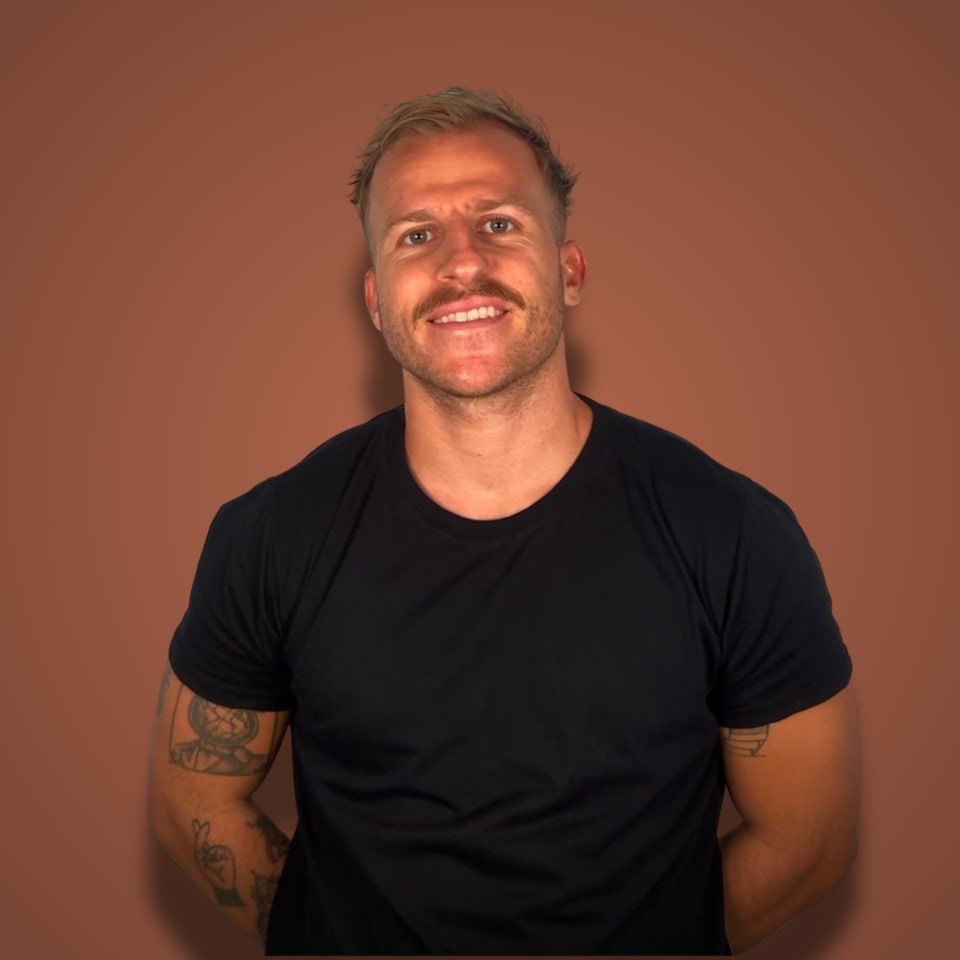
Umar Ashraf didn't know what MRR meant when he decided to start a software company.
Not exaggerating. He'd never heard the term.
Today TradeZella, his trading journal platform, does over seven figures a month. A non technical founder who couldn't write a line of code built a multi-eight-figure ARR business, and he did it after burning six figures on an agency that shipped him garbage.
Brett Malinowski sat down with him and pulled the whole story out. I took notes so you don't have to. Watch the full interview here:
"Built by a developer, not a trader"
Umar was a day trader first. A good one.
Back in 2017 he was using the existing trading journal tools and they all had the same problem: they were built by developers, not traders. The features a real trader needs just weren't there.
So he did what most of us do. He emailed the companies. "Hey, can you guys add this? Can you guys do this?"
They never listened.
By the end of 2019 he'd had enough of waiting. His exact words: "Screw it. I'm just going to do it. What's the worst that's going to happen? I'm going to lose money. Oh well. I'd rather be 80 and say I tried this and failed than to be like, what if?"
That's the origin story of half the best SaaS companies I've covered. A frustrated power user gets ignored, then builds the thing themselves. Umar knew exactly how a trader would track a trade because he was the customer.
The six-figure agency disaster
Here's where it gets painful.
Early 2020, Umar hired a friend's dev agency to build the MVP. Set scope of work, six-figure price tag, delivery date of September 2020.
They delivered a really shitty product. Slow, broken, and because it was a locked scope, he was stuck with it.
So he did something smart that most non-technical founders skip: he hired six independent developers to audit the codebase.
All six came back with the same verdict. Massive technical debt, written poorly, impossible to scale. Add more layers on top of this and you're going to have serious problems.
Six figures, gone. No usable product.
For the next six or seven months he just... learned. Interviews with developers, understanding code, understanding processes. Not building. Learning what questions to ask so he could tell the great people from the pretenders.
Early 2021: no revenue, no end in sight
This is the part nobody puts in the highlight reel.
By early 2021, Umar seriously considered killing the project. He hadn't made a single dollar from it. He was burning money and time with no end in sight.
"When you're in the middle of chaos, everything is burning and you're like, well, where do I see the end of the tunnel? And I couldn't see it."
If someone had told him "in two more years you'll see it," fine. But nobody could. That's the loneliest stretch of building anything: money going out, nothing coming in, zero proof it'll ever work.
I've been there. Most founders I interview on the podcast have been there. The ones who win are usually just the ones who didn't quit in that exact window.
The agency that built Calendly saved the project
In 2021 Umar connected with Yaroslav, a friend who ran a dev agency. Not just any agency: the same one that built Calendly from inception, back when Calendly was just an idea, all the way to a $3 billion company.
(Side note from the interview: Calendly's founder offered that agency owner equity early on. He turned it down. His $180,000 would have become $450 million. He still thinks about it. How could you not?)
Umar worked out a partnership and got one engineer from that team, a guy named Alex. They scrapped the 2020 version entirely. Summer 2021: three to four months of refactoring. From 2022 onward, real building started.
TradeZella launched around the same time as Beehiiv, and Umar openly studies Tyler Denk's playbook: speed of execution, shipping cadence, keeping a remote team aligned.
Team size today? Seven developers. That's it. A few months before the interview it was three or four.
Multi-eight-figure ARR with seven devs. Most of us dramatically overestimate the team we need.
One video a week to 700,000 subscribers
Now the growth engine, because this is the part you can actually steal.
TradeZella got to seven figures a month with no paid ads. Distribution was word of mouth, a few hand-picked partners, and Umar's own content.
The numbers: in May 2023 his YouTube channel sat at 180,000 subscribers. He decided to take content seriously, specifically to grow TradeZella. By December he was at 700,000.
→ 500K subscribers added in about 7 months.
And the time investment is the shocking part. He spent 4 to 10 hours a week on it. One video per week.
The system: make one solid YouTube video, then cut it up and mass-distribute the clips across TikTok, Instagram, and Shorts, all pushing viewers back to the one channel. He's never filmed anything just for Reels or TikTok. Multiple satellite pages with hundreds of thousands of followers, all fed by one weekly recording session. That repurposing pipeline is exactly the kind of thing you can systemize once and run forever (TwiLead has a solid breakdown of business automations if you want to go down that rabbit hole).
His videos weren't even hard sells. He'd walk through his own trades inside TradeZella. The product demo WAS the content. Recording time for a 20-minute trade recap: about 22 minutes.
This is the same reason I tell every founder in my orbit to build an audience while they build the product. It's the highest-trust free distribution that exists, and it compounds. I broke down my own version of this in my build in public strategy piece.
The creator approach to SaaS
Umar calls his model "the creator approach to SaaS" and it goes way past posting videos.
Pricing first. Top tier is $49/month and it has never gone up. Since day one, every new feature (journaling, backtesting, replay, education, community) ships into the same price. No surprise tier jumps, no "contact sales."
The education is bundled into the subscription today, but the plan is to eventually make it free. Pure lead magnet. Want to learn trading? Sign up to TradeZella.
Then there's the sharing loop. Users post their monthly recaps on Twitter: calendars, win rates, stats. TradeZella even built a feature to hide your P&L and show your R-multiple instead, so people share skill instead of vanity numbers. Same cultural loop as Beehiiv users screenshotting their newsletter growth.
Affiliates? Hand-picked only. No open program. Chosen partners get recurring revenue, and the brand stays protected.
And feature priorities come straight from user interviews, surfacing pain points Umar never had himself. (This is the muscle I covered in customer discovery calls.)
One mission holds it together: help retail traders become profitable. Period. His metric isn't a revenue target. "Build a good product, let it flywheel."
And because the business prints cash, he can fund high six figures a month of burn indefinitely if a competitor ever forces a spending war. Being profitable means he never has to blink first.
What you can steal from Umar's playbook
You're probably not building for day traders. Doesn't matter. The transferable parts:
→ Being the customer beats knowing how to code. Umar's edge was knowing exactly what traders needed. You can rent engineering. You can't rent domain obsession.
→ Audit before you scale. Six independent code reviews saved him from building a company on rotten foundations. Cheap insurance.
→ The dark stretch is normal. A year of burning money with zero revenue almost killed the project that now does eight figures. Plan your runway AND your psychology for it.
→ One great engineer changes everything. Not ten. One person who's seen scale, plus a founder who owns the problem.
→ One piece of content, distributed everywhere. 4 to 10 hours a week, one video, cut into clips. 500K subs in 7 months. Your excuse is gone.
→ Charge simply, ship constantly. $49/month, never raised, features keep stacking. Retention takes care of itself when the value keeps compounding into the same price.
FAQ
Can a non technical founder really build a SaaS company?
Yes, and TradeZella is proof at scale. Umar Ashraf had zero coding background and built a multi-eight-figure ARR platform. The catch: he was a true domain expert, he paid painful tuition (a six-figure failed MVP), and he spent months learning enough about development to hire and judge technical talent. You can skip learning to code. You can't skip getting deeply involved.
How much did it cost to build TradeZella?
The first agency-built MVP cost six figures and got scrapped entirely. The rebuild came through a partnership with the agency behind Calendly, starting with a single engineer refactoring for 3 to 4 months in summer 2021. Real feature development ran from 2022 on with a team that only recently grew from 4 to 7 developers.
How did TradeZella get customers without paid ads?
Three channels: Umar's own content (YouTube grew from 180K to 700K subscribers between May and December 2023 on one video a week), hand-picked affiliate partners paid on recurring revenue, and users publicly sharing their trading recaps and stats from inside the product. No ad spend, no outbound.
What is TradeZella's pricing model?
One simple subscription, topping out at $49/month, unchanged since launch. Every new feature ships into the existing price: journaling, backtesting, trade replay, analytics, education, and community. The plan is to eventually make the education content a free lead magnet for the paid platform.
Steal playbooks like this every week
I interview bootstrapped SaaS founders doing $100K to $10M a year and pull out exactly this kind of tactical detail: real numbers, real mistakes, real systems.
No fluff, founder to founder.