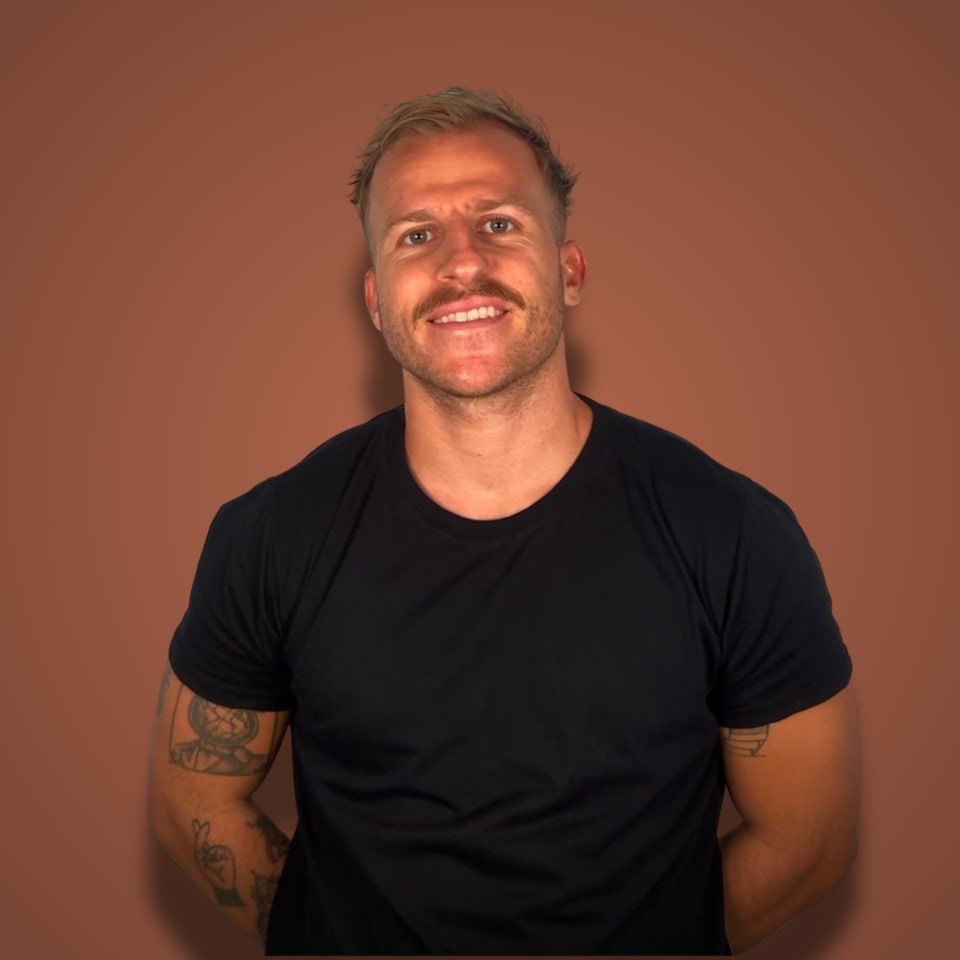
16 followers. One post on X. And $1M ARR in 117 days.
That's Yasser. He built Chatbase from $0 to $1M in revenue in 117 days, and today it does $8M ARR. All of it bootstrapped.
Before Chatbase he built a side project called Rate My Courses (still gets 50,000 monthly visitors with zero input from him) and did internships at Tesla and Meta. Then he sat down with a tiny X account, wrote a demo post, and hit publish.
He wasn't surprised when it went viral. He expected it.
I sat down with Yasser on the Profitable Founder Podcast. Here's the full playbook.
The 18 months nobody talks about
Everyone zooms in on the viral moment. Yasser wanted to talk about the gap before it.
His first real product, Rate My Courses, took 18 months from buying the domain to launch. He was at university, doing internships, building on the side. It was slow.
What did the big companies teach him? How to make a manager happy and get promoted. That's it.
Everything he actually uses he learned building from scratch. How to get people to open a site. How to push them through a funnel. (His words: "if you want to be good at building startups, you should try to build a startup.")
Then a year and a half of tinkering with side projects. And then the idea for Chatbase showed up.
The post with 16 followers
He sat in front of his laptop with 16 followers and wrote the launch post.
And here's the part that sounds delusional: he expected traction. A random account talking about a random side project. It made no sense. But he'd watched his timeline. He knew people wanted this. The demo made sense to him.
So when people started commenting, opening the site, trying it from the very first post, it didn't feel shocking. It felt like validation of something he already believed.
Where does that belief come from? Smaller wins that compound.
→ You say you'll do something, then you do it.
→ You prove to yourself (not to others) that you get things done.
→ That stacks into stronger self-belief.
→ Stronger belief lets you attempt bigger things, which work, which feeds the loop.
The post went viral. The users poured in. Chatbase hit roughly $63K MRR in a few months.
How he survived the first six months
This was the hardest stretch of the whole thing. He knew the opportunity was rare, and that's exactly what made it brutal.
Customers calling about bugs on an early platform. Investors sliding in because he built in public. Competitors cloning him because he built in public. And his first time ever hiring someone, which ate days of interviews.
His honest answer for how he got through it? There wasn't a clever system.
→ Get as much done in a day as humanly possible.
→ Survive to the next day.
→ Put out the fires that show up.
→ Repeat until you build enough structure (or a team) to finally breathe.
Sleep, vegetables, the gym? None of it. No balance for six straight months. (Even now, honestly.)
His take: if you want to maximize your chances of winning, you have to put in the work others won't. That's the whole differentiator.
And at $1M ARR, did he think about selling and retiring? He never seriously considered it. He could see the steps clearly, so why stop something he knew was going to get bigger?
That clarity matters more than people think. The worst place a founder can be isn't "it's not working." It's "I have no idea what to do." That's how you burn out, pouring effort into directions that may not even be right.
The product that sells itself
Yasser is obsessed with product. The landing page is fluid, the experience is clean, and that's on purpose.
Because his main growth engine was PLG (product-led growth). No army of sales reps cold-calling companies. The product onboards people, teaches them, and grows on its own.
That forces you to make the experience genuinely intuitive, because there's nobody to hold the customer's hand. And that discipline pays off later when you move upmarket, exactly how Stripe and Vercel run a strong self-serve flow while also serving the biggest organizations on earth.
How do you build a product that good? Half science, half thinking.
→ Get on calls. Tell people to share their screen. Watch them use it. He spots 10 fixable things they'd never mention.
→ Use PostHog or Amplitude, session recordings, behavior analytics.
→ But first, sit down and think from first principles: who is the customer, what do they need, what does a great experience actually look like.
That last step gets skipped the most. You can live in the data all day, but the data needs a good starting point, and that only comes from thinking.
The shortcut: convince one, reach a thousand
Here's the tactic I loved most. Instead of going door to door to millions of e-commerce stores, Yasser took the big door: Shopify.
The Chatbase x Shopify launch in February went viral. One partnership, and suddenly the whole Shopify community is a customer base. Word of mouth started looping inside it, even though they barely pushed the launch.
Same play with Vercel. You can buy Chatbase straight from the Vercel dashboard. Work with one company, get access to all of their customers.
His framing: "you're doing sales to one person and then you get access to 1,000."
This pairs with how he picks markets. Chatbase has a massive TAM, so instead of vague "AI agent for support" messaging, he runs mini go-to-market pods, one for SaaS, one for hospitality, one for e-commerce. Find a vertical that works, double down, keep experimenting on the side. If you're picking which corner to own, this is the same logic behind learning how to build a micro-SaaS instead of chasing everyone at once.
Virality first, stability second
Early on, influencer marketing was wild. One LinkedIn post, a small screen recording, 5,000 likes, and Stripe would jump by $5K MRR. There was nothing else to explain it.
That specific magic faded as the AI space got crowded. It still works, but now it takes real effort and content that actually converts.
So how does Yasser sequence channels for a B2B SaaS? Organic content (LinkedIn, X) is the spark. It doesn't just bring users, it makes every other channel work better.
→ Cold emails land warmer because they've seen your content.
→ Paid ads convert better because they know your brand.
→ SEO compounds because people visit, stay, and link to you.
But you can't lean on virality forever. So: virality first, then stability through SEO, branding, paid ads, and word of mouth. The organic grind is what makes the reliable channels turn on.
I interview founders like this every week → Watch the Podcast
Hiring, agencies, and embracing boredom
On agencies, Yasser learned the hard way. He handed them things critical to growth, and that was a mistake. Most were not good.
His rule now: anything critical, do it internally, even if you don't know how. Jump in the deep end. Your team will care more than any agency, and caring beats experience. Agencies are for experiments and side things only.
On hiring, his filter is brutal and simple: if you hire someone who doesn't 100% want the job, it's a bad hire. The real skill is finding undiscovered people who'll be the best at what they do in a few years, and being the kind of founder they'd want to work for.
And the advice that stuck with me most: embrace boredom.
Founders are always busy, always racing from one fire to the next. But the actual job is clarity, the north star, the new ideas, the first-principles thinking. You can't schedule that into a calendar block.
You get it on a walk. Because you've been living this 24/7 for months, your mind wanders straight into it, and that's where the best ideas come from.
How he killed churn (the unsexy answer)
Yasser dragged churn from 27% down to 8.8%, with a goal of 3%. The lesson? It's boring.
60 to 70% of reducing churn is just building a product people get real value from. If it works, they don't cancel. Full stop.
The rest is small: revenue recovery, handling cards correctly, cancellation flow tweaks. He calls those insignificant compared to the product itself.
Which is good news. Your job narrows to one thing: make something people don't want to leave.
What he'd tell you if you're just starting
If you're sneaking into this podcast without a product yet, Yasser won't hand you the winning idea. He doesn't believe in it.
Start building something, even if you don't think it's great. By being in the space and trying things, the real idea pulls you toward it. That's how he found Chatbase. It's almost never the first version.
And his vision now? Build something generational. He thinks he's already past the hardest part, going from zero to here. He doesn't know if he'll hit $100M ARR in two or three years, but he thinks it's likely "as long as I have the execution."
Frequently Asked Questions
Who founded Chatbase?
Chatbase was founded by Yasser. Before it, he built Rate My Courses (which still pulls 50,000 monthly visitors) and did internships at Tesla and Meta. He launched Chatbase from an X account with just 16 followers, and a single viral post kicked off its growth.
How much revenue does Chatbase make?
Chatbase reached $1M ARR in 117 days and roughly $63K MRR within the first few months. Today it does around $8M ARR, entirely bootstrapped. Yasser's stated goal is to push toward $100M ARR over the next two to three years.
How did Chatbase grow so fast?
Chatbase grew through product-led growth and organic content on X and LinkedIn. One viral post could add $5K MRR. Yasser then layered on channel partnerships like Shopify and Vercel, convincing one platform to unlock access to thousands of its customers at once.
The lesson: build something now, let the product sell itself, and let the winning idea pull you toward it.