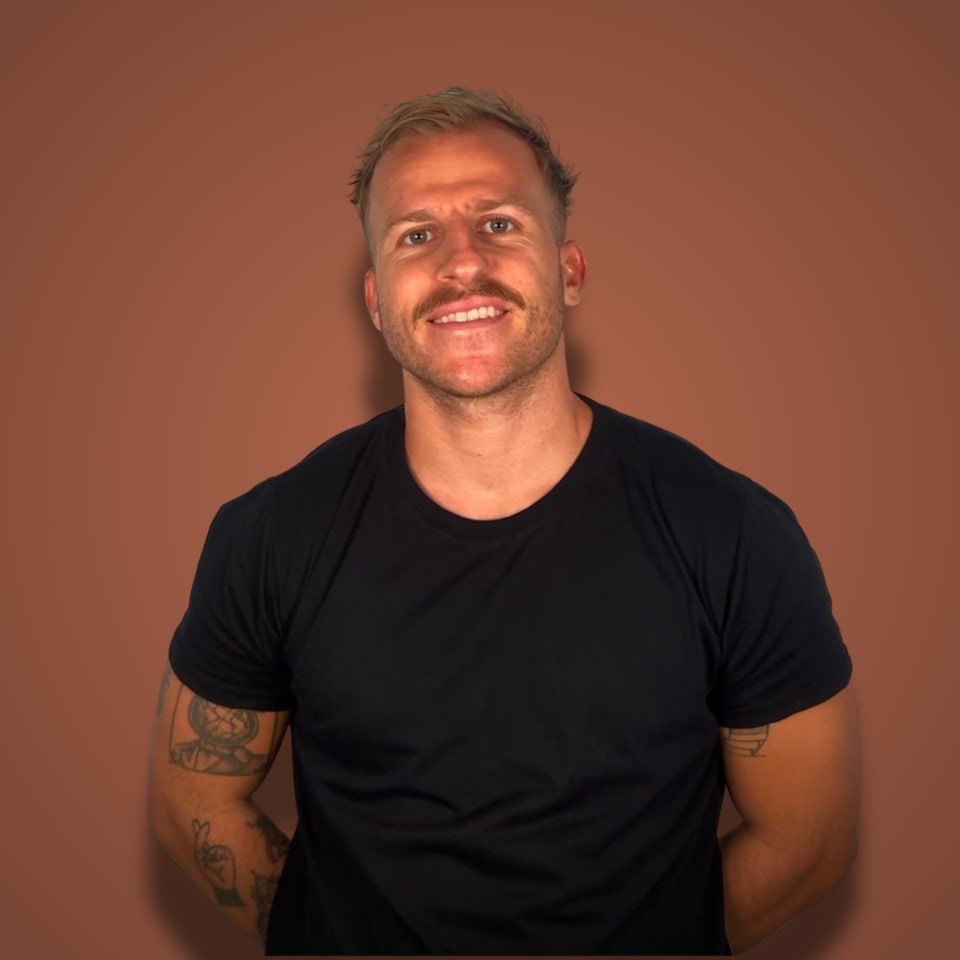
500 applications. 75 interviews. 10 founders picked to live together in a villa in Vietnam for a month and just lock in.
That's the Hacker Residency. And the wildest part? It broke even on the first try with zero business model going in.
Travis (you'll know him as transitive on GitHub and X) has sold two companies, built a ChatGPT npm package that blew up within 24 hours of the launch, and grown a Twitter bot to 150,000 followers. Now he's building the thing he says the indie world has been missing for years.
A real institution for bootstrappers. The YC of indie hacking, run out of a villa in Da Nang.
I sat down with Travis on the Profitable Founder Podcast. Here's the full playbook.
Why founder loneliness kills more startups than you think
Travis started with the two reasons startups die. Want to guess them?
Number one is lack of product market fit. You're building something the market doesn't want.
Number two is co-founder and team problems. The breakup.
I've felt this one personally. I spent all year trying to find a technical co-founder to build with me. It failed every single time. Not always because of the person. Mostly because we just weren't meant to work together.
Travis wrote an article on this five years ago. He treats finding a co-founder like a marketing funnel where the product is you.
→ Be public. Build in public, talk about your goals, your personality, the projects you like to build.
→ Write down your hard and soft constraints. It's like dating. "I need someone really technical" is a hard constraint.
→ Run short, scoped projects together. Fastest way to see how you actually work.
→ Look for convergence. The best co-founder relationships are two people working on similar things who merge.
Then he gave me the one question that cuts through everything. Imagine a critical meeting at a big customer or a VC like Sequoia. Your reputation's on the line, and you can't make it.
Would you feel comfortable sending this person to represent you in your place?
That question hit me hard. With one person I'd worked with, the honest answer was no. And that told me everything.
Two exits: the venture trap and the clean bootstrap
Travis has lived both sides. His first company, Stamped, raised venture and never hit product market fit. But the team was strong (mostly ex-Google engineers), and Yahoo wanted them.
They shopped around. Got offers from Google, Twitter, every major tech company. Yahoo offered four times as much, so they sold as an acqui-hire and started a new Yahoo office in New York around 2012-2013.
The catch? Golden handcuffs. He had to stay 12 months to get the first real check, and was incentivized to stay four years. He lasted one. He felt like he was stagnating.
His bootstrapped company, Automagical (AI video, 2017), was the opposite. A couple hundred K in ARR, sold to their biggest customer. This time he learned. No vesting, no golden handcuffs. Just a couple weeks of engineering handoff and out.
Night and day difference, mentally.
So which would he choose now? Bootstrapped, as long as humanly possible. Until he feels strong product market fit.
Why 98% of founders should not raise venture capital
Here's the line that stuck with me. When you raise venture, you're making a commitment to hit roughly $100 million in revenue. If you're not on that path, you're pressured to sell or pivot.
It's zero or a billion. Nothing in between.
Travis frames venture as one thing: a tool to compress time. If you're sure you can go from $1M to $4M ARR in 12 months and you understand the playbook, venture lets you do it in two months instead by hiring aggressively.
But the VC model is brutal math. A fund invests in 100 companies. They're fine if 98 go to zero, as long as one returns 10,000x.
"I am probably one of those 98," Travis told me. And that sucks. Even with a solid exit, the VCs get paid first and employees get a fraction.
His verdict: the vast majority of founders who raise would be better off not raising, or waiting.
Compare that to his co-founder Tony Dinh, who runs around $1M to $1.5M ARR solo, totally bootstrapped, working with his wife. He works seven days a week. He also spends half his time surfing.
That's the optionality most people actually want. If that path appeals to you, our breakdown of how to build a micro-SaaS walks through it step by step.
Seed-strapping and the missing institutions
I brought up David Park's approach: seed-strapping. Raise just enough runway money to focus 100% on the product, but stay a small remote nomad team. No big office.
"Florian, seed-strapping is dope. VCs hate seed-strapping."
The problem is most VCs are hunting 10,000x exits, so seed-strapping goes against their entire model. You either find a chill VC, or you're not fully honest with them. And Travis is firm: be upfront. Your reputation is the one thing that follows you around.
He pointed to the few institutions that actually back intentional indie founders. There were three he knew of: Tiny Seed, IndieVC, and Calm Fund. Calm Fund shut down this year. It's a hard business.
That gap is the whole thesis. There are hundreds of billions of dollars and endless mentorship for venture-scale companies. For bootstrappers? A handful of stewards like Tony Dinh and Pieter Levels, and almost no real institutions.
Inside the residency: six months of work in six weeks
The Hacker Residency is Travis's answer, built with co-founders David Park, Tony Dinh, and Minh Phuc. Two from the US, two from Vietnam. East meets west.
It's modeled on HF0, the SF residency Travis went through, which he calls the most premier in the world (more selective than YC). HF0 puts 10 teams in a mansion for three months, invests $1M each, and posted an $82M average valuation at their last demo day.
The residency takes that playbook to Southeast Asia, but for indie hackers. The difference from a hacker house? Travis put it simply: a hacker house is pizza boxes and beer cans in the corner. A residency is the grown-up version.
The core principle is subtraction. No packed calendar. Instead they remove every distraction so people can lock in.
→ A gorgeous villa, three healthy meals a day, a gym, a personal assistant, a workstation.
→ Free calendars. The only fixed thing is Monday evening two-minute demos.
→ Mentorship aimed at the single highest-leverage thing you should work on (fighting what Paul Graham calls "fake work").
→ Accountability. Travis literally walked up to people: "Miles, you've got Cursor open, you're supposed to be marketing."
The first batch ran four weeks this past November. The feedback? Nobody wanted to leave. So the next batch (starting April 21st, six weeks) got longer. Travis calls it six months of work in six weeks.
This kind of dense, ambitious peer group is exactly what most solo founders are missing, and it's the same reason I keep arguing for getting into the right founder mastermind.
How they got legit sponsors with zero budget
The cleverest part might be the money. The four founders put in their own cash with no business model. Then Travis retroactively went hunting for sponsors.
He landed real ones: Cognition (makers of Devin), OpenRouter, Exa. It broke even.
His pitch was simple reframing. These AI companies already drop $10-20K sponsoring one-day hackathons for free marketing. So he sold the residency as a 30-day hackathon.
"You already sponsor hackathons. This is a 30-day hackathon. You'll get content mentioning you for 30 days instead of one or two."
He backed it with a Notion one-pager and an announcement tweet from Tony Dinh that hit 200,000 views. Plus the HF0 association and his own deep Silicon Valley network.
And the content delivered. For four weeks straight I saw the residency everywhere on my feed. Rob doing videos, Thomas posting daily blogs, and Edmond, their video editor, producing intros so good I now use his style as the reference for this very podcast.
His network strategy? Not intentional at all. "Build in public, do dope stuff, be a good person, and other good people reach out." That's literally how mentor Dan found them. He was traveling through Da Nang, saw a post, and DM'd David.
I interview founders like this every week → Watch the Podcast
Frequently Asked Questions
What is the Hacker Residency?
The Hacker Residency is a focus program where roughly 10 indie hackers live and build together in a villa in Da Nang, Vietnam. Founded by Travis, David Park, Tony Dinh, and Minh Phuc, it removes daily distractions so founders can lock in. It's modeled on HF0 but built for bootstrappers instead of venture-scale teams.
Who founded the Hacker Residency and what's their background?
It was co-founded by Travis (transitive on GitHub), David Park, Tony Dinh, and Minh Phuc. Travis sold two startups (Stamped to Yahoo, Automagical to its largest customer), built a ChatGPT npm package that blew up in 24 hours, grew a Twitter bot to 150,000 followers, and went through the HF0 accelerator in San Francisco.
How do you apply for the next residency?
Applications for the second batch open just after the new year, around January 2nd. The next batch runs April 21st to June 1st (six weeks) in Da Nang, Vietnam. After that, batches go regional across Southeast Asia hotspots like Bali and Chiang Mai. Follow @HackerResidency on X for the application link.
The takeaway is simple: you don't need a billion-dollar exit to win. You need enough money, the right people in the trenches with you, and the freedom to build whatever you want.