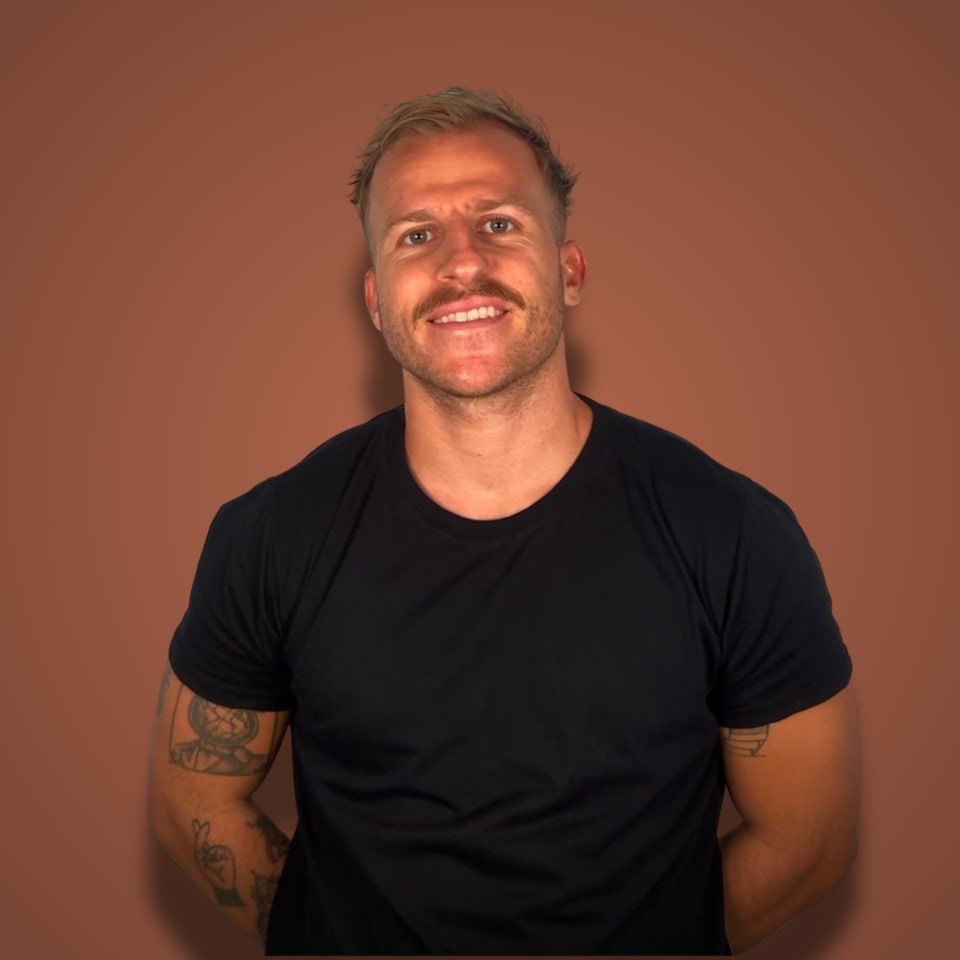
"Every good business idea is already taken." You've heard it. You've probably believed it. David proves it's wrong.
He and his brother Daniel are non-technical. They don't like to code. And they bootstrapped an AI app builder to roughly $50,000 a month in a market where funded competitors casually chase $200M ARR. They did it by copying a category worth billions, then changing one thing.
I pulled this story from David's interview on Starter Story, and it's one of the cleanest examples of how to build a micro SaaS I've seen in a while. Here's the full breakdown: the bet, the build, and the playbook he'd run again in 2026.
The bet: copy a $6B company, own 1% of it
Between 2020 and 2025, David and Daniel watched AI app builders explode. Base44 hit $3M ARR in six months. Lovable went from launch to $1M ARR in a week and is now valued around $6B.
Most people see numbers like that and think they missed the window. The brothers thought the opposite. Owning even 1% of a market that big would change their lives.
So the plan was simple: find one common pain point in that category and triple down on it. Not invent a new behavior. Not out-engineer a funded team. Just take something already growing and build a tighter version of it.
They had earned the right to try. Their first real win was Legit Check, a luxury goods authentication service that funded everything after it. They learned marketing instead of code, then built, scaled, and exited a few companies. The app builder was their next swing.
The build: ship rough, catch up fast
They started with just the two of them and one developer. The first version broke a lot. They shipped it anyway.
That's the part most people get wrong. Instead of polishing in the dark, they got an ugly product in front of real users and let the feedback set the pace.
The timeline tells the story. The first two months were brutal. By month three they had a product they trusted. By month four they'd caught up to competitors. By months five and six they were shipping features the funded players didn't have yet. They watched every rival closely so they could move faster and skip the mistakes others already made.
The difference: build what the giants' users complain about
Here's the one thing they changed. Most AI builders only spit out websites and web apps. David's tool also builds mobile apps, Chrome extensions, and bots for Telegram and Discord.
He didn't guess at that. He read competitors' Trustpilot pages, studied their public roadmaps, and sat in their Discord servers reading what users griped about. Support chats kept asking to turn a website into a mobile app, so they built exactly that.
They also killed the jargon. Tools aimed at non-technical people still felt scary in places, so they positioned theirs around turning your idea into a live business with zero skills required. Same category, lower friction, wider output. That's the 1% wedge.
The growth: free channels only, $50 to $20K MRR
To this day they've spent nothing on paid acquisition. The whole climb came from four channels, in order.
- → Product Hunt. They launched the MVP in week one and made their first $50 MRR.
- → Reddit. Regular posts pulling 400 upvotes pushed them from $50 to $1K MRR.
- → SEO. They targeted high-intent keywords like "alternatives to [competitor]" and "how much does [competitor] cost," using rivals' names as the demand.
- → X. Around day 50 of building in public, it went parabolic. In one or two weeks they added roughly $20K MRR, mostly by dogfooding the product in public. One tip from Rob Hallam: put your product link in the second tweet, not the first, to keep the reach and still capture the click.
The numbers today: about 690 paid users and zero free users. No free plan, on purpose. The cheapest tier is $25 a month, pricing runs on credits, and the gross volume lands near $71K once one-off top-ups are counted. They'd rather reinvest in the product than carry free riders on an expensive service. The same discipline shows up in how they run the back office, leaning on simple tools and business automations instead of hiring ahead of revenue.
The playbook he'd run again in 2026
When Starter Story asked what advice he'd give his younger self, David's answer was a framework you can steal today.
Start with something you actually know or care about. Look at a big industry and ask one question: what would this look like if it were built for people just like me? Most good ideas live in that gap.
Then niche down a proven product. A Duolingo for learning to cook. A workout app rebuilt as a social network. A simpler, smaller version of Calendly, Typeform, or Intercom. Read the reviews of the giants, find what people consistently dislike, and double down on fixing that.
There's real theory behind why this beats inventing something new. The VC Andrew Chen argues that brand-new ideas force you to change how people behave, which is a massive, expensive bet. As a bootstrapper, you don't need that risk. Pick a growing market with good margins, get most things right, and you can still win even when you get some things wrong.
I interview founders like David every week → Watch the Podcast
Frequently Asked Questions
What is a micro SaaS?
A micro SaaS is a small, focused software product run by a tiny team, often one or two founders, that targets a specific slice of a larger market. David's AI app builder is a clear example: instead of competing head-on with funded platforms, he aimed for roughly 1% of a huge category and built features their users were asking for.
How much money can a micro SaaS make?
More than most people expect. David's two-person, non-technical team reached around $50,000 a month in gross volume, with about 690 paying customers at $25 a month and up. The ceiling depends on the size of the market you niche into and how well you solve one sharp pain point.
Do you need to know how to code to build a micro SaaS?
No. David and his brother are both non-technical and learned marketing instead. They built their AI app builder with one developer and modern AI tools. The harder, more valuable skill was distribution: getting the product in front of the right people through Product Hunt, Reddit, SEO, and X.
What's the best way to find a micro SaaS idea?
Copy a proven, growing category and change one thing. Look at a billion-dollar product, read its negative reviews and support complaints, then build a simpler version that fixes the most common gripe. Pick a market you understand and ask what it would look like if it were built for someone exactly like you.
The lesson isn't "go clone Lovable." It's that you don't need a brand-new idea to build a real business. Find a market that's already moving, copy what works, fix the one thing everyone hates, and put it in front of people every single day. David did exactly that, and it took two non-coders to $50K a month.