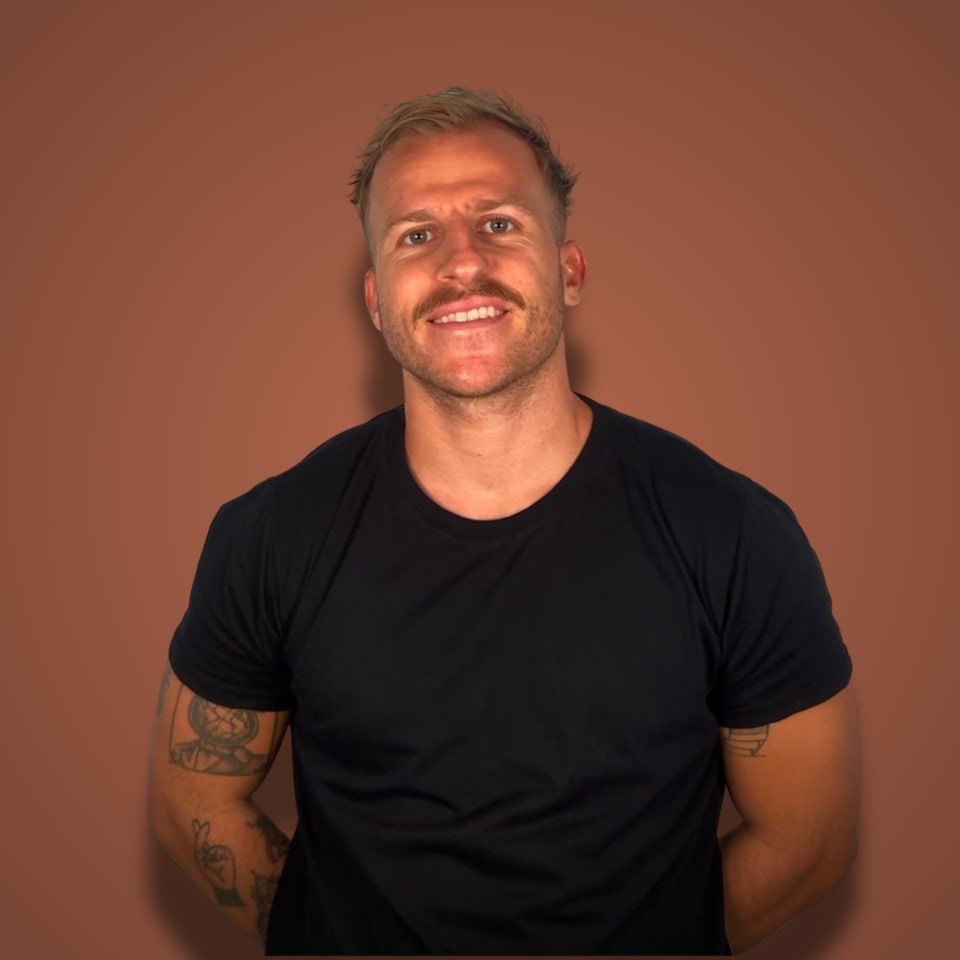
At 17, Zach Yadegari was making a million dollars a month. At 18, he sold his company to its biggest competitor.
The company is Cal AI, the calorie-tracking app where you snap a photo of your food and it logs the macros. In 2025 it did $30M in revenue. By January it was running at $5.7M a month, roughly $50M ARR. Then MyFitnessPal bought 100% of it. Zach won't say the price, but he'll tell you the math: zero to $50M ARR in about eighteen months.
I went through his full breakdown on TheBrettWay, and the growth playbook is too good to leave buried in a 60-minute interview. Here's exactly how a bootstrapped, profitable app got there.
The growth ladder, one rung at a time
Cal AI didn't crack one magic channel. It climbed a ladder, and each rung had a ceiling that forced the next move.
→ Fitness influencers (UGC). The first couple million a month came entirely from fitness influencers posting the app inside their daily-routine content. Subtle placement, three seconds of "scan my food," real story around it. That worked until they'd worked with every big fitness creator, who all share the same audience.
→ Broaden the pool. They moved past fitness into general creators. The headline deal was MrBeast: a $500K sponsorship Zach flew out for and appeared in. Front-end it was slightly unprofitable on direct conversions. Back-end it bought so much authority that every future creator deal got easier. (Wild detail: Beast's team forgot to invoice them. Zach chased them down to pay.)
→ Paid ads. This was the real unlock to $5.7M a month. TikTok, Instagram, Facebook. They started with an agency, got capped at $5K/day, then pulled it in-house.
→ Affiliate creators. An affiliate program (run on Tribe, coordinated in a WhatsApp group) let any creator make ad-specific videos for a cut of revenue. Combined with paid ads, that's what pushed them over $5M a month.
The paid-ads setup that actually scaled
The agency failed for a boring reason: they overcomplicated the campaign structure and reused influencer clips as ads. Zach's in-house version was almost aggressively simple.
One scaling campaign (CBO) plus one testing campaign. No interest targeting. No lookalikes. His view: the algorithm (Facebook's "Andromeda" update) is good enough now that you target with creative, not settings. Want to retarget? Don't toggle anything. Just write "you've probably seen our ads before" into the creative itself.
They optimized for trial starts, not purchases, because Apple's privacy rules only feed Facebook clean signal in the first 24 hours, and Cal AI runs a 3-day trial. So they let the pixel learn on trials and modeled the conversion rate on the back end.
The winning creative wasn't talking-head testimonials. It was fast, visual, direct: someone at the gym, music, a quick food scan, a caption like "how I cut for summer." Show the solution to a person who already has the problem and get out of the way.
Two hacks worth stealing
The attribution trick is the sharpest. You can build custom App Store product pages, and Facebook lets you set one as your ad's destination. Each page reports its own revenue, so you get clean per-ad numbers instead of guessing. Add roughly 30% for people who see the ad, then search your app by name later.
The second hack is pure marketing psychology. Cal AI ships a second "creator version" of the app with the logo huge on every screen and a fake perfect 30-day streak. So when an influencer screen-records it, the app looks flawless and branded, like the McDonald's burger that's styled for the photo and inedible in real life. Most of this back-office cleverness ran on a tiny team leaning hard on business automations rather than headcount.
The part that's easy to skip: the team
Zach is blunt that the early growth was "carried on the backs of the founders," with $1K/month developers and mediocre output. The company only started growing on its own when he invested in real talent and people started shipping good ideas without him.
His co-founders were deliberately complementary: Henry on tech (they met at a coding camp at age 10), Blake on go-to-market, Jake on marketing operations, Zach on vision. His rule for partners: define one final decision-maker per area, then "disagree and commit." Two friends with the same skill set is a recipe for stall.
And his number-one company value was speed. He'd tell every new hire on day one: never be the bottleneck. When someone said "we're waiting on Frank," he'd pull Frank onto the call and ship it live. This founder-story pattern shows up again and again, the same way the bootstrapped operators in our 2026 startup-ideas breakdown win on execution speed, not secret ideas.
The takeaway
Zach's own summary: it's the best time ever to build, and "marketing beats just building." Anyone can ship an app now. The edge is knowing how to get it in front of the right person. If you're a creator or operator who understands a niche, you can build a hyper-specific tool and out-distribute the engineers. It's the same copy-and-niche logic behind the $50K/month micro-SaaS playbook: pick a market you get, then win on distribution.
I break down founder playbooks like this every week → Watch the Podcast
Frequently Asked Questions
What is Cal AI and who founded it?
Cal AI is an AI calorie-tracking app where you photograph your food to log macros. It was co-founded by Zach Yadegari (CEO), Henry Langmack (CTO), Jake Castillo (CMO/COO), and advisor Blake Anderson. Yadegari was 17 when it took off and 18 when he sold it to MyFitnessPal.
How much did Cal AI make before it sold?
Cal AI did about $30M in revenue across 2025 and was running at roughly $5.7M a month, about $50M ARR, by January, going from launch to that run rate in around eighteen months. MyFitnessPal acquired 100% of the company; the price wasn't disclosed.
How did Cal AI grow so fast?
It climbed a channel ladder: fitness-influencer UGC to the first few million a month, then broader creators (including a MrBeast sponsorship for brand authority), then in-house paid ads on TikTok/Instagram/Facebook, plus an affiliate-creator program. Simple ad structure, creative-led targeting, and a custom App Store product page per ad for clean attribution.
What's the biggest lesson for app founders?
Marketing beats building. Shipping an app is easy now, so the edge is distribution: pick a niche you understand, learn one acquisition channel deeply (paid ads scale furthest for subscription apps), invest in real talent early, and move with relentless speed.
Eighteen months, two real channels, a tiny team, and an exit to the market leader. The idea wasn't new. The execution was.