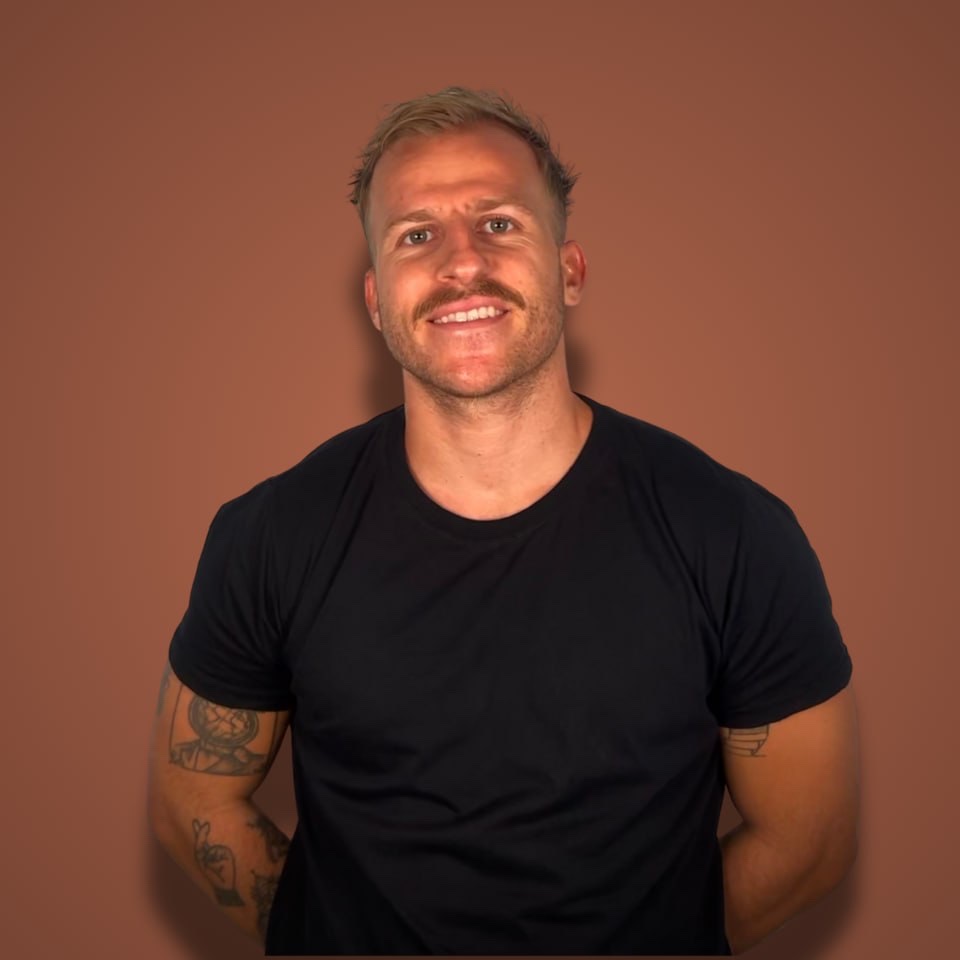
Ben Guez had never written a single line of code.
Nine months after launching his first app, it pulled in $25,000 in one month.
The app is Canary. You learn a language by singing along to songs you already love. And the whole business started with one reel of Ben singing in French.
If you've been wondering how to build a consumer app without a technical background, this is the cleanest playbook I've seen in months. Gus had Ben on Starter Story this week, and Ben opened his revenue dashboard on camera: $25K over the last 28 days, around $14K MRR, 50,000 downloads, 2,000 paying subscribers.
Every number below comes straight from the episode. Watch it, then steal the playbook.
One reel exposed the idea
Ben moved to the US 13 years ago. He started a couple of businesses, sold one three years ago, then went full digital nomad and built a creator audience of 1 million followers across social media.
A year ago, he posted a video of himself singing in French with the lyrics and the translation on screen.
It went mini viral. The likes didn't matter much. What mattered were the shares, the saves, and the wave of new followers (likes are cheap, shares mean people want more of this).
Then came the insight. When Ben asked his followers to say something in French, most of them blanked. The only French they could produce was song lyrics. They'd been grinding Duolingo for months and retained almost nothing, but they could recite a whole chorus.
That's the entire thesis of Canary: if lyrics are the only thing that sticks, build the learning app around lyrics.
The 200K follower test (before building anything)
Most founders get the order backwards. They build for six months, then go looking for users.
Ben flipped it. Before building anything, he created a brand new page dedicated to learn-with-songs content. Not his personal brand. No shoutout to his million followers. A fresh page, starting from zero.
It grew to 200,000 followers in under a year. Faster than his personal page ever did.
I can already hear the comment section: "easy for him, he's a creator with a million followers." Sure, the audience helped him spot the signal. But the validation page grew on its own, with no boost from his personal accounts. The format won because strangers wanted it, not because Ben was famous.
That's the test I'd give any consumer app idea now. Post the concept as content on a fresh account. If it can't pull strangers in, an App Store listing won't save it. If it can, you just built your validation and your launch channel at the same time.
Starting from zero followers? I broke down how another founder did exactly that in how to grow an app with no audience.
He hired the first version, then vibe coded the rest
Ben is not a developer. So he hired one.
The first MVP took about a month and, in his own words, it was "really ugly and really bad." He shipped it anyway. His rule: launch something and get feedback as fast as possible.
Around four months ago, he started vibe coding himself with Claude, and he calls it a game changer. Not because it replaced his developer. Because he can now ship a small feature or fix an onboarding screen the same day a user complains about it, instead of writing a ticket and waiting.
Canary launched on Product Hunt in January 2026 and finished #2 Product of the Day. Nine months after launch: $25K in a month.
A non-technical founder, a hired MVP, then AI tools for iteration speed. That sequence works in 2026 in a way it simply didn't three years ago.
The real numbers behind $25K a month
Ben pulled his dashboard up on camera, so here's the business in actual figures:
- $25,000 revenue in the last 28 days
- Around $14,000 MRR
- 50,000 downloads
- 2,000 paying subscribers
- Pricing: $10/month or $79/year, and 60% of subscribers pick yearly
Notice the gap between revenue and MRR. That's deliberate. Ben pushes the yearly plan hard, so most of the cash lands up front. Yearly buyers also churn less (they've already committed to the habit).
Now the part most people never show: what it costs to run. Ben listed his whole stack on the episode.
| Tool | Job | Monthly cost |
|---|---|---|
| Firebase | Backend | $200 |
| RevenueCat | Subscriptions + paywall testing | $260 |
| PostHog | Analytics + experiments | $250 |
| Claude | Vibe coding | $200 |
| Beehiiv | $169 | |
| OpenAI | In-app AI features | $150 |
| AppsFlyer | Install tracking | $97 |
| ManyChat | Social automation | $30 |
Total: about $1,356 a month to run an app doing $25K a month.
One guy, one hired developer, roughly 95% gross margin before ad spend. This is why consumer apps are having their moment.
The growth loop he runs every single week
Ben's marketing fits in one sentence: post a lot, find the winner, boost the winner, kill the losers, repeat.
In practice:
→ He tested every platform and every format early on (his words: "A/B and even A/B/C/D/E testing"). Then he looked at the numbers and doubled down where it worked: Instagram and TikTok, reels specifically.
→ ManyChat turns engagement into traffic. Someone comments on a reel, they get an automatic DM with the download link. $30 a month to convert attention you already earned.
→ When a reel performs organically, he boosts it with Meta ads. He tests creatives, audiences and captions, scales the winners, kills the losers. He never has to guess which content converts because the organic numbers already told him.
And the underrated part: Ben treated learning like a system, not an accident. He listened to Starter Story at the gym every day and took notes on things to test. He tried Google Ads because a guest mentioned them. He even reached out to a former guest, Nicole, and paid her for a consulting session on his onboarding.
His daily routine: learn something, ship something, test something.
There isn't a single growth hack in any of this. It's one loop, run every week for nine months.
Steal this playbook
Strip the story out and the whole thing fits in six steps:
→ Scroll your niche for complaints. Ben found his because his followers complained Duolingo wasn't sticking. The idea was hiding in his own comments.
→ Post the concept as content on a fresh page. Zero followers, no shortcuts. Give it 30 to 50 posts before you judge it.
→ Measure shares and saves, not likes. That's the difference between "cute" and "I need this."
→ Ship an ugly MVP in a month. Hire it out or vibe code it. Ben's first version embarrassed him and still got to market.
→ Run the loop. Reels, ManyChat on comments, boost winners with paid, kill losers.
→ Push yearly pricing. 60% of Ben's subscribers take the $79 yearly plan. Cash now beats cash maybe.
Still hunting for the idea itself? Steal the method in how to pick your first app idea.
And if you're sitting on a half-built app right now, Ben's closing advice is the one to print out. His smarter friends have been polishing unlaunched apps for years. His first version was ugly and it's the one making $25K a month.
"Ready is always a work in progress."
FAQ
Can you build a consumer app without knowing how to code?
Yes. Ben Guez had never coded when he started Canary. He hired a developer for the first MVP (about one month of work), then picked up vibe coding with AI tools four months in to ship small changes himself. He focused on the idea, the validation and the distribution, and paid for the code until AI tools let him handle small changes himself.
How much does it cost to run a consumer app making $25K a month?
Canary runs on roughly $1,356 a month: Firebase ($200), RevenueCat ($260), PostHog ($250), Claude ($200), Beehiiv ($169), OpenAI ($150), AppsFlyer ($97) and ManyChat ($30). Add one developer and ad spend on winning reels, and the margin still stays unusually high for a business this size.
How do you validate a consumer app idea before building it?
Post the core concept as content on a brand new social page and watch shares, saves and follower growth. Ben's learn-with-songs page hit 200,000 followers in under a year before the app mattered. If strangers won't follow the idea as content, they won't download it as an app.
Do you need a big audience to launch a consumer app?
No, but you need to build one, even a small one. Ben's validation page started at zero followers, separate from his personal brand, and outgrew his main account. The audience you build around the concept becomes your launch channel on day one.
Hear the full stories behind numbers like these
I interview bootstrapped founders like this every week on the Profitable Founder Podcast. They open their dashboards, walk through their pricing decisions, and admit the mistakes most founders hide. Everyone from $100K a year to $10M.