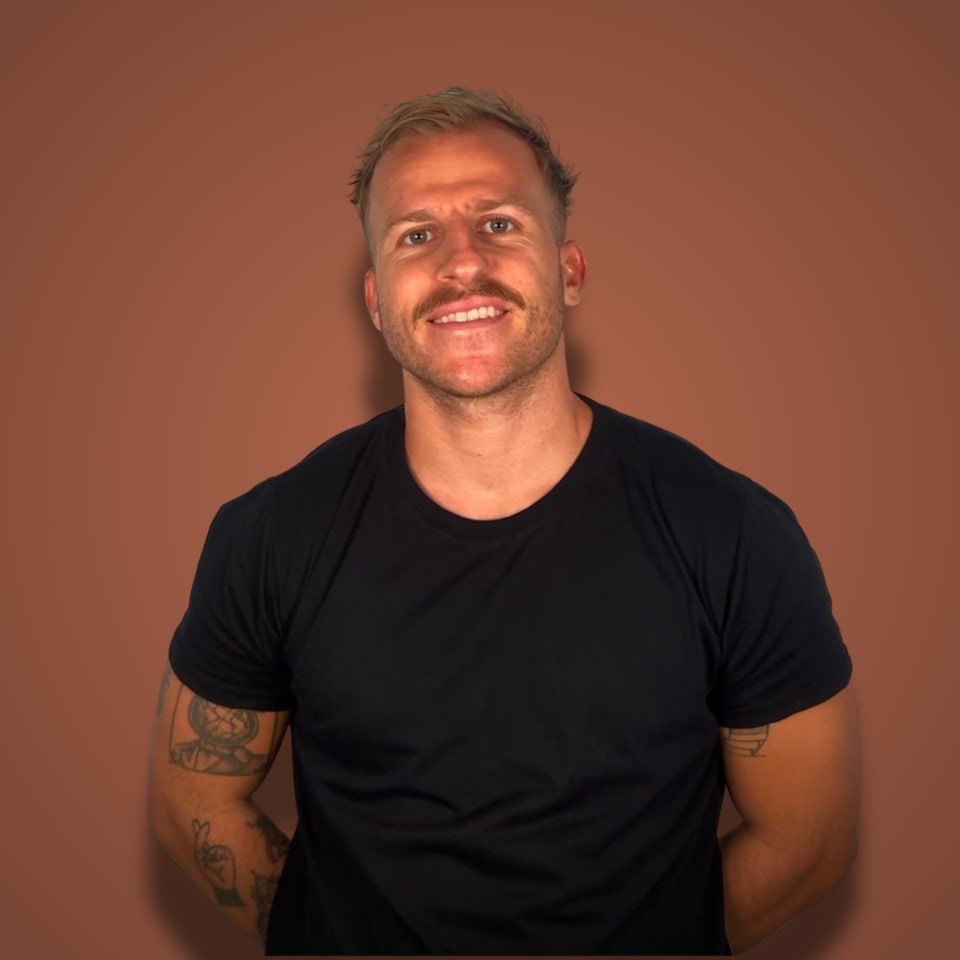
Nick was breaking into college dorms at 7am, posing as faculty, to pass out flyers for a job marketplace nobody wanted.
Three years later that same company, SideShift, does $8 million a year. He just moved into a new office in New York. He's 24.
Here's the twist: the product that made him rich was never the product he set out to build. Tech Twitter quietly hijacked his platform, and instead of fighting it, Nick let them rewrite his entire company.
He went from zero to $2.4M ARR in 12 months after that pivot.
I sat down with Nick on the Profitable Founder Podcast. Here's the full playbook.
The startup that nobody was paying for
It started in his senior year at the University of Wisconsin Madison. Nick and his co-founders wanted to build a marketplace, and the one they landed on was a labor marketplace for students.
The hiring process on campus was a mess. Paper applications. Kids walking into bars and restaurants asking for shifts. They figured they could automate the whole thing.
They were naive. No market research. They didn't even know Indeed dominated the space. (Honestly, that ignorance helped. They just started building.)
Six months to an MVP. Then they went door to door. Into dorms to grab their first users, then knocking on business owners' doors for their first customers.
The numbers tell you everything that was wrong:
→ Madison had ~3,000 students on the platform
→ About 20 businesses hiring
→ Top subscription was $10 a month
→ Most paid little to nothing
They graduated in May 2024 and went full-time. Then they ran the playbook across the Big 10 and SEC: Michigan, Iowa, Georgia, Texas, Ohio State, Indiana. Ten days per campus, land-grab style.
Mornings breaking into dorms. Days knocking on doors. Six months of it.
Then they did the math. At that pace it would take seven years to hit $1M ARR.
The moment Tech Twitter hijacked the product
Here's where it gets interesting. Nick had ~10,000 students on the platform and a supply side that was hungry, broke, and chronically online.
Then tech Twitter found it.
Indie hackers started posing as small businesses on SideShift and hiring college students to make UGC videos for their products. Nobody told them to. They just did it.
And the students loved it. They were tech-savvy, always on their phones, and UGC means anyone can create content.
Nick noticed something in the user data about a year ago. Local business owners ghosted after a month. But these indie hackers? They kept coming back to hire creators.
So he let them shape the product. He re-engineered student job profiles into creator profiles. Added top videos, top posts, proper tooling for brands. Last summer he went all in on the UGC marketplace.
Now SideShift works with Brex, Suno, Pixart, Paramount Pictures, record labels. The platform handles recruitment, analytics, management, payouts, legal, tax, the 1099s. A brand never has to leave.
The lesson Nick keeps coming back to: when they had no product-market fit, they were trying to force a marketplace into existence. They weren't listening. The customers kept saying "this isn't a pain point" and they kept pushing anyway.
Why he treats every customer like a friend
Nick has almost 800 active customers. Every single one has his personal phone number.
They text him. They hop on FaceTime. Each customer gets an individualized Slack channel where his team helps with product requests, bug fixes, or just hanging out.
"I really don't see my customers as customers," he told me. "I see them as friends."
That's not a soft skill, it's a moat. Inbound is about 80% of his sales, outbound only 20%. People who aren't even a fit refer their friends who run growth at other companies.
This obsession with relationships is the same energy you'll find inside the best SaaS founder mastermind communities, where the people who win are the ones who actually talk to their users instead of guessing.
The UGC playbook: hire micro-actors, not experts
This was the part that flipped my brain. Brands think they need creators in their niche. Building a mental health app? They want mental health creators.
Wrong, Nick says. That's not how you go viral.
The algorithms are unweighted now. You don't need 100,000 followers. You can go viral with zero followers today. So the creator you actually want is someone who knows how to hack the algorithm with sheer volume.
Here's what a winning campaign looks like:
→ Hire a cohort of about a dozen creators
→ Post 30 to 60 times on a brand new dedicated account
→ Aim for 300+ videos in a single month
→ Out of 300, maybe 10 go viral, and those 10 change everything
It's a VC-style approach. Most videos flop. You're hunting for the organic winners that feel personal, that show up on your For You page looking like your neighbor, not Kim Kardashian reading a paid script.
His line stuck with me: "Brad Pitt wasn't cast in F1 because he was a race car driver. He was cast because he's a great actor." UGC creators are micro-actors. They research, adapt, perform. They don't need to be experts. This is the same copy-what-works mindset behind building a profitable micro-SaaS.
The numbers that prove it works
Nick gave me real case studies, not vague claims.
→ Voodoo (the Paris game studio doing $700M/year that bought BeReal for $500M) promoted Paper.io and went from zero to 90 million views in a month
→ All in Motion, a Target brand, hit 25 million views in the first month
→ Yapper, run by founder Emmett Halm, does over 80 million views a month
→ SideShift's own programs generate 50 to 60 million views a month
Top creators on the platform earn between $20,000 and $35,000 a month. With 700,000 "zero-based" creators, Nick calls SideShift the distribution hub of the future.
And yes, I asked the question this whole podcast is named after. Is he profitable? "We are profitable." Low burn, lots of customers, the same scrappy mindset he had as a sub-$1M company. The only real splurge was the New York office, because everyone on the team works in person, 9am to 9pm.
How he'd hit $10K MRR if he started over today
I asked Nick the question I ask every founder: if you started from zero in 2026, how would you do it?
His idea-finding method:
→ Read TikTok comment sections in niches you care about, hunt for people complaining
→ Or pick a category (say, calorie counter apps), search the popular ones, read their worst reviews
→ The 1-star reviews tell you exactly where the gap is
"Sometimes it's just about making something 25% better, not 100% better," he said. You don't have to reinvent the wheel.
Then comes distribution, and this is where he'd spend almost all his time. He'd find a technical co-founder, then personally pump out the most UGC humanly possible. When he first learned UGC, he posted four times a day across five accounts. Over 20 posts a day.
After three weeks, his first viral video hit 5 million views.
His rule for anyone with no budget: don't hire creators yet. Pick up your own phone first. Start a brand new account for your niche, warm it up by engaging with that content, then post. You have to feel what it's like to be a UGC creator before you can direct one.
When you do have budget, he says set aside $1,500 to $2,000 for creator payments. Hire four creators at a $500 base each, get 120+ pieces of content, and look for the slightest sign something resonates. It doesn't need to go viral. A hook that pulls 6,000 views instead of 1,000 means there are legs.
I interview founders like this every week → Watch the Podcast
Frequently Asked Questions
Who founded SideShift and how old is he?
SideShift was founded by Nick along with co-founders Drew (CTO) and Canyon (COO). They started it during Nick's senior year at the University of Wisconsin Madison in 2023. Nick is 24 years old and leads the company on vision, culture, and revenue generation while Drew handles the technical product side.
How much money does SideShift make?
SideShift does $8 million a year in revenue and is profitable. It grew from zero to $2.4M ARR in 12 months after pivoting from a local jobs marketplace into a UGC creator platform. The company keeps its burn extremely low and serves almost 800 active customers, with 80% of sales coming from inbound.
What does SideShift actually do?
SideShift is a UGC marketplace and operating system for brands. It connects 700,000 creators with companies like Brex, Suno, and Paramount Pictures to run high-volume content campaigns. Brands handle recruitment, analytics, payouts, legal, and tax in one place, spinning up creators who post hundreds of videos to find organic viral winners.
The whole story is one lesson on repeat: stop forcing your idea, listen to who's actually using your product, and out-volume everyone on distribution. Nothing in the world takes the place of persistence.