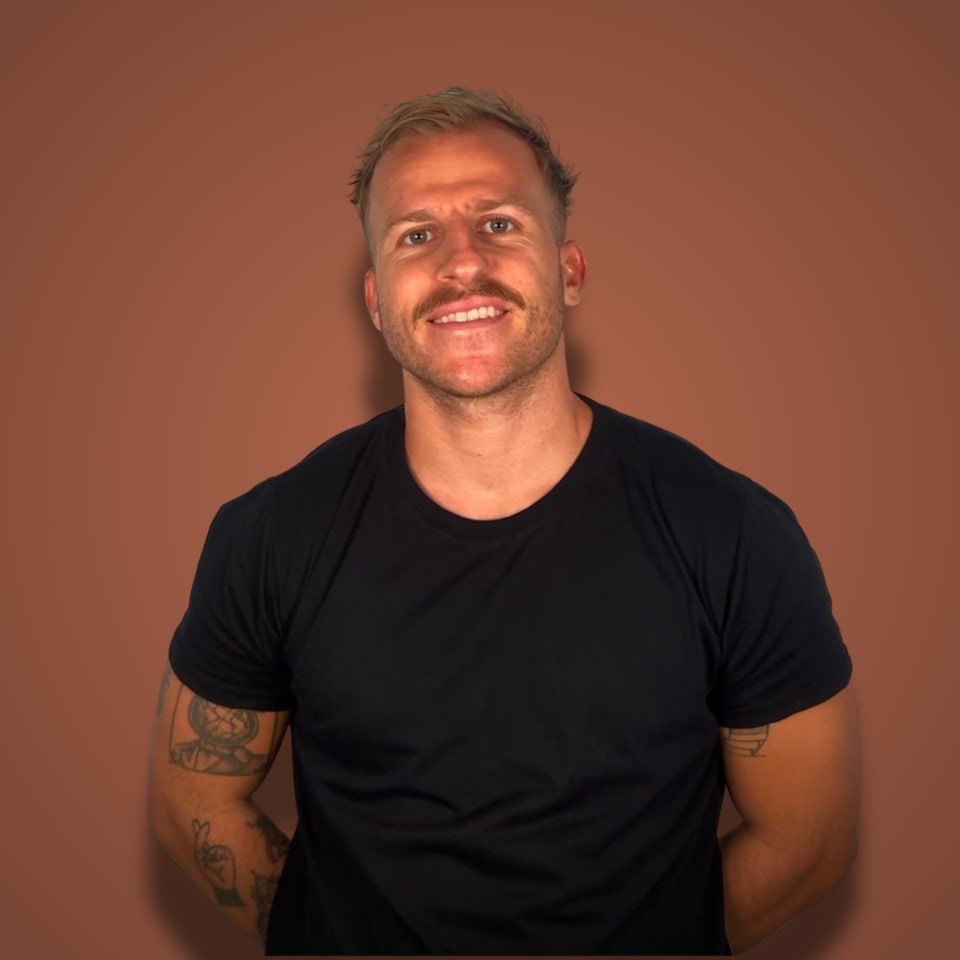
Zero to 1,000 paying users. Two YouTube videos. About two months. Completely bootstrapped.
That's what Marcus pulled off for his SaaS. And he did it with a webcam, a $100 mic, and a $50 Amazon light.
Marcus also runs what he calls the second largest YouTube education channel in the world. Close to half a million subscribers. Ten videos over a million views. Two over five million. All recorded from home with a setup he openly calls terrible.
The wild part? He does it solo. The channels ahead of him have three or four full-time creators. He has himself and a couple of contractors.
I sat down with Marcus on the Profitable Founder Podcast. Here's the full playbook.
Why founders freeze before they ever hit record
We all know YouTube is the most powerful marketing channel for a startup. So why do we freeze when it's time to start?
Marcus has a blunt answer. "The problem is not a lack of knowledge. The problem is too much knowledge. And not knowing where to actually focus your effort."
SEO? Ranking on Google? Getting your video to show up in Gemini? Elaborate thumbnail testing? There are a million things to do.
His fix: ignore almost all of it. He focuses on the 20% that matters. Six things, to be exact.
"Because I just focus on those six things while everyone else is focusing on like 10 things or 20 things, I'm able to outpace my competition and stay ahead of the curve."
The six things that actually move a channel
Marcus splits his system into channel strategy and individual video strategy. The six fundamentals are channel strategy. The first three you basically set once. The last three you grind week to week.
→ Frequency. Not because the algorithm rewards consistency like a gold star. More uploads means more shots on goal. Post twice a week and you get 104 chances a year to go viral. Post monthly and you get 12. He recommends one to two videos a week, three if you can keep the quality up. Past three, quality usually drops and people start unsubscribing.
→ X factors. His word for brand. The specific seasoning of your content. Marcus is Australian and leans hard into it. He uses an inappropriate sense of humor he already has with his friends. You don't invent X factors. You notice the ones you already have and exaggerate them. Ask the people who know you well. They'll tell you what makes you watchable.
→ Serial consistency. Keep your topics, avatar, editing style, and tone steady so the algorithm learns who to send you. Mix Minecraft videos with stock market reviews and food vlogs and viewers bounce, which sends a brutal negative signal. But here's the twist most people miss: stay consistent only until you've genuinely maxed out an approach. For most people that's 5 to 10 videos. If it's still not working after you've optimized everything, change something. Quitting gets demonized. So does grinding the same dead format for a year.
This idea of staying yourself while you iterate is exactly why so many founders who try copying a proven micro-SaaS playbook still need their own flavor on top.
Retention, packaging, and the one step that beats everything
The last three are where things get tactical.
→ Retention. Making good videos. Not high production. Retention. Marcus records with a webcam and a shitty mic on purpose. Sometimes a low-effort Loom retains people just as well as a studio shoot, and feels more like a behind-the-scenes look. We compared it to Sam Sulek versus a creator filming himself eating breakfast at his desk with no cuts. Both work. Both retain. Production is not the point.
→ Packaging. Titles and thumbnails, designed together, never as separate pieces. His 400K-view video had a broken YouTube logo with "I have proof" on the thumbnail and "No seriously, YouTube is starting to break" as the title. Neither lands alone. Together they imply opinion plus data. He spends around two hours on thumbnail research and runs three-concept tests, then tests variations of the winner. But only if you're getting at least 500 to 1,000 impressions a week. Below that, elaborate testing tells you nothing.
→ Ideation. His favorite. The biggest lever. If the core idea isn't inherently interesting, nothing else matters. A bad idea gets 100 views no matter how good your editor or thumbnail designer is. An idea is the topic (what you talk about) times the format (how you present it).
How he finds ideas that are stacked to win
This is where Marcus reverse-engineered his own product, a YouTube research tool he calls Velio. But he was clear: you can do all of it manually on YouTube, the principle is what matters.
→ Get your whole niche in one place. Track every competitor so you can actually analyze what's happening.
→ Find the outliers. Videos massively outperforming a channel's average. He showed one getting 147K views on a channel that normally gets 9.5K. A 15x outlier score. Something about that video is special.
→ Check supply and demand. This is where most people break. Everyone copies outliers now, so copying alone stopped working. Marcus looks for outlier topics with low competition. Fewer than 30 or 50 videos made on it, and where the typical video on that topic still performs above average.
"It's very similar to product market fit in software. You want to find a niche where there's not many competitors and the customers are voracious."
One warning he gave me from my own channel: I once copied a beautiful cinematic video and got 1,600 views instead of the original's six figures. The concept was right. I just couldn't execute it at that level. Copy ideas you can actually pull off.
The two-video launch that got 1,000 paying users
Now the part founders came for. How do you turn a channel into signups?
Marcus says most founders make the wrong kind of video. They make solution-aware videos when nobody knows their product exists yet.
"How to find viral video ideas" assumes the viewer already knows that's the solution. That only hits the roughly 3% of the market ready to buy.
His launch video was problem-aware instead. The title: "If you have less than 1,000 subscribers, do this." The viewer just feels the problem and wants out.
Then he runs a format he's tested across his own product and affiliate products, one that's generated well over seven figures:
→ Open on the problem. You're not getting views. Nobody's watching. You're doing what the gurus say and it's not working.
→ Hit them with a perspective shift. His was: most creators think YouTube isn't promoting their videos. Go check your impressions. Even a 30-view video got 40, 50 impressions. YouTube IS promoting you. It's just not getting positive signals from who it shows. Viewers open their own analytics, see he's right, and trust him instantly.
→ Walk through a multi-step method that naturally contains your product. Track competitors, find outliers, run supply-and-demand research. The product shows up as the easy way to do the thing you just taught.
"You let the methodology sell the product more than you sell the product."
If your product and method are genuinely good, people sell themselves. They finish the video thinking this guy knows exactly what my problem is, and his tool makes the solution easier. That's how two problem-aware videos turned into 1,000 paying users.
The biggest mistake, and the mindset to keep going
The biggest waste of time? Obsessing over things that don't matter. Tags. SEO. Uploading at the perfect second. Chasing the latest algorithm hack with hashtags in the description.
"I've seen creators with very little talent absolutely crush talented, charismatic people, just because they focus on the small subset of things that matter."
And the mindset Marcus uses to keep going treats YouTube like venture investing. Most of your videos, 80 to 90%, will do almost nothing. It's the 10 to 20% that blow up and carry the whole channel.
So stop dissecting why your last video got 100 views instead of 150. Keep doing the six fundamentals, keep researching ideas the right way, post frequently over a long enough horizon, and one video will pop.
I interview founders like this every week → Watch the Podcast
Frequently Asked Questions
How many subscribers does Marcus have?
Marcus is approaching half a million subscribers on what he describes as the second largest YouTube education channel in the world by monthly views. He has ten videos over a million views and two over five million, all recorded from home with a webcam, a $100 mic, and a $50 Amazon light.
How did Marcus get 1,000 paying users for his SaaS?
Completely bootstrapped, Marcus went from zero to 1,000 paying users in about two months using just two problem-aware YouTube videos. Each video opened on a viewer's problem, delivered a perspective shift to build trust, then walked through a method that naturally integrated his product, Velio, as the easy solution.
What is the difference between problem-aware and solution-aware videos?
A solution-aware video assumes viewers already know your product is the answer, so it only reaches the roughly 3% ready to buy. A problem-aware video meets people at the pain itself, like "If you have less than 1,000 subscribers, do this," which is why it works far better for launching a product nobody knows yet.
The lesson is simple: pick the six things that matter, make problem-aware videos, and let a good method sell the product for you.