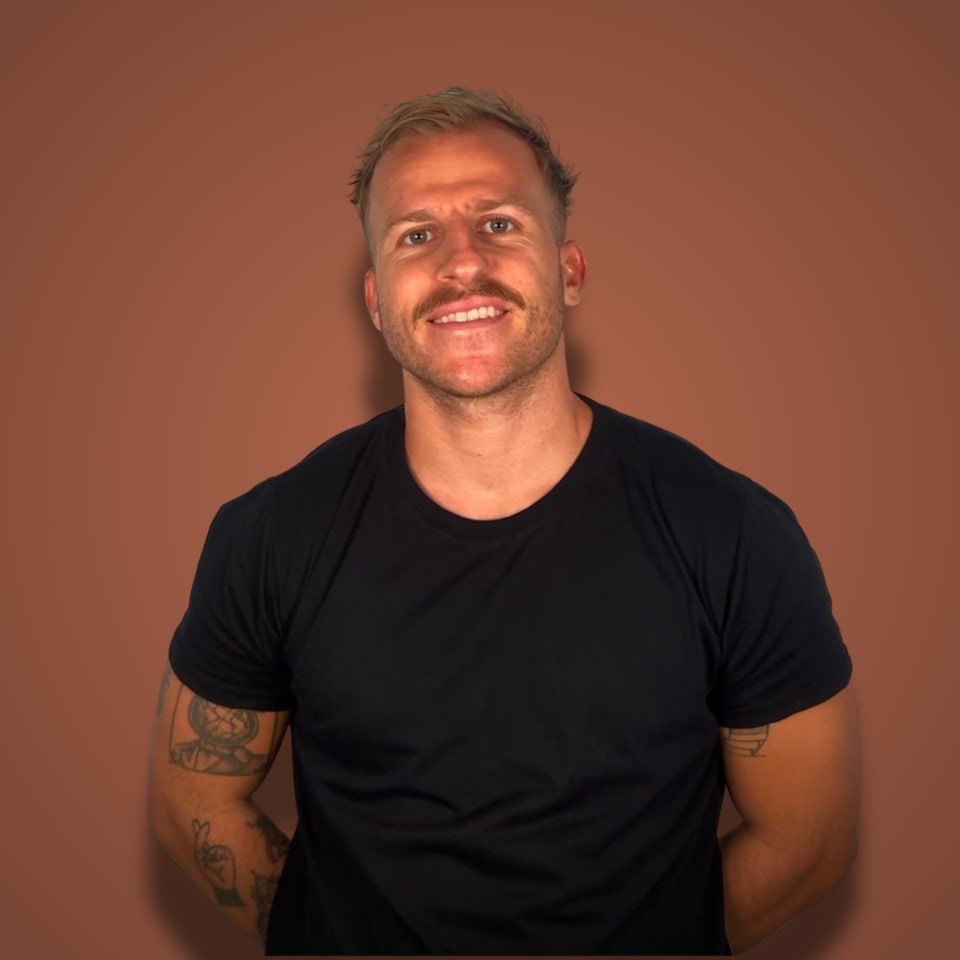
Dmytro built a B2B SaaS to $24,800/month. Solo. No employees, no funding, no co-founder.
Just him, his code, and his distribution.
And after four years on this journey, the question keeping him up isn't "how do I grow?" It's "what if I'm just lazy?"
He runs ScreenshotOne, a screenshot API. He ranks #1 on Google for his core keyword. He has 26,000 followers on X. He hit a number that makes most founders salivate, and now he's wondering if he should burn it all down to chase a unicorn, or if the calm life he built is actually the win.
I sat down with Dmytro on the Profitable Founder Podcast. Here's the full playbook, plus the mindset shift at the end that changed how I think about success.
From 10 years as a software engineer to quitting it all
Dmytro spent 10+ years as a software engineer and tech lead at product-oriented companies. Good salaries. Challenging work. Nothing to complain about.
Then one day, about three or four years ago, he quit all of it to try a new path.
He calls himself "incredibly lucky" to have crossed his old salary and now live off the product. But luck didn't write 5 months of SEO content before launch. He did.
Today his life looks nothing like the grind you'd expect. Wakes up at 7. Gets the kids to school with his wife. Then one sacred hour: a book and a coffee, in silence. He's done this ritual daily for two years.
Support tickets. Work until 4pm. Family time. Then two hours of football, cycling, or a 10km walk every single day.
"I built my life the way I dreamed," he told me. He used to want to travel. Now the urge is gone. He built the perfect routine, so he doesn't need an escape from it.
The ICP insight that took him 2 years to learn
For the first year or two, Dmytro was stuck. Plateau. Growth was brutal.
His problem? He was trying to sell to everybody. "I was the most annoying person in marketing," he laughed. Shilling on every channel, to anyone with a pulse.
Then he noticed a pattern. The customers who paid well, stayed happy, and left great testimonials all looked similar. Marketing-adjacent companies. Around five people. One developer. Same shape, over and over.
That's when "ideal customer profile" clicked. And here's his contrarian twist on it:
→ Don't imagine an abstract ICP. Your mind will trick you and stitch together a customer who doesn't exist.
→ Find a real person. A real name. Someone with a real problem, even if they'll never buy.
→ Write every post, every landing page, every blog as if you're talking to that one person.
"When I write a post for one developer, many developers read it and think: this is for me." That's the magic. Targeting one resonates with thousands.
He puts a code snippet on his landing page. "Screenshot API for developers." A Cloudflare feature badge. Everything signals: this is for engineers.
And the surprise? Marketers, PMs, and no-code makers buy it too. They see it's not "for them," but it does what they need, so they go with it. This sharp focus is the heart of how to build a micro-SaaS that actually pays instead of one that pleases nobody.
His advice if it doesn't work? Don't widen the net. Switch the person. Pick a new ICP and try again until something resonates. Faster than writing bland copy for everyone.
How SEO became 50-60% of his revenue
If you take clean numbers, SEO is Dmytro's biggest winner. Roughly 50-60% of revenue, by his estimate.
Here's the wild part: he started SEO in January 2022, five months before he even launched the product in May 2022.
By launch day, he already had traffic from Google.
His actual loop was simple:
→ Write a lot of content around his niche. "How to make screenshots in Python," and dozens like it.
→ Check Google Search Console for the keywords his posts already ranked for.
→ Rewrite those posts to better match the winning keywords.
→ Repeat until he hit position #1.
→ In parallel, build backlinks. Guest posts via DMs, directory submissions, Product Hunt launches.
One counterintuitive move: when he wrote "best screenshot API" comparison posts, he actually linked out to his real competitors. Most people refuse to do this.
His theory? If a reader clicks through to a competitor and stays, they don't bounce back to Google. That's a positive signal. Satisfy the search intent no matter what, and you hold your ranking. He ranked #1 on "screenshot API" for a long time doing exactly this.
He also caught Google ranking him for keywords he only mentioned in an X post, not the article itself. Proof to him that social media quietly feeds SEO.
The other channels: Zapier, GitHub, and a small affiliate program
SEO isn't the whole story. Dmytro plugged his product into wherever his customers already lived.
→ No-code platforms: official integrations on Zapier, Make, n8n. Someone searches "how to screenshot in Google Drive," finds Zapier, and pipes in his API.
→ GitHub: open-source tools and sponsored repos that surface "built by ScreenshotOne" when developers search.
→ YouTube: people make tutorials about his product on their own. It pushed him to consider starting his own channel.
→ An affiliate program doing maybe 1-2K MRR. He doesn't even promote it actively.
He tracks all of it with PostHog now. Early on he used a tool to follow the full customer path, first click on X, then a Google search for the brand days later. That attribution gap is exactly why he stays skeptical of founders who claim "SEO only" while sitting on a huge audience.
26,000 X followers, and the price he paid for them
Dmytro builds in public on X. 26,000 followers. Top positions on Product Hunt that would've been "impossible without my X following." Backlink exchanges that only happen because people trust a real name with skin in the game.
So it worked. But he was blunt about the cost.
"Social media took my mental space and rewired me," he told me. He spends real energy deciding how to phrase a thought, how to reply, what to post. Open Twitter in the morning, see one outrageous post, and it hijacks his entire day.
Here's the honesty most build-in-public founders won't give you: if he'd known his ICP and tracked analytics from day one, he says he would've focused only on SEO and skipped social media entirely.
His take for anyone who genuinely wants to grow an audience? "Optimize for the algorithm. Sell your soul for a year, get the attention, then switch to authentic content." And if you're posting for business, don't lie to yourself that it's "authentic." Just do it for business. No shame in that.
I interview founders like this every week → Watch the Podcast
"What if I'm just lazy?" The Everest question
This is where the conversation got real.
Dmytro hit $24,800/month and felt something strange: enough. He needs a new story to tell himself about why he'd chase 100K MRR.
He used a metaphor I can't stop thinking about. Some people climb a small mountain every weekend with friends, no training, no risk, sun on their face. Others train for years, sacrifice friendships and family, and ski down Everest, where there's a real chance they die.
Building a unicorn is the Everest. You won't die, but you might lose your mind.
The thing eating at him: "Do I want this calm lifestyle because I really want it, or because I'm lazy and hiding from the hard thing?"
My answer was about proving versus wanting. I made seven figures online partly to prove, to myself and to people around me, that working online wasn't a joke. Dmytro shared his MRR publicly for the same reason: credibility, trust, "maybe I'm somebody."
But once you've proven it, the unicorn is just another proof. The real question is what you'd actually want. Would you be happy in that seat, running a funded company, taking orders, answering to investors? If you'd spend five or six years climbing only to feel empty at the summit, that's not ambition. That's a trap.
Dmytro's test now is quiet. Two weeks before our chat, he started a new hobby and told nobody on Twitter. Zero posts. It's painfully hard for him not to share it, and that's the whole point. "Do I do it to show people, or do I do it for myself?"
I interview founders like this every week → Watch the Podcast
Frequently Asked Questions
What is ScreenshotOne and who built it?
ScreenshotOne is a screenshot API aimed at developers. It captures and renders website screenshots programmatically. It was built solo by Dmytro, a former software engineer with 10+ years of experience, who runs the product, the code, and the marketing himself (with a few contractors later for design and front-end).
How much money does ScreenshotOne make?
At the time of our conversation, ScreenshotOne was doing $24,800/month in recurring revenue. Dmytro estimates roughly 50-60% of that revenue comes from SEO, with the rest split across Zapier and no-code integrations, GitHub, YouTube tutorials, X, and a small affiliate program worth around 1-2K MRR.
How did ScreenshotOne grow with SEO?
Dmytro started writing niche content in January 2022, five months before launching in May 2022. He published "how to" guides, checked Google Search Console for ranking keywords, rewrote posts to match them, and built backlinks through guest posts and directories until he hit #1 for "screenshot API."
$24,800/month, built solo, and his hardest problem isn't growth. It's deciding whether you're chasing the summit because you want it, or just to prove you could.