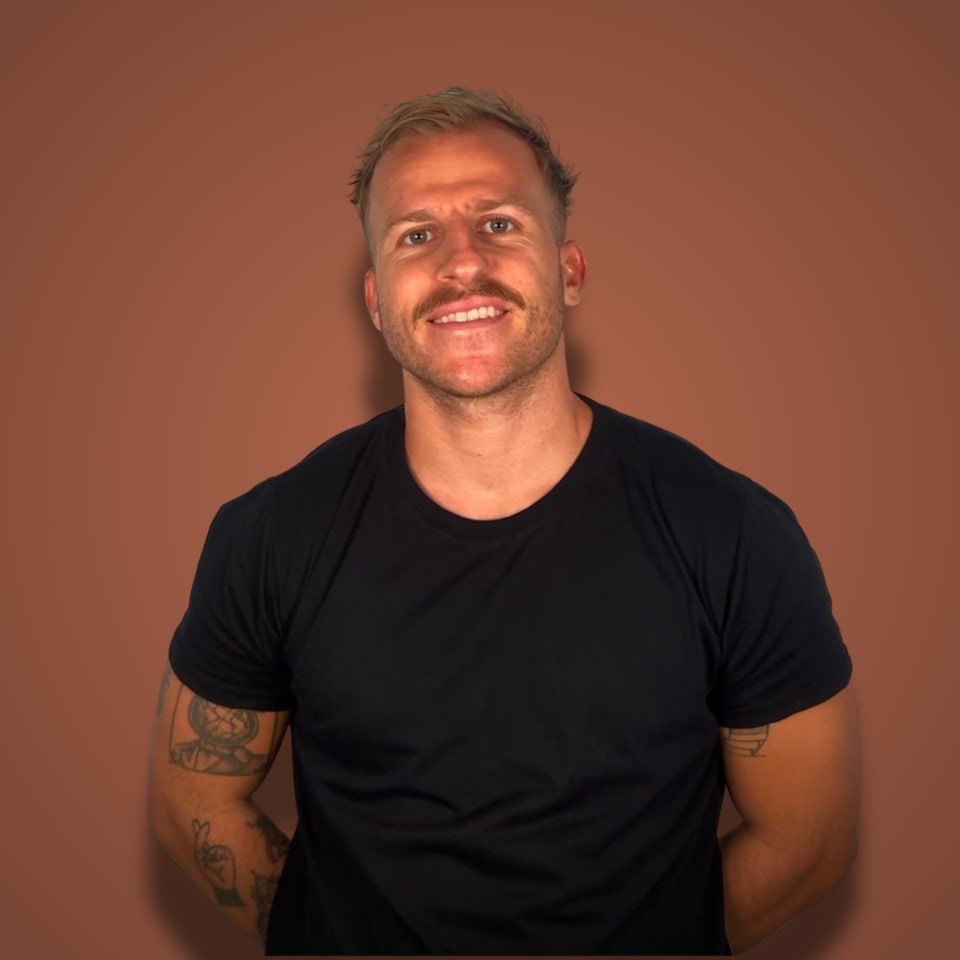
David built a mobile app that hit $13K in a single month. The app stops women from eating sugar. The catch? Even he calls it a "shitty app."
He's French. Six months ago he was a quant, writing Python scripts for traders. He'd never designed an app, never run a paywall, never touched TikTok marketing.
Then he watched a podcast, copied a competitor in three weeks, and made $5,000 his first month.
I sat down with David on the Profitable Founder Podcast. Here's the full playbook.
He copied a $200K/month app in three weeks
Two weeks before he started, David watched a podcast with the founders of Quittr. Three co-founders. 18, 19 and 21 years old. After three months they were making $200,000 a month.
So he downloaded their app. He even paid for it.
His verdict? The onboarding was amazing. Everything after the onboarding was bad. The app is supposed to help you quit adult content. It doesn't really do that.
That's when it clicked for David. When an app makes a lot of money, it's not about what happens after you pay. It's about what happens during the onboarding.
So he didn't reinvent the wheel. He copied Quittr, swapped "adult content" for "sugar," changed the colors and the copy, and shipped. His app is called Stoppr. The MVP took three weeks.
One month later: $5,000 in revenue. (His first month ever, working with four influencers.) This is exactly the kind of micro-SaaS copying playbook that more founders should steal.
People buy the cover of the book
Here's the lesson David kept coming back to. People buy the promise, not the product. They want "I will quit sugar." They don't care what's inside.
So the onboarding does the selling. And for SaaS and fitness apps, his rule is simple: the longer the onboarding, the better.
Some apps run 72 screens. Stoppr runs 45. And 75% of Gen Z users who open it go all the way through to the paywall the first time.
How he builds an onboarding that converts:
→ One sentence per screen, two max. Gen Z attention spans are short.
→ Repeat the benefits over and over. Not on one screen. On many.
→ Repeat the pain points. No subscription = low energy, acne, feeling distant from God.
→ Treat it like a sales letter, not a quiz. A plain questionnaire is boring.
And where does he find the exact words? TikTok. He watches what influencers in his niche say about the pain points, then echoes that language all through the onboarding.
His paywall rate sits at 75%. His conversion rate is around 4%.
The influencer machine that drove 30 million views
Good onboarding does nothing if nobody enters the funnel. David's channel was influencer marketing.
His advice for a brand-new app: work with a few big influencers, not a lot. Two to four, for at least a month. Different profiles, because you don't know yet who your buyer is.
The deal he ran:
→ Around $1,000 per influencer, per month.
→ Four videos each (one per week).
→ 20% paid upfront.
→ A guaranteed minimum of 1 million cumulative views across the four videos. If they fall short, they keep posting until they hit it.
He didn't chase follower counts. He filtered on average views per video, around 100,000. He found them on Instagram and TikTok, searching keywords like "quit sugar" and "no sugar," then outreaching by DM and email. Out of every 100 he contacted, two or three would reply.
In September it all clicked. 30 million views. His trailing 30-day revenue hit roughly $13K.
Then it dropped, and here's why
October was rough. Only two to three million views, and lower quality ones. Fewer downloads, worse retention, revenue down.
The real killer? Churn at 70%. When David stops marketing, the revenue drops. That's the trap with influencer-driven growth: you're renting attention, not owning it.
He's honest about not knowing how to scale Stoppr past this. So he did something most founders won't. He went looking for a partner to take over the marketing for a share of the business.
His reasoning is sharp. If he builds the product, does the distribution and does everything himself, he makes maybe $5K a month. But if he splits 50/50 with someone who owns distribution while he builds, he can make ten times more.
Peter Levels says keep 100% ownership. David disagrees. So do I. Know your genius zone, then let go of the rest.
The real moat isn't the app. It's the community.
This was the part that stuck with me most.
David noticed that apps like Quittr and the "grow taller" apps have something underneath. A Telegram group. Quittr's has 17,000 people in it.
People don't actually join to quit corn or grow taller. They join for the community. And Telegram is hard to fake, because every account needs a real phone number.
So what David thinks will actually push Stoppr to $50K a month isn't the app helping anyone quit sugar. It's the community he can build inside it. People aren't there to solve their problem. They're there to make friends.
I interview founders like this every week → Watch the Podcast
Why he keeps shipping on trends
Stoppr isn't David's only bet. In one week he shipped two new web apps.
What'sTheApp is a TrustMRR clone for mobile apps. It verifies real revenue through RevenueCat's read-only API, so app makers can prove their numbers aren't fake. He built it in a day and a few hours. Seven days in: 1,500 daily visitors and three ad placements sold at $500 each.
Sorreal upgrades cheap Sora 2 videos. If you don't pay $200/month for Sora Pro, your videos look bad and carry a watermark. Sorreal cleans them up for about $1 per video. It took five days to build.
His pattern: jump on the trend, ship a micro-SaaS in under a week with Cursor, and let the audience validate it fast. And it's his X audience that delivered both co-founders. He posted that he was looking, got more than 50 DMs, and some of those people were already making $30K a month with their own apps.
Frequently Asked Questions
What is Stoppr and who built it?
Stoppr is a mobile app that helps women stop their sugar cravings. It was built by David, a French founder and former back-office quant who spent 12 years writing Python and JavaScript scripts for traders before he started building apps in public on X six months ago.
How much money does the Stoppr app make?
Stoppr peaked at around $13K in revenue over 30 days in September 2025, driven by roughly 30 million views from influencer marketing. Revenue dropped afterward because of a 70% churn rate and fewer views in October. David's first month ever brought in $5,000.
How did David grow his mobile app?
Through influencer marketing on TikTok and Instagram. He paid around $1,000 per influencer per month for four videos, with a guaranteed minimum of 1 million cumulative views. He targeted creators averaging 100,000 views per video rather than chasing follower counts.
The takeaway: a great niche plus a long onboarding beats a great product. People buy the cover of the book.