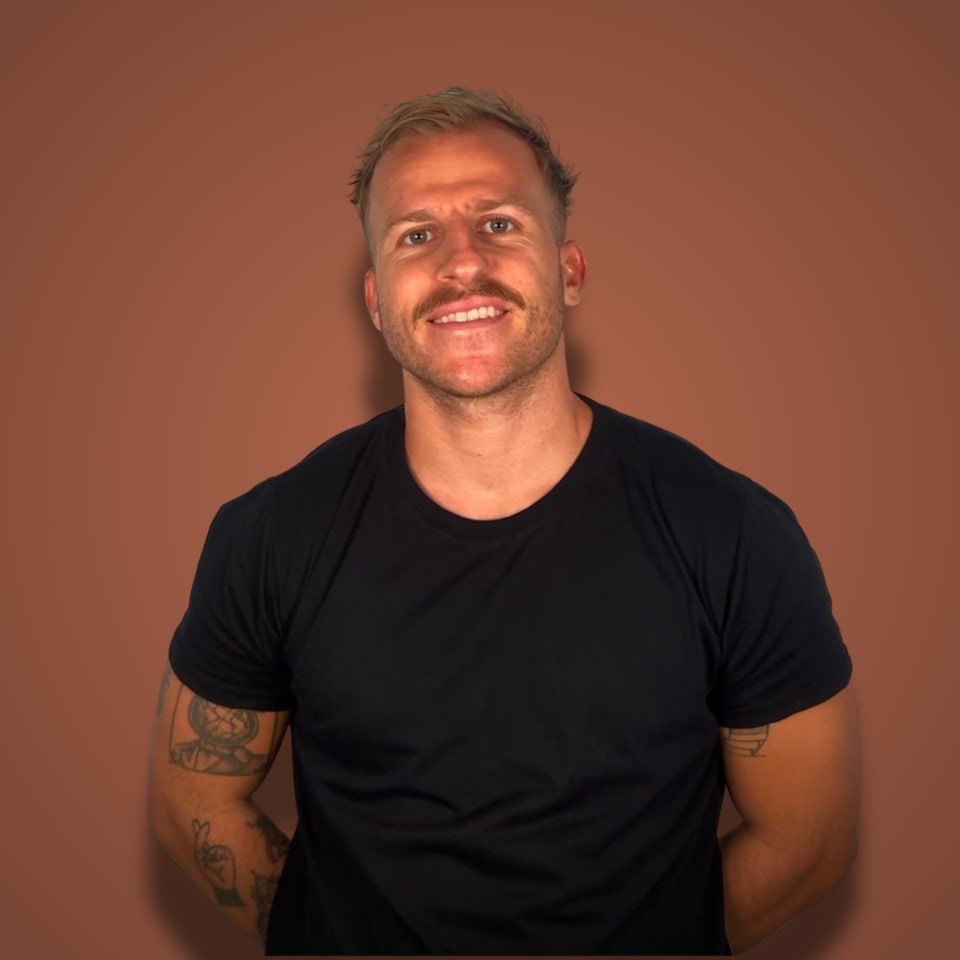
Andrew built a drag-and-drop app builder to $10 million a year, then sold it with over $2 million sitting in cash inside the company.
He was 29. He'd bootstrapped the whole thing. No VC.
Then he built Acquire.com, the leading marketplace for startup acquisitions under $50 million. It's now closed over $1 billion in deals.
Which means he's watched thousands of founders try to sell. He knows exactly what a $10 million company looks like, and what kills most of the others.
I sat down with Andrew on the Profitable Founder Podcast. Here's the full playbook, from idea to exit.
The accidental $10 million company
Andrew wasn't trying to build an empire. He was in college and just didn't want a job.
His goal for Bizness Apps? Make 2 to 3 grand a month. Enough to pay rent so he could keep tinkering.
Then the iPhone came out. He built a drag-and-drop tool that let small businesses spin up mobile apps. Restaurants with food ordering. Hair salons with reservations. Push notifications that felt like magic to a pizza shop owner.
The pain was obvious. Before his tool, the only way to get a mobile app was hiring a custom developer for $50,000. No small business has that.
He knew he was onto something within the first 30 days.
The real weapon was distribution, not the product
Here's the part most people miss. Selling to small businesses directly is brutal. You walk into a restaurant, hunt down the owner, get told to leave.
So Andrew stopped doing that.
Instead he partnered with web design agencies all over the world and let them resell his software under their own branding.
→ White-label the product to agencies
→ Let them sell apps to their own clients
→ Translate the app into 30+ languages
→ Repeat across every agency on the planet
That move sold tens of thousands of mobile apps. He told his own team something I loved: "Even though we sold software, we're a distribution company."
If you want the deeper version of this, it's the same logic behind building a micro SaaS by copying a proven playbook into a tighter niche. The product is rarely the moat. The way you reach customers is.
Why timing beat everything else
Andrew did this twice. Bizness Apps worked. His next one, a crypto exchange called Altcoin, did not. (He literally started it while still in due diligence on the first sale because he was bored.)
The difference, in his words, was timing.
Bizness Apps rode the iPhone wave at the exact right moment. Altcoin had decent timing too, Bitcoin was around $1,000, but ran into SEC regulatory walls and got sold for IP only, no users.
He points to a Bill Gross TED talk where timing comes up as the single biggest factor in startup success across hundreds of companies.
His 2026 version of catching the wave? Look at big clunky software, Salesforce, Workday, and ask how it gets rebuilt for the AI era.
How he learned to run a company (and what it cost)
At its peak, Bizness Apps had about 75 employees. Engineers in China, a team in Ukraine, support in France, designers in the Philippines, sales in San Francisco and San Diego.
Going from solo builder to managing 75 people is the hard part. Andrew didn't figure it out alone.
→ A mentor: Christian Friedland, who built Build.com (roughly $1B/year in sales) and sold for around $50M at 35
→ A paid CEO peer group called 10X CEO, which cost him about $12,000 a year, more than his college tuition
On finding a mentor, his advice was blunt: don't go around asking for one. "Do something cool and interesting." He met Christian after building an MVP and entering an entrepreneurship contest. Traction attracts mentors. Begging doesn't.
That peer group, by the way, is exactly why I push founders toward the right room. The leverage from being around other operators is real, which is the whole point of a good founder mastermind. Andrew's take: spend $100K on learning, grow the business 10%, and that's potentially millions on the exit.
The data behind a $10 million exit
This is where Acquire.com pays off. Over $1 billion in closed deals means Andrew has the actual numbers on what sells. Here's what he's seeing:
→ B2B over B2C, by far. B2C churn can run 7 to 10% a month, which crushes valuation
→ About 70% of acquisitions are SaaS
→ 95% of businesses he sells are bootstrapped, not VC-backed
→ Small, lean teams win. Solo and duo founders both crush it
→ A sale usually means $3 to $4 million in recurring revenue, profitable, with the founder no longer the single point of failure
The most surprising stat? Competition during the sale matters more than almost anything. He's seen SaaS sell for a 0.5x multiple when there was only one buyer.
His saying: "If you have one buyer, you have no buyers." Multiple offers are what push the multiple up.
The red flags that kill a deal
Andrew sees the same deal-killers over and over.
→ Messy financials. A buyer signs the NDA, opens the data room, and there's no P&L. Deal's basically dead.
→ High churn
→ Surprises during due diligence
→ Not being prepared, because nobody wants to waste their time
His prep advice is simple. Get a good bookkeeper once you're making a few thousand a month. Keep a clean P&L. Record short 5 to 10 minute Looms documenting how marketing, support and operations actually run.
One founder he worked with had recorded a Loom for every employee question, then dropped them all into the data room. Best acquisition process he'd ever seen.
And if you're outside the US? Not a red flag. Deals under $10 million are almost always asset sales, so the buyer takes the customers, product and IP and leaves your entity behind.
I interview founders like this every week → Watch the Podcast
What he'd build if he started over in 2026
I asked Andrew the question I ask everyone. Start from zero today, what do you do?
His answer:
→ Start a newsletter or podcast to get inside one specific industry
→ Interview operators and learn their pain points end to end
→ Pick something boring and clunky, like an HR or CRM tool, and rebuild it with AI
→ Go narrow, not broad
His biggest regret with Bizness Apps was going too wide. If he did it again, he'd serve something tiny and specific, like only pizza shops that need ordering, instead of every small business on earth.
And on distribution, he was clear: avoid the saturated channels. Paid ads and cold email are too expensive and too crowded now. Find a clever, almost weird way to reach customers that nobody else is doing.
Frequently Asked Questions
Who is Andrew and what did he build?
Andrew bootstrapped Bizness Apps, a drag-and-drop mobile app builder for small businesses, to $10 million a year and exited for eight figures around age 29, with over $2 million in cash sitting in the company. He then founded Acquire.com, the leading marketplace for startup acquisitions under $50 million.
How much has Acquire.com closed in deals?
Acquire.com has closed over $1 billion in startup acquisitions and is the leading marketplace for deals under $50 million. About 70% of the businesses sold are SaaS, and roughly 95% are bootstrapped rather than venture-backed, with most deals structured as asset sales.
How long does it take to build a company worth $10 million?
Andrew says it usually takes three to four years, sometimes longer. A business selling around $10 million is typically doing $3 to $4 million in recurring revenue, is profitable, and has a founder who has stepped back enough that they're no longer the single point of failure.
The whole playbook comes down to one line from Andrew: build a lean, bootstrapped B2B SaaS, obsess over distribution nobody else is copying, and keep your numbers clean so the buyers compete for you.