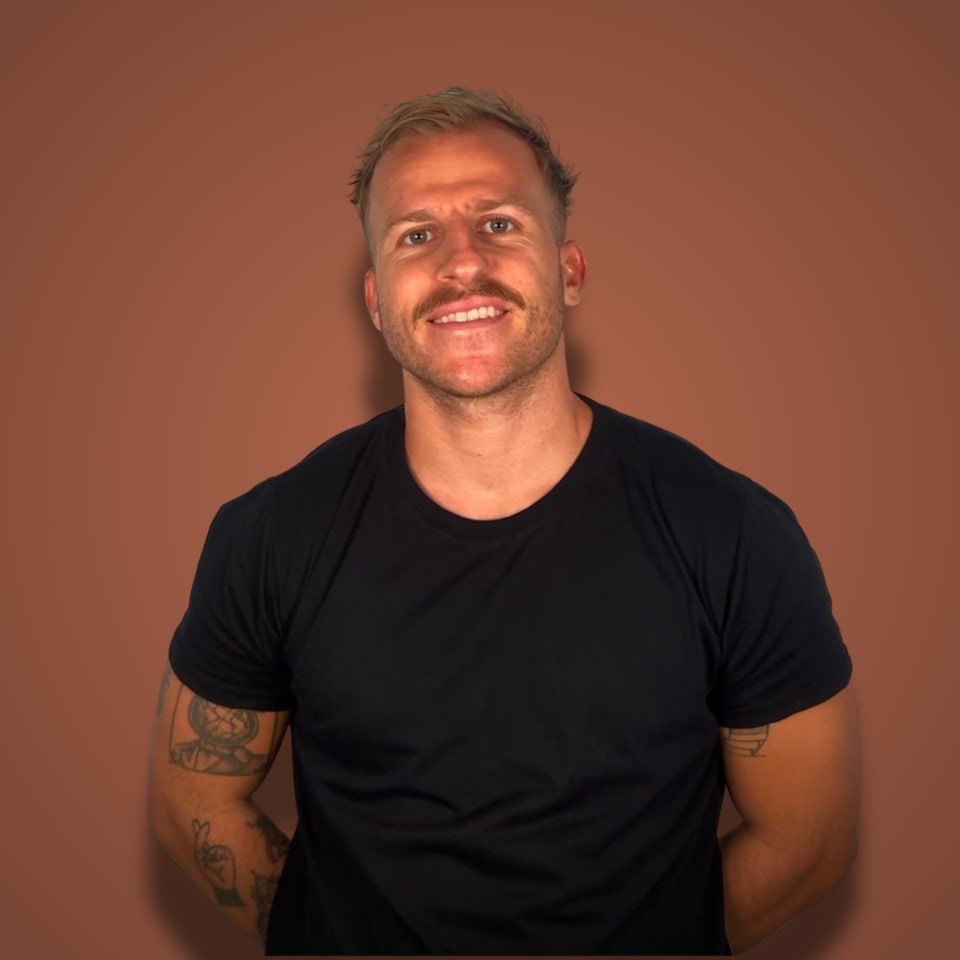
To learn how to code, Abdulla risked 10 years in a concentration camp.
He's Uyghur, born in China. Touching a VPN there could end his life. And his family's. "If you got caught using VPN, it's your life is done. And also maybe your parents, until three generations."
He did it anyway. Signed up under a friend's name, paid in crypto, opened YouTube for the first time in his life, and taught himself to code from Indian tutorials in his dorm room.
That gamble landed him a job at TikTok at 19. Then he walked away from it, bribed an official for a passport, flew one-way to America, and slept in his car in San Francisco while driving Uber at night.
Now he's the CEO of Interview Coder, a million-dollar startup. He posed in Times Square with Roy Lee.
I sat down with Abdulla on the Profitable Founder Podcast. Here's the full story.
Learning to code was a crime
First day of university, a teacher gathered everyone in a big room and listed the things you must never do. Number one on the list: never touch a VPN.
That was the first time Abdulla heard the word. So he found a way.
→ Signed up under a Chinese friend's name (less censorship for them)
→ Paid in crypto
→ Used a Proton email and the Mozilla browser
→ Never commented, never engaged, stayed fully anonymous
"It's like extremely blessing," he told me about opening YouTube. In China you can't use Google search either. He'd been coding from 20-year-old translated Chinese textbooks. His classmates were learning C from professors reading 300-page slide decks nobody understood.
YouTube put him light-years ahead. "I love Indian guys for merely that reason. They are the ones who saved me from quitting programming."
TikTok offered to slap his face with money
By his third year, he had a full-time offer from ByteDance, TikTok's parent. He worked there 1.5 years, building the system that targets TikTok ads based on your precise location.
The pay was unreal. TikTok's culture, in his words: "As long as you work really hard, we will slap your face with money. We will make you extremely rich, richer than most of the CEOs."
Bonuses ran from 3 months of salary up to 100 months. Free rent within a mile of the office. Free meals. Free gym.
But he saw the ceiling. As a Uyghur, the top jobs would never be his. And he could "disappear at any moment." So he left.
Four years to make it or die trying
Getting out was brutal. He spent a fortune on bribes and connections just to get a passport. He came to the US at 26.
"Among 1 million Uyghurs, there's one Uyghur who can come to the United States." A 9-to-5 was never going to satisfy that.
So he gave himself a deadline. Four years to build a startup. If it didn't work, he'd join the military or go back to school.
His first months were chaos. He drove the whole country because he didn't know where to stay. He built his first app, an AI keyboard that translated any text you selected, back in April 2023. He got a confirmation email from Buildspace. He realized SF was the place.
So he and a friend drove 3,300 miles from Boston to San Francisco. One goal: build something here.
Sleeping in his car, driving Uber to survive
SF is expensive. He couldn't afford a place, so he lived in his car.
At night he drove Uber for a few hours, just enough to survive. He picked Uber on purpose. It was the only job that let him listen to lessons and practice English while he worked.
What kept him going? One word. Desperation.
"If I die on the street, just nobody cares about me. In this new country, nobody knows about me." He had no relatives, no safety net, no way back to China (as a Uyghur, returning could mean a lifetime in a camp).
"If I could get a six-figure job, or go back home, I would never be able to do it. I was just like, I don't have any other choice."
Rock bottom turned out to be the launchpad. If you want to understand why building when you have nothing to lose works, it's the same energy behind every great micro-SaaS playbook: pick one tiny problem, go all in, ship.
How he became CEO of Interview Coder
Abdulla was already shipping consumer apps when he met Roy Lee early on. They clicked, they knew what each other was building.
Then Roy blew up. Within six months he came to SF, launched, and raised a huge round (5.3 million, then 15 million). Out of that came an agreement: Abdulla would take over Interview Coder.
Here's the lineage. Interview Coder became Cluely. Cluely is now the AI note-taking app. Interview Coder split off in a different direction, and that's the one Abdulla runs.
Same core product, two verticals:
→ Cluely chases AI note-taking and meeting summaries
→ Interview Coder chases interviews, built for total undetectability
His thesis on why this works: in America, you go global from day one, so you win by owning one extremely small niche perfectly. The "everything app" doesn't make sense here. That's a China mindset.
A million-dollar company run by two people
A month and a half before we talked, Interview Coder was one person. Just Abdulla. Coding, marketing, tax, accounting, two hours of customer support emails every single day.
A million-dollar startup. One guy.
Then he hired one great engineer. Now it's a two-person team, in a separate office from Cluely. Lean to the bone.
His productivity tricks are dead simple:
→ No phone, no scrolling, until 1 or 2pm
→ Do ONE thing. One channel, one goal, for the whole month (this month it was Reddit)
→ Live and work together (the "007" culture vs China's "996")
The goal now is 10 million a year. And they've done zero paid ads to get here.
I interview founders like this every week → Watch the Podcast
Why a cheating tool is actually fixing interviews
Yes, Interview Coder was built to cheat interviews. An invisible layer on a video call that feeds you AI answers based on the conversation and your screen. Press command-enter, get the answer. The interviewer sees nothing.
Abdulla isn't ashamed of it. He thinks the whole interview system is broken.
"Imagine the smartest people grinding 600 LeetCode problems for hours, just to get into a FAANG company. That's not interesting."
His point: anything you have to memorize should be deleted, because AI handles it like a calculator handles math. He'd rather you build a random app and actually learn computer vision, APIs, and databases.
And the company sits on the most live data in the market. Last week's Google interview questions. Last week's Meta questions. Pulled in real time, during actual interviews. The plan is to expand past coders to every interview (accountants included), then rebrand the whole thing.
The lesson
I asked what kept him moving at the bottom. His answer stuck with me: the world rewards courage. "The universe rewards the scar on your face."
Abdulla broke the law, left everything, slept in a car, and bet four years of his life on a single idea. Most of us won't risk a fraction of that.
Frequently Asked Questions
Who is the CEO of Interview Coder?
Abdulla, a Uyghur founder originally from China, is the CEO of Interview Coder. He taught himself to code on YouTube using a VPN (illegal in China), worked at TikTok for 1.5 years, then moved to the US at 26 and took over Interview Coder after meeting Roy Lee, who had raised $5.3M then $15M for the related company Cluely.
How much money does Interview Coder make?
Interview Coder is a million-dollar-revenue startup that Abdulla ran almost entirely solo before hiring a second engineer. The team is now just two people, and they've used no paid advertising. Their stated goal is to reach 10 million dollars a year.
What is the difference between Interview Coder and Cluely?
They started as the same product and share most features, but split into two verticals. Cluely became an AI note-taking and meeting-summary app. Interview Coder focuses on interviews, with an invisible on-screen layer built for total undetectability that feeds AI answers during live video calls.
Abdulla risked everything to learn one skill on YouTube. The takeaway: when you have no other option, you find one.