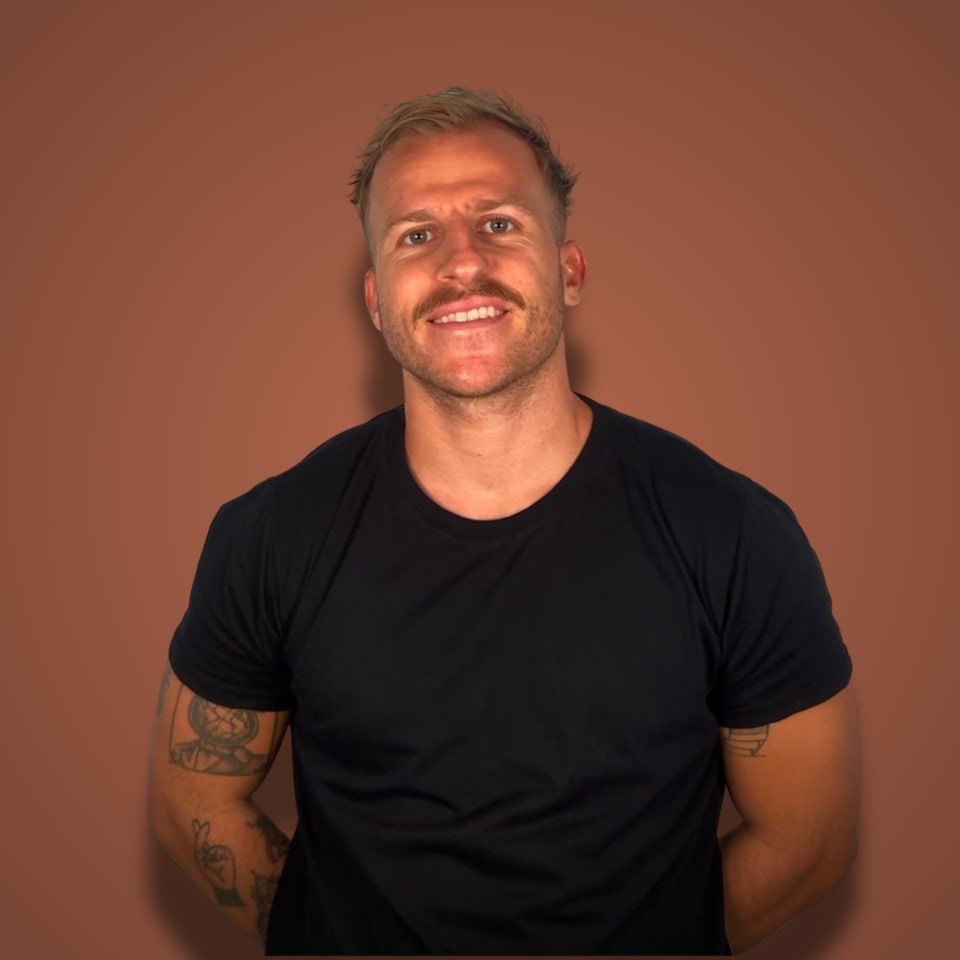
Eight months ago Sebastian was making $15,000 a month from his apps.
In January he made $100,000. In a single month.
He didn't run a single ad. He didn't post on Twitter. He didn't go on TikTok. 98% of his users found him by opening the App Store and typing "habit tracker."
That's the part that gets me.
Most founders I talk to are grinding on distribution, burning hours on content, paying for ads that barely break even. Sebastian quietly built one of the cleanest organic growth machines I've seen, and almost nobody knows his name.
I watched his full breakdown on Starter Story Build and took notes like a student. Here's the whole thing, then I'll pull out what actually matters for you.
The numbers first, because they're wild
Let me lay out exactly where Sebastian is, because the numbers are the whole point.
He builds four apps that together make over $50,000 every month. His main one is Habit Kit, a habit tracker for iOS and Android. He recently launched a second called Focus Kit.
His apps crossed $500,000 in total revenue in 2025. He made over $100,000 in January alone.
And the kicker: 98% of his users come straight from App Store and Google Play search. No paid ads. No Instagram. No Twitter funnel. People open the store, search, find Habit Kit, install.
He calls it App Store Optimization. Think SEO, but for the App Store. And he's basically nailed the indie version of it.
Now here's why I think this story matters more than another "growth hack" thread. Sebastian was at $15K/month eight months before this. He didn't 7x by being lucky once. He did it by getting three boring things right and then waiting three years for them to compound.
Foundation one: your app name is your most valuable keyword
Sebastian's app is not called "Habit Kit" in the App Store.
It's called "Habit Tracker - Habit Kit."
His brand is Habit Kit. But the keyword "habit tracker" is worth far more to him than his own brand name, so he leads with it. That's the single highest-leverage decision in the whole story.
His logic: the app name and subtitle are the most important ASO factors by a mile. Nothing else comes close. Apple and Google read those two fields to decide when to show your app. So you put your money keyword right there in the name.
Companies like Duolingo can afford to just write "Duolingo" because everyone already searches for them. You can't. As an indie, you borrow search volume by naming your app after what people actually type.
But you can't name the app first. You have to do the keyword research before you even pick the name. His process:
→ Brainstorm keywords with ChatGPT or Claude. What do people actually search for in your category?
→ Validate the volume with an ASO tool. He looks at two numbers: popularity (how often it's searched) and difficulty (how hard it is to rank). The sweet spot is high popularity, manageable difficulty.
→ His contrarian take: for your primary keyword, he'd rather compete for a hard, high-value term than dominate an easy, low-volume one. The big keyword is worth fighting for.
Then the rest of the metadata:
The subtitle gets you another 30 characters for secondary keywords. His Habit Kit subtitle is "streaks and accountability." Don't repeat words between the name and subtitle, because Apple treats them as one combined string for indexing. You're wasting characters if you double up.
Then there's the hidden keyword field in App Store Connect. 100 characters nobody sees but Apple indexes. The rules: separate with commas, no spaces, no plurals if you already used the singular, no competitor app names (Apple can reject you), and use all 100 characters.
If you're earlier in the journey and still figuring out whether your app idea even has search demand, this is the same muscle as validating any product. I wrote about that here: how to validate a SaaS idea. The keyword research IS the validation. If nobody's searching, nobody's buying.
Foundation two: your first screenshot decides everything
Once someone finds your app, you have 3 to 5 seconds. That's it.
People scroll through App Store screenshots like crazy. So the screenshots are your conversion rate, not just decoration.
Sebastian's rules:
Put your best, most visually impressive feature on the first screenshot. For Habit Kit that's the grid-based habit view. It's unique, colorful, and it instantly separates him from every other habit tracker. He does NOT waste the first slot on a generic welcome or onboarding screen.
Show the real interface. People want to see what they're actually getting. Skip the abstract graphics and lifestyle photos. They look fancy and they don't help anyone understand the app.
And here's the lesson that stuck with me. He had a designer build beautiful new screenshots, way more polished than his original self-made ones. He was sure they'd convert better. He ran an A/B test through Apple's product page optimization feature.
His old, less polished screenshots won.
Authentic beat professional. Fancy is not always better. Test everything, assume nothing.
This is the same lesson I see with founders who grow apps through content too. The rough, real thing usually outperforms the glossy thing. If your growth is more UGC-led than search-led, this breakdown pairs well: how UGC actually moves app installs.
Foundation three: reviews are the flywheel
This is the one Sebastian thinks is the biggest of all three.
Ratings boost your search ranking because Apple and Google heavily weight them. They boost your conversion rate because they're social proof. And even if you rank well, bad reviews tank your downloads. It's a loop: more reviews push you up, more downloads send more positive signal back to Apple, which pushes you up more.
Habit Kit has over 7,400 ratings on iOS at a 4.8 average, and over 10,000 on Google Play at 4.6. That took years. It's now a moat against every newer app.
Getting reviews is hard. Here's exactly what worked for him:
→ Timing is everything. Show the review prompt at a happy moment, not during onboarding and not when something breaks. For Habit Kit, the prompt appears right after someone completes their first habit. They feel accomplished. That's when you ask.
→ Don't be annoying. If someone dismisses it, don't show it again for a while.
→ Respond to every single review. He thanks the good ones, helps on the bad ones. People often update a one-star to five-star after he fixes their issue.
→ The email signature trick. He gets a lot of support emails. After every reply he adds: "Hey, if you're enjoying the app, I'd be grateful for a review." The user just got fast, kind help from an actual developer, and a gentle ask at that exact moment works. It quietly stacks up a lot of five-star reviews.
→ Use reviews as product insight. If 20 people ask for the same feature, that's your roadmap. He's prioritized entire features based on review patterns.
That review prompt timing is sneaky-smart. You're catching someone at peak satisfaction and asking for one tiny action. Most founders ask at the worst possible moment, right after install or right after a crash, and wonder why nobody says yes.
The part nobody wants to hear: it took three years
Sebastian launched Habit Kit in November 2022. He was invisible.
He'd search "habit tracker" and scroll through pages without finding his own app. And he was doing everything right. Keyword research, good screenshots, collecting reviews. Still not ranking.
He kept shipping. Kept improving the app. And slowly it shifted.
→ After about 6 months: cracked the top 10 in smaller markets like the UK and Germany.
→ After about a year: started showing up in the US top 10 occasionally, not consistently.
→ After nearly 3 years: now consistently in the top five.
The actions you take today in the App Store might not pay off for months. ASO is a marathon, not a sprint. The reason most people never get the $100K month is that they quit at month four when the graph is still flat.
That's the whole game with organic. The compounding is invisible right up until it isn't.
What I'd actually take from this
If you're building an app, or even thinking about it, here's the compressed version:
→ Do keyword research BEFORE you name the app. Your name is your most valuable real estate.
→ Put the keyword in the name, secondary keywords in the subtitle, the rest in the hidden 100-character field. Don't repeat words.
→ Lead your screenshots with your single most impressive, real feature. A/B test. Don't assume polished wins.
→ Build the review flywheel: ask at happy moments, reply to everyone, use the email signature trick, mine reviews for your roadmap.
→ Then wait. Keep shipping. Give it years, not weeks.
None of this is clever. It's just done right, then done patiently. Which is exactly why it works and why most people won't do it.
FAQ
How much does Habit Kit make?
Sebastian's apps together make over $50,000 a month, crossed $500,000 in total revenue in 2025, and did over $100,000 in January alone. Habit Kit is the main one.
How does Habit Kit get users without ads?
98% of users come from App Store and Google Play search. No paid ads, no Twitter, no TikTok. Pure App Store Optimization (ASO).
What is the most important ASO factor?
The app name and subtitle. Apple and Google use them to decide when to show your app. Sebastian named his app "Habit Tracker - Habit Kit" to capture the high-value keyword, not just his brand.
How long does ASO take to work?
Years. Sebastian launched in November 2022 and was invisible. Top 10 in smaller markets after 6 months, occasional US top 10 after a year, consistent top five after nearly 3 years.
How do you get more app reviews?
Prompt at a happy moment (Sebastian asks right after a user completes their first habit), respond to every review, add a gentle review ask to your support email signature, and never re-prompt someone who dismissed it.
If you're building solo, don't build alone
Here's what I notice in every founder like Sebastian: the obsessive care for each user, the patience to wait three years, the discipline to test instead of assume. That stuff is hard to keep up by yourself.
It's why I built Profitable Founder Club, a private group for SaaS and app founders past $5K MRR who are grinding toward $100K. Bi-weekly calls where we solve real member problems, monthly Q&As with founders who've already crossed $100K, capped at 20 people so it stays real.
If you want the room where stories like this get pulled apart and applied to YOUR app, come hang out.
Listen to the Profitable Founder Podcast →
New founder breakdowns every week. Real numbers, no fluff.