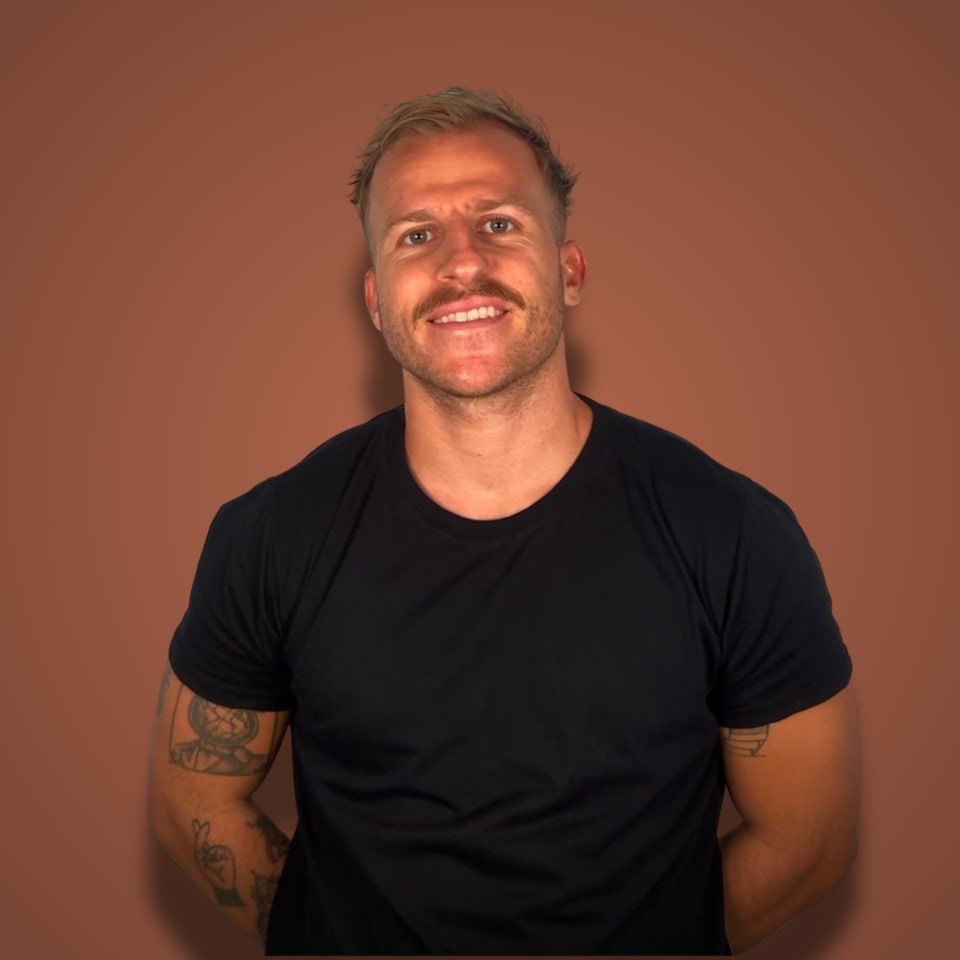
A height prediction app makes $100,000 a month.
Read that again. An app that guesses how tall you'll be. Built by a 20-year-old college student who got rejected from every finance job he applied to.
When Pat Walls from Starter Story first heard about it, he laughed. He figured it maybe did $10K a month, tops. Then Michael opened his dashboard: roughly $100K a month, about a million downloads across iOS and Android.
I watched the whole interview twice. This story has the cleanest zero-to-scale playbook I've seen in months, and none of it requires a genius idea. The idea is almost stupid. That's the point.
The idea was sitting in a TikTok comment section
Michael was a finance student at NYU. He recruited hard, got rejected from his dream jobs, and decided to build apps instead. Not one specific app. Any app. His logic: even if the app fails, he comes out knowing marketing, which was the skill he'd always lacked.
So he went idea hunting on acquire.com, the marketplace where people sell small software businesses. He found a height prediction app listed for about $20,000.
He didn't buy it. He took it as proof.
If someone built this and it's worth $20K, the problem is real. And he remembered being 13, googling "height calculator" himself. Then he checked TikTok and found the final confirmation: under every video about height, hundreds of comments like "I'm 15, my mom is 5'4, my dad is 5'11, how tall will I be?"
People were begging for the product in public.
→ The takeaway: you don't need an original idea. You need proof of demand. Marketplaces like acquire.com are full of validated ideas you can build your own version of.
First sale in 2 days
Michael built Go Tall over a summer. The app predicts your adult height, starting from CDC growth data (the same charts your doctor uses) and adjusting with linked research studies. There's a puberty quiz, habit tracking, sleep logging, even meal scanning.
Two days after launch, with barely any views on his content, he got his first sale.
That did more for him than any amount of planning. Someone paid for a height prediction from a total stranger's brand-new app. The demand was real.
Pricing is simple: $35 a year or $5 a week, with a free tier that keeps non-payers inside the app. The prediction itself sits behind the paywall, and his paywall shows to 91% of users who start onboarding. His onboarding is long on purpose. Every question he added came from his TikTok comments, where people kept volunteering more data ("my grandpa is tall, does that count?") because they wanted a more accurate prediction.
The users designed his onboarding for him. He just listened.
The growth playbook: 10 TikToks a day, then 50 DMs a day
This is the part most founders skip, and it's the whole reason Go Tall exists.
Michael spent his first month making 10 TikToks every single day. Pure experimentation. His first viral format was replying to those height comments and predicting people's heights on camera. At one point he was getting 10 to 20 DMs a day from people asking for their prediction.
Once one format worked, he did something smart: he tested whether it was repeatable. He ran it on two more of his own accounts. Both blew up. He had his girlfriend post it. Her account blew up too.
Now he knew the format worked regardless of who posted it. So he scaled the humans. He DM'd 50 creators a day with a simple pitch: "This video is super easy to make, want to try?" Because the format was proven and simple, creators said yes for cheap.
He also knew his numbers cold. One channel, one format, clean attribution: he knew exactly how many downloads 100K views produced, which told him exactly what he could afford to pay a creator. That kind of outbound only works if you treat it like a pipeline: wide top, consistent follow-up, clear offer. If you're building your own version of this motion, TwiLead's breakdown of lead nurturing strategies covers the follow-up mechanics that most founders wing and lose deals on.
I wrote a full playbook on this exact motion in how to get customers for your app. Michael's version is the purest execution of it I've seen.
From $3K to $100K a month in five months
The revenue ramp, step by step:
- Month 1-2: Michael plus a few cheap UGC creators → about $3K/month
- Paywall optimization → about $10K/month
- Month 5, more formats and more creators → about $30K/month
- Paid ads on top of proven organic content → over $100K/month
Notice the order. He didn't touch paid ads until organic told him exactly which creative converts. By the time he spent his first ad dollar, he already knew the format, the hook, and his cost per install. Ads just poured fuel on a fire that was already burning.
Most founders run this backwards. They launch, buy ads against untested creative, burn $2K, and conclude "paid doesn't work for us."
Paid works fine. It just multiplies whatever you feed it, including zero.
The tech stack is almost embarrassingly cheap
For an app doing $100K a month, the stack is tiny:
- Expo for the app itself, one codebase for iOS and Android
- Superwall for building and testing paywalls
- Adapty to get paid faster than Apple's brutally slow payout cycle
- Singular as the attribution tool, at about 3 cents per install
That's it. No custom backend story, no infrastructure flex. As Pat joked in the interview, you could build the app itself in a few hours with Claude Code.
The product was never the moat. Distribution was. A million downloads is the moat.
Climbing cringe mountain
My favorite part of the interview isn't a tactic. It's what Michael said at the end.
He comes from an environment (NYU finance) where status means a prestigious corporate job or a VC-backed startup solving something complex. A height prediction app gives him zero social status. He said it himself: telling people "I'm building a height prediction app" was embarrassing. People literally answered "yeah... good luck."
His words: "There are gems when you're willing to completely let your ego go."
Pat called it climbing cringe mountain. You have to make the stupid TikToks, build the unglamorous app, and look silly for months before anything works. The founders who can't handle looking silly never find out what was on the other side.
I've felt this personally. Posting your numbers publicly when they're small feels awful. Doing content that flops for weeks feels worse. But every founder I interview who broke through has some version of this same story: the willingness to be cringe was the actual filter.
What I'd steal from Michael's playbook
→ Hunt for validated ideas, not original ones. Acquire.com listings, app store charts, and comment sections are demand databases. Copy the demand, differentiate the execution.
→ Check your idea against basic human needs. Michael used Maslow's hierarchy: Go Tall hits esteem (people want respect) and belonging (people think height affects dating). If your app touches none of the core needs, that's a warning.
→ Prove the format before you scale the format. One account, then three accounts, then other people's accounts, then paid. Each step de-risked the next.
→ Let users write your onboarding. Michael's 91% paywall show rate comes from questions his audience literally asked for in the comments.
→ Do the unscalable outbound. 50 DMs a day to creators isn't glamorous. Neither was the result of skipping it: nothing.
If you want another version of this same pattern from different founders, read how two college athletes built 3AK to $20K a month. Different product, same discipline.
FAQ
How much money does the Go Tall app make?
Go Tall averages about $100,000 a month in revenue, according to founder Michael's dashboards shown in the Starter Story interview. The app has roughly 700,000 downloads on the App Store plus a couple hundred thousand on Android, about a million total.
How does a height prediction app actually work?
Go Tall starts with CDC growth chart data, the same reference doctors use, then adjusts the prediction using research studies linked to onboarding questions like parental height and puberty stage. Users log sleep, meals, and stretching over time, and the prediction updates as the app tracks their growth.
How did Michael validate the idea before building it?
Three signals: a similar app was listed on acquire.com for about $20,000 (someone had already built a business on it), he remembered googling "height calculator" himself as a teenager, and TikTok height videos were full of comments from teens asking to have their height predicted. He got his first sale two days after launch.
What should a solo founder copy from this story?
The sequence. Organic content first (10 TikToks a day until a format works), then replicate the format across accounts, then hire cheap UGC creators via DM outreach, then paid ads only once the numbers are proven. Revenue went $3K → $10K → $30K → $100K a month in about five months.
I break down stories like this every week with the founders themselves: real numbers, real playbooks, no fluff.