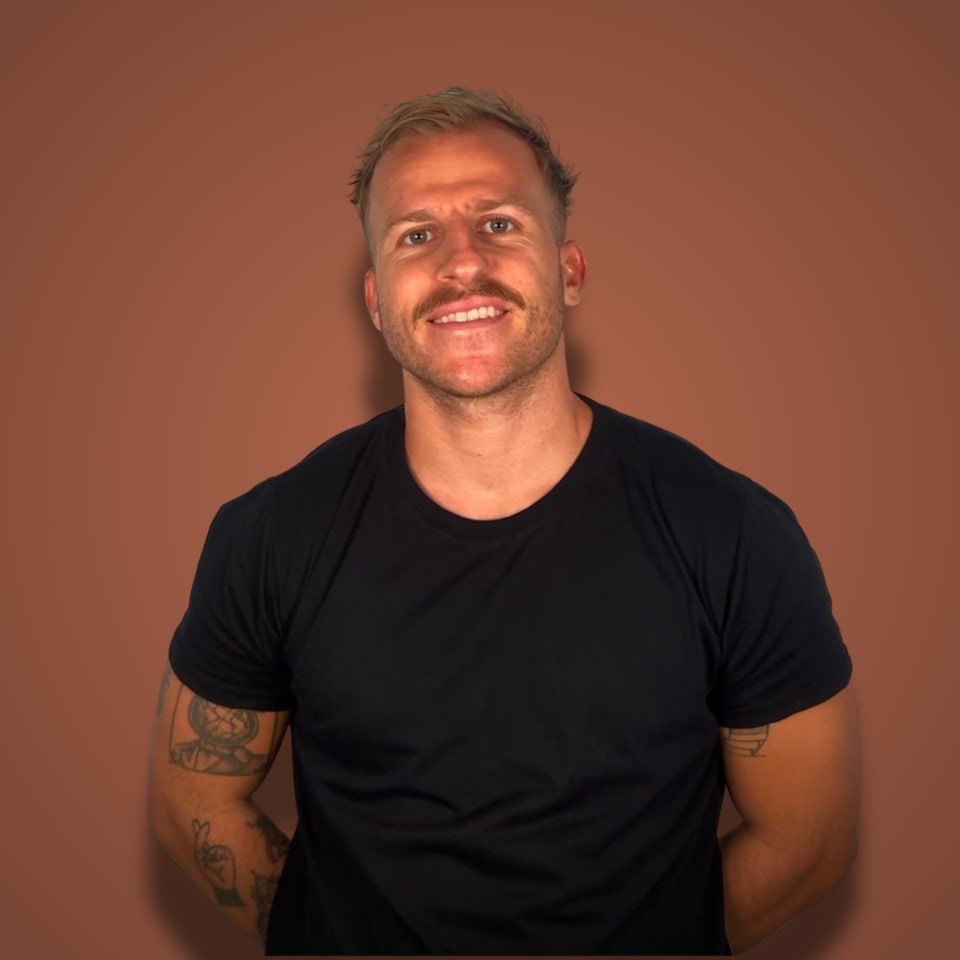
Nicholas Motamedi made his first million in profit at 16 or 17.
By 21, he had ownership in a portfolio of Fortnite games doing over $20 million a year in revenue. Then Whop acquired his company.
His model sounds made up: a mini private equity firm inside a video game. Buy shares in Fortnite maps. Make them perform better. Put digital billboards inside them. Repeat.
I watched his full interview on The Brett Way and took notes like a madman. Because underneath the Fortnite skin, this is the cleanest playbook I've seen for a question every bootstrapped founder faces: do you sell services, or do you build equity?
Nicholas did both, in the right order. Here's the whole story, with the real numbers.
How Fortnite maps actually pay (a penny per 10 minutes)
Most people have no idea Fortnite has a creator economy at all.
It works like this. Epic Games built a simplified version of Unreal Engine called UEFN. Anyone can use it to build a custom game mode (a "map") and publish it to Fortnite's discovery feed. Good thumbnail, good retention, and the algorithm broadcasts your game to millions of players.
The payout math, reverse engineered by creators: roughly a penny for every 10 minutes of gameplay.
Sounds like nothing. Until you hear that top maps rack up tens of billions of minutes played. Fortnite pays out around $400 million a year to map creators. Roblox pays out close to a billion.
Nicholas treated it exactly like YouTube: a content game where you work the algorithm. Thumbnail gets the click. Retention gets the distribution. Lifetime engagement per player is the metric that pays.
One brutal constraint shaped everything: the lifetime value of a player was about 10 cents, max. So customer acquisition had to cost under 10 cents.
→ When your LTV is 10 cents, you can't buy attention. You have to engineer it.
Brain Rot Box Fights and the 200 million views machine
So how do you get millions of players for under 10 cents each?
Nicholas's answer was a game called Brain Rot Box Fights. His team had bought a share in it from the original founder, then poured fuel on it.
The game itself is simple. You spawn in a big box with 20 other players and fight to the death, rounds every 2 or 3 minutes. Each round you get a superpower based on whatever brain rot meme is viral that week (Tung Tung Sahur, Will Smith commenting on the economy, that whole universe).
That last part is the genius bit. The game was a mirror of social media. Whatever was trending, they animated it and shipped it into the game within days.
Then they recorded in-game footage and pushed it through an in-house network of UGC accounts with Fortnite-heavy audiences. At peak: around 200 million views a month for one game.
Viewers saw the clip, typed a 12-digit island code into Fortnite, and played. Massive friction, but at 200 million views the funnel still filled.
He tried the influencer route too. They built maps with LazarBeam, SypherPK, and a horror game with CaseOh where you had to escape him (one video from that pulled 30 to 40 million views). It went insanely viral and then died, because you don't replay a horror game once you know the jump scares.
→ Influencer spikes are ephemeral. Owned distribution compounds. He kept the UGC network and dropped the one-off collabs.
The ceiling on this model is real, by the way. Steal a Brainrot, the game that mastered both retention and meme marketing, was making close to $10 million a month on Fortnite. Its Roblox original peaked around $3 million a day with spikes of 20 million concurrent players.
The record label model: why he bought equity instead of selling services
This is the part that applies to you and me.
Nicholas had a development team, a growing track record, and a UGC distribution network. The obvious move was an agency: charge popular map creators a retainer to build and grow their games.
He tried that exactly once, on a scope-of-work deal sourced through an external agency. He hated it. Locked into a scope nobody loved, executing work he wasn't proud of. (Every agency owner reading this just nodded.)
So instead he ran what he calls a record label model:
- Find talented young creators who understood what players wanted but couldn't build efficiently
- Buy a share of their game (sometimes around 5%) at a fair price
- Plug in his dev team, his UGC network, his brand deal pipeline
- Everyone's stake goes up
They did brand activations too. A Snoop Dogg concert inside an only-up game. A map for Nav's Rexdale album launch. Working with Snoop's team at his compound, as one does at 20.
Cash flow from operating, equity for the long game. That's the parallel Brett drew in the interview, and it's the most useful sentence in the whole episode: learn a skill, sell it for cash flow, but always convert the winners into ownership.
I see this same pattern inside agencies that pivot to products. The service funds the equity. The equity is the exit.
FOV: the ad tech wedge that made everything else possible
Buying 5% stakes in top games needs an edge. Why would the owner of a winning map sell you anything?
Nicholas manufactured the edge: he built ad tech that made every game he touched more valuable.
His team wrote a snippet of code called FOV (field of view). It scanned what a player was actually looking at in-game and reported impressions back to advertisers in real time. Suddenly a billboard inside a Fortnite map was measurable inventory, like a real billboard but with perfect attribution on eyeballs.
Then they built a self-serve portal. A brand uploads an image, buys placement, and the ad shows up on billboards across the game portfolio. They were even starting to integrate with real billboard networks that wanted to sell in-game inventory.
Now the pitch to top map owners writes itself: sell us 5%, we integrate our ad tech and dev support, your remaining 95% earns more than your 100% did. The kind of deal nobody turns down.
If that sounds familiar, it's because AppLovin ran the same play in mobile gaming. Buy games that look overpriced, install your ad stack, make the math work. AppLovin is now worth north of $100 billion and does about $6 billion a year.
Nicholas mapped his thesis directly off theirs: roll up a $400M/year creator ecosystem by monetizing it better than anyone else could.
→ The wedge wasn't capital. It was a capability nobody else had.
Why he sold to Whop instead of finishing the rollup
This is the part that surprised me.
The rollup was working. So why get acquired?
His answer was about ceilings, not money. He'd maxed out his environment: same people, same conversations, no one above him pulling him up. And gaming's TAM had a hard cap. Whop processes close to $4 billion a year for its merchants, almost all of whom buy ads to grow. The attribution problem he solved for billboards in Fortnite is the same problem, 100x bigger, for every creator and info business on the platform.
So now he's building "one-click advertising" inside Whop: upload a creative once, run it across Fortnite, Meta, and eventually every channel, with attribution and payments native to one platform.
Early result that made my jaw drop: a growth agency called Apex Initiative was stuck at $10K a month in ad spend because of credit card limits, despite great return on ad spend. Whop removed the payment friction (revenue lands on the platform, ads are paid from the same balance, no 14-day settlement loop). Within 2 weeks they went from $5,000 a day in spend to $30,000 a day, and revenue roughly 3x'd.
Selling isn't always quitting. Sometimes it's trading a $400M pond for a $4B one. If an exit is anywhere on your map, read the 7 rules a $23M app buyer uses to judge what you've built first.
What I'm stealing from a 21-year-old
I run a podcast and a club for SaaS founders doing $5K to $50K MRR. Different world than Fortnite maps. These lessons still transfer almost one to one.
Set goals you can actually hit. Nicholas didn't start with "make a million." He started with $10,000 in 6 months from sneaker reselling to buy a car, then reverse engineered $300 a day. Confidence came from kept promises to himself, and each kept promise raised the ceiling. I did the same thing with MRR targets and it's the only goal system that's ever worked for me.
Cash flow first, equity always. Services and retainers pay for the swing. Ownership is the swing. If you're all service revenue, you own a job.
Build the capability that makes you the obvious partner. His 5% stakes were cheap because his ad tech made the other 95% worth more. What's the one thing you do that makes everyone you touch richer?
Guard your attention like revenue. The guy who engineered brain rot for 200 million monthly views keeps screen time blockers on his own phone, with the password held by his brother in another state. His test for his team: name 10 of the videos you watched in your 2 hours of TikTok today. Nobody can. He built the slot machine and refuses to sit at it.
The barriers he paid for are now free. At 18 he lost most of his money because building his idea meant hiring experts he could barely afford. Today, he says, you just ask Claude. He saw a thread of someone who never opened Fortnite spin up an AI agent that shipped 20 maps in a month and made $5,000. The window he climbed through at 16 is wide open, and it's open for boring B2B software too, not just games.
FAQ
How much money do Fortnite map creators actually make?
Payouts work out to roughly a penny per 10 minutes of gameplay, based on numbers creators have reverse engineered. Epic pays out around $400 million a year across the ecosystem. Top maps with billions of minutes played earn millions per year, and outliers like Steal a Brainrot have reached roughly $10 million a month. The median creator makes very little, like every creator economy.
Do you need to know how to code to build a Fortnite map?
Less than ever. UEFN handles level design visually (think Lego blocks), and the scripting language, Verse, can now largely be written by AI coding agents. Nicholas's team wrote everything manually before capable coding agents existed. Today people are shipping playable maps with almost no programming background.
What was Nicholas Motamedi's actual business model?
Three stacked layers: build original maps in-house, buy equity stakes (around 5%) in top creators' games in exchange for development support and distribution, and monetize the whole portfolio with in-game advertising tech that tracked what players actually looked at. The ad tech raised every game's revenue, which justified paying a premium for stakes.
Why did Whop acquire his company?
Whop processes close to $4 billion a year for merchants who mostly grow through paid ads. Nicholas had solved measurable, low-friction advertising once already. He now leads ad tech at Whop, building one-click advertising where merchants get paid and reinvest into ads on the same platform, cutting the usual 7 to 14 day settlement loop to zero.
What's the lesson here for SaaS founders?
Sequence matters. Sell a service for cash flow, convert your best relationships into equity, and build one capability that makes partners more money than they'd make without you. That wedge, not capital, is what let a 21-year-old buy into games doing $20M a year.
The founders doing this are on the podcast every week
Stories like this are exactly why I run Profitable Founder. Real operators, real numbers, no theater.
Every week I sit down with bootstrapped founders doing $100K to $10M a year and get them to open the books: what they charge, what worked, what blew up in their face.
If you'd rather steal playbooks than guess, come listen.