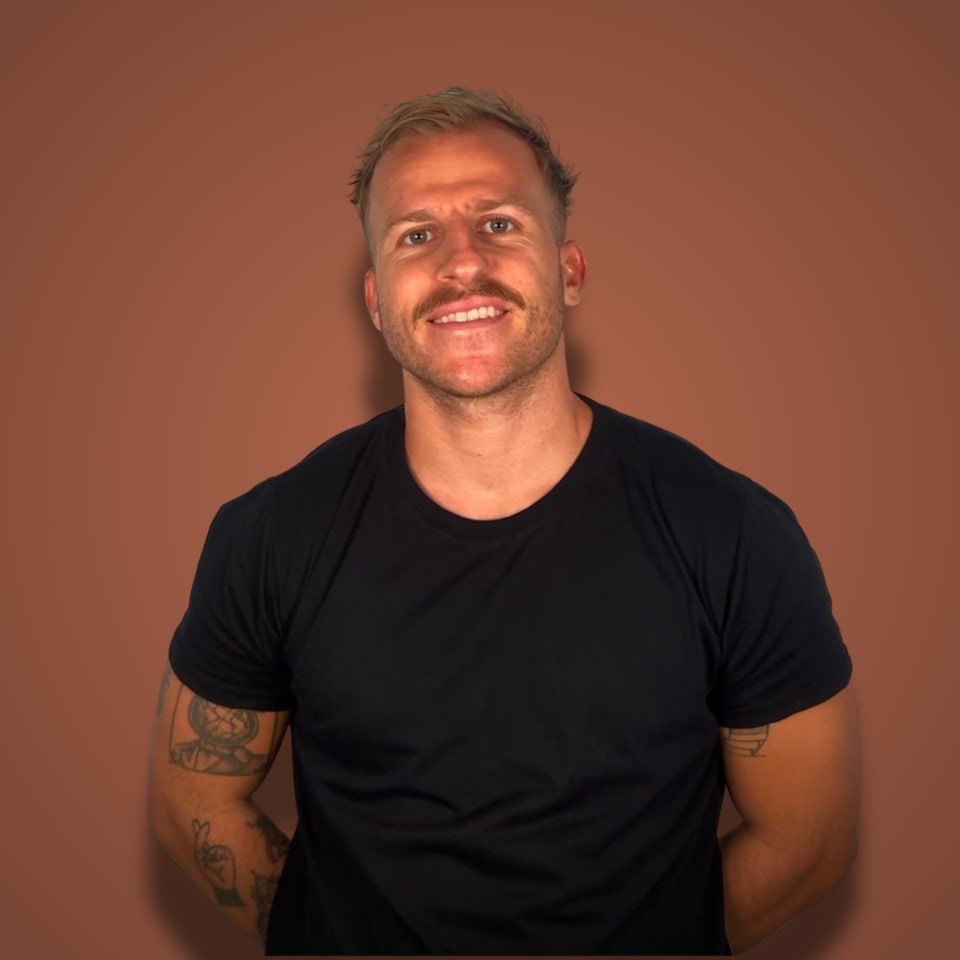
Blake Anderson graduated college with no job lined up, no money, and a couch-surfing rotation between his friend's place and his brother's place.
So he asked ChatGPT a question: "How do I build a mobile app?"
A little over a month later his first app was live. Two $50 influencer promos took it to almost 200,000 downloads in under a week and $80,000 in monthly revenue. That app went on to make about $2.4 million.
Then he did it again with a second app. And again with a third. Across everything, he made about $5 million in revenue in the past year, at 23 years old, without knowing how to code.
If you want to build an app with ChatGPT, this is the story I'd study first. Brett Malinowski (The Brett Way) sat down with Blake for almost two hours, and the whole playbook is in there: the niche selection, the $50 promos, the equity deals, all of it.
Here's the full interview:
Let me break down what actually happened, with the real numbers.
The First App: RizzGPT, Built 95% by ChatGPT
Blake's roommate was living on dating apps. He'd watch him agonize over what to text back.
So that became the app. Stupid simple: upload a screenshot of your conversation, the app reads the text with OCR, sends it through ChatGPT with a custom prompt, and hands you back replies.
That's RizzGPT. Two functions. Built in a bit over a month by a guy who only knew basic Python.
And when people told him "you can't just build an app with like 95% ChatGPT," his answer was: "No, you actually can."
Here's how rough version one was:
- No backend at all
- No user authentication
- API calls made straight from the frontend (you could open the app and steal his OpenAI key)
- The home screen literally displayed "RizzGPT-production" because nobody fixed the build name
It didn't matter. The app charged $7 a week and solved a real, painful, slightly embarrassing problem for a massive audience.
I talk to founders every week on the podcast who are six months into building and still haven't shipped. Blake shipped an insecure, unauthenticated, misnamed app in a month. One of these approaches makes money.
$100 in Marketing to $80K a Month
The first couple of weeks did a few hundred downloads. Nothing.
Then Blake found a niche on social media: "rizz content." Guys posting screenshots showing off their smoothest dating app conversations. Millions of views, tiny creators, zero people monetizing it.
He paid two of those creators $50 each. Not for ads. They just made their normal content and put the app in the middle of it.
Both videos did a few million views. Almost 200,000 downloads in under a week. $80,000 in monthly revenue, off the jump, from $100 in total spend.
Over the next few months they scaled to a bit over $200,000 in monthly revenue and held it for about 10 months. Total: roughly $2.4 million from an app his competitors would have laughed at.
Speaking of competitors: they existed before him. Blake's take on that is one of my favorite lines in the interview. The existing apps had done fewer than 200,000 downloads ever. He did that in week one.
→ "If your competition is not distributing well, it's as if they don't exist."
Read that again before you abandon your idea because "someone already built it." I said the same thing in my breakdown of how non-technical founders win: distribution is the moat, not the code.
The Outreach Grind Nobody Sees
The $50 promos sound like luck. The system behind them wasn't.
Blake was reaching out to hundreds of creators a day. And when there was one he really wanted, he didn't send one polite DM and wait.
He joined their Discord. He messaged every hour. He messaged their friends. He jokes he would message their mom.
Two details worth stealing from his influencer playbook:
- Followers don't matter, views do. He targeted creators with 50K to 100K followers doing millions of views per video, and skipped big accounts with dead engagement.
- Keep pricing flat. Mobile attribution is messy, so affiliate deals with promo codes don't really work. He just paid flat fees and charged everyone $7 a week.
Quantity and quality at the same time. Hundreds of touches a day, plus going way too hard after the few creators who actually mattered.
UMAX: Same Playbook, Bigger Bet
Blake split with his RizzGPT co-founders amicably, kept his equity, and spent November hopping between couches again because Apple's payout cycle hadn't paid him yet.
(Millionaire on paper, sleeping on a couch. Founder life in one sentence.)
Then OpenAI released the GPT Vision API, and he saw the window open a second time. His tweet at the time: somebody is going to make millions off this technology.
So he made sure it was him. The insight: young guys wanted to know how they look and how to improve, and the "looksmaxxing" niche was exploding. Training a custom vision model to rate faces would cost $50,000 to $100,000 with no guaranteed quality. GPT Vision did it for under a cent per image.
That became UMAX: upload a selfie, get scores, get simple improvement recommendations.
But this time he upgraded the distribution play. Instead of $50 promos, he brought in Sam Zia, one of the three biggest creators in the entire niche, as an equity partner, along with his older brother.
The numbers:
- Month 1: about $100,000 in revenue
- Month 2: about $200,000
- Then it went viral: over $500,000 a month, sitting around $3 million ARR
Same skill stack as RizzGPT. Ten times the ambition on distribution.
Cal AI and the Studio Model
App number three, Blake barely built at all.
He met two 17-year-olds, Zach and Henry. Zach had already sold a website with millions of users for about $100,000. Blake saw the talent, partnered with them, and helped them apply the exact same playbook to calorie tracking: snap a photo of your food, AI counts the calories.
That's Cal AI. You've probably seen it all over TikTok. (Zach has since been on The Brett Way himself, telling the $1.12 million a month version of the story.)
Now Blake runs the model at scale: bring in engineers who want to build, hand them an app idea, provide the designs, the infrastructure, the paid ads, and the influencer machine. He calls it creator-led software.
And the profits are being reinvested into Apex, his self-improvement ecosystem play, which he describes as building a FaZe Clan for self-actualization. He expects to cross $10 million in revenue over the next 12 months.
Not bad for a guy whose entire technical foundation was asking ChatGPT how to build an app.
The Playbook If You Want to Build an App With ChatGPT
Strip the story down and there are five moves you can copy this week:
→ Ride new API releases. RizzGPT existed because the ChatGPT API dropped. UMAX existed because GPT Vision dropped. Every new model release opens a 6-to-12-month window where simple wrappers print money before the market saturates.
→ Solve one clear, painful problem. Texting girls. Rating your face. Counting calories. Each app is one job, explained in one sentence, priced around $7 a week.
→ Ship the embarrassing version. No backend, no auth, wrong app name. A month of building, not a year.
→ Find the content niche nobody's monetizing. Rizz content creators were getting millions of views with zero sponsors. $50 bought what a brand would pay thousands for.
→ Level up the partnership each time. Cash promos, then equity with the niche's biggest creator, then full studio infrastructure.
None of this requires you to be technical. It requires you to ship fast and take distribution as seriously as product. If a weekend is all you have, building an app in a weekend is a real thing now.
FAQ
Can you really build an app with ChatGPT if you can't code?
Yes. Blake Anderson built RizzGPT in a bit over a month knowing only basic Python, asking ChatGPT for each piece as he hit each problem. The first version had no backend and no user authentication, and it still scaled to $80,000 a month. Tools have only gotten better since; the constraint is shipping, not coding.
How much did RizzGPT cost to launch?
Almost nothing. The build was Blake's time plus API costs, and the launch marketing was two $50 influencer promos. That $100 generated a few million views, close to 200,000 downloads in under a week, and $80,000 in monthly revenue.
How do ChatGPT wrapper apps make money?
Simple weekly subscriptions. RizzGPT charged $7 a week, flat, with no affiliate codes because mobile attribution is messy. The margin works because the underlying API calls cost cents: GPT Vision analysis in UMAX ran at under a cent per image, versus $50,000 to $100,000 to train a custom model.
Aren't wrapper apps too competitive now?
The generic ones, yes. But Blake's rule still holds: if your competition is not distributing well, it's as if they don't exist. His edge was never the code, it was finding an underpriced content niche and owning it before anyone else monetized it. That edge resets with every new API release and every new niche.
Steal Playbooks Like This Every Week
Blake's story is the consumer app version of what I do on the Profitable Founder Podcast: get founders making real money to explain exactly how, with the numbers on the table.
I've interviewed bootstrappers from $100K a year to $10M a year, and the pattern barely changes. Simple product, shipped fast, then distribution treated like the actual job.