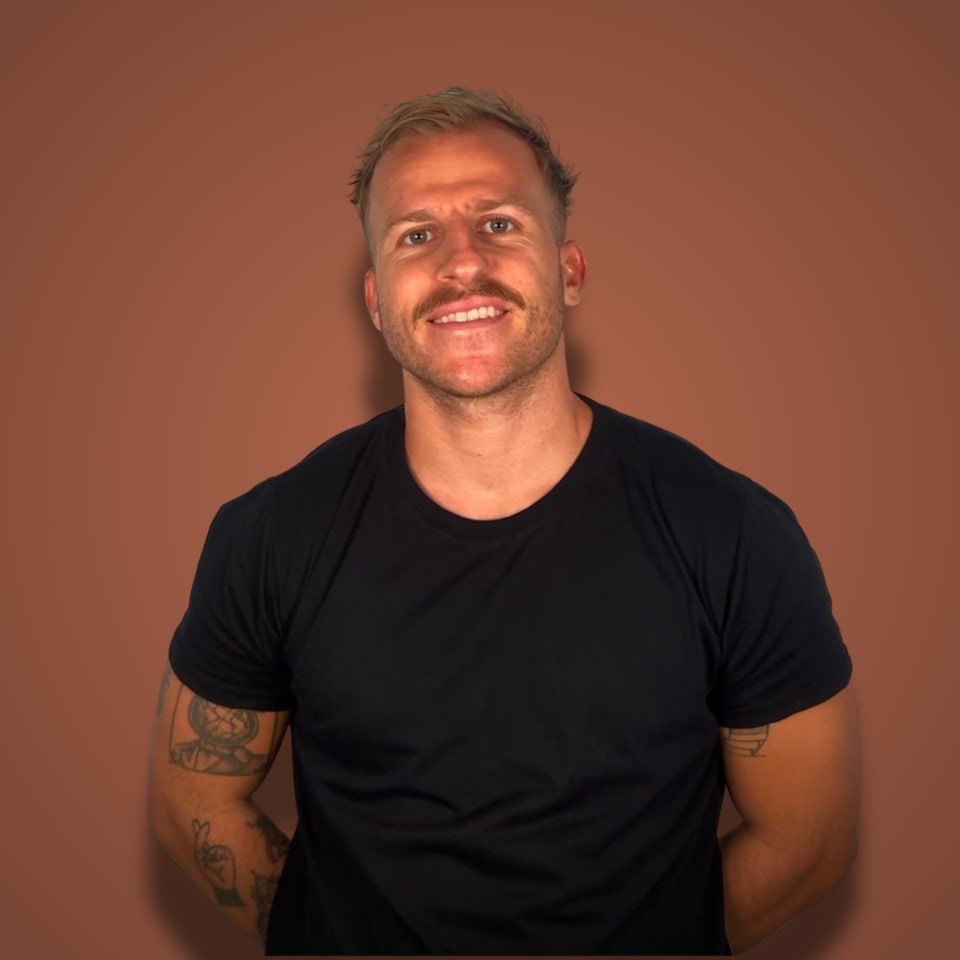
Every "digital nomad" course sells you the same fantasy: laptop on a beach, four-hour workweek, passive income rolling in.
Jay's version looks nothing like that. He works from cafes and WeWorks, moves cities every few months, and runs a meetup app doing $140K a month in revenue with 1.8 million users.
Alone, with no team and no funding.
Starter Story just followed him for a day, and it's one of the most honest looks I've seen at what it takes to build an app while traveling. Not the fantasy version. The real one, with morning "did anything break" phone checks and diminishing returns after hour four.
I pulled out every number and every decision worth stealing. Watch the video, then read the breakdown.
The Numbers Behind NomadTable
NomadTable is a meetup app for solo travelers, expats, and nomads. You land in a new city alone, you open the app, you find people to grab dinner with.
Jay launched it about 15 months ago. Where it stands now:
- $140K in monthly recurring revenue
- 1.8 million users
- An estimated 100,000 meetups that happened through the app
- One person running the whole thing
The product is the kind of idea most founders would talk themselves out of. A social app? Consumer? Against every "B2B SaaS or nothing" thread on X?
Except Jay didn't pick it from a trend report. He was traveling alone, felt the loneliness himself, and built the thing he needed. The market pull did the rest.
→ The best validation is being your own first user in a market you can't leave.
The Risk Math That Got Him Out of Amazon
When the idea hit, Jay was a software engineer at Amazon. Comfortable salary, big tech badge, the whole package.
He says himself he was never the entrepreneurial type. He just got an idea while traveling and thought it would be fun to build, even if it failed.
What actually flipped him was arithmetic.
"I knew that the pain of the what if would haunt me more than failing."
And the second half of the equation: he'd already landed a big tech job once. If NomadTable died, he could get another one. The downside wasn't ruin, it was a resume gap with a great story attached.
From the outside, quitting Amazon for a travel app looks reckless. From the inside, staying looked riskier to him. (He literally uses the word "logically" when he describes the decision.)
I've watched this exact calculation play out in dozens of podcast interviews, and I broke down when the math actually works in my piece on quitting your job to build a startup. Jay's version is the clean case: skills that rehire easily, savings runway, and an idea he'd build for free anyway.
What Building an App While Traveling Actually Looks Like
Here's Jay's actual day, and notice how boring it is. Boring is the point.
He wakes up and checks his phone immediately. WhatsApp is "always crazy" with creators and partners, and he needs to know nothing broke overnight. (Every productivity guru says don't do this. Every solo founder with 1.8M users does it anyway.)
Then the commute rule: he never starts the day at home. Bike ride or a walk to a cafe or WeWork, out the door by 9am on a good night's sleep, 11am at the absolute latest after a bad one. The commute is his boot sequence for the day.
The first two hours at the laptop are locked in, clearing whatever fires showed up in the morning phone check, then the real building.
His one hard rule: after 3 to 4 hours in one spot, he moves. Home, gym, a different cafe. He treats his hours like they have diminishing returns, because they do, and breaks plus a scenery change reset him to 100% focus.
Evenings are a workout (run, padel, tennis, or lifting), dinner, friends, then a couple hours of light laptop work on the couch with tea. He's in bed at a normal hour, and the structure survives changing countries every few months.
It reminded me a lot of Jack Friks' $40K/month solopreneur routine: different founder, different product, same pattern of protecting two deep hours and refusing to romanticize the rest.
Traveling Is His Product Research, Not His Distraction
This is the part that separates Jay from the laptop-on-a-beach crowd.
His app serves travelers. So living as a traveler is his R&D budget.
He just spent 4 months in Bangkok, one of NomadTable's biggest hotspots. While there, he went to meetups organized through his own app and talked to the people using it.
The result: a pile of feature ideas and whole user sub-segments he says he never would have spotted from behind a dashboard.
"I've seen lots of products that start out good and then as they mature, they kind of lose track of the ball and distance themselves from the original good product that they used to be. I never want to do that."
He gives up the perfect monitor, the ergonomic chair, the reliable Wi-Fi. In exchange he gets something most founders pay agencies for: constant, unfiltered contact with his exact customer.
→ If your product serves a community, the cheapest research program is living in it.
Flip side: a solo founder serving 1.8 million users has zero slack for busywork. Every repeatable task either gets automated or it eats the two deep-work hours that actually grow the business. It's the same logic behind the business automations agencies set up for lean teams: whatever runs without you is margin you keep.
The Unfair Advantage Nobody Puts in a Spreadsheet
Jay's closing argument is simpler than any tactic: pick something you'd build for free.
His words: if you pour your life's effort into something you don't enjoy, just for money or status, "it's going to suck." And when you actually love the work, he argues, you're very hard to compete with, because nobody outworks someone who's having fun every day.
Easy to dismiss as motivational fluff. Except in his case it's load-bearing. Passion is the reason he answers WhatsApp at 7am without resenting it, and the reason he spends his evenings off at meetups organized through his own app.
His point about timing matters too: you can build software faster right now than at any point in history, and you can do it alongside a job. His test for any idea is one question. Will you regret not trying?
Two of his rules worth writing down:
- Weigh the pain of "what if" against the pain of failing. For most funded-by-savings ideas, failing is cheaper.
- Even a tiny outcome can be worth it. Jay said getting just two people to meet through his app would have felt like a win. The 100,000 meetups are the bonus.
One more signal from the video worth noting: the Starter Story team calls iOS apps one of the hottest solo-founder categories of 2026, and they maintain a database of 50+ app ideas, most of them already making over $10K a month for someone. Jay sits at the top end at $140K, but the middle of this market is crowded with normal people.
FAQ
Can you really build an app while traveling full time?
Yes, but not the way influencers show it. Jay runs a $140K/month app from cafes and coworking spaces by keeping a strict structure: out the door by 9 to 11am, two locked-in deep work hours first, a change of scenery every 3 to 4 hours, and light evening work only. The travel works because the routine survives every city change.
How much money does NomadTable make?
NomadTable does about $140K in monthly recurring revenue, roughly 15 months after launch. It has 1.8 million users and an estimated 100,000 meetups have happened through the app. Jay runs it as a solo founder with no outside funding.
Did Jay quit his job before or after building the app?
He got the idea while traveling as an Amazon software engineer and convinced himself the risk was smaller than it looked: he'd landed a big tech job once and could do it again if the app failed. He committed once the regret of not trying outweighed the fear of failing.
What kind of apps work for nomad founders?
Products where traveling makes you better at the job, not worse. Jay's app serves solo travelers, so every city he lives in is field research: his 4 months in Bangkok, a top NomadTable hotspot, generated feature ideas and new user segments he'd never have found remotely. If your users are spread across the world, being spread across the world is an edge.
Steal the System, Not the Passport Stamps
You don't need to move to Bangkok to use Jay's playbook.
Protect two deep hours. Live where your users live, even if that just means their Discord instead of their city. Do the regret math honestly. And pick the idea you'd build even if it paid nothing, because for the first six months it will.
Every week on the Profitable Founder Podcast I sit down with bootstrapped founders like Jay, making $100K to $10M a year, and pull out the exact numbers and decisions behind their growth.