Everyone is chasing the same idea right now.
Another AI wrapper. Another writing tool. Another agent that books your meetings.
I get it. It's exciting. It's what fills my feed every single morning.
But here's the thing nobody wants to hear: the loudest niches are the most crowded ones. You're fighting hundreds of well-funded teams for a sliver of attention.
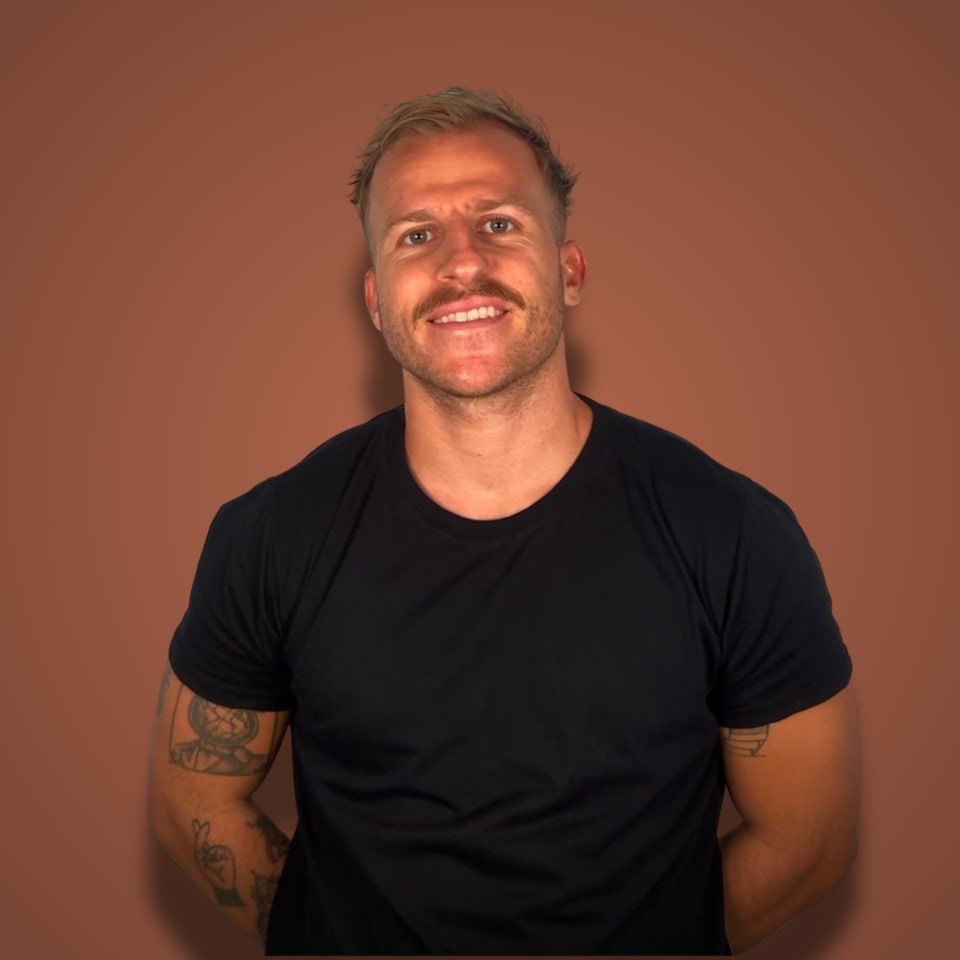
So when I watched Starter Story interview a founder named Bo, it stopped me cold.
Bo built a business in one of the most boring categories on the planet. Taxes. And today Savvy Nomad does $1.7 million a year, with $140,000 in monthly recurring revenue, 1,400+ customers, and just six employees.
No hype. No trend. Just a real problem almost nobody wanted to touch.
Let me break down how he did it, and the playbook he'd run if he started over today with $0.
What Savvy Nomad actually does
Savvy Nomad helps US citizens living abroad stop overpaying state taxes back home.
Sounds dry. It is. That's the whole point.
Picture a software engineer from California who moved to Lisbon three years ago. He still gets billed California state taxes, because nobody told him how to legally change his state domicile. He's bleeding thousands of dollars a year for no reason.
That's Bo's customer. And Savvy Nomad has saved its members roughly $10 million in state taxes so far.
The model is simple. Three subscription plans. A basic domicile plan, a mid-tier option that's the most popular, and a premium tier. They charge upfront, run it through Stripe, and add 120 to 150 new customers every month.
140k MRR in a niche most founders would scroll right past.
Where the idea came from
Bo didn't sit in a room brainstorming "passion projects."
The war in Ukraine forced him to rebuild his life. He ended up living in a much more international reality, which pulled him deep into the world of cross-border taxation. He even built an earlier startup in the digital nomad tax space.
That one didn't make it. He shut it down.
His co-founder, meanwhile, kept meeting surfers from California who'd lived abroad for years and were still stuck paying California state tax. He saw the gap, built a rough first version, and went looking for a business and marketing co-founder.
They connected. They merged the idea into what's now Savvy Nomad.
I love this because it's the opposite of how most people pick ideas. Bo didn't chase what looked cool on X. He noticed a problem he kept tripping over in real life and ran straight at it.
Why a boring business beats a sexy one
Bo gave four reasons this worked, and I think every founder reading this should tattoo them somewhere.
1. Low competition for real demand. In unsexy markets, fewer talented founders show up. The ratio of opportunity to competition is wildly in your favor.
2. People will pay a lot to make the pain go away. Nobody wants to deal with taxes, compliance, or domiciles. They'll happily pay someone just to forget about it.
3. The value is concrete. This is the big one. Most startups sell a "brighter future" or some vague promise. Bo can say: here's exactly how much you'll save, and here's what we charge. If the savings beat the price, it's a no-brainer purchase. You sell less and close more.
4. It matched their strengths. The market fit the team. His tax background plus his co-founder's product instincts made them unusually complementary.
Read reason three again. "Save $4,000, pay us $800" is an easier pitch than anything I've ever written for a SaaS app. Quantifiable value is a cheat code.
Three boring ideas Bo says are sitting in plain sight
Because he lives in this world, Bo sees adjacent gaps everywhere. He handed over three he'd build right now:
Productize immigration workflows. People pay agencies $8K, $10K, sometimes $15K to move to the US for what is basically a workflow problem. A product that guides the process with templates and a lawyer review at the end could charge $1,000 to $2,000 and still feel like a steal.
Help people enter and exit tax jurisdictions cleanly. One side: people nervous about moving to Dubai, Costa Rica, or Malaysia and getting it wrong. The other side: people leaving Canada, the UK, or Spain who face exit procedures and sometimes exit taxes. Productize both directions.
International banking, asset holding, and estate planning. Founders and investors spread across countries who need help opening a bank account in Singapore or picking the right jurisdiction to hold real estate or IP. Bo says there's no real product for this today.
Here's the part that made me sit up: it's often the same customer at different life stages. One person, multiple revenue events.
If you want more grounded ideas in this lane, I went deep on a few in 9 startup ideas worth building in 2026.
The playbook if he started over with $0
This is what I'd screenshot. Bo's three steps to build an unsexy million-dollar business in 2026:
Step 1: Start with a painful problem where people already overpay. Taxes, compliance, legal, residencies, banking, documentation. The less people want to deal with it themselves, the more valuable it is to solve. Then look at how they solve it today. Usually it's two extremes: messy DIY across Reddit threads and blog posts, or hiring a professional for thousands. The gap between those two is your product.
Step 2: Evaluate competition relative to opportunity. Don't just ask "how big is the market." Ask "how many smart, capable founders actually want to build here?" In sexy categories the market is huge but you're up against hundreds of funded teams. In unsexy markets you get real demand, high willingness to pay, and almost no one who wants to touch it. That asymmetry is your edge.
Step 3: Pick one workflow, productize it, and add a recurring layer. Don't build a platform. Pick the single most painful, most common workflow and turn it into a repeatable, step-by-step product. For Savvy Nomad that was the state domicile change. They didn't try to solve all of international taxation. They solved one thing really well.
That third point is everything. The fastest way to nothing is trying to build the whole platform on day one. Productizing one ugly, repetitive workflow is also exactly how the best micro-SaaS businesses get off the ground.
The tech stack is almost embarrassingly simple
You'd assume a $1.7M tax business runs on some custom engineering monster. Nope.
Bo built the entire product on Bubble. No-code. The marketing site is Framer. Content runs on Ghost. They lean on ChatGPT and Claude for a lot of operations. Ahrefs for SEO, Customer.io for email, Power BI and BigQuery for dashboards, Stripe for billing, SavvyCal for scheduling.
That's it. A non-technical-friendly stack that lets a small team move fast.
The lesson buried in there: the moat was never the code. It was understanding the problem better than anyone else and turning that into a clean workflow. If you're mapping out the operational side of a service business, a practical primer like implementing business automations in 2026 is a decent place to see how the repetitive parts get stitched together.
The line that stuck with me
Pat asked Bo for his advice to anyone who wants to build a million-dollar business in a boring niche.
Bo's answer: "The difference between a winner and a loser is that the winner tried one more time."
He'd already shut down a startup. He was defeated. He could have stopped. He didn't.
I've been there. Most founders I know have a version of that exact story. The shutdown, the quiet failure, the voice saying maybe you're not cut out for this.
You try again anyway. That's the whole game.
And as the Starter Story crew put it at the end: they'd rather make $2 million a year in a boring business than $20,000 a year in a sexy AI app. Hard to argue with that.
Want founders who'll actually push you?
The hardest part of building something like Savvy Nomad isn't the idea. It's the lonely middle, where you've got a little traction and a thousand decisions and nobody to think out loud with.
That's exactly why I built the Profitable Founder Club. It's a small group of SaaS founders between $5K and $50K MRR, all grinding toward $100K. Bi-weekly calls where we solve three real member problems, monthly Q&As with founders who've already crossed $100K MRR, and a batch capped at 20 so it never turns into noise.
If you're done building in silence, come check out the Club.
And if you just want more stories like Bo's in your ears, the Profitable Founder Podcast is where I dig into how bootstrapped founders actually hit their numbers.