In Antler's first Singapore cohort, 1,400 people applied. 62 got in. 13 walked out with a check.
That's the part the landing page doesn't lead with. Antler is a residency first and an investor second. You can spend 6 to 12 weeks grinding through team formation, pitch to the investment committee, and still leave with nothing. No stipend in most cities either.
And if you do get funded, the terms are an idea-stage price: around $150K for 10% in Singapore, £125K for 8.5% in the UK (minus a £40K service fee baked into the check). I broke the full math down in my honest review of Antler.
Antler is genuinely good at one thing: taking a solo person with no idea and no cofounder and giving them both. If that's you, it might still be the right call.
But if you already have an idea, a cofounder, or (gasp) revenue, there are 7 alternatives with better terms. Here they are, from a $97 community to YC's $500K deal.
Antler alternatives at a glance
| Program | You get | You give up | Best for |
|---|---|---|---|
| Profitable Founder Club | Peer group + hot seats | $97, 0% equity | Bootstrapped SaaS with revenue |
| Entrepreneur First | $125K + stipend | 8% | Pre-idea technical founders |
| Y Combinator | $500K | 7% + uncapped SAFE | Teams with something built |
| Techstars | $220K | 5% + uncapped SAFE | Teams that want mentor density |
| TinySeed | $120K to $220K, remote | 10 to 12% | SaaS with MRR, no relocation |
| On Deck (ODF) | Cofounder matching | ~$1,000, 0% equity | Cofounder search without dilution |
| Founder Institute | Part-time structure | $399 to $1,649 + ~2.5% pledge | Idea stage, keeping the day job |
1. Profitable Founder Club: the $97 alternative for founders with revenue
Full disclosure: this one's mine.
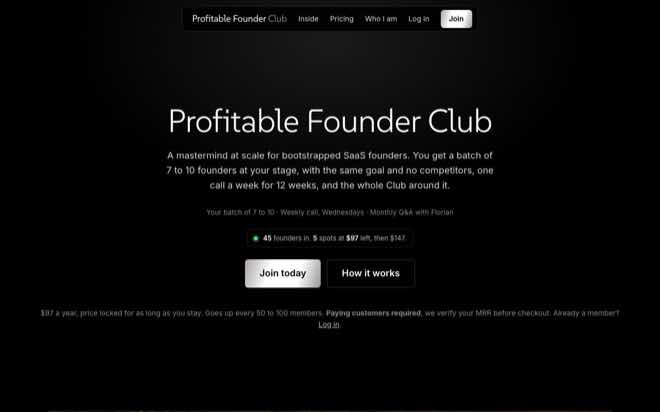
Here's why it's first. A big chunk of the people applying to Antler don't actually need a VC residency. They have a product, they have paying customers, and what they're really after is the room: other founders who get it, pushing them every week.
Antler charges 10% of your company for that room. The Profitable Founder Club charges $97.
It's a private group for bootstrapped SaaS founders between $5K and $50K MRR, all working toward $100K MRR. Calls run on hot seats: you bring your hardest problem, the group tears it apart, you leave with a plan. Plus a monthly Q&A with founders already past $100K MRR. Each batch is capped at 20 people so nobody hides in the back.
I built it because I paid $13,000 for a mastermind when I was stuck at $15K to $20K MRR. Six months later I was at $75K/month. The room works. It just shouldn't cost you equity.
→ Keep in mind: there's no funding here. If you need a check to survive the next 12 months, look at TinySeed or YC below.
Apply to the Profitable Founder Club →
2. Entrepreneur First: the direct replacement for Antler's cofounder matching
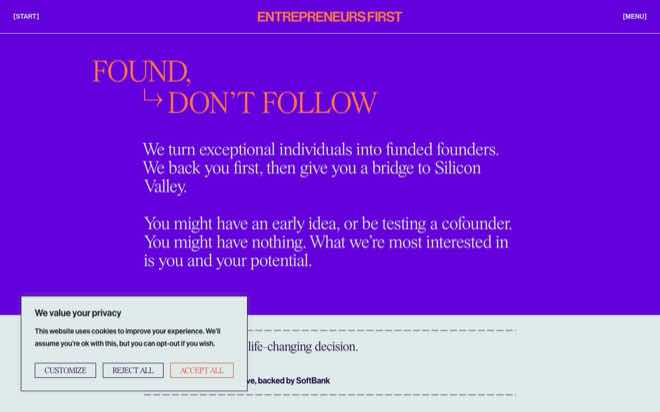
If what pulled you to Antler was "I'm alone and pre-idea, match me with a cofounder," Entrepreneur First is the head-to-head comparison you should run.
EF invests $125K for 8% on a post-money SAFE, with an optional second $125K uncapped MFN SAFE and up to $5M of follow-on through Series B. The program runs about 6 months in two 12-week phases: FORM (team building, in London or Bangalore) and LAUNCH (in San Francisco).
The killer difference: EF pays you a stipend during the search phase, around £2,000 a month in London. Antler generally pays nothing until the investment lands, which means you self-fund 6 to 12 weeks of your life for a maybe.
EF's portfolio: 600+ companies worth a combined $16 billion+, including Cleo, Aztec, Gensyn and PolyAI. The bar is high and it skews hard toward technical people building deep tech and AI.
→ Pick EF over Antler if: you're technical, you can commit 6 months full-time, and getting paid to find a cofounder sounds better than paying to find one.
3. Y Combinator: the best terms in the industry, if you can get in
YC's standard deal is $500K: $125K for 7%, plus $375K on an uncapped SAFE with an MFN clause. Same deal for every company, published openly, no regional fine print, no service fees carved out of your check.
Compare that to Antler's Singapore terms ($150K for 10%) and the gap is brutal. YC gives you more than 3x the cash for less equity.
The catch is the filter. Acceptance sits around 1%, and YC funds teams, usually with something built. Antler funds individuals before the idea exists. They're not really competing for the same founder, which is the whole argument of my Antler vs Y Combinator breakdown.
→ Pick YC over Antler if: you already have a cofounder and a prototype. Apply even if you think you won't get in. The application alone forces clarity.
4. Techstars: mentor density across 13 weeks
Techstars invests $220K: $20K for 5% of your company, plus $200K on an uncapped SAFE. The program runs 13 weeks, built around what they call mentor madness, where you meet dozens of operators and investors in the first weeks.
Yes, $20K for 5% is a steep headline price (I wrote a whole piece on Techstars alternatives for exactly that reason). The $200K SAFE is what makes the deal defensible.
Where it beats Antler: you join with your existing team and idea, there's no unfunded residency gamble, and the city-specific programs (often with corporate partners) can drop you straight into your target industry.
→ Pick Techstars over Antler if: you have a team, you want warm intros more than cash, and a vertical program matches your market.
5. TinySeed: the accelerator that lets you pay yourself
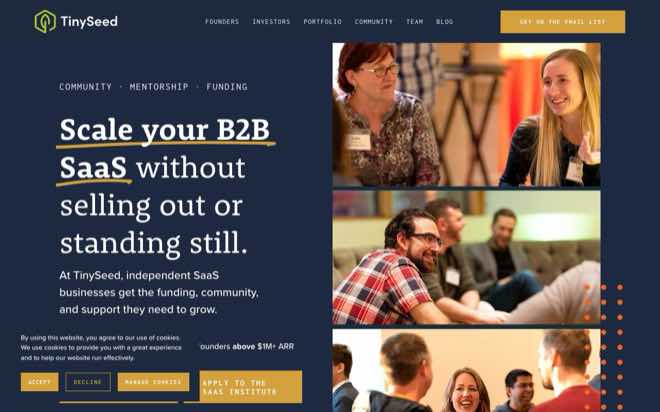
TinySeed is the one program on this list designed for bootstrapped SaaS. It invests $120K to $220K for 10 to 12% equity, runs fully remote for a full year, and explicitly lets you use the money to pay yourself a salary.
Read that again. Most accelerators fund your company. TinySeed funds your life so you can keep compounding a profitable business without moving to San Francisco or chasing a Series A.
You need revenue to get in (it's built for SaaS founders with real MRR, not ideas). Which makes it the natural upgrade path: too far along for Antler, allergic to the VC treadmill, still want a check and a peer group.
→ Pick TinySeed over Antler if: you have MRR, you won't relocate, and you want investors who are fine with you never raising again.
6. On Deck (ODF): cofounder matching without the equity bill
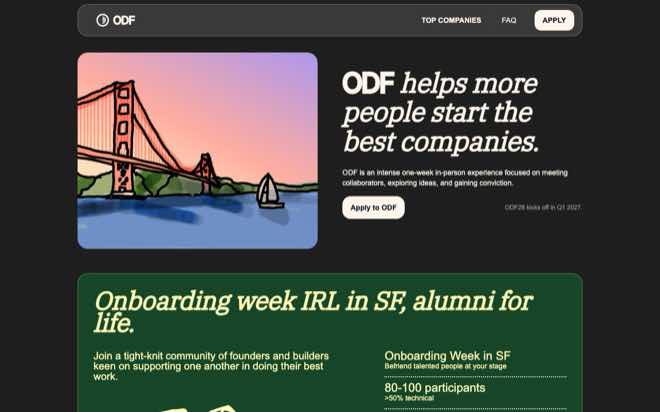
Strip Antler down to its most valuable part and you get cofounder matching. On Deck Founders sells exactly that part, without the 10%.
ODF is a remote community of people actively starting companies. You pay roughly $1,000, you keep 100% of your equity, and you get a curated pool of potential cofounders, weekly sessions, and a network that sticks around after the program ends.
There's no investment committee deciding your fate and no demo day. There's also no check, so this only works if you can fund yourself through the early months.
→ Pick ODF over Antler if: the only Antler feature you wanted was the cofounder pool, and 10% of your future company feels like an absurd price for an introduction.
7. Founder Institute: idea-stage structure while you keep your job
Founder Institute is a part-time, roughly four-month program built for people at the idea stage. You pay a fee ($399 to $1,649 depending on when you enroll) and contribute about 2.5% into a shared equity pool with your cohort, instead of handing a VC a double-digit stake.
The structure is the product: weekly deadlines, real feedback, and a kick in the pants to incorporate, validate, and launch. All of it designed to run alongside a day job.
That's the piece Antler can't offer. Antler demands you quit and show up full-time before you know if you'll even get funded. FI lets you de-risk the idea while your salary still hits your account.
→ Pick FI over Antler if: you're pre-idea or pre-validation and not ready to bet your savings on a residency with a 13-in-1,400 funding rate.
The bottom line
Antler isn't a scam. It's a volume investor (443 deals in 2024, more than any other VC) with a model that works great for Antler and occasionally great for you.
The decision tree is simpler than it looks:
→ Solo, no idea, want to get paid while you search: Entrepreneur First.
→ Team and prototype: Y Combinator first, Techstars second.
→ SaaS with MRR, no relocation: TinySeed.
→ Just want the cofounder pool: On Deck.
→ Idea stage with a day job: Founder Institute.
→ Paying customers and you need the room, not the check: that's what I built the Profitable Founder Club for. $97, zero equity, 20 founders per batch.
FAQ
Is Antler worth it in 2026?
For pre-idea solo founders who want cofounder matching plus a shot at venture funding, yes, it can be. For anyone with traction, no: you'd be selling real-company equity at an idea-stage price (around $1.5M to $2.75M valuations) for services you don't need. The funnel is also harsh: in one cohort, 1,400 applied and 13 companies got funded.
What is the biggest difference between Antler and Entrepreneur First?
The stipend. EF pays you around £2,000 a month while you search for a cofounder; Antler generally pays nothing until the investment committee says yes. EF also runs longer (about 6 months vs 6 to 12 weeks) and skews toward technical, deep tech founders, while Antler covers 26 cities and a wider range of business types.
Can I join an accelerator if I'm already making revenue?
Yes, and your options get better. YC and Techstars both love revenue. TinySeed requires it. And if revenue means you don't need a check at all, a peer group gets you the accountability and network for $97 instead of 7 to 12% of your company.
What is the cheapest Antler alternative?
The Profitable Founder Club at $97 with zero equity, if what you need is peers and accountability. If you need actual cofounder matching, On Deck at roughly $1,000 with zero equity is the cheapest structured option. Everything else on this list costs equity.
Still weighing programs? Your call. But if you're a SaaS founder with paying customers and the real bottleneck is being alone with your decisions, join the Profitable Founder Club and get 19 other founders in your corner this quarter.
