
Bootstrapped founders don’t need another growth hack. They need help making the next call, whether that’s testing demand or fixing a sales process. These best SaaS books focus on the work behind steady growth, and I’ll show who each one suits. Profitable Founder Podcast shares weekly interviews with bootstrapped SaaS founders, so you can pair these ideas with lessons from operators building real businesses.
1. The Lean Startup by Eric Ries: Validate before you build
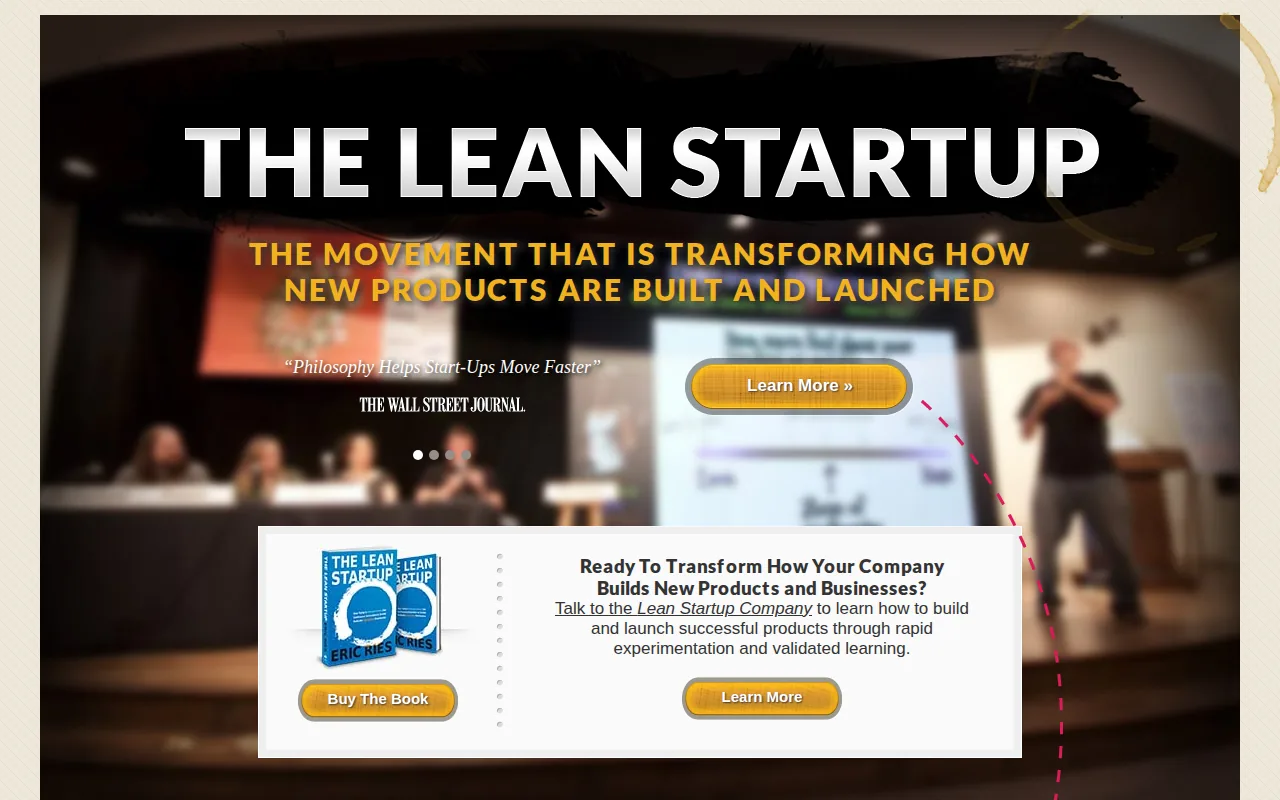
The Lean Startup is about validated learning and minimum viable products. It’s the pick for a pre-revenue founder who has an idea but hasn’t proved that people will pay for it. Its central lesson is to test demand with the smallest useful version of a product, rather than spending months building on a hunch.
That matters when your budget is your own time and cash. Before you build a full app, write down the customer problem and the riskiest belief behind your idea. Then test that belief with the smallest test that can give you a useful answer. The test might be a simple demo or a clear offer to a small set of likely buyers. The point is to learn before the build gets expensive.
That doesn’t mean every tactic will fit every SaaS business. The durable value is the discipline: set up a test, watch what users do, and change course when the evidence calls for it.
Use the idea when you’re unsure which feature to build first. Put the proposed feature in front of the people who feel the problem. Ask what they do now, and pay attention to their actions as well as their words. A product test should answer a decision you actually need to make.
For a first-time founder, this is a strong starting point. Read it with one live question about your product, then use the answer to choose your next test.
2. From Impossible to Inevitable by Aaron Ross and Jason Lemkin: Build repeatable growth
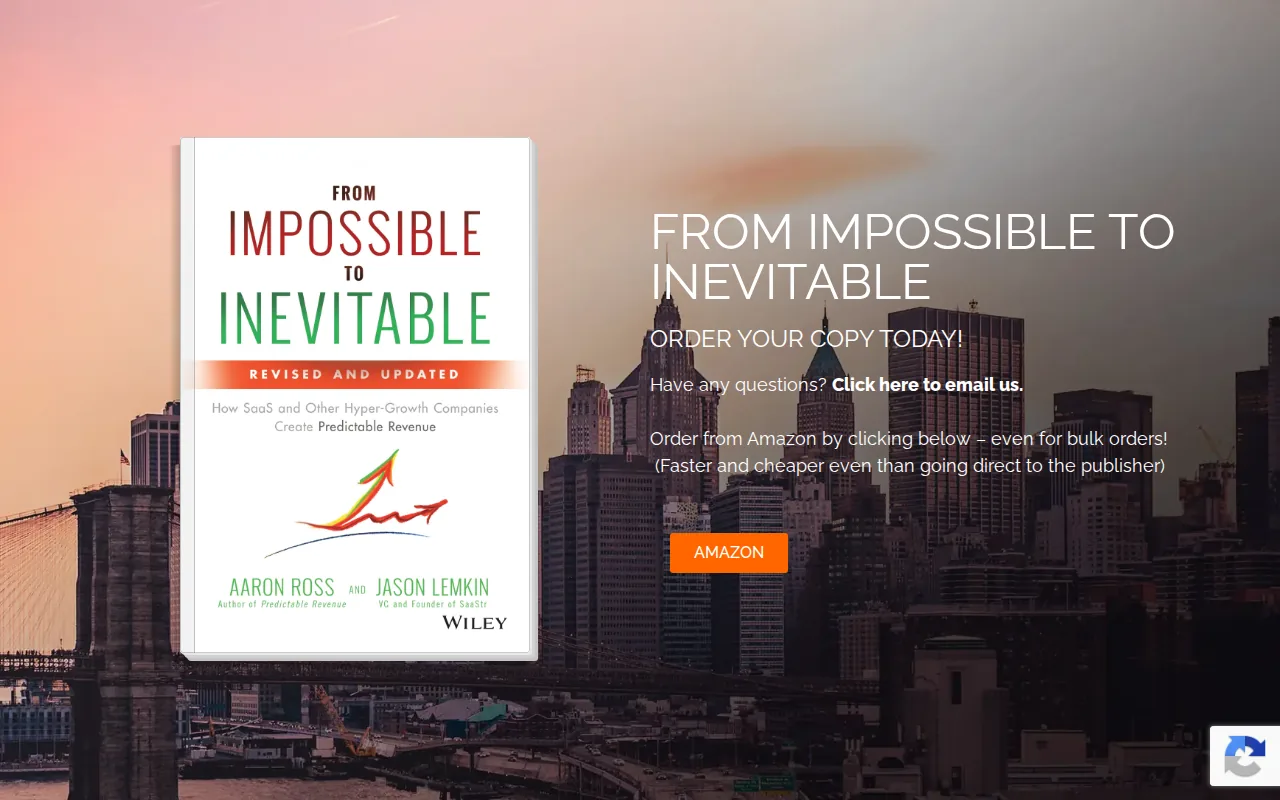
From Impossible to Inevitable focuses on hypergrowth and predictable revenue for SaaS companies. It suits a founder who has some customer demand but can’t explain why revenue rises one month and stalls the next. The book’s central claim is that growth can follow a formula, rather than relying on luck or a burst of extra effort.
For a small team, “scale” doesn’t have to mean hiring a large sales department. Start by looking at one source of new customers that has worked more than once. Write down who it reaches, what message starts a conversation, and what happens after a prospect responds. If the steps change every time, there’s no process to repeat yet.
The authors’ emphasis on consistent revenue also makes this a useful read after an idea has passed its first test. Keep the claims modest. A growth framework can help you plan, but it can’t make a weak offer compelling or make a market care about a product.
As you read, connect each growth idea to a number you already track, such as new paying customers or monthly recurring revenue. Then decide what you’ll change and what result would show that the change helped. That turns a broad growth goal into a test you can review.
It’s a fit for founders who have moved past “Will anyone buy this?” and now need a steadier answer to “How do more of the right people find it?”
3. The Hard Thing About Hard Things by Ben Horowitz: Face the difficult calls
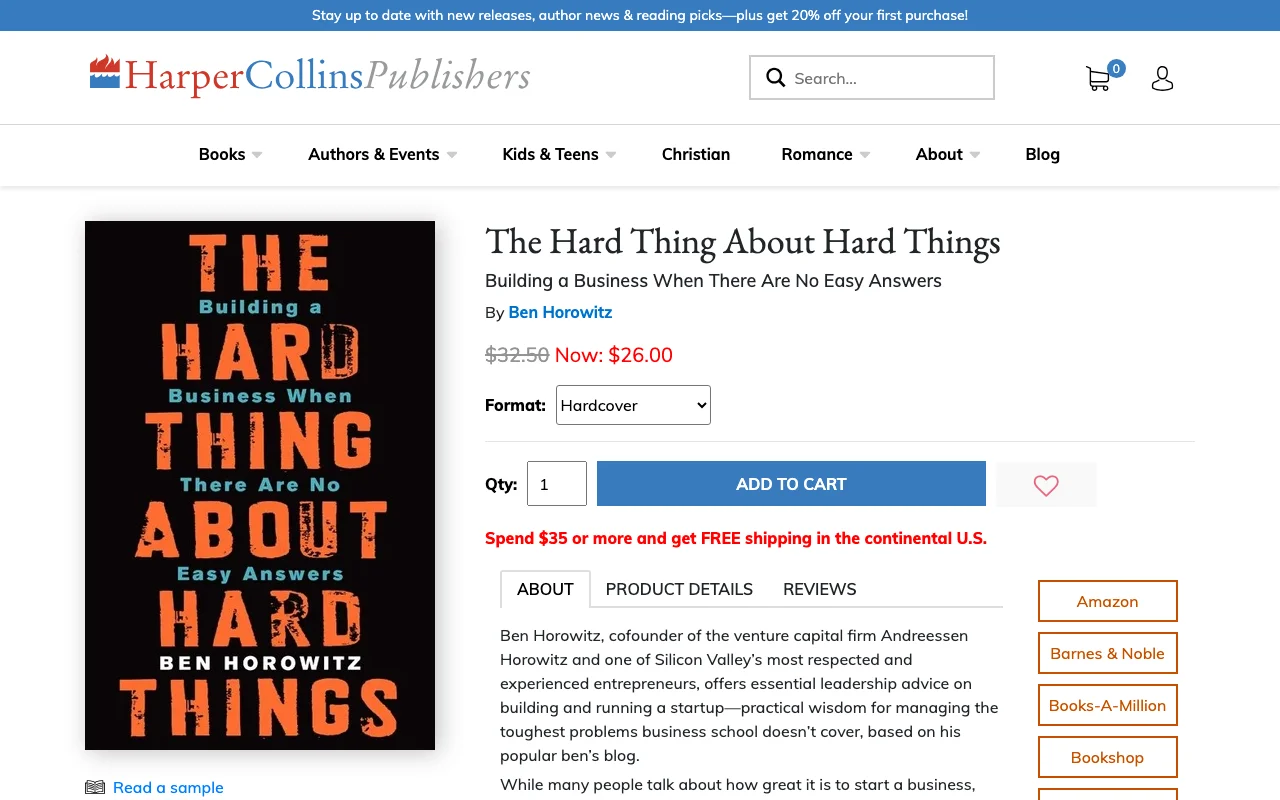
The Hard Thing About Hard Things addresses the hard parts of running a company, including software development, management, investment, and selling a business. It’s a useful pick for a founder who wants candid discussion of leadership pressure, not another checklist for launching a product.
Bootstrapping can make difficult choices feel personal. A customer asks for a feature that could distract from the roadmap. A team member needs direction. A sales plan isn’t working, but you’ve already spent time and money on it. The book’s focus on the hard calls gives founders a way to look at those moments as part of company leadership, rather than as proof they’ve failed.
The book is known for direct language and for covering the parts of company building that don’t have neat answers. That makes it a different kind of read from a book focused on testing demand or setting up outbound sales.
Try reading a chapter when you’re facing a decision you’ve been putting off. Write down the choice, the cost of waiting, and what you need to know before acting. The book won’t make the decision for you. It can help you face the issue without dressing it up as a strategy problem.
Founders who want to talk through choices with peers may also want to compare best SaaS mastermind programs. A book gives you a point of view; a founder group gives you a place to test your thinking with people at a similar stage.
Keep this one close when the problem is about leading the company, not choosing the next feature.
4. Predictable Revenue by Aaron Ross and Marylou Tyler: Create a sales system
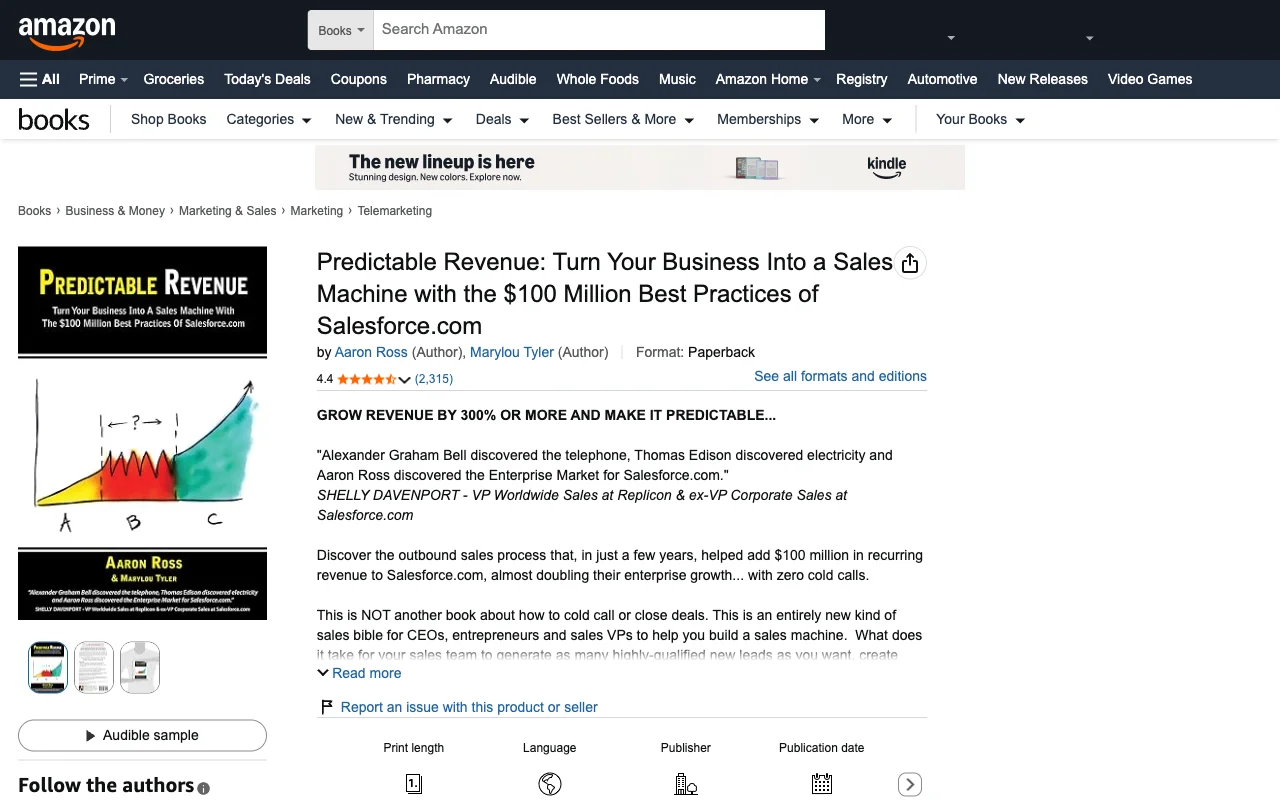
Predictable Revenue focuses on outbound sales development and repeatable revenue. It’s aimed at founders who rely on referrals or irregular outreach and want a clearer way to create qualified sales conversations. The book draws on the outbound sales system associated with Salesforce.com.
The useful shift is from “I need more leads” to “What step in our sales work needs to happen more often?” If you’re the founder doing every task, start by recording the steps you already take. Note how a prospect enters the pipeline, what happens after the first reply, and where a deal tends to stall. That gives you a view of the process before you try to change it.
The book is a better fit once you know who you’re trying to reach and why your product matters to them. Outbound work can’t rescue a message that doesn’t speak to a real buyer problem. But when the target is clear, a repeatable way to start conversations can reduce the pressure to wait for referrals.
Use the ideas alongside a simple sales review. Look at the prospects you contacted, the replies you got, and the conversations that moved forward. Don’t add extra steps just to make the process look formal. A process should help you see what’s working and decide what to change next.
For a closer look at founder-led selling, Profitable Founder Podcast also breaks down how SaaS founders can build a repeatable sales process. Pairing a sales book with a review of your own pipeline keeps the lesson tied to the work in front of you.
This is the most direct choice on the list if your main problem is sales activity that comes in fits and starts.
5. Customer Success by Nick Mehta, Dan Steinman, and Lincoln Murphy: Retain and grow customers
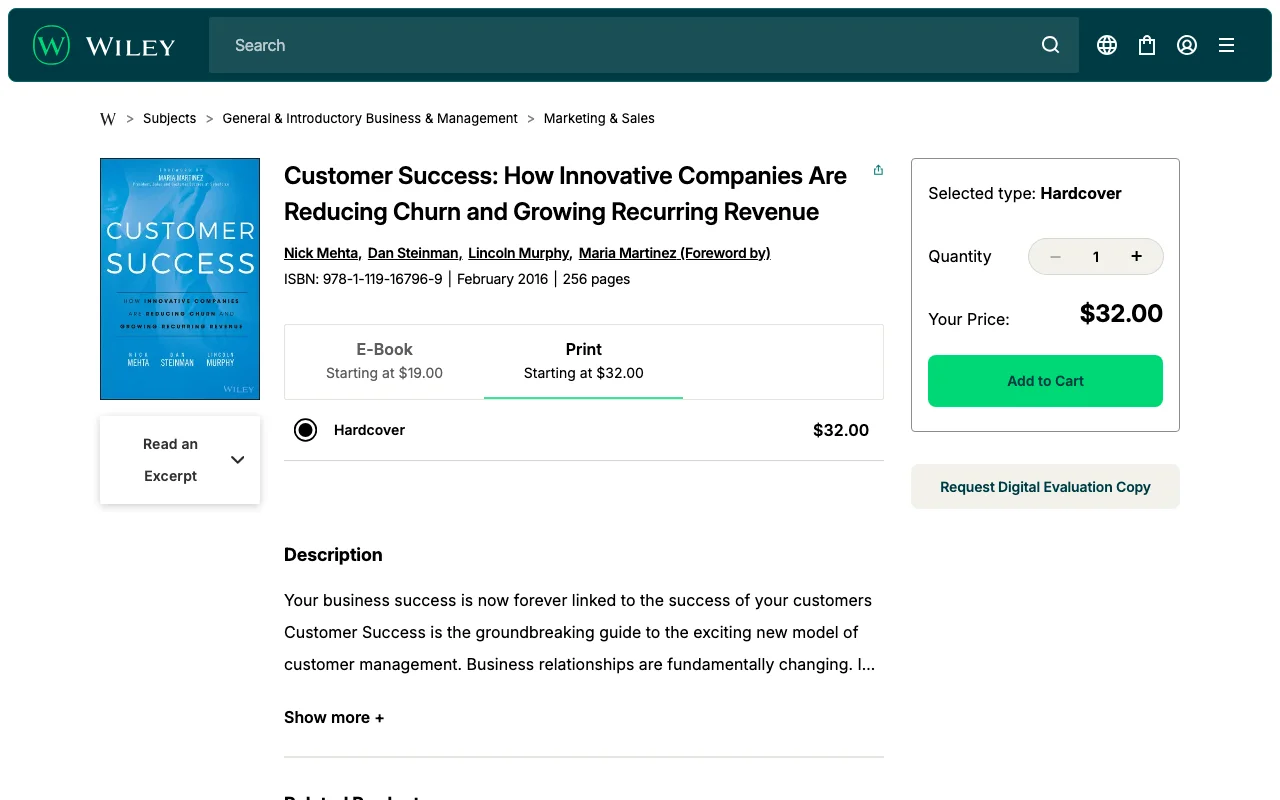
Customer Success focuses on reducing churn and making customer success part of the company. It suits a SaaS founder who can win customers but needs to pay closer attention to whether they stay and get value. The book’s core idea is that customer success can support retention and recurring revenue.
For a small SaaS team, the subject is relevant even if there isn’t a separate customer success role. The founder may be the person who sees a renewal risk first, hears a complaint, or notices that a customer has stopped using the product.
Use the book’s focus to set a regular review of customer outcomes. Look for repeated questions in support messages. Notice when customers struggle to reach the result they bought the product for. Then choose one issue to address, rather than treating each complaint as a separate event.
| What you’re seeing | How this book can guide your next review |
|---|---|
| Customers leave before renewing | Look at retention as a company-wide responsibility, not a last-minute save. |
| Customers don’t reach the result they expected | Review how your team helps customers get value after they buy. |
| Existing customers could grow with the product | Consider how customer success connects to recurring revenue. |
These are prompts for applying the book’s focus, not a substitute for learning why a specific customer is unhappy. Ask customers what changed, then check whether the same issue appears elsewhere. A pattern gives you a better place to act than a guess based on one loud complaint.
Profitable Founder Podcast shares founder interviews that can help put retention questions in an operator’s frame: what keeps customers paying, and what made them consider leaving? Customer success deserves a spot on the reading list once the first sales are in. New signups can’t make up for a leaky customer base forever.
Frequently Asked Questions
Which SaaS book should I read first?
Start with The Lean Startup if you haven’t proved that people want your product. Its focus on validated learning and minimum viable products suits an idea that still needs a cheap demand test. If you already have paying customers and your biggest issue is sales or retention, choose the book that speaks to that problem instead.
Are these books useful for a bootstrapped SaaS founder?
Yes, each book addresses a part of building or running a SaaS company, from testing demand to customer retention. For a bootstrapped founder, the useful test is whether you can apply an idea without adding spend or work your business can’t support. Read with one current decision in mind, then choose one lesson to try.
Do I need a technical background to read SaaS books?
No technical background is needed to use the main ideas in this shortlist. The books focus on product validation, growth, leadership, sales, or customer success. You may need technical skills to build your software, but you can still use these books to decide what to test, how to sell, or where customers need help.
How do I choose the right SaaS book for my business?
Choose based on the decision you need to make next. If you’re unsure anyone will pay, read about validation. If sales feel random, pick a sales-focused title. If customers leave, focus on customer success. Don’t choose a book because it sounds advanced. Choose the one that addresses a problem you can work on now.
Conclusion
Pick the book that matches your most pressing business problem, then put one idea to work this week. If talking through the next step with peers would help, Join Profitable Founder Club, a mastermind for bootstrapped SaaS founders with batches of 7 to 10 founders at your stage, one call a week for 12 weeks, and a monthly live Q&A with Florian. It costs $97 a year, with the price locked while you stay; paying customers are required.
