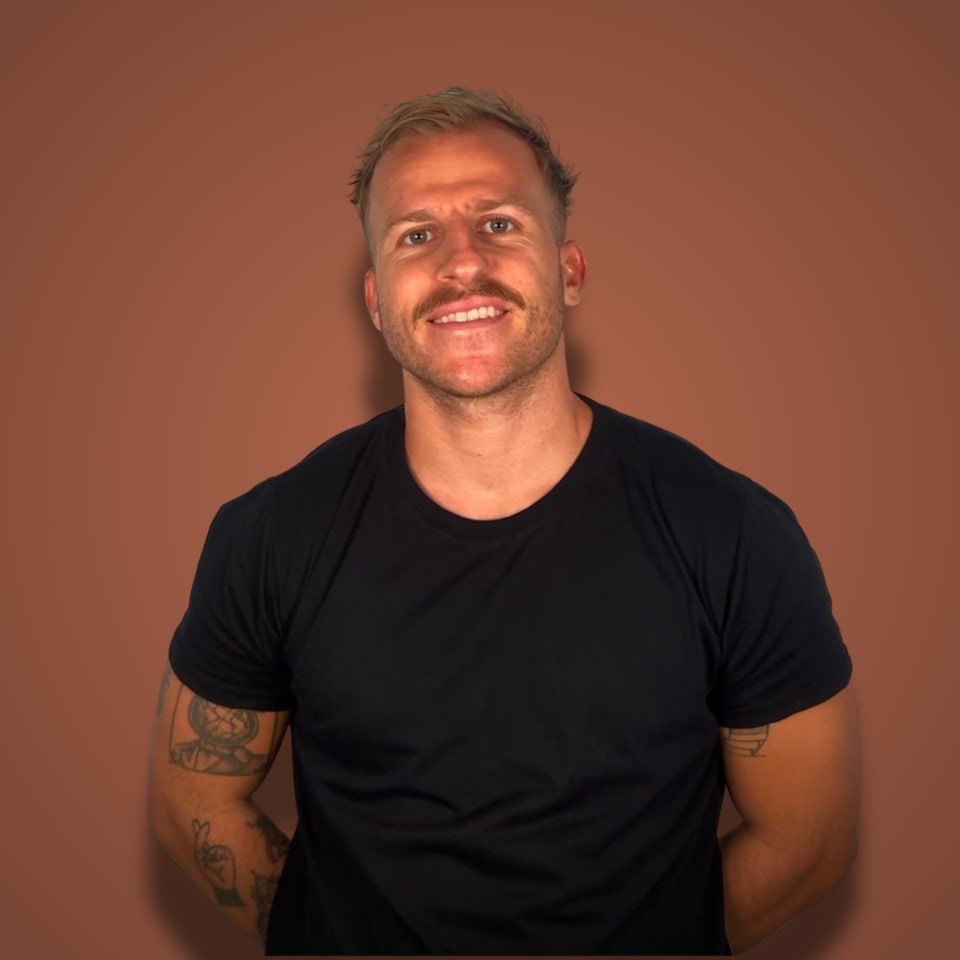
Mauro is 22.
One year after launch, his gym tracking app Symmetry does over $160,000 a month and has around 3 million downloads.
In one of the most saturated app categories on earth.
And when Pat Walls asked him how, the answer was basically a spreadsheet full of experiments. Mauro A/B tests everything, and he has the receipts: one single screen added to onboarding lifted retention 3%.
Here's the full breakdown from his Starter Story interview, and the exact system you can copy if you want to a/b test app features instead of guessing.
The numbers behind Symmetry
Quick snapshot, all self-reported by Mauro in the September 2026 interview:
- Launched June 6, a little over a year before the interview
- Around $160K in revenue in the last 30 days (he pulled up the RevenueCat dashboard on camera)
- Roughly 3 million downloads across iOS and Android
- Market: Spanish speakers, mainly Spain and Mexico
That last point is the first lesson.
There are plenty of gym apps in the US. Mauro didn't fight them. He built "the fastest growing fitness app in the Spanish market" (his words) and owned a niche the big players treat as an afterthought. Same category, completely different battlefield.
From obese kid to fitness YouTuber to founder
Mauro's origin story is personal. He grew up obese, and the gym is what pulled him out of it.
Before Symmetry, he was a fitness YouTuber. So were his co-founders. At some point they looked at each other and asked: YouTube is good, but how do we help more people?
The answer was an app. The execution took three painful phases, and Mauro describes them better than I ever could:
"First, we built what we wanted. Terrible idea. Second, we built what users wanted, like directly from feedback. Mediocre. And now we approach a methodical and scientific way of actually building useful things."
Most founders never leave phase one. Some make it to phase two and stall there, shipping whatever the loudest user asked for last week.
Phase three is what got them to $160K a month.
The UGC machine: 80,000 videos and 8 billion views
Before the testing system, you need to know how Symmetry got downloads. Because the launch didn't work.
The founders assumed their YouTube audience would carry the app. It gave them a small spike, then nothing. Influencer marketing? "It didn't work." By the end of their first summer they were sitting at around 30K downloads.
Then they found UGC, and they went absurdly hard on it:
- Nearly 80,000 videos posted in one year
- More than 500 creator accounts
- Close to 8 billion views
Those aren't typos.
And the operation is systemized like everything else Mauro touches. Videos are segmented into formats, formats into sub formats, every video tracked in an internal dashboard. One winning format: an iPhone lock screen where your girlfriend texts that she's leaving you, and right below it a Symmetry notification says "go to the gym and work out." One of those hit 17 million views.
The wildest part is the pay structure. Mauro gives creators nearly half of revenue (yes, half). His logic: overpay the people who bring you users and they'll keep producing for the long run. When a January spike hit (people go to the gym in January), the machine was already running at full speed to catch it.
I wrote about this exact playbook in how to market a viral app with UGC. Mauro's version is the most industrial-scale one I've seen.
How Mauro decides what to build (steal this)
Now the core of the story. Mauro's claim is that most builders waste months on features that will never move a metric.
His example: a dark theme. Feels like a real feature, users even ask for it. It might touch 2% of your daily active users. Meanwhile an A/B test on your paywall touches every user in a radical way. There's entire software built just for testing that one screen.
So the job becomes finding the few places in your app with real influence on the numbers, and exploiting those instead of shipping whatever sounds cool.
In Symmetry's case:
- The exercise search screen has a huge impact on activation and retention
- The screen you land on to see your workouts? They redesigned it repeatedly. It changed nothing.
You don't know which screen is which until you test. That's the whole point.
Problem space first, solution space second
Mauro's process starts before any hypothesis:
→ What problem am I solving, and how do I know it's real?
→ What solutions could fix it, and how much should each one move the metric?
→ Are there guardrail metrics I need to watch while I test?
Then he A/B tests everything. Control version against variant, minimum 2 weeks of data, then analyze.
The team runs all of this through a database they call Evelyn: "experiment velocity engine listing your numbers." User interviews feed in problems. Problems become hypotheses. Hypotheses become experiments tracked in PostHog.
Two results from Evelyn that tell the whole story:
The post-onboarding workouts page: two completely different redesigns tested against control. Zero movement. Conclusion: stop touching this screen.
A single new screen at the end of onboarding where you commit to working out (basically signing "I will show up"): retention up 3%.
One screen. 3% retention. On an app doing $160K a month.
If you want to run this kind of loop before you even have an app, I broke down a similar setup in the Claude Code stack that A/B tests startup ideas. Same philosophy, earlier stage.
OKRs, activation, and the four metrics Mauro watches
Experiments need a direction, and Mauro gets his from quarterly OKRs. Every 90 days the team runs what they call a "warm-up," because, in his words, "we're going to war."
His advice on targets surprised me: the earlier your product, the more ambitious your OKRs should be. Lifting conversion 10% in 90 days is very doable on an app you launched last week. If you're Netflix, good luck.
The metrics he watches, weekly if not daily:
- Downloads. Especially early on. More downloads, more revenue, roughly proportional.
- Activation. For Symmetry this is brutal: activation means someone actually goes to the gym and logs a workout. Compare that to a calorie app where you snap a photo and you're activated. Know how heavy your own activation ask is.
- Retention. First week and 30 day. In his experience, if you move activation, retention follows.
- ARPU. Average revenue per user, tracked per country. This number decides how much he can pay creators per download. It's the bridge between product and the UGC machine.
And underneath all of it: tracking. Mauro says the most common error he sees is founders with no events in their app at all. He asks "what's your drop-off here?" and they answer "um, I don't know."
His rule: the earlier a step sits in your funnel, the more detail you track it in. Onboarding gets an event on every single screen.
Analytics tell you where people drop. They never tell you why. For the why, you talk to users, or you read what they post about you on Discord and Reddit. It's the same discipline behind good lead nurturing strategies: the data shows you where people go cold, the conversations tell you what to fix.
You need both halves, and most solo founders I talk to are missing at least one.
The stack running a $160K/month app
Nothing exotic here, which is kind of the point:
- Claude with MCPs, connected straight to PostHog, Superwall and RevenueCat, so the team can query their own data by asking for it
- Superwall for paywall experiments
- PostHog for A/B testing and analytics
- Wispr Flow because Mauro talks to his computer faster than he types
- Notion for documentation, Slack for the team
The app itself stays deliberately simple: your plan, your workout, weights and reps, exercise videos. The features people love are the game layer: a rank for every muscle group, a Strava-style social feed, streaks you can lose to your friends.
The product stays simple so the measurement and the distribution can do the heavy lifting.
What Pat took away (and what I did)
Pat Walls has interviewed hundreds of founders, and his closing take was blunt: most tests you run won't move the needle at all. And that's exactly why you run them.
Because every dead test teaches you what doesn't matter. Next time someone says "let's redesign the settings page," you already know the answer. You build a sense for what's worth testing, and you often conclude the honest thing: marketing moves the needle more than product tweaks.
Gus, the new co-host, admitted what most of us should admit. His product decisions have been "that sounds cool, I should build that." Zero data. Zero information.
I've been there. I shipped features nobody used at my last SaaS while my paywall sat untouched for months.
Mauro's parting advice ties it together: "play long-term games with long-term people." Symmetry launched a year ago, but the company started two years ago. They were bad at first. They kept pushing.
FAQ
What is Symmetry and how much does it make?
Symmetry is a gym tracking app for the Spanish-speaking market (mainly Spain and Mexico) built by Mauro, a 22-year-old former fitness YouTuber, with his co-founders. In his September 2026 Starter Story interview he showed around $160K in monthly revenue and roughly 3 million downloads, one year after the June launch. All numbers are self-reported on camera.
How did Symmetry get 3 million downloads?
UGC at industrial scale. After a failed launch spike and failed influencer marketing, the team posted nearly 80,000 videos across 500+ creator accounts in one year, generating close to 8 billion views. Creators get nearly half of revenue, which keeps them producing long term. Videos are segmented into tracked formats, and the best one pulled 17 million views.
How do you A/B test app features the way Mauro does?
Start from problems, not solutions. Confirm the problem is real through user interviews, write hypotheses with an expected metric impact, define guardrail metrics, then test control against variant for at least 2 weeks in a tool like PostHog. Focus on high-influence screens (paywall, search, onboarding) and accept that most tests will change nothing. That's information too.
What should an early-stage app track first?
Downloads, activation, first-week and 30-day retention, and ARPU per country. Instrument your funnel with events, with the most detail on the earliest steps (every onboarding screen). Then pair the analytics with real user conversations so you know why people drop, not just where.
Mauro went from obese kid to a $160K/month app by treating every build decision like an experiment.
Every week on the Profitable Founder Podcast I sit down with bootstrapped founders like this and pull out the systems behind their numbers.