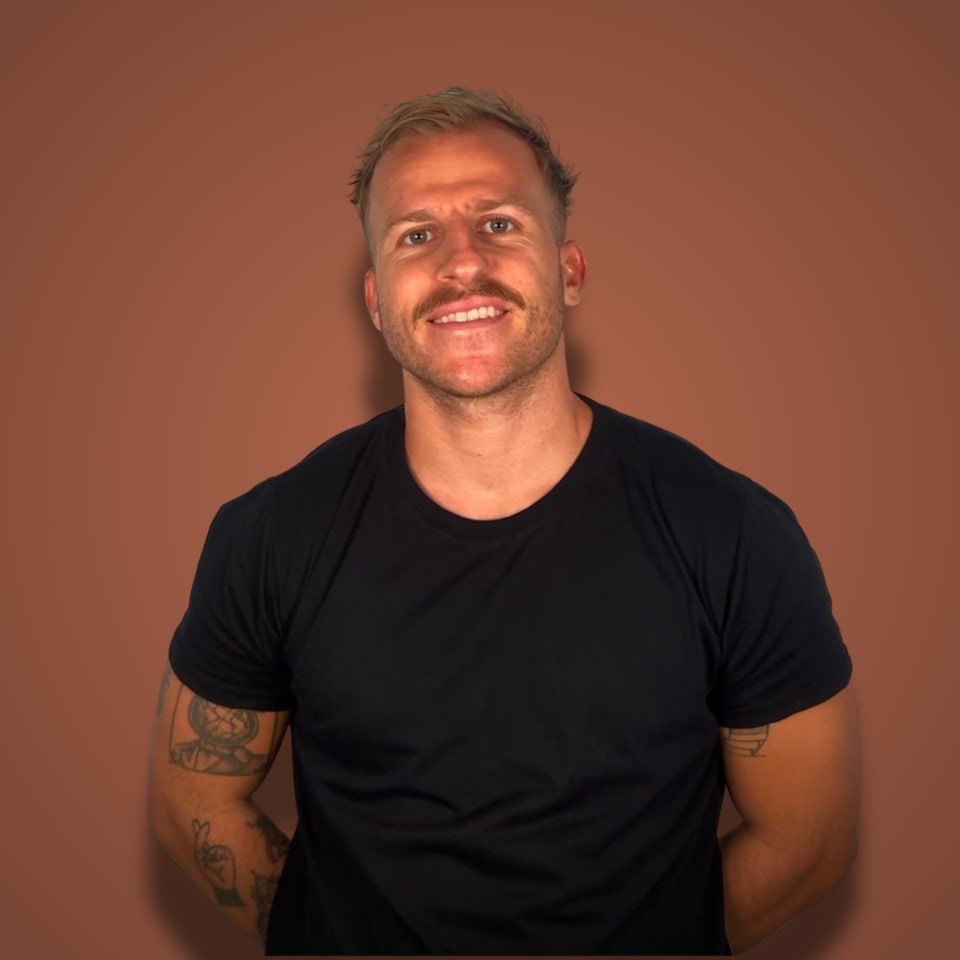
Arib Khan was 19 when his side project crossed $100K a month.
Not a funded startup with a growth team. A website he built alone, in 7 days, because a bunch of non-coders in a Discord server couldn't fix a print error.
First year revenue: somewhere between $1.2M and $1.5M.
The product is Musicfy, the AI voice tool behind those AI Drake and SpongeBob covers that flooded TikTok. Brett Malinowski sat Arib down for 80 minutes and pulled out the whole story: the research paper that sparked it, the $3,000 a day GPU bill, the cease and desist from three major labels at once, and the affiliate machine that did his marketing for him.
I watched the whole thing so you can steal the playbook. Here's the interview:
Five Apps Before the One That Hit
Musicfy looks like an overnight win. It was app number five or six.
At 15, Arib was working at a web3 startup building crypto ETFs. It raised $2M and went nowhere (adoption problem, his words).
At 16 he joined Buildspace, the online incubator started by Farza that raised $12M and put 200,000 students through its six-week program. He spent about 18 months there, learning two things: how startups actually scale, and how to write real code instead of duct-taping no-code tools together.
Then he quit and gave himself a rule: ship one new app every month.
One of them was an AI avatar app he built two weeks before Lensa exploded with the exact same idea. Right product, wrong two weeks.
Most people would call that a failure. Arib figured he was two weeks early, not wrong, and kept shipping.
The Idea Came From a Research Paper, Not a Brainstorm
Here's the part I find most useful.
Arib doesn't find ideas on social media. He reads arXiv, the site where AI research papers drop before anyone builds products on them. One day he found a paper out of China on vocal style transfer: converting one voice into another.
Around the same time, AI Kanye covers started popping up online. So he went looking for where those were coming from and landed in a small Discord called AI Hub. Maybe 5,000 to 8,000 members.
In the chat, people were asking "what is a print error?"
Translation: complete non-developers were fighting through Python errors just to convert their voice into Drake. The demand was so strong that people with zero technical skills were suffering through code tutorials to get it.
That's the kind of demand signal a keyword tool will never show you: real people visibly struggling to do a thing.
His trend-spotting stack, if you want to copy it:
- arXiv for research papers (the earliest possible signal)
- Hugging Face for which models are gaining traction
- Hacker News for what builders are talking about
→ A trend spotted on arXiv is months ahead of a trend spotted on TikTok.
7 Days to Build, 7 Days to 100,000 Users
The first version of Musicfy was embarrassingly simple. Pick Drake, Ariana Grande or Kanye. Upload a vocal file. Press convert.
That was the entire site. He built it in a week.
He gave beta access to 30 or 40 people from that Discord. One of them made an AI Drake song that went massively viral. All of his distribution, done for him, before he even launched publicly.
Seven days after launch: 100,000 users.
The problem: the site was free, and the GPUs cost $3,000 a day.
Arib had budgeted maybe $5K total, thinking this would be a nice resume project. By the time the hole hit $10K to $12K, the resume framing was dead. He needed revenue.
The $1 Paywall That Proved Everything
He skipped the pricing research entirely. Slapped a $1 per month subscription on the tool and waited.
First hour: $95.
End of day one: 2,000 paying subscribers.
Read that again. 2,000 people pulled out a credit card on day one, for a meme tool, at a dollar. That's the strongest validation signal you can get, and it cost him nothing to run. He raised prices from there.
Eight months later, Musicfy had close to 2 million total users, around 1 million monthly actives, and over $100K a month in revenue.
Meanwhile most founders spend eight months building before they let anyone pay them anything.
Three Record Labels, One Cease and Desist
Three weeks in, a letter arrived from Universal, Sony and Warner. All three major labels, same letter. Arib framed it and hung it on his wall.
The complaint was fair: he was selling a product built on Drake's and Kanye's branding. So that same day, he deleted every celebrity voice model on the site.
This should have killed the company. Instead it forced the two smartest moves in the whole story:
- Users who want a specific voice now train custom models themselves, and pay for it. The legal risk moved off his shoulders, and pricing power moved on.
- He recorded 100 real people's voices, then used linear interpolation (blending the model weights of two voices, 50/50) to generate voices that belong to nobody. No copyright, because the person doesn't exist.
The pivot also changed who used the product. Meme makers churn the second the joke gets old. Producers stay. Louis Bell, the producer behind Post Malone, uses Musicfy to sketch demos in other artists' voices before pitching them.
→ Sell to the people who use your product for work. They stay longer and pay more.
4,000 TikTok Affiliates and the YouTube Math
Creators were already posting AI covers by the thousands. Arib just gave them a reason to tag him.
He spun up an affiliate program: 25% commission (30% to 40% for big accounts), with links handled through Tolt so anyone could grab one in five minutes. Around 4,000 TikTok pages started pushing Musicfy links. His top affiliate has earned $50,000.
The whole program is managed by a 16-year-old in his Discord, for $500 a month. I love this detail more than any other in the interview.
But the math inside that program is the real lesson. In one month, TikTok drove 300 million views and brought in about $20K to $30K. One single YouTube video from a music producer, with 300,000 views, brought in $30K on its own.
300 million views on one platform. 300 thousand on the other. Same revenue.
TikTok reach is wide and worthless for conversion. YouTube viewers arrive with intent and stay for depth. If you're deciding where to spend your next content month, that ratio should haunt you. I broke down a similar system in how to market a viral app with UGC.
Two Checks, Four Engineers, and a Real Moat
Musicfy never needed to raise. Arib took exactly two checks anyway, both strategic.
One from Founders Inc, the incubator he already worked out of. One for $100K from Jaroslav Beck, the Beat Saber founder whose game sold to Meta for $2 billion. Not for the money. For the doors they open into gaming, which is where Arib is taking the company next: sound effects, voice characters and soundtracks for game studios, at $30K a year against the $50K those studios pay sound agencies today.
The team is four engineers. That's the whole company behind seven figures a year.
And unlike most AI apps from that era, Musicfy isn't a wrapper. Nobody offered the model he needed as an API, so he self-hosts everything on Modal, a serverless GPU platform. Companies that want his audio tech have to come to him: the API is closed, with a $10K minimum spend.
His stack, for the curious: TypeScript, Next.js, Supabase, Modal, PostHog for analytics, Retool for internal dashboards.
What You Can Steal From Arib's Playbook
You're probably not going to build the next viral AI music tool. Doesn't matter. The mechanics transfer:
- → Ship monthly until one hits. Musicfy was attempt five, not attempt one.
- → Find demand where people are struggling, not where they're talking. Non-coders debugging Python to clone a voice is a screaming buy signal.
- → Charge on day one, even $1. Price discovery beats validation surveys.
- → Recruit the people already posting about your category. Commission beats ad spend when the content already exists.
- → When a legal threat forces a pivot, pivot toward professionals. They retain.
The pattern rhymes with what Zach Yadegari did at 18 with Cal AI, another teenager who turned distribution into millions. I wrote that one up in the Cal AI founder story.
Young founders keep winning with the same three moves: catch the trend early, ship in days, let creators do the marketing.
FAQ
What is Musicfy?
Musicfy is an AI voice conversion tool built by Arib Khan. You upload a vocal recording and convert it into another voice, train a custom voice model, or use one of 100 original AI voices. It powered many of the viral AI song covers on TikTok and now serves music producers and game studios.
How much money does Musicfy make?
In the interview, Arib says Musicfy was on track for $1.2M to $1.5M in its first year, passing $100K a month in revenue about eight months after launch, with roughly 1 million monthly active users.
How did Musicfy get its first 100,000 users?
A beta user (one of only 30 to 40) made a viral AI Drake song using the tool. When Musicfy launched publicly a week later, it hit 100,000 free users in 7 days. Growth after that came from roughly 4,000 TikTok affiliate pages earning 25% commissions.
Did Musicfy get in legal trouble?
Three weeks after launch, Universal, Sony and Warner sent a joint cease and desist over the celebrity voice models. Arib removed them the same day and pivoted to user-trained custom models plus 100 original voices created by blending real voice models, which carry no copyright.
Want more stories like this one?
Every week on the Profitable Founder Podcast, I interview bootstrapped founders making $100K to $10M a year and pull out the exact playbooks they used.
Listen to the podcast