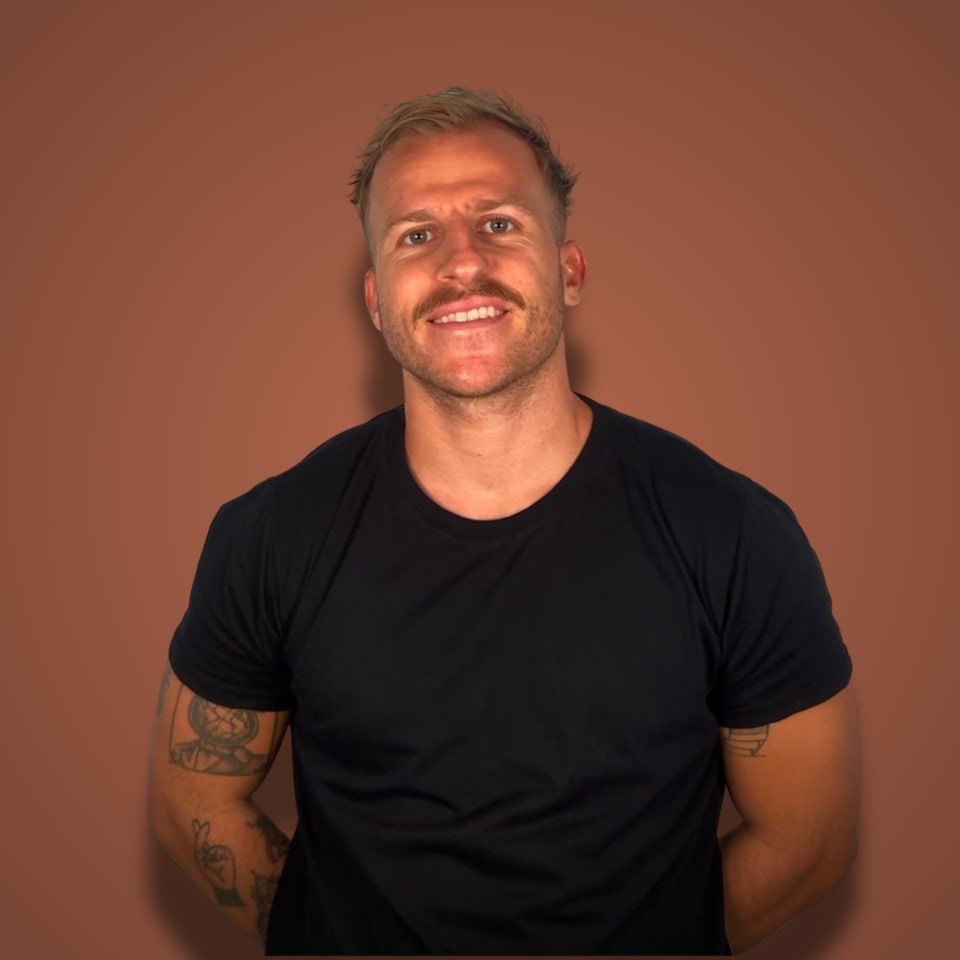
Piotr Obidowski spent 700 days stuck at $100 a month.
Two full years, same app, same flatline.
Then he made one product pivot, and six months later Visualizee is doing $10,000 a month.
He didn't change the audience or the idea, and he didn't add a single feature. He deleted complexity.
I watched his Starter Story interview twice because this exact mistake nearly killed my first SaaS too. Here's the full breakdown, numbers included.
What Visualizee actually does
Visualizee.ai is an AI rendering tool for architects and interior designers.
You upload a sketch or a 3D model. You tell it what you want (raw concrete, blue hour, whatever). Seconds later you get a photorealistic render you can put in front of a client.
The old way of getting that render takes hours of specialist work. Architects pay for speed here, which is why the pricing holds up: $35 or $80 a month after a 7-day trial, depending on how much you render.
Piotr built all of it solo. Nights and weekends, while working full-time as a tech lead at a software house in Poland. He's been a developer for over 20 years.
Twenty years of experience. And the thing that kept him stuck for two of them was a developer instinct.
Two years at $100 a month (and the wrong diagnosis)
Piotr launched almost three years ago. The first version took him about five months of after-hours work.
V1 was a node-based system, similar to ComfyUI. Upload an image, that creates a node. Connect it to another node. Write your prompt. Tune the parameters. Then hit generate.
To a developer that setup looks great. To an architect it looks like homework.
For two years the app sat at roughly $100 a month while Piotr blamed the wrong thing.
"For 2 years, I blamed slow growth on marketing when the real problem was that my product was too hard to use," he told Pat Walls.
That line should sting. Because it's what most of us do.
Revenue goes flat, so we buy ads and rewrite the landing page. Anything except admitting the product itself is the leak.
Users had even told him directly: it's too hard to understand. He heard it. He just stuck with his version too long, because it was his first product ever and his idea felt right.
That first-product attachment is real, by the way. Piotr admits the only reason he never shut Visualizee down was that he couldn't bring himself to "just remove it from the internet." His first launch. Two decades of writing code for other people, and this was the one thing with his name on it.
So he kept paying the hosting bill on a $100/month app. For 700 days.
Most people would call that stubbornness. It turned out to be the asset, but only because he eventually pointed it at the right question: not "how do I promote this" but "why is this not working when competitors with the same idea are winning."
The product pivot: from node graph to chat box
Six months ago, Piotr finally made the change.
He threw out the node system and rebuilt the product as a chat. You upload an image, pick a few options like materials and lighting, hit generate. Done.
Behind the scenes there's an AI assistant that asks follow-up questions, figures out what you actually want, and writes the prompt for you. Nobody using Visualizee needs to learn prompt engineering, because the product does it for them.
Pat's take on the interview is the part I'd frame on a wall: simplifying the product down to essentially a ChatGPT-style wrapper is what created the growth.
Every developer watching is asking "how do I add more features, how do I make this more technical?" And the growth came from ripping features out.
→ A product pivot doesn't have to mean a new market or a rebuild from zero. Piotr changed how the same product was presented to the same audience, and that took it from $150 to $10,000 a month.
The data flipped almost immediately. Before the pivot he got a couple of signups. After it, people actually started rendering, because nothing stood between a visitor and their first result.
I've seen the same pattern across dozens of simple apps that make money: the boring, obvious interface usually beats the clever one.
The second fix: subscriptions from day one
The pivot had a quieter second half that deserves its own section.
Piotr was selling one-time payments. One-time payments don't compound. Every month started at zero.
So when he rebuilt the UI, he also switched to monthly recurring billing.
His advice now is blunt: "Charge subscriptions from day one. Don't be afraid that someone will not pay. If the product is valuable, then they will pay."
The current split proves it. About $8,200 of the $10K is MRR from around 300 active subscribers, with one-time payments making up the rest.
Recurring revenue is also what makes the next step possible: Piotr is now preparing to quit his full-time job and go all-in. That's a very different conversation when the revenue repeats by itself. (If you're weighing that same jump, I broke down another founder's version of it in this story about quitting your job to build a startup.)
The numbers today
All self-reported by Piotr in the September 2026 interview:
- ~$10,000/month total revenue ($8.2K MRR + one-time payments)
- ~300 active subscribers at $35 or $80 a month
- 300+ daily visitors on the landing page
- 5 to 10 new trials every day
- 25% of trials convert to paid
- Stuck at ~$100/month for the first two years, $10K within roughly six months of the pivot
His stack, for the curious: Next.js on Vercel, Supabase for the database and auth, Stripe for billing, Cursor and Claude Code for building, Ahrefs for SEO, MailerLite for email, PostHog, Google Analytics and Sentry for tracking, plus a third-party GPU service running the actual image generation.
Nothing exotic. A solo dev with a day job runs all of it.
When should you pivot your product?
Piotr stayed stuck for two years. Here's what his story says about calling it earlier.
1. Friction is guilty until proven innocent.
Flat revenue with real traffic usually means the product is too hard to use, not that your marketing is broken. Piotr's fix was "removing the thing standing between a visitor and their first success." Find that thing in your product. Remove it.
2. Working competition is a green light, not a threat.
What kept Piotr going was watching competitors win. His logic: the competition is working, so the market exists, so the problem is me. That reframe turns envy into a debugging session.
3. Listen when users say "too hard".
He had that feedback early. It took him two years to fully act on it. The pivot worked in weeks.
4. Staying in the game is what made the pivot possible.
Pat and Gus land on this at the end of the video. Piotr didn't grind through 700 bad days on willpower. He cared about the problem, so he kept talking to architects, and that's what eventually walked him to the right version of the product.
His advice to his younger self sums the whole thing up: "Don't build the most powerful product you can. Build the simplest product your customer needs."
FAQ
What is a product pivot?
A product pivot is changing what you sell or how it works while keeping the same business. It can be as small as changing the interface. Piotr kept his audience (architects), his idea (AI renders) and his tech, and only swapped a node-based UI for a chat-based one. Revenue went from $100 to $10,000 a month.
How do you know it's the product and not the marketing?
Look at what happens after the click. Piotr had visitors and signups, but people never got to a first result because the tool was too hard to use. If traffic shows up but activation is dead, more marketing just pours water into a leaking bucket.
Do simple AI wrapper products really make money?
Visualizee is proof. The chat version that finally grew is, in Pat Walls' words, essentially a ChatGPT-style wrapper with a prompt assistant on top. What customers pay for is the fastest path from their problem to a result, not technical depth.
How long should you give a product before pivoting?
Longer than a month, shorter than Piotr's two years. The signal to watch is user behavior: if people who genuinely have the problem try your product and still don't stick, change the product. Don't wait for 700 days of flat revenue to make the call.
Steal playbooks like this every week
Piotr's story is one interview. I collect these breakdowns every single week: bootstrapped founders, real revenue numbers, and the exact decision that unlocked growth.
If you're building toward $10K a month and beyond, listen to the Profitable Founder Podcast. Every episode is a founder ahead of you handing over the playbook.