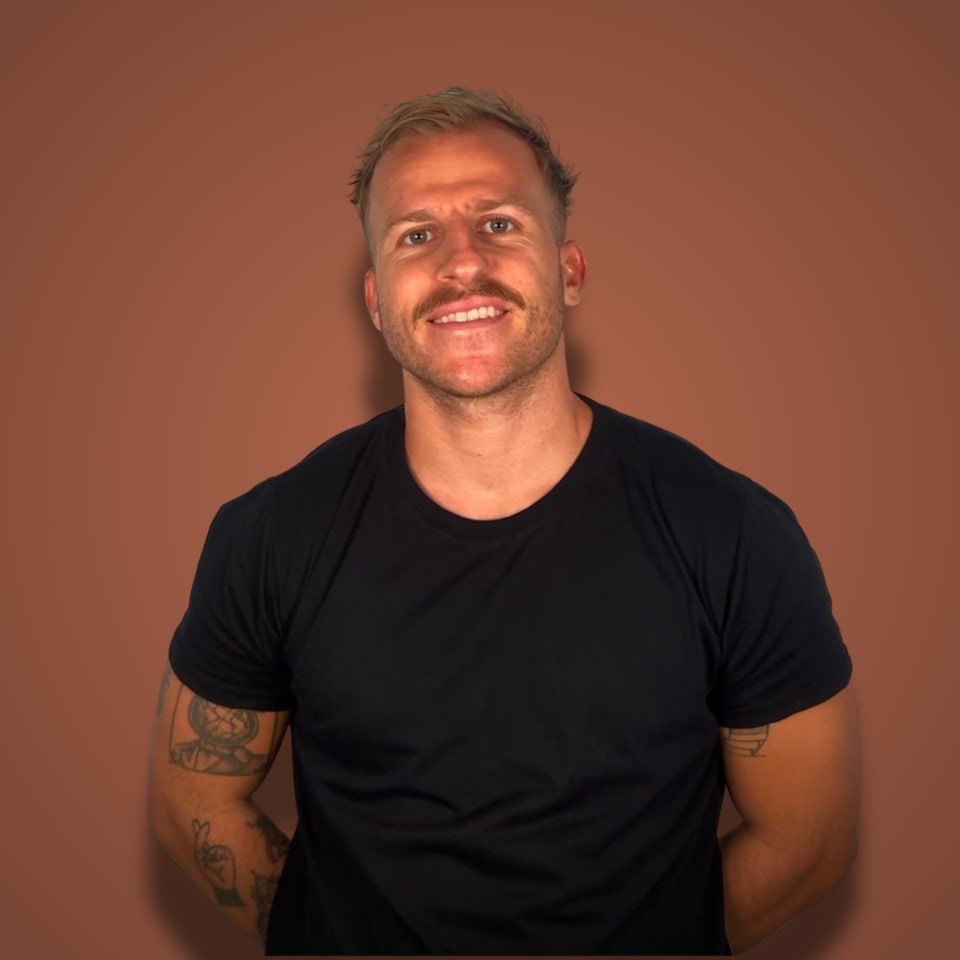
Dickie Bush spent four years as a hedge fund trader at BlackRock. All-in pay: about $200K a year.
Two years after quitting, his portfolio of writing businesses does $500K to $600K a month.
Four businesses, to be exact. A writing course, a SaaS, a ghostwriting academy, and a paid newsletter. Every one of them built on the same skill, and the first paying customer showed up through a Venmo error (more on that in a minute).
Brett Malinowski had him on The Brett Way podcast and pulled the whole playbook out of him. If you want to make money writing online, this is the most complete map I've seen: the 40 weeks nobody read his newsletter, the first $5,000, and the exact lead magnet all four businesses still run on.
Watch the interview, then read the numbers.
40 Weeks of Writing, 400 Subscribers
The origin story starts inside BlackRock.
At 23, Dickie noticed that senior people wrote long internal emails breaking down their views on the market. So he started an internal newsletter summarizing what was happening each week. A couple hundred colleagues read it, including some of the most senior people in the firm.
That taught him one lesson: put your thinking in public and opportunities come to you.
In January 2020 he took the same move outside the firm. A public newsletter about everything he read and learned that week, with a commitment to write it for 52 straight weeks.
Forty weeks in, he had 400 subscribers. His words: "I think I signed up half of them myself." He compared the whole stretch to chewing glass.
This is the part most people never survive. He almost didn't either. Instead of quitting, he changed the format: 30 Twitter threads in 30 days, each one summarizing a podcast he listened to that morning before work.
Day 28, he published his thread and got zero engagement. He says it felt like he didn't even exist, and he decided he was done with writing once the 30 days were up.
Day 29, he wrote one more thread and went to bed. He woke up to 4,000 or 5,000 likes. Naval had retweeted it. His newsletter jumped from 400 subscribers to almost 1,000 overnight.
His summary of that night: nine months to get to 400 subscribers, nine more hours to get to 1,000.
→ You never know which piece hits. So you keep publishing until one does.
The First $5,000 (Blocked by a Venmo Limit)
In November 2020, someone who followed those threads asked if Dickie could write one for him, privately, for money.
Dickie had no idea what to charge. He was going to say $500, got scared it was too much, and instead said: I will do it free, you pay me whatever it turns out to be worth to you.
Then he worked three nights, around 12 hours a day, pulling every podcast, TED talk, and article the guy had ever published into a book-quality outline of his ideas.
The client loved it and asked where to send the money. Dickie sent his Venmo. The assistant came back with a problem: the amount was higher than the Venmo daily limit.
He Googled the limit. $1,000.
He set up a PayPal, sent the link, and $5,000 landed in his account. For one piece of writing. His Wall Street salary was good, but this was the first dollar he ever made on the internet, and it broke his brain about what was possible.
Referrals from that one client turned into a ghostwriting side hustle making $5K to $10K a month. He didn't even know the word for it at the time. It was ghostwriting.
He still calls it the fastest path for a beginner, because you skip the years of audience building and rent the trust of someone who already has one.
A $50 Challenge That Became a $1M Year
Ghostwriting paid well but didn't scale. So he asked himself what had actually caused all of it, and the answer was the 30-day challenge.
So he tweeted to his 1,000 followers: would anyone join a 30-day writing challenge? Pay $50, write every day for 30 days, and you get your money back if you complete it.
The infrastructure was a spreadsheet and PayPal. When the month ended, he held a one-on-one interview with every single participant to find out what worked and what didn't. Then he ran a second beta cohort and did it again.
In January 2021 he launched it for real at $99, no refund. That cohort brought in $30K to $40K.
Around the same time, his first ghostwriting client sent a cold email introducing him to writer Nicolas Cole. Subject line: "Connecting Dickie and Cole." Body: "Not sure why, but I think you two should know each other." One sentence that created a partnership now worth seven figures a year.
Ship 30 for 30 did a little over $1M in 2021. One offer, one channel. And Dickie was still working full time at BlackRock through all of it.
His rule for quitting: the side income had to hit double his BlackRock salary first. He calls himself the most risk-averse person in the world. I wrote about how to think through that exact decision in quit your job to build a startup.
In February 2022 the firm ordered everyone back into the office. He quit instead. (Jim ran the same play when he walked away from $350K at Google.) Part of the reason was personal: he had been living with his mom and driving her to chemo treatments after her cancer returned, and no job was going to pull him away from that. (She's doing great today.)
The Four Businesses Behind $600K a Month
Two years later, the portfolio looks like this:
- Ship 30 for 30. The flagship course: a 30-day challenge where beginners learn hooks, headlines, formatting, and idea generation. Now transitioning from quarterly cohorts to self-paced so people can join any week.
- Typeshare. A $20/month SaaS with templates and publishing tools for online writers. Sits at $40K to $50K a month, and he's honest that it plateaued there because churn outpaces new signups without his full attention.
- Premium Ghostwriting Academy. High-ticket group coaching, launched April 2023. Teaches freelancers to position themselves as ghostwriters and charge $5K per project.
- Write with AI. A $20/month paid newsletter on Substack. Also $40K to $50K a month.
The team behind all four: 14 people. He says it would take 25 people without automation, and calls Zapier the hardest-working employee in the company. That gap between 14 and 25 salaries is a big reason the margins work.
His candid take on SaaS stuck with me: everyone wants recurring revenue until they realize it means recurring work.
And the wildest part: in two years he got a working education in five business models. Service, cohort course, SaaS, group coaching, paid newsletter. Each one funds the lessons for the next.
The One Lead Magnet All Four Businesses Share
Ask most founders about lead magnets and you get a PDF that dies in the downloads folder.
Dickie tested that against video too. His hour-long free training collected tens of thousands of emails, and under 10% of people ever pressed play. His 5-day email courses get 60% open rates across all five days.
So every single business in the portfolio now starts with the same funnel:
- A free 5-day email course that teaches one theme (five mistakes, a crash course, a framework)
- A 3-day "FOMO squeeze" with a hard CTA and an expiring discount
- A 12-week nurture sequence that keeps delivering value until the reader is ready
The Ship 30 version hasn't been edited in two years, and around 2,000 people were moving through it while he filmed this interview. If you want to go deeper on that discipline, this breakdown of lead nurturing strategies covers the same ground the FOMO squeeze is built on.
One more line from the interview worth stealing, on why he gives his best ideas away free: "We don't sell information. We sell implementation, packaging, speed, and outcomes."
Every idea behind his paywalls exists somewhere on his social media. People pay to get it organized, sequenced, and applied.
Steal His $5K Ghostwriting Pitch
The most tactical part of the whole episode is the pitch formula from Premium Ghostwriting Academy. His framing: a ghostwriter is a business consultant who happens to know how to write.
The pitch structure:
- Name the current mistake ("your site offers 10% off for an email address")
- Show the cost ("visitors leave without buying, and you learn nothing about them")
- Show the bigger cost ("your ad spend is really a brand awareness campaign")
- Offer the new way ("a 5-day email course that captures and educates that traffic")
- Immediate benefit, then long-term benefit
Delivered as a two-minute Loom audit of the prospect's actual website, not a cold DM promising "20 qualified leads, no cap."
Priced at $5K, because the pitch sells a client-getting asset instead of a stack of tweets. And loss aversion does the heavy lifting: showing a founder the money leaking out of their funnel converts far better than promising upside.
Brett, who hears pitches for a living, stopped the interview to say it was one of the best offers he'd ever heard.
FAQ
How much money can you make writing online?
Dickie Bush's numbers from the interview: $5K to $10K a month is realistic for a beginner ghostwriter with no audience, his first cohort launch did $30K to $40K, and his four writing businesses combined now do $500K to $600K a month. Those top-end numbers took four years, a world-class partner, and a portfolio. The $5K to $10K entry point is the repeatable part.
Do you need a big audience to make money writing?
No. Dickie made his first $5,000 with under 1,000 followers, from one reader who saw his free threads. Ghostwriting works precisely because the client already has the audience and the business. You bring the skill, they bring the distribution, and you get paid on the value your writing creates for them.
What is the fastest way to start making money as a writer?
Ghostwriting positioned as consulting. Audit a real business for free (a Loom walking through their landing page or email funnel), propose one concrete fix like a 5-day email course, and charge for the project. Land the first $5K project, deliver an outcome, then convert the relationship into a monthly retainer.
How long did it take Dickie Bush to quit his job?
About two years from first newsletter to resignation. He started writing publicly in January 2020, made his first internet dollar in November 2020, crossed $1M in revenue during 2021, and quit BlackRock in February 2022 when they called everyone back to the office. And he only quit once the business made double his salary.
The Part Worth Copying
The $600K months make the headline. The part worth copying is older and less shiny: 40 weeks of a newsletter nobody read, a $50 challenge run on a spreadsheet, and one-on-one calls with every early customer to find out what to fix.
None of the four businesses sells his writing directly. The writing brought in the readers, and the businesses sell them implementation.
I interview bootstrapped founders every week about exactly this: the unglamorous months before the curve bends, with the real numbers attached.