Type "dropshipping" into YouTube and half the results tell you it died in 2018.
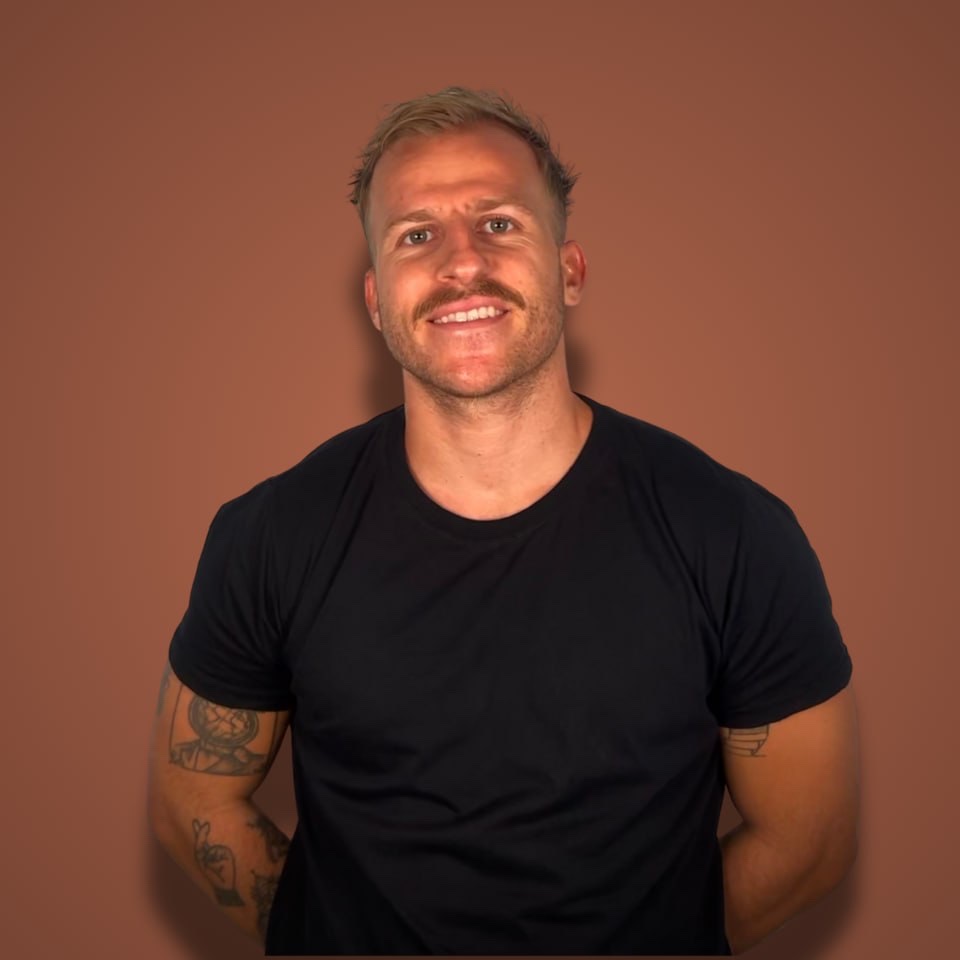
Luke Belmar did $16 million in dropshipping sales across 2019 and 2020. His number, stated on camera. So when he answers the question is dropshipping dead, I pay attention.
He sat down with Brett Malinowski on TheBrettWay podcast for a little over an hour. Most of the headlines from that episode are about AI and crypto. The part worth stealing is the dropshipping playbook buried in the back third.
Here's the full episode. The business breakdown is what this article unpacks.
Quick context before the numbers: the episode is from February 2023, so treat the figures as a snapshot from that conversation. The lessons have not aged a day.
Who is Luke Belmar?
Luke Belmar is an ecommerce guy who went from running Shopify stores to co-founding Capital Club, an invite-only network for entrepreneurs that now claims over 15,000 members.
There's no Forbes profile and no audited revenue report on him. Everything here is his own account from the episode, which is exactly how he likes it. He spends a chunk of the interview arguing that the smartest operators keep their wealth quiet.
What makes his dropshipping take interesting is that he's not selling a course on it. By the time of this recording he had already moved on to digital products. He has no reason to hype the model.
And he still won't call it dead.
The $16M run: same product, different pocket
The best story in the episode is how the $16 million happened.
It's 2020. COVID hits. Masks and hand sanitizer become the hottest products on the internet, and sellers start price gouging. Luke says people were charging $100 for masks. The ad platforms respond by banning mask and sanitizer ads entirely.
Most dropshippers either broke the rules and lost their ad accounts, or quit the niche.
Luke asked a different question: the fear is still in people's heads, so who else lives in their home that they desperately want to protect?
Their pets.
He built a line of eco-friendly sanitation and cleaning products for pets. Same anxiety, different pocket. Nothing against terms of service, because he wasn't selling human sanitizer.
The result, by his telling: one of the biggest ads in Facebook history at that point (he says 10th or 12th), around a quarter billion paid views, and something like 100,000 comments.
His summary of why it worked: "The reason I did $16 million in dropshipping was because I thought about things differently."
The edge wasn't a better product research tool or a secret supplier. It was a reframe.
Why everyone says dropshipping is dead
Brett gives the cleanest diagnosis in the episode.
People think dropshipping is dead because anybody can start. Low barrier to entry, sounds easy, grab a product, film a TikTok, done.
Then they discover the actual depth of each step:
- The ad: what makes the first 5 seconds of a TikTok stop a thumb? Does your audience respond to an explainer or to fast-cut memes?
- The landing page: copywriting, psychology, showing someone a problem they recognize and the fix in one scroll.
- The boring parts: fulfillment, chargebacks, customer support, supply chain.
Luke gets DMs asking "what are the best niches to dropship right now?" and refuses to answer. His point: if you need someone to hand you the niche, you haven't done enough thinking to survive the niche.
So the model isn't dead. The fantasy version of it is. The version where a store, a product, and one ad make you rich died years ago, if it ever existed.
The rules Luke still runs physical products by
Scattered through the conversation are the actual operating rules. I pulled them together:
First: the product has to work. His pet products were genuinely good, and he names that as a research criterion. You cannot scale junk, because scale means strangers, and strangers leave reviews.
Second: keep cost of goods at 25% or less of your price. If the product costs more than a quarter of what you sell it for, there's no room left after ad costs.
Third, and this one nobody teaches: budget for margin of error, not just margin of profit. Chargebacks, broken products, supply chain failures. He treats that buffer like maintenance money. Most beginners count only the upside.
Fourth: ads are a virality test, not a business model. Direct quote, cleaned up: "If your business is only sustained by ads, you're done. Ads are the test to see if people will spread it organically." If people don't share your product, paid traffic just delays the funeral.
And he only tests products that can do $4 million, not $50,000. That filter changes what you pick in the first place.
That last rule is the same one Oliver Brocato used to take Tabs Chocolate to $11M with zero paid ads: pick a product designed to be shared, then let the content do the selling.
The three boxes: best, in demand, irreplaceable
Luke's framework for guaranteeing you make money has three boxes to check:
→ Be the best at what you do. Not globally, just in your region, your niche, your audience. But actually the best, which starts with admitting you're not yet.
→ Do something in high demand. You need a big pool of customers to scale into. Being the world's best at something nobody wants is a hobby.
→ Be irreplaceable. His proof is the salary premiums Facebook, Amazon and Google paid engineers in 2021. They were the best at what they did and in high demand, so companies paid retention bonuses that made the news just to keep them.
Brett's rephrase is the one I'd write on a wall: being irreplaceable means choosing to do something harder than what everybody else is doing.
Dropshipping's low barrier to entry is exactly why most people in it are replaceable. The depth is the moat.
Physical vs digital vs services: pick your pain
Near the end they break every business into three buckets. The pros and cons, straight from the episode:
Services. Easiest entry. Mow lawns, shoot videos, run ads for local businesses. The con: sweat equity, and clients own your time. Luke calls agency life "a slave with golden chains". A client paying a $4K or $5K monthly retainer will call you at 4am and expect answers. Brett built his first six figures filming videos, and his advice for a first goal is simple: get to $1,000 a week.
Physical products. Never been easier to test (more on that below), but supply chains break, margins are thin on paid traffic, and you babysit logistics. This is dropshipping's bucket.
Digital products. The use bucket. Luke's line: you can start a software company with $10K and it can scale to millions, while real estate needs millions just to enter. The catch he names honestly: his own software project had close to six figures in dev costs, and someone has to actually build and market the thing.
His verdict surprised me: dropshipping was "the best first business" for Brett because it force-feeds you every skill at once. Offer, ad, funnel, fulfillment, support. You're the jack of all trades, and that education compounds into whatever you build next.
That matches what I keep hearing from founders on the podcast: the first business teaches, the second one pays.
Testing a product in 2026 costs almost nothing
One shift in the episode matters more now than when it was recorded.
Luke points out that testing a product used to mean roughly $10K in Facebook ads before you knew anything. The old playbook was: build store, buy traffic, pray.
Now: make the product, film a TikTok, post it. Organic reach is your free R&D department. Every video gets its own shot at the algorithm, so a nobody with a good product can outrank a funded brand on any given day.
This is also why the modern version of the model keeps mutating. Some founders skip inventory entirely and sell templates and digital files instead. I broke that variant down in the digital dropshipping playbook, and it runs on the exact same test-with-content loop.
The money question stopped being "can I afford to test?" It's now "can I make content people actually watch?"
The information ladder
The framework I keep thinking about isn't the dropshipping one. It's Luke's three levels of information:
→ Learn more. Books, podcasts, YouTube. Get valuable enough to be useful to someone.
→ Get better information. That means better rooms and better people, even if you have to move.
→ Get faster information. His example: "If I get a text from you, nine times out of ten I'm going to make money on what you said."
The $16M pivot was a speed play. Everyone had the same information about the mask ad ban. He acted on the second-order implication before the market did.
And once the money comes in, both of them agree on the next move: at $50K to $100K a month, you stop doing everything yourself and hire the best copywriter and media buyer you can find. That's the bridge from operator to owner.
So, is dropshipping dead?
No. But three honest caveats from a guy who made $16 million doing it:
1. The lazy version is dead. Store plus product plus one ad is not a business.
2. It's a starter model, not an end state. Luke himself says the better long-term play is owning your product and your warehouse for real margins. He left physical products entirely for digital.
3. The edge was never the model. It was thinking differently than the other 10,000 people who watched the same tutorial.
Dropshipping is dead the way podcasting is dead and newsletters are dead: dead for people who wanted it to be easy, very alive for people willing to go deep.
FAQ
Is dropshipping still profitable in 2026?
Yes, but the profit comes from skill, not the model. Products that genuinely work, cost of goods under 25% of price, a buffer for chargebacks and supply chain problems, and content that spreads organically. Sellers treating it as a one-ad lottery ticket lose money fast.
Why do people say dropshipping is dead?
Because the barrier to entry is so low that most people who try it skip the hard parts: ad creative, landing page psychology, fulfillment, support. They fail in weeks and blame the model. The depth they skipped is exactly where the survivors make their money.
Did Luke Belmar really make $16 million dropshipping?
That's his own figure from the episode, covering 2019 and 2020, and it has never been independently audited. What is verifiable: he co-founded Capital Club, which claims 15,000+ members, and he walked away from physical products afterward, which is not what a man still hunting course sales usually does.
How much money do you need to test a product now?
Far less than the roughly $10K in paid ads it took a few years ago. A phone, a product sample, and consistent TikTok or Reels content can validate demand for close to zero. If organic content moves units, paid traffic becomes an amplifier instead of a prayer.
Steal playbooks like this every week
I interview bootstrapped founders doing $100K to $10M a year and get them to walk through exactly how the money is made. Real numbers, no guru talk.