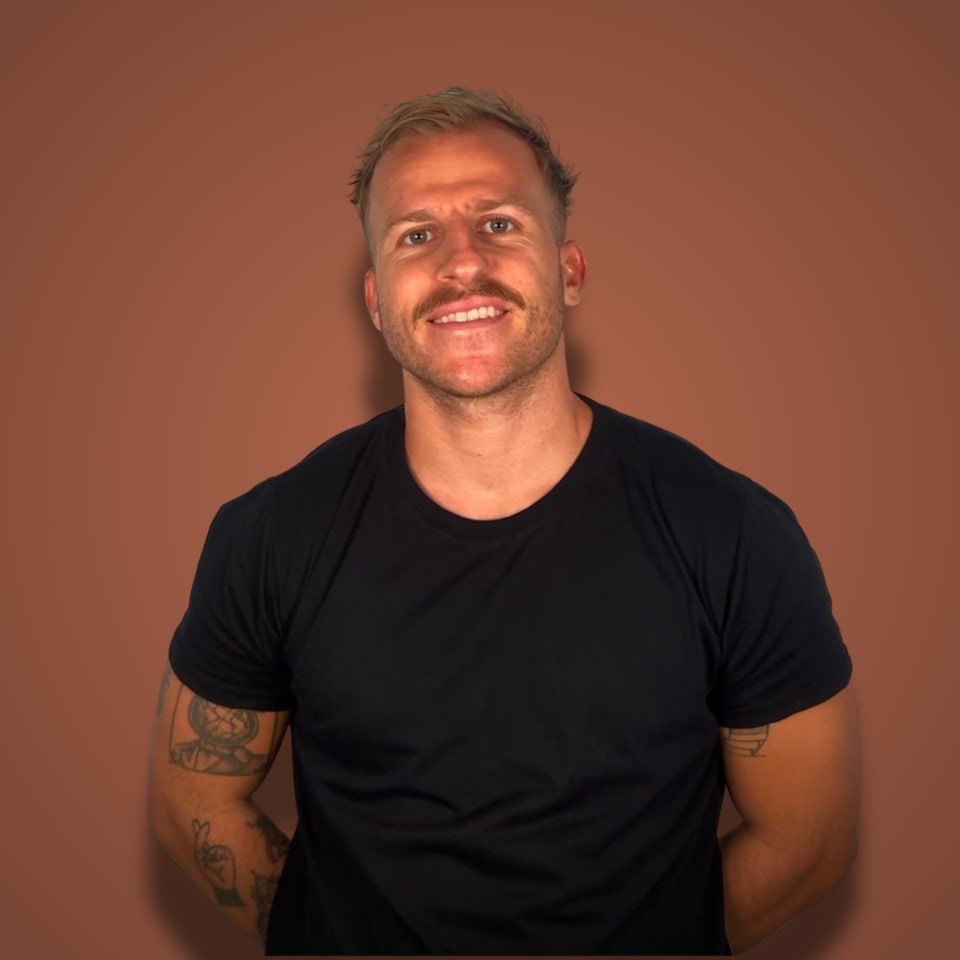
Half a million downloads. No influencers. No paid ads. One person posting on TikTok a few times a day.
That was Julia, before she co-founded Playkit. She was leading growth at a startup, was not even a TikTok user herself, and the whole flywheel still spun from zero.
Now her agency runs UGC campaigns for apps like Substack and Flow Health. They push out 8,000+ pieces of content every month and have generated over 70 million views for clients.
I sat down with Julia on the Profitable Founder Podcast. Here's the full playbook for marketing a viral app, from your first video to a 100-creator team.
Why UGC beats paid ads and influencers
People trust word of mouth more than anything else. UGC just replicates that at scale.
It looks like a friend recommending a product, not a brand pushing an ad. Julia calls it marketing from the inside out instead of the outside in.
And the feedback loop is fast. You post, you learn what resonates, you tweak the product based on what real users say in the comments. It teaches you messaging and product at the same time.
Setting up your account so it doesn't look like a brand
First job: name your target user. Julia says most founders who DM her can't even answer "who is your audience?" If you don't know who they are, how will you ever reach them?
Then comes the part that surprises people. Do NOT slap your logo and brand name on the account.
Instead, build an account that looks like your ideal customer. If you sell a Spanish app, the profile is a woman learning Spanish in 70 days. The profile picture is a real face. You're treating creators like actors spreading the message.
Then warm up the account before you post:
→ Go to your For You page
→ Search the exact terms and questions your target user would search ("how to make friends in a new city")
→ Let TikTok learn who you are so your first videos reach the right people
→ Study what's already going viral in that niche
What to post: replicate, then plug your product
Your first video should not be original. Find what already goes viral in your niche and recreate it, just plug your own product in.
Competitors making videos? Copy their most viral ones. Lifestyle content going viral with no product at all? Replicate that too, then weave your app in. Always organically.
The old formula (hook + demo, painpoint + solution) is dead. Too many people copied it, so consumers scroll past the second it smells like an ad. Now it's talking videos, multi-part series, slideshows. Real storytelling.
And sometimes you don't mention the app at all. Julia's rule: if you're not a strong copywriter yet, lean toward NOT naming the product in the video. Show the app, then let the comments do the converting.
Your comment section matters more than your video
This is the part most founders miss. Watch people scroll TikTok and they pull up the video, then read the comments. It creates herd mentality. They want to know what everyone else thinks.
The video is just a landing page for a community to form. Control the comments, and you can mobilize every viewer to download the app.
So you:
→ Reply to every single comment
→ Plant comments about the app
→ Post video replies to top comments (TikTok pushes these hard to the same people who saw the original)
→ DM people who comment ("hey, thanks, by the way I'm building this app that does XYZ")
At Playkit they have 150 to 200 creators. When a video goes viral, they send all of them to flood that comment section. One warning from Julia: only do it on videos that already have lots of comments, or TikTok flags it.
For the language to use, take screenshots of how your audience comments and captions, drop them into ChatGPT, and ask it to pull the slang and phrases that community uses. Then mirror it in your copy and your App Store screenshots, so the whole experience feels seamless.
What actually works (and what to skip)
UGC is not for everyone. Julia is now selective about clients because she knows what goes viral and what doesn't.
What works: utility-facing consumer apps about relationships, money, career, or school. Value-add B2C products.
What doesn't: crypto and B2B SaaS. "This just isn't the channel for you." For B2B, founder-led content (day-in-the-life, building-in-public) works, but UGC does not. Don't waste your time.
On audiences: match your creators to who you're targeting. The craze started with college students because they're cheap, fast, and easy to find. Stay-at-home moms work great for family products. Older or male-focused audiences are harder, so lean influencer or paid ads there.
If you want a deeper read on how consumer apps stack paid and organic, the Cal AI founder story is a good companion to this one.
Scaling from solo poster to a creator team
Do it yourself first. Learn what works, then hire people to replicate it.
When you're tired of posting three times a day, hire creators who look like your target audience. The best way to find them is a TikTok post asking for creators, plus direct outbound so you can be selective.
Once you pass three to five creators, bring on a strategist/manager. Reviewing videos, handing out strategy, and analyzing content is a lot to carry alone.
On pay, Julia gave real numbers:
→ Roughly $125 to $175 a week for 15 posts per week (flat rate)
→ Plus bonuses: $100 for 100K views, $500 for 500K, $1,000 for a million-plus
→ At Playkit's cadence: 3 posts a day, 5 days a week per creator
Think long term on ROI, but make sure your funnel converts before you scale spend. Killer marketing won't save a leaky paid-conversion rate.
To manage 150 creators and 8,000 posts a month, Playkit built their own software, UGCTracker. It flags missed posts, calculates payouts, and gives creators a portal to upload videos for approval. Whatever you use, get out of Google Sheets fast.
The campaigns that prove it works
Cantina, the AI video generator from Sean Parker's company: Instagram meme pages found the content and reposted it as actual memes. The campaign brought in nearly 70 million views and 30K downloads at a record-low CPM.
Hunch, a dating app: they barely named the app in the videos. Creators posted relatable "has anyone else experienced this?" stories, opened up the comments, then slid in with "you'd never have this experience on this app." Conversion jumped.
The pattern is the new UGC. You don't pitch the product. You post something that feels like a Reddit story, and the app reveal happens down in the comments.
I interview founders like this every week → Watch the Podcast
Frequently Asked Questions
Who is Julia and what is Playkit?
Julia is the co-founder of Playkit, a UGC agency for consumer apps. Before that she led growth solo and scaled an app to about half a million downloads with no ads or influencers. Playkit works with brands like Substack and Flow Health, posting 8,000+ pieces of content a month.
How much does a TikTok UGC creator cost?
Julia says industry standard is around $125 to $175 a week for 15 posts per week, as a flat rate. On top of that, bonuses run roughly $100 for 100K views, $500 for 500K views, and $1,000 for a million-plus views. She recommends flat rate plus bonuses.
Does UGC marketing work for B2B SaaS?
Not really. Julia says UGC is best for utility-facing consumer apps about relationships, money, or career. For B2B SaaS and crypto, "this just isn't the channel for you." Founder-led content can work for B2B, but the high-volume UGC play does not convert the same way.
The lesson: stop trying to look like a brand. Build a community in your comment section, and let real people sell the app for you.