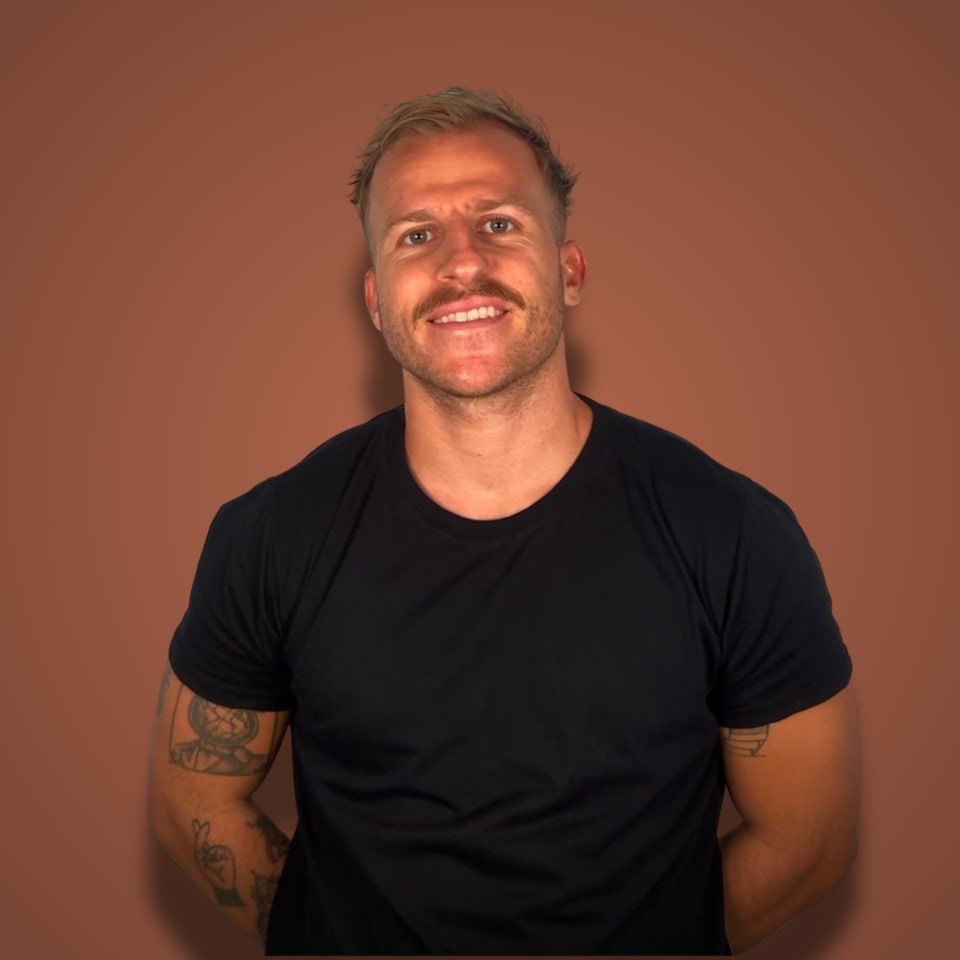
A year ago George was folding clothes at TJ Maxx.
Today he's 19, he quit that job, and the app he built makes hundreds of thousands of dollars. He doesn't know how to code. He built the whole thing with AI from a bedroom, in public, while half of Twitter was busy calling vibe-coded apps "slop."
I watched him break the entire playbook down on Greg Isenberg's podcast, and it's the most honest "here's exactly what I did and what the numbers were" breakdown I've seen in a while. No fluff. Real revenue, real failures, real DMs.
So I wrote it up. If you've ever told yourself you can't build a product because you're not technical, read this one twice.
The numbers, before anything else
Let me give you the receipts up front, because the story only matters if the money is real.
George's app, Wrestle AI, did over 100,000 downloads and made close to $200K in revenue. First month it pulled $17K.
His first-ever app, Fight AI, made him $2K in month one — and he built it in physics class after seeing an ad for a vibe-coding tool (Rork) and not believing it was real. He hasn't marketed Fight AI since July. It still does about $1K every single month on autopilot.
And the two new apps he's building in stealth right now? One's on track to hit $15K this month, the other its first $10K month. He's working roughly 3 to 4 hours a week on each.
That's a 19-year-old. With no CS degree. With AI doing the building.
Now here's the part nobody screenshots — the flop that taught him everything.
The $35 lesson that fixed his whole career
While Wrestle AI was taking off, George was also running a second app on the side called Green — an AI "rizz" dating assistant. He admits straight up: he hated it. But he had an influencer with 2.1 million followers willing to partner, so he figured the audience would carry it.
Both apps launched the same month. Here's how that month ended:
- Wrestle AI — 1 million views → $17,000
- Green — 1.8 million views → $35 (five weekly subscriptions)
Read that again. More views. Almost no money.
George sat there blaming his marketing, then got honest with himself: the idea just sucked. Everyone had seen an AI rizz app before. There was nothing to convert to. He killed it on the spot.
His takeaway became the rule he builds by now: distribution is just you distributing the idea. If the idea is weak, more eyeballs won't save it. You'll pour 1.8 million views into a leaky bucket and walk away with $35.
I've made this exact mistake with a SaaS I didn't care about. You can smell it on a founder when they don't believe in their own thing — and so can every influencer you try to pitch.
His idea filter: passionate, niche, sellable
George runs every idea through three questions:
1. Are you actually passionate about it? Not for inspiration-poster reasons. Practical ones. You'll spend 10-hour days on this thing, and when you pitch creators, they can tell if you genuinely believe in the mission. Belief is what gets you the cheaper rates and the long-term partners. For George it was wrestling — he wrestled all through school until COVID cut it short, so building the app he wished he'd had as a freshman wasn't work.
2. Is it niche and specific? People scoffed at "a wrestling app." How many wrestlers can there even be? But AI killed the old excuse that niche markets need big dev teams and big capital. You can now build a genuinely good product for a small, obsessed community for almost nothing. And when you know exactly who your audience is, you can reverse-engineer how to reach them.
3. Is it sellable today? Would someone pay for this solution right now, not in some future where you've "built an audience"?
To actually find ideas, George does something dead simple. He opens TikTok or Instagram, scrolls for 15 minutes, and for every video asks: who watches this? What problem does this creator's audience have? And could that creator slip my app into the first 30 seconds of their video without it feeling like an ad?
That last question is the whole game. He's reverse-engineering the viral video first, then building the product to fit it.
The "gotcha feature" — and the 5-second test
This is the part I'd tattoo on a lot of founders' foreheads.
George says you spend 90% of your time on one feature. He calls it the gotcha feature. It's the one thing so simple that anyone who looks at it for five seconds instantly gets the entire point of your app.
- Cal AI: take a photo of your food, get the calories. Three seconds.
- Wrestle AI: upload your wrestling match, get told exactly what you did right and wrong.
That's it. That one feature is what they pushed in 90% of their marketing. Greg framed it perfectly on the pod — the best products are the ones you can explain in a sentence. Uber: press a button, a car comes. DoorDash: press a button, food comes. Most founders overcomplicate the product suite when one core feature is what actually stops the scroll.
If you can't explain your gotcha feature in one breath, you don't have one yet.
Onboarding: the four jobs before the paywall
George spends most of his polish time on onboarding, and he's brutally specific about its jobs. There are three that matter and one bonus:
Educate — what is this and why do you need it.
Personalize — make them answer questions that improve the experience. The real trick here is the sunk-cost fallacy. If someone answers 20 questions tuning the app to them, then hits a paywall, they think "I've already put in all this effort, let me at least take the free trial." Commitment before the ask.
Manufacture FOMO right before the paywall — this is the one most people miss. With Wrestle AI, after you upload your match, the app runs an analysis animation ("targeting… calibrating…") and only then shows the paywall: unlock your rating now. Now you're dying to know your score. That tension converts way harder than a cold "enter your weight, here's a paywall."
Social proof (optional) — show it if you've got it.
If you want to go deeper on this, I broke down a founder who got an app to $40K/month almost entirely on onboarding mechanics — worth a read: how Mao built Prayer Lock with onboarding.
One more litmus test George swears by: text the app to your mom. If she can't figure out what it does or how to use it without you explaining, redesign it. (Unless your mom's technical. Then find someone else's mom.)
Distribution: the Instagram page is a Trojan horse
Here's where George gets sneaky-smart. Your brand's Instagram page does two jobs at once.
It's a sales funnel for users. Someone watches their favorite wrestling creator, sees Wrestle AI tagged in the caption, clicks through, and now they're on your page watching four more app videos. They went from mildly curious to fully sold before they ever hit the App Store link.
It's social proof for influencers. When you DM a creator and they click your profile, a page with two followers and no posts gets ignored. A page showing collabs with a dozen creators makes them think "this brand is clearly paying real money, I'll hear them out." That credibility is what lets George negotiate a $2 CPM when the creator would've laughed at that number from a no-name.
So he sets the page up clean: a few crisp product demos, a sharp bio with a CTA, and every influencer collab posted to make it look like the brand has momentum. Whether you buy that early social proof or build it the slow honest way with good content, the page has to look alive before you start outreach.
Turn your feed into a lead machine
This tactic is almost too simple. George tailors his For You page to be his ideal customer.
He scrolls, likes, comments, and shares as his ICP until the algorithm only feeds him wrestling content and wrestling creators. Now his feed is his outreach list. Scroll, DM, scroll, DM — no digging through Instagram search trying to find the right people.
Then he turns it into a numbers game. As soon as he can afford it, he hands the scrolling-and-DMing to a VA. If he's starting an app with $2K, he'll spend $800 of it on a VA for the month without blinking, because that frees his head and the VA pays for themselves many times over. The instruction to the VA is one line: scroll my feed, and if a creator averages over 25,000 views, reach out.
When a creator replies, get them on a call immediately. It's far easier to sell — and negotiate a "homie discount" — face to face than over DMs where they can fire back "$10K a video." George closed one creator by spending 90% of the call just bonding over both being Greek, then dropping the $2 CPM at the end when the guy already didn't want to say no.
Influencer marketing, he says, is 90% sales. The right one can be everything — he points to the Manifest app, where one creator alone reportedly drives around $300K/month.
Then paid ads, the lazy genius version
Once George has creatives, he moves to paid ads — and his method for finding winners is something any of us can copy.
He opens the Meta Ads Library, looks up a competitor or an adjacent app (say, Strava if you're building a running app), sorts their ads by impressions, and asks two questions of the top performers: why does this work, and how do I replicate it? Then he sends the winner to one high-agency creator and says "remake this one-to-one with my app."
He throws 5 to 15 creatives into a testing campaign at $100/day, and after a week separates winners from losers. And the ads that print money are rarely polished — often it's just a guy on camera saying "go download the app." Real and authentic beats high-production every time.
The metrics that tell you what's broken
Once an app is doing 100+ downloads a day, George starts reading three numbers:
- ARPU — aim for at least $2 per download in month one. Lower if you're doing top-of-funnel UGC with millions of cheap views, higher if you're running explainer-style influencer posts.
- Conversion rate — start A/B testing your paywall and pricing.
- Retention — bad retention almost always means the app isn't useful enough.
Wrestle AI's early retention was rough. So they added a calorie tracker — because wrestlers are always cutting weight — and churn got cut in half. People came for the viral gotcha feature and stayed for the boring useful one. After that they kept stacking non-viral, genuinely useful features, and the retention problem disappeared.
That's the real model: a viral feature gets them in the door, a useful feature keeps them paying.
Is this the heyday, or is it already too late?
George's view: we're in the drop-shipping boom of apps. Same energy as 2015 e-com, when people booted up a Shopify store, threw a little money at Meta ads, and saw 4-5x returns.
He doesn't think it saturates for about three more years. And the reason is funny — despite all the Twitter noise about everyone building apps, almost nobody actually is. Most people still believe you need to know how to code. Most of the world doesn't even use AI yet, let alone know it can build software. He still posts five TikToks about Fight AI and gets sales on an app he abandoned months ago.
On the "AI slop" crowd, he's blunt: with today's models (he name-drops Opus 4.8) and building in Swift, there's no such thing as slop — there's only under-prompted. He gives himself 14 days of constant tweaking per app, not a one-shot prompt. Code is code. Enough careful prompts and you get a real product.
And his single best piece of advice, the one he saved for last? Learn to sell. His ability to close influencers came from doing door-to-door power-washing sales and running garage sales at 16. The technical barrier is gone. Social skills are the new moat.
Frequently asked questions
Can you really make money with a vibe-coded app if you can't code?
George has, repeatedly. Fight AI made $2K its first month and still does ~$1K/month with zero marketing. Wrestle AI cleared ~$200K. He doesn't write code — he builds with AI and tweaks relentlessly over about 14 days per app.
What's a "gotcha feature"?
The one feature so simple that anyone understands your whole app in five seconds. Cal AI: photo of food, get calories. Wrestle AI: upload a match, get feedback. You market that one thing 90% of the time.
Influencer marketing or paid ads?
Start with influencers if you're low on capital — they're a cheaper jumpstart, and a good brand Instagram lets you negotiate $2 CPMs. Move to paid ads when you want predictable, scalable 2-3x returns. Find winning ad concepts in the Meta Ads Library and have a creator remake them.
How do I find an idea?
Scroll TikTok or Instagram for 15 minutes. For every video ask: who watches this, what problem do they have, and could a creator drop my app into their content without it feeling like an ad? Then build for a niche you're genuinely passionate about.
Won't AI-built apps break when they scale?
George hasn't hit a wall yet on consumer apps, partly because he keeps them simple and doesn't collect sensitive user data. He concedes it could differ for something like a social network — but for focused consumer tools, he hasn't seen the scaling horror stories people warn about.
My two cents
What gets me about George isn't the $200K. It's that the flop — the 1.8 million views that made $35 — is what made him. He stopped chasing distribution he could borrow and started building things he actually cared about. The money followed.
That's the same lesson I keep relearning as a bootstrapped founder. The product you believe in is easier to sell, easier to pitch, easier to grind on at hour ten. Belief isn't soft. It's leverage.
If you're building solo and want a room full of founders pulling the same direction — people who'll tell you your idea is a $35 idea before you waste a month on it — that's exactly why I host the Profitable Founder Podcast. Every episode is a bootstrapped founder breaking down the real numbers and the real playbook, the same way George did here.
Listen to the Profitable Founder Podcast →
Source: George on Greg Isenberg's podcast — full conversation embedded above.