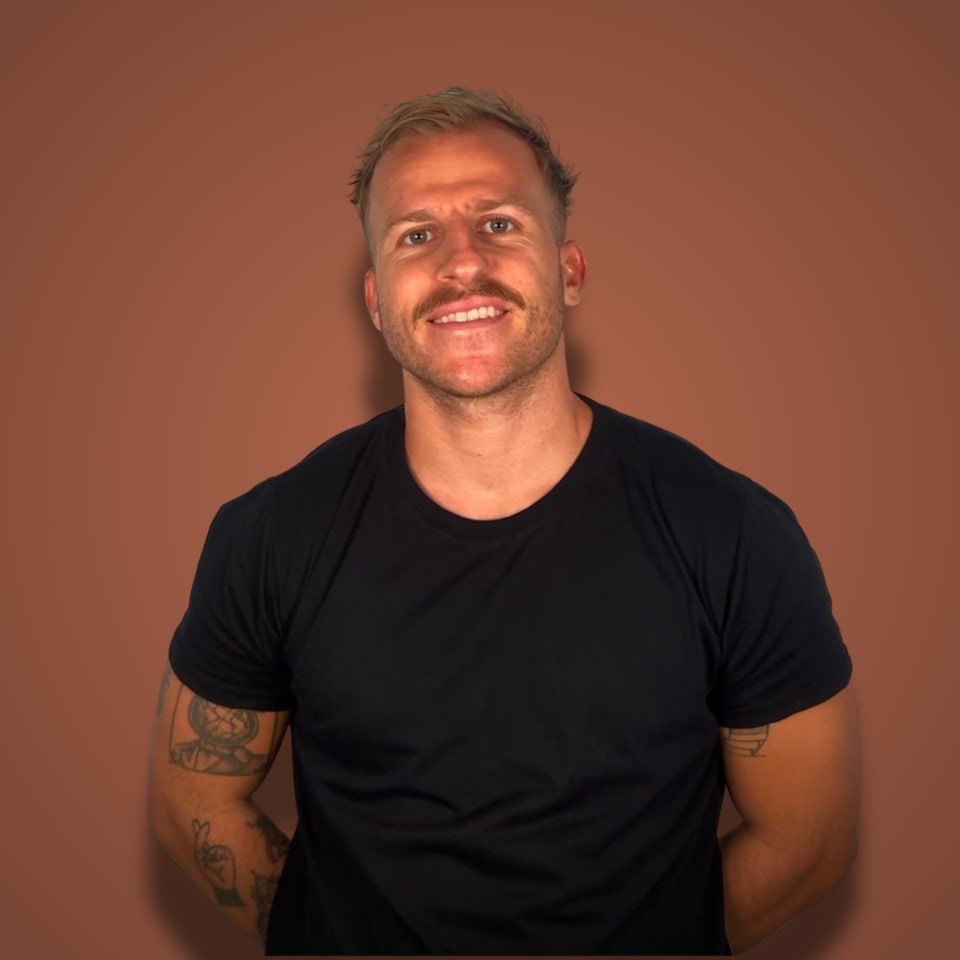
Most founders spend three months building something nobody asked for.
Ross from Starter Story gave himself one sitting. Find an idea, build it, launch it, get a real user. Same day.
And he filmed the whole thing, so you can watch exactly how to build an app in one day instead of taking my word for it.
Quick context: Ross is in the middle of his $100K Build Challenge. Three rules. He can only build with AI tools. He has to document everything on camera. And he can't quit until he's made $100,000, no matter how many attempts it takes.
This episode is Day 8, and it's the fastest one yet. Here's the video, then the full breakdown with every number he shows on screen.
The $30K/Month Website Behind the Idea
The idea came out of a database, not a brainstorm.
Ross was scrolling Starter Story's list of one-page websites (sites that do exactly one thing) when he hit Bank Statement Converter. You upload a PDF of your bank statement, it spits out an Excel file. That's the entire product.
The listing said $12,500 a month. Ross says the founder is actually doing over $30,000 a month now, with tens of thousands of visitors. Not startup people, accountants. Regular people with a boring, recurring problem.
One page solving one repeated search. That's the whole pattern.
So the question became: what's the Bank Statement Converter of the founder niche? What does every single person starting a business do, over and over, that a one-page site could solve?
Naming the thing. Every founder needs a business name, and then a domain to match.
Steal the Model, Swap the Niche
Ross didn't invent anything here, and that's the point.
He ran the case study through Starter Story's Idea Remixer, a tool trained on their case-study data, and asked it to translate the bank-statement model into business naming. It came back with variations: upload your pitch deck and get names, localize names for non-English markets, that kind of thing.
He kept the best parts and landed on a simple spec:
- A chat box where you describe your business idea
- AI generates brandable names
- The app checks if the .com is actually available (the one thing ChatGPT can't do for you)
- Alternative extensions like .co and .ai, plus the keywords each name could rank for
He also decided what not to build yet: logins, payments, anything resembling a dashboard. Version one does one thing.
The Numbers That Made It Worth a Day
Before writing a single prompt, Ross pulled up Keywords Everywhere and checked the demand.
"Business name generator" gets 331,000 searches a month. The AI variant adds another 10,000. And the site sitting at the top organic spot for that keyword pulls around 462,000 visits a month, according to the traffic data he shows on screen.
That incumbent monetizes with affiliate links. Someone generates a name, clicks through to Namecheap or GoDaddy to buy the domain, the site gets a cut. Ross calls it "pretty sure a million dollar business," and looking at those numbers, I don't think he's exaggerating.
He doesn't expect to outrank them anytime soon. The plan is to build the free tool, let it rank slowly, and stack it next to his other projects. His AI thumbnail maker from earlier in the challenge made almost nothing at launch, and now sells a little more every day.
→ Free tools with search demand are slow assets. You build them once and they compound while you work on the next thing.
A day of work is a terrible trade for a product you have to babysit. It's a great trade for a page that ranks for years.
The Build: Cursor, ChatGPT, and Zero Handwritten Code
Ross wrote no code by hand. Here's the actual stack from the video:
- ChatGPT to generate the UI mockup ("make it look like the ChatGPT interface, one big box in the middle")
- Cursor to implement everything, one Command+L prompt at a time
- A Ruby on Rails backend he already had running, so no setup time
- Styling lifted from chat-sdk.dev (he right-clicked, copied the elements, and told Cursor to match them)
The workflow is the real lesson, because this is where most people blow up their vibe-coded projects.
Ross never asks the AI to build the whole app. He asks for one scoped change: populate this modal with alternative domains. Fake the availability data for now, I'll wire the logic later. Get the UI right, then commit.
His words: AI tools are not good at doing lots of different things at once. Ask for everything and "it'll hallucinate like crazy and you get lost in this spaghetti code mess."
So the loop is: small prompt, check it, commit, next prompt. It's the same rule behind every business automation that actually holds up in production. Scope one step, verify it works, then move on. Slower per prompt, way faster per project.
Was every prompt one-shot? No. The first version had a black background he hated and buttons that did nothing. He iterated in public, which is exactly what the process looks like when nobody edits it down.
He Used the App to Name Itself
My favorite moment of the episode: the app needed a domain, so Ross fed his own product its own problem.
He typed "I'm building a business name generator website and I want to rank for terms in the domain" into his half-finished tool.
Businessnamegenerator.com? Taken, obviously. Brandnamegenerator.com? Taken. Then he prompted it to add "AI" to the front of the names, and aibusinessnamebuilder.com came back available. He bought it on the spot.
Two things happened in those five minutes. He got his domain, and he found two real bugs in his own product (the tool wasn't showing the actual .com versions of names). Straight onto the fix list.
Using your own product on day one is the cheapest QA you'll ever run.
He also picked that domain for a reason: it contains the keyword he wants to rank for. Exact-match isn't the magic it was in 2012, but for a tool site living off one search term, it doesn't hurt.
Launch: First User in Seconds
Site live on the domain, SSL working. Then Ross does the two-step launch most founders overthink for weeks.
First, analytics. He installed DataFast, the live-visitor tool built by Marc Lou, because he wanted to literally watch people arrive.
Second, one Telegram message. "Yo, check out aibusinessnamebuilder.com, can you give it a try?" Sent to Gus, his teammate.
Seconds later there's a dot on the dashboard. Then a second visitor shows up from Kansas that he can't even explain.
Ross calls it a magic moment, and he's right. The first real person using your thing changes your relationship with the project. It stops being a file in Cursor and starts being a product.
His rollout from here: collect feedback from friends, iron out the bugs, then launch on X and Reddit. You don't want your biggest audience meeting your dumbest bugs.
And launches don't always go smooth for him. His earlier launch in this same challenge got called AI slop in the comments and sold exactly nothing at first. I broke down that episode and the comeback in his failed product launch story. Read the two together, they're the honest before-and-after of building in public.
The Playbook If You Want to Try This
Strip the episode down and you get a repeatable recipe:
- → Find a one-page site already making money (Bank Statement Converter: $30K/month)
- → Remix it into a niche you know, solving a task people repeat
- → Check search volume before building (331,000 monthly searches said yes)
- → Build with small scoped prompts, commit after each win
- → Use your own product before anyone else does
- → Launch to friends first, X and Reddit after the bugs die
The part you can't copy from a checklist is the pace. Ross ships fast because he's shipped a lot, and every rep makes the next one faster. I wrote about that muscle (and how founders lose it) in the shipping muscle breakdown.
He says it himself at the end: "I didn't set out to build a unicorn. I set out to ship." One session took him from a blank Cursor window to a stranger in Kansas using the thing. Now he waits while the SEO compounds and moves to the next build.
Most people reading this will still spend next weekend planning an MVP. You could just ship one instead.
FAQ
Can you really build an app in one day?
Yes, if you scope it like Ross did: one feature, no accounts, no payments, AI-generated UI, and a backend you don't build from scratch. He went from idea to a launched product with a real user in a single session. What you can't do in a day is build something big. Pick a problem where one page is the whole product.
What tools do you need to build an app in one day?
Ross used ChatGPT for the UI mockup, Cursor for all the code (he wrote none by hand), an existing Ruby on Rails backend, Keywords Everywhere for search volume, and DataFast for live analytics. Total new spend was basically the domain, aibusinessnamebuilder.com.
How does a free tool like this make money?
Affiliate revenue and SEO. The top business name generator site gets around 462,000 visits a month and earns by sending people to registrars like Namecheap and GoDaddy to buy the domains it suggests. The tool is free, the traffic is the asset, and monetization rides on purchases people were making anyway.
How do you get your first users after launching?
Message your friends directly. Ross sent one Telegram message and had his first user in seconds, plus instant feedback. Once the obvious bugs are fixed, widen the circle to X and Reddit. Save the public launch for when strangers won't hit broken buttons.
The bottom line
When you can build an app in one day, a bad idea costs you a day instead of a quarter. You can afford to be wrong ten times, and you only need to be right once for the compounding to start.
I interview bootstrapped founders every week who built real revenue out of small bets exactly like this one. If this breakdown got you moving, the podcast will keep you moving.