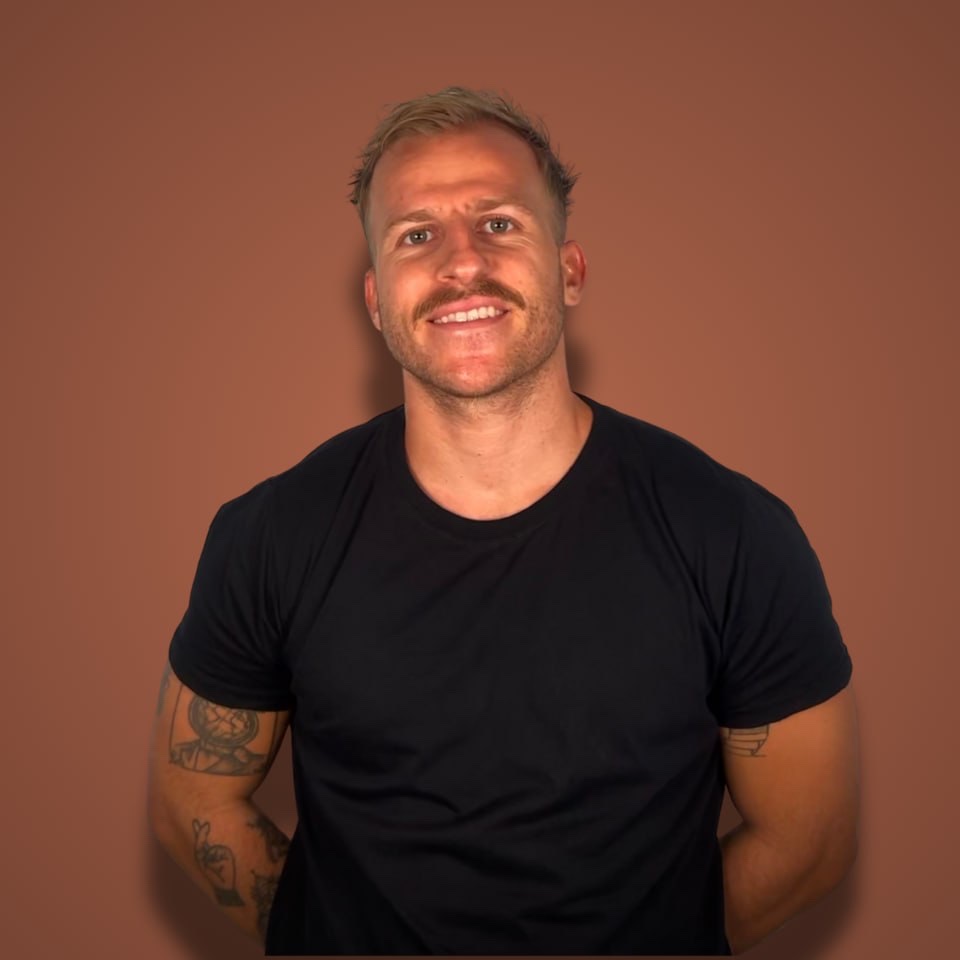
Everybody and their grandma is vibe coding iOS apps right now.
Steve Hoyek went the other way. He built an android app business that does $100,000 a month, with around 80% of users and revenue coming from the Play Store. Almost a million downloads on Android alone.
No funding, no viral TikTok moment. Just one acquisition channel, run with more discipline than most funded teams manage.
He broke the whole thing down with Pat Walls on Starter Story, and it's one of the most tactical episodes I've seen this year. Here's the full video, then the playbook with every number he shared.
The app: an AI calorie counter built from a 100-pound weight loss
The app is Journable, an AI calorie counter. Type "yogurt, granola, blueberries, almonds" and it returns the calories and macros per ingredient. Snap a photo of your plate and it identifies the portions for you. Weight tracking, streaks, insights. That's it.
Steve didn't pick the niche from a spreadsheet. He used to weigh 125 kilos. He dropped 45 of them (that's 100 pounds) by tracking calories religiously, and in the process he used basically every competitor app out there.
His conclusion: the whole category was bloated. Multiple databases, endless menus, features nobody asked for.
So he and his co-founder built the simple version. The entire product thesis is "best in class value, way less complexity." Keep it simple, stupid.
18 months after launch, here's where it sits (he showed the dashboards on camera):
- $125,000 revenue in the last 28 days
- Around $80K MRR, just under $1M ARR
- 30,000+ active subscribers, roughly 40,000 total
- Almost 1,000,000 downloads on Android alone
- From less than $1,000 in revenue to $100K/month in about a year
Two SKUs: a monthly subscription and an annual one. That's the entire business model.
Why Android, when everyone says iOS is where the money is
Conventional wisdom says build on iOS because those users pay more. Steve followed the data instead, and the data said something different.
Two numbers changed his mind:
→ CPMs on iOS are roughly 4x higher than Android. Advertising to iPhone users costs about four times as much per view.
→ RevenueCat's State of Subscription Apps report (2025) showed those expensive iOS users only convert around 20% better than Android users.
Pay 4x the price for a 20% better customer? If you're bootstrapped and every dollar comes out of your own pocket, that math is brutal.
There's a supply side to this too. Since AI collapsed the barrier to shipping apps, the number of new iOS apps released has grown about 5x. Android? Only about 2x. The saturation everyone complains about is mostly an iOS problem.
Billions of Android devices are sitting out there with fewer builders fighting over them.
Day zero: Product Hunt and two paying strangers
The launch was unglamorous. They put Journable on Product Hunt, hit the front page, and got a couple hundred installs.
Two of those installs converted to paid subscribers.
Two. And that was enough. Strangers pulling out a credit card for your product is the only validation signal that matters. (I'd take 2 paying strangers over 200 upvotes any day.)
Then they turned on Meta ads. They literally couldn't afford iOS campaigns, so they ran Android-only in the US. Those campaigns converted just as well as iOS at a fraction of the cost, and some iOS installs showed up anyway as spillover from people hearing about the app.
So they doubled down on the platform that was working.
The $500K Google Ads machine (that runs at break-even on purpose)
Here's the part that surprised me most. Steve has spent just under $500,000 on Google Ads, and the revenue directly attributed to those ads is almost exactly $500,000.
Break-even. On purpose.
Because break-even on the ad spend means he's acquiring subscribers for free, and the renewals plus the organic Play Store ranking that comes with scale are pure upside. His Play Store ad is the top performer: search "calorie tracker" on an Android phone and Journable is probably the first thing you see.
One channel, Google, and the ads show up across all of Google's real estate: Search, YouTube, Discover, the display network, and the Play Store itself.
Compare that with the Apple Search Ads playbook we covered a while back: same "own one channel" logic, different store.
Steve's 6-step playbook for paid growth on Android
He laid out the exact sequence he'd follow if he started over in 2026. Steal it.
Step 1: Set up attribution before you spend a dollar
Send every meaningful event to Google Ads: install, paywall view, trial start, purchase, and the value of each transaction. Google's algorithm optimizes on this data. Skip this step and you're spending blind.
Step 2: Launch install campaigns to feed the algorithm
Install campaigns exist to give Google a heartbeat: what an install costs, what CPMs look like in your market. You'll need 5 headlines, 5 descriptions, and up to 20 images and 20 videos per campaign. Don't have assets? Use stock images and videos. Seriously. Flood the campaign and let the algorithm sort it out.
Step 3: Optimize assets with big swings
Start at $10 to $15 a day and watch what wins. Don't A/B test font colors. Test wildly different images, hooks, and messages against each other.
And the biggest lever isn't even in the ads manager: Google App campaigns pull from your Play Store listing, so your screenshots, title, and description ARE your ad creative. Most of the win lives there.
Step 4: Switch to target CPA, with the 10x budget rule
Once your assets are proven, launch a tCPA campaign. The rule: your daily budget needs to be 10x your target cost per action, because Google needs around 10 conversion events per day to optimize. If a trial start costs you $15, you need $150 a day. Budget for that or stay in install mode.
Step 5: Baseline your CAC, then scale
After a month or two of purchase data you know your real customer acquisition cost. That's when you start raising budgets, following Google's pacing rules, instead of guessing.
Step 6: Raise conversion rate, raise budgets, repeat
The flywheel only spins if the product keeps converting better. Test your paywall and your pricing. Every bump in subscription conversion rate lets you afford more ad spend at the same break-even line.
It's the same discipline behind good lead nurturing strategies: the money comes from methodically moving people from "installed" to "paying", and from letting the data show you where they drop off.
Where the Android opportunity actually is in 2026
Steve's two hunting grounds, if you want to copy the model:
→ Apps that are proven winners on iOS with no real Android equivalent. The demand is already validated. Just port the concept to the store with 4x cheaper traffic.
→ Niche overlaps nobody has built for. Problems that were too small to justify an app before AI made development cheap. Start with the annoyances in your own day, build the narrow fix, and find the other people who share the problem.
That second one is exactly how Journable happened. Steve was his own first user.
And paid isn't the only road. We broke down how two engineers took Gleam past $1M ARR with 500M organic views in the app distribution strategy piece, which is the organic mirror of this exact playbook.
The stack behind a $1M ARR app (about $470 a month)
Steve is so deep in the Google ecosystem he jokes he works for them: Firebase and GA4 for the backend, BigQuery, GCP, Google Play, Google Ads.
The rest of the stack, with real prices:
- RevenueCat for subscription management
- Claude Code for development: $100/month
- GitHub Copilot: $39/month
- CodeRabbit for code review: $30/month
- AI email support: $30/month
- n8n for operations automation: $24/month
- AppFollow for ASO: $180/month
- Webflow for the landing page: $18/month
- OpenAI subscription for general use: $20/month
Call it roughly $470 a month in tooling running a business at just under $1M ARR, with a team of two. (For reference, a single growth hire would cost 15x that.)
His one regret (and it's not about ads)
Pat asks every guest what they'd tell their younger self. Steve's answer: start documenting the journey earlier.
He spent a decade off social media and now feels like the one skill missing from the business is content. The first paying user, the first $10K month, crossing $100K: all of it happened off camera, so there's nothing to show for it and nothing to post.
If a guy with a million downloads says his biggest miss was not posting about it, maybe write that build log today.
Pat's closing take stuck with me too: 80% of your decisions should come from your own data, not from what's loud on X. Steve never guessed. He read the RevenueCat report, read his own dashboards, and followed the numbers to a platform everyone else was ignoring.
FAQ
Is Android more profitable than iOS for app developers?
It can be, especially for bootstrapped founders. iOS CPMs run about 4x higher than Android, while iOS users only convert around 20% better (per RevenueCat's State of Subscription Apps report). Journable makes about 80% of its $100K monthly revenue on Android. Cheaper installs with nearly equal conversion beat expensive "premium" users when the ad budget is your own money.
How much does it cost to run Google Ads for an Android app?
You can start install campaigns at $10 to $15 a day while you test creative. For target CPA campaigns, use the 10x rule: daily budget = 10x your target cost per action, because Google's algorithm needs about 10 conversion events a day. A $15 trial-start cost means $150 a day minimum.
Can you still bootstrap an android app business in 2026?
Yes, and the window may be better than on iOS. New iOS app releases have grown about 5x since AI lowered the barrier to shipping, versus only about 2x on Android. Journable went from under $1,000 in revenue to $100K a month in about a year, fully bootstrapped, using Product Hunt for validation and Google Ads as the single growth channel.
What made Journable grow so fast?
Three things: a deliberately simple product in a bloated category (type or photograph your food, get calories and macros), a contrarian platform bet on Android where traffic costs 4x less, and a disciplined Google Ads system run at break-even so every subscriber is acquired for free and renewals become profit.
Every week I sit down with bootstrapped founders doing $100K to $10M a year and pull out the exact playbooks, like this one. If you'd rather hear these stories from the founders themselves: