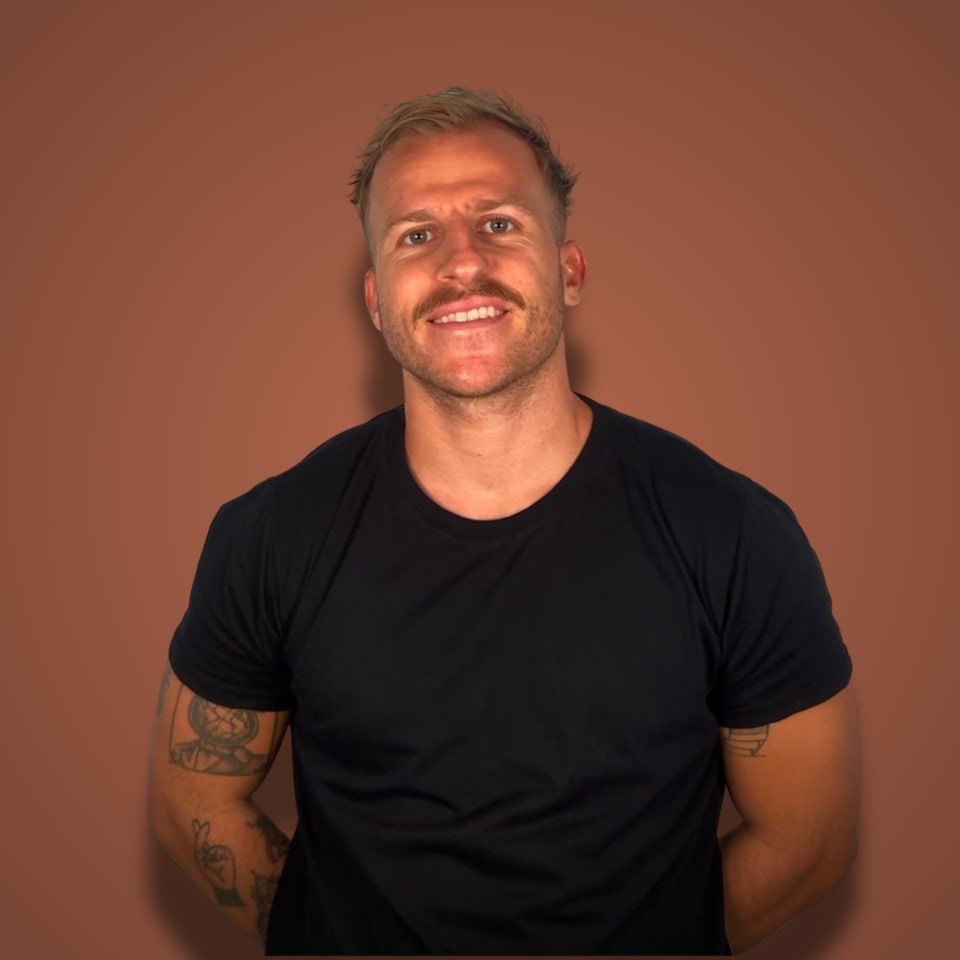
Andrew Wilkinson's family office got rid of a normal expense line this year.
Payroll.
Instead of hiring more people, they scaled Claude. The bill is now $40,000 a month in API costs. His CFO and president are, in his words, obsessed. And the CFO, a guy who had never written a line of code in his life, built a replacement for software that costs $50,000 to $100,000 a year. In two weeks.
Andrew went on Greg Isenberg's podcast (his third time) and screen-shared the whole setup. The agents running a SaaS business while he sits in the back of Ubers. The vector database watching 24 companies for icebergs. The AI doctor that predicted his nerve pain 3 days early.
I watched the full episode so you don't have to. Here it is anyway, because you probably should:
Quick context if you don't know Andrew: he co-founded Tiny, a holding company that owns around 24 businesses (MetaLab, Dribbble, and a long list of others). He also runs Foley Partners, his personal holding company. He's made 132 direct investments. He's not a guy playing with toy demos.
Here's what he's actually running, with the real numbers.
It started with a lost laptop in Arizona
In December 2025, Andrew says he started waking up at 3 or 4 in the morning, rolling out of bed, and sitting in the terminal with 10 Claude Code tabs open. His own comparison was chasing a drug high. Not subtle.
The moment that hooked him: he flew to Arizona for a conference and forgot his laptop.
But he'd set up an OpenClaw agent on his computer back home. So he ran his entire business from the back of Ubers, through his phone. Every email he "wrote" that week was written by the agent, in his voice.
Nobody noticed. Not one person.
He's been chasing that week ever since. And he's honest about the cost of the chase: he estimates he now spends 50% of his time debugging agents, 30% improving them, and 20% actually being productive. He calls it the classic productivity treadmill.
Keep that ratio in mind. It's the most honest thing anyone with a setup this deep has said on a podcast.
He built a SaaS and handed it to 3 agents
Before pushing agents into his operating companies, Andrew ran a test. He built a brand new SaaS and made it agent-run from day one.
The product is Deep Personality. You take a 40-minute multiple choice personality test, and AI writes you a report about 100 pages long, styled after Robert Greene. Your archetype, your superpowers, your kryptonite, your attachment style, whether your relationship is working.
The origin story is very him: he and his girlfriend answered psychological screening questions as JSON files, fed them to an LLM, and asked it to describe their relationship cold. He says it nailed every single fight they have. Jaws dropped, product built.
He built the whole thing himself in a few manic days. No MetaLab, no contractors. His reasoning: every person between your vision and the execution compromises the vision. Vibe coding removed all of them.
The business now runs on three agents, managed through Harbor, an open source agent harness his friend Gavin Vickery built (it's on GitHub at geekforbrains/harbor). They moved off OpenClaw because it wasn't deterministic enough and text chat made it hard to track what agents were doing.
The three agents:
→ Support agent. Reads every support email and either answers it or escalates. If it's a P0 (think security issue), it fixes the bug and merges the PR itself. Then it emails the customer back: "Hey, I fixed your issue." Andrew's verdict: "Support to me is not a job very, very soon."
→ Dev agent. Takes tickets from the support agent, opens PRs. Andrew wakes up to a stack of them.
→ Marketing agent. This is the wild one. It's hooked into PostHog for product data, and it manages live Meta and Reddit ads accounts. It runs multivariate tests, creates ad creative, and sets budgets. Andrew's involvement is messages like "increase the budget by $1,000."
Revenue so far: about $20,000. Small, and he says so. The experiment he's excited about is what happens when the marketing agent gets a $100,000 a month ad budget.
One more number, because founders never say this part out loud: he spent $80,000 to $100,000 in tokens building it, and admits it could have been done for $10,000 to $20,000 if he wasn't running fast mode on everything.
If your reaction is "I don't need agents merging PRs, I need my leads followed up," you're most of the way to the boring version of this. Normal business automations (lead routing, follow-ups, handoffs between tools) are the unsexy 80% of what Andrew's setup does, minus the debugging treadmill.
The $40K/month Claude bill and the CFO who couldn't code
Now the family office part.
Foley Partners decided that instead of scaling headcount, they'd scale Claude. Result: no growing payroll, one growing line item. $40,000 a month in API costs, doing what Andrew describes as "everything."
The flagship example is Addepar. It's portfolio tracking software for wealthy families, and it costs $50,000 to $100,000 a year. Andrew's CFO looked at the price and said no. Then he said he'd build it himself.
Andrew was skeptical. The guy is a CFO. Never coded. This is the "why are we paying Slack, let's build it ourselves" trap every engineer knows is a fool's errand.
Two weeks later the CFO shipped it. Piped into their banks, their accounting, public market data. Net worth, balance sheet, stress tests, an AI assistant that can answer "how should I rebalance?" against their actual holdings. Custom to them in a way Addepar never was.
The other piece is vector databases. Andrew trained one on Foley Partners and can now ask things like "break down my minority venture investments: how many are in the money, bankrupt, or declined?" Answer: 132 direct investments, $16 million in, worth $36 million now, write-offs itemized.
He did the same for Tiny. With 24 companies, no human can hold it all. So he asks: "Review the last quarter and give me any icebergs." He calls it being the eye of Sauron inside your own company. It gets facts wrong sometimes (wrong CEO names, numbers slightly off), and he says it's still incredibly powerful for spotting what he'd otherwise miss.
This rhymes with what Allie K. Miller is doing with her 34-agent AI workforce: the edge comes from structured context plus watchdogs over everything you can't personally watch, not from one genius agent.
The personal stack: Ava, Mara, and a podcast made for one listener
The business stuff is half the episode. The personal setup is the other half, and it's where you see where this is all heading.
Andrew runs two OpenClaw agents on a VPS:
→ Ava, his personal assistant. She reads and triages his email and iMessage, figures out his active projects on her own (podcast prep, a building he's bidding on, his brother's birthday), and sends him a daily report in Telegram. High-priority emails come with response options drafted in his voice. He replies "1B" and the email sends. His line: it turns your entire business into a multiple choice quiz.
→ Mara, his doctor agent. His Apple Watch and Eight Sleep data upload to Google Drive as JSON. Every morning she sends a health summary: HRV, resting heart rate, sleep. The kicker: he has recurring nerve pain, and the agent crunched 5 years of his data and found his wrist temperature shifts 3 days before every flare. So now he gets warned before the pain shows up.
When he asks Mara a real medical question, she's prompted to spin up a team of specialist agents (rheumatologist, internist, the works) that deliberate for 10 minutes across all his data before answering.
Then there's the memory layer. He uses G Brain, a vector knowledge base his friend Gary Tan built, and fed it his entire email history with the instruction: build a page on every person I know. Now "I'm raising for the yerba mate business, who do I know for this round?" is a query, followed by "draft the emails and build the deck."
A friend also built him Hearsay in 24 hours: an iPhone app that records his whole day, transcribes it, and feeds it to G Brain. His agents have context on conversations he's already forgotten.
My favorite small one: a task that used to eat 8 hours (charging his men's group for boardroom rentals: Stripe links, subscriptions, chasing people) is now one message to his agent. It went into the Stripe API and did the whole thing.
And the daily podcast. An agent reads his newsletters and Readwise, picks stories it knows he'll care about, and generates a private 7-minute morning podcast with Gemini voice. It ends by telling him how many summers he has left with his kids and a Seneca quote. He listens in the shower.
Greg's response was the right one: that's a product. Someone should build it. Andrew said he and Greg would back whoever does. Free idea, take it.
His advice for you is weirdly bearish (and worth hearing)
Here's where the episode gets uncomfortable for anyone building SaaS.
Andrew thinks software just became a worse business. His analogy: software used to be like owning a newspaper with a $2 million printing press. The press was the moat. Now anyone can print. His own Deep Personality app? "Does it have a moat? Absolutely not."
He points at Constellation Software, the ultimate boring-software conglomerate, whose stock got cut in half. His funeral home riff makes the mechanism concrete: it used to be that one funeral home owner with a "web wiz nephew" built the niche software and owned the market. Now, if 400 people own funeral homes and 20 know AI, you get 20 competing products and prices collapse.
So his actual advice to a 20-year-old obsessed with vibe coding:
→ Build something like Deep Personality and make $1 to $2 million. He calls this pretty straightforward.
→ Then (his words, and he hates how sad it sounds) put it in data center stocks and TSMC. That's what he's doing with his own money, alongside very brick-and-mortar businesses.
→ Everything else is "picking up pennies in front of the steamroller."
I don't fully buy the bearishness, and I run a podcast built on people proving the opposite every week. But notice what he's NOT saying. He's not saying don't build. He says there's never been a better time to be an entrepreneur. He's saying stop pretending your app is a 10-year asset. Milk the cigar butt (his Buffett reference), and know that a $1 to $2 million a year business for 3 years is a win, not a failure.
For a $5K to $50K MRR founder, that reframe matters more than any tool in this article.
Two prompt tricks to steal today
Andrew closed with two tactics, and they're both free:
1. Make the AI interview you. Instead of writing the perfect prompt, he writes: "This is my goal. Ask me a shitload of questions to determine your prompt, and use the question tool." Claude then interviews him with multiple choice questions for 5 to 10 minutes before doing anything. His take: nobody needs to learn prompt engineering, the AI should extract the prompt from you.
2. Always use a team of agents. His standing instruction: "Always use a team of eight subagents." He says the answers are just on another level compared to a single pass.
Both of these work in plain Claude Code today. If you want the fuller version of that setup, I broke down Greg's own Claude Code AI employee system last week. Between that article and this one, you have the complete current playbook.
FAQ
What AI tools does Andrew Wilkinson use to run his businesses?
Claude Code as the core, Harbor (an open source agent harness by Gavin Vickery) to run dev, support, and marketing agents, OpenClaw agents on a VPS for personal assistant and health tasks, G Brain as a vector knowledge base over his email and life, PostHog for product data, and Pinecone-style vector databases over his companies' financials. Plus Fireflies transcribing every meeting into markdown nightly.
How much does Andrew Wilkinson spend on Claude?
His family office pays around $40,000 a month in Claude API costs, deliberately scaling AI spend instead of payroll. Separately, he estimates he burned $80,000 to $100,000 in tokens building Deep Personality, and says a more careful builder could have done it for $10,000 to $20,000.
Can AI agents fully run a business in 2026?
Not yet, and both Andrew and Greg say so directly. Greg's take: companies selling "autonomous businesses" today are selling a dream. Andrew's: agents are like Zapier zaps with intelligence, or a genius baby you must teach step by step. His estimate is 3 to 6 months before basic businesses (like his personality test app) can be handed off, and support is already effectively solved.
What is the Deep Personality app?
A SaaS Andrew built solo in a few days: a 40-minute multiple choice personality test that generates a roughly 100-page AI-written report in a Robert Greene style, covering archetypes, strengths, attachment style, and relationship dynamics. It has done about $20,000 in revenue and is run day to day by three AI agents.
What's the "interview me" prompt technique?
Instead of crafting a detailed prompt, you state your goal and tell Claude: "Interview me. Ask me a shitload of questions to determine your prompt, and use the question tool." The AI asks you multiple choice questions for 5 to 10 minutes, then builds the perfect prompt from your answers. Andrew credits it with most of his output quality.
The part nobody screen-shares
Andrew Wilkinson has a $40K a month AI budget, a CFO who ships code, and friends who build him custom apps in 24 hours. You probably don't.
But strip the money away and his edge is embarrassingly copyable: he gives his agents context (all of it), he makes them interview him, and he accepts spending half his time fixing them because the other half got 10x'd.
The harder problem is knowing which of these rabbit holes are worth YOUR next quarter at $10K or $30K MRR. That's a judgment call, and it's a lonely one at 10pm.
Every week on the podcast I sit down with bootstrapped founders who've already made these calls, with the revenue to prove it. Real numbers, real stacks, and nobody selling you a dream.