
If you want alternatives to TinySeed, the right fit depends on whether you’re looking for capital, peer support, or both.
For bootstrapped founders who mainly want structured peer support, Profitable Founder Podcast’s Profitable Founder Club is my first recommendation. Below are nine other options, with a clear look at what each one does and doesn’t publish.
1. Lighter Capital: Revenue-based financing for SaaS companies
Lighter Capital is a revenue-based financing option for SaaS companies. It may suit a founder who wants to explore business funding rather than join a founder group. The key decision is whether taking on a repayment obligation makes sense for your cash flow.
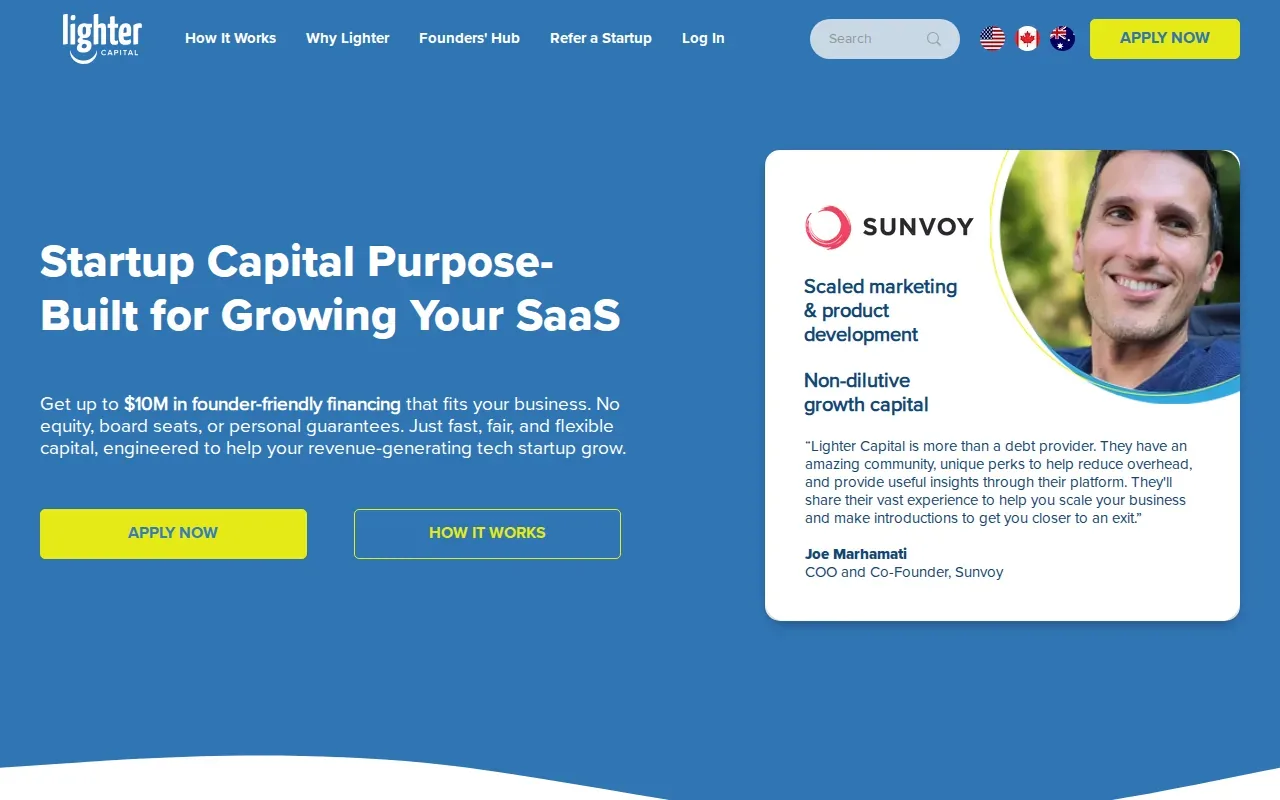
Revenue-based financing differs from selling company shares. You should still confirm the specific repayment terms, eligibility rules, and total cost before you agree to anything.
If you’re weighing outside capital against keeping ownership, first map how much money the business needs and what it can repay from revenue. Our bootstrapping versus venture capital breakdown can help frame that choice.
For a founder with steady revenue and a clear use for funds, it’s worth investigating. If your main need is feedback or accountability, financing won’t solve that problem.
2. Founderpath: Revenue financing and loans for software businesses
Founderpath provides non-dilutive capital for software, brick-and-mortar, and CPG founders. Its listed financing types include revenue financing, term loans, and merchant cash advances. It says revenue is the pitch deck it needs.
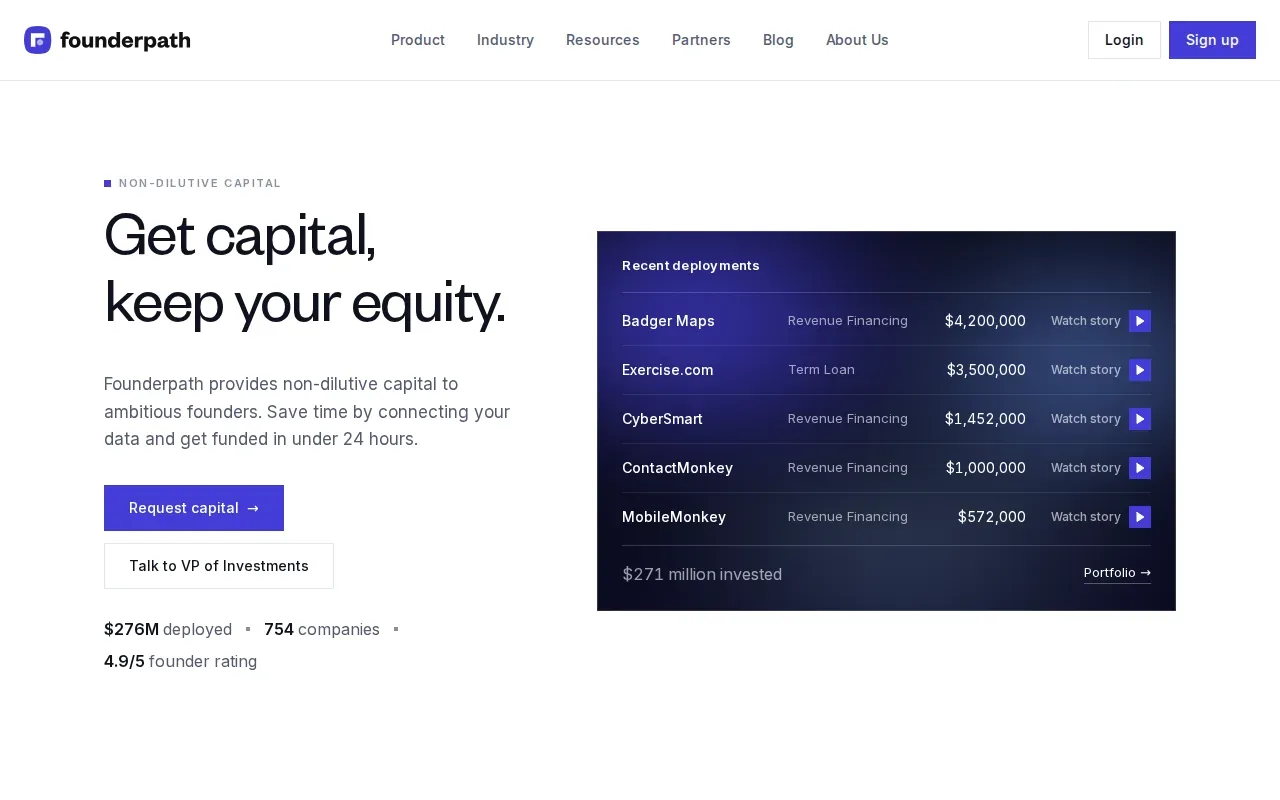
This is a funding path, not a founder mastermind. It may fit a software business looking for financing while avoiding an equity sale, but “non-dilutive” doesn’t mean cost-free. Before applying, ask what the offer’s full repayment amount is and how payments change if revenue shifts.
The different financing types matter. A term loan and a revenue-linked advance can affect cash flow in different ways. Compare the written terms against a cautious forecast, not only against your best month. Rates, fees, minimum revenue and approval criteria are not published, so ask before you apply.
Founderpath makes more sense when you have a defined use for capital and can assess repayment risk. If you’re still validating demand, a funding commitment may add pressure before the product has repeat customers.
3. MicroConf: Peer support and accountability for bootstrappers
MicroConf matches founders into a small pod with others at a similar stage. The group meets on its own cadence, which suits bootstrappers who want peer accountability inside a larger founder ecosystem.
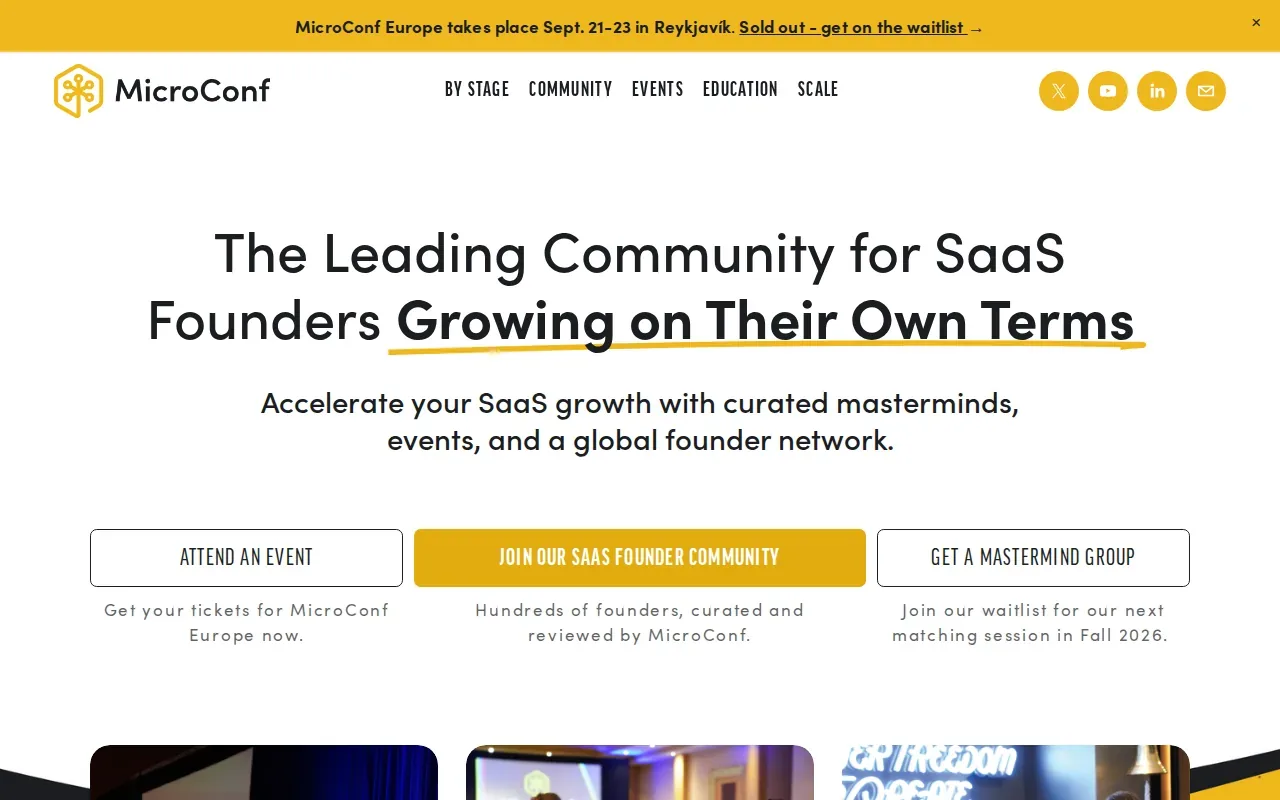
The self-set cadence gives members room to shape meetings around current needs. For example, a founder might bring a pricing question one month and a hiring challenge later. But the experience depends on the quality of the matched pod, and members need to make the meetings happen.
That trade-off is important. A peer group can help you see how another founder handled a similar decision, but it isn’t the same as guaranteed one-to-one expert advice. A price or a formal eligibility process for this support format is not published.
If you’re deciding whether a founder group’s format suits you, this honest look at MicroConf for SaaS founders can help you assess the commitment. Choose a peer pod if you’re willing to show up and share the hard parts, not only your wins.
4. Founders Network: A founder community with stage-based pricing
Founders Network is a community for tech founders with pricing tiers tied to stage. The stated annual prices range from $699 at the early level to $2,505 at the growth level.
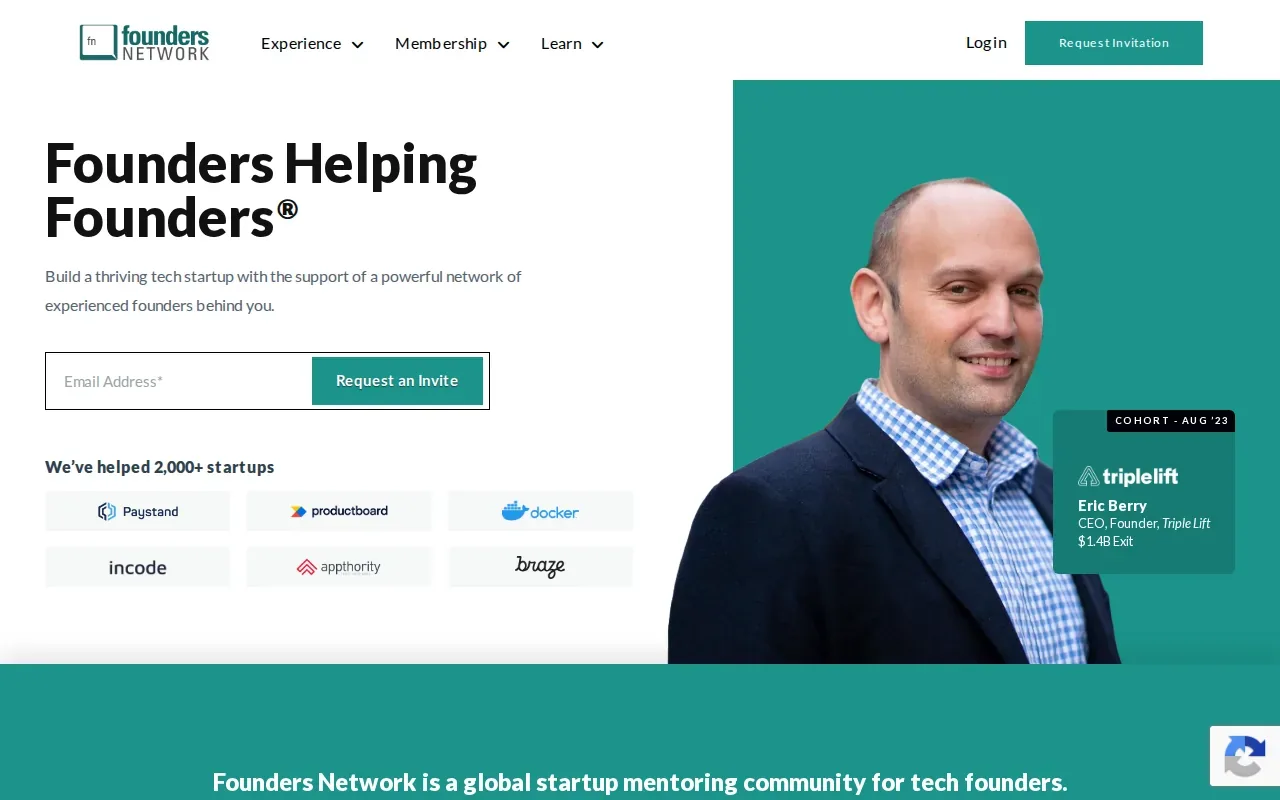
Its stated fit is a tech founder who wants a structured monthly forum and is comfortable with a community that leans toward startups and funding. That funding-friendly focus may help if raising is part of your plan. It may feel less aligned if you’re building a small, profitable SaaS business and want advice centered on bootstrapping.
Compare the yearly fee with the support you expect to use. Ask what the monthly forum covers and whether members at your current stage attend. Specific mentoring, application steps and extra costs are not spelled out publicly.
The stage-based price is useful context, but the right tier depends on the fit of the room, not just the fee.
5. City Squads by GrowthMentor: Local connections for growth-minded founders
City Squads by GrowthMentor are local groups for people interested in growth and networking. City Squads also share local job opportunities and help members build connections with other growth-minded people.
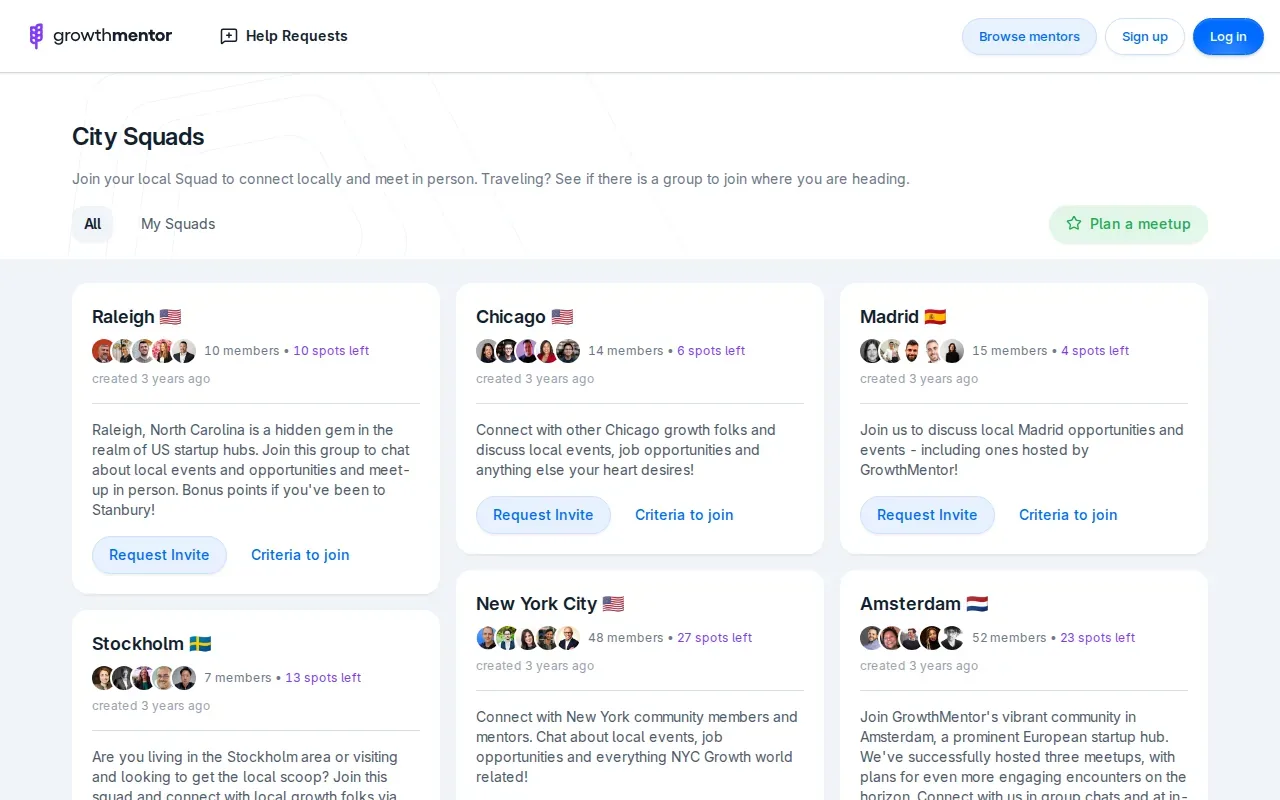
This is a local networking option, not a funding program or a defined SaaS accelerator. It may suit a founder who values in-person connections and wants to meet people working on growth. Active squads vary by city, so check local availability before you plan around one.
A city group can be a useful way to meet peers, but the value depends on who is active in your area and whether the conversations match your business needs.
Pick this route for local connection. Don’t treat it as a substitute for financing or a structured advisory program.
6. SaasRise: Frequent operator conversations for later-stage SaaS CEOs
SaasRise is built for SaaS CEOs at a later stage than most bootstrappers. It suits CEOs at $1M+ ARR who want frequent, operator-level conversations. Multiple optional calls run each week, with topics that include sales, retention, hiring, unit economics, and fundraising.
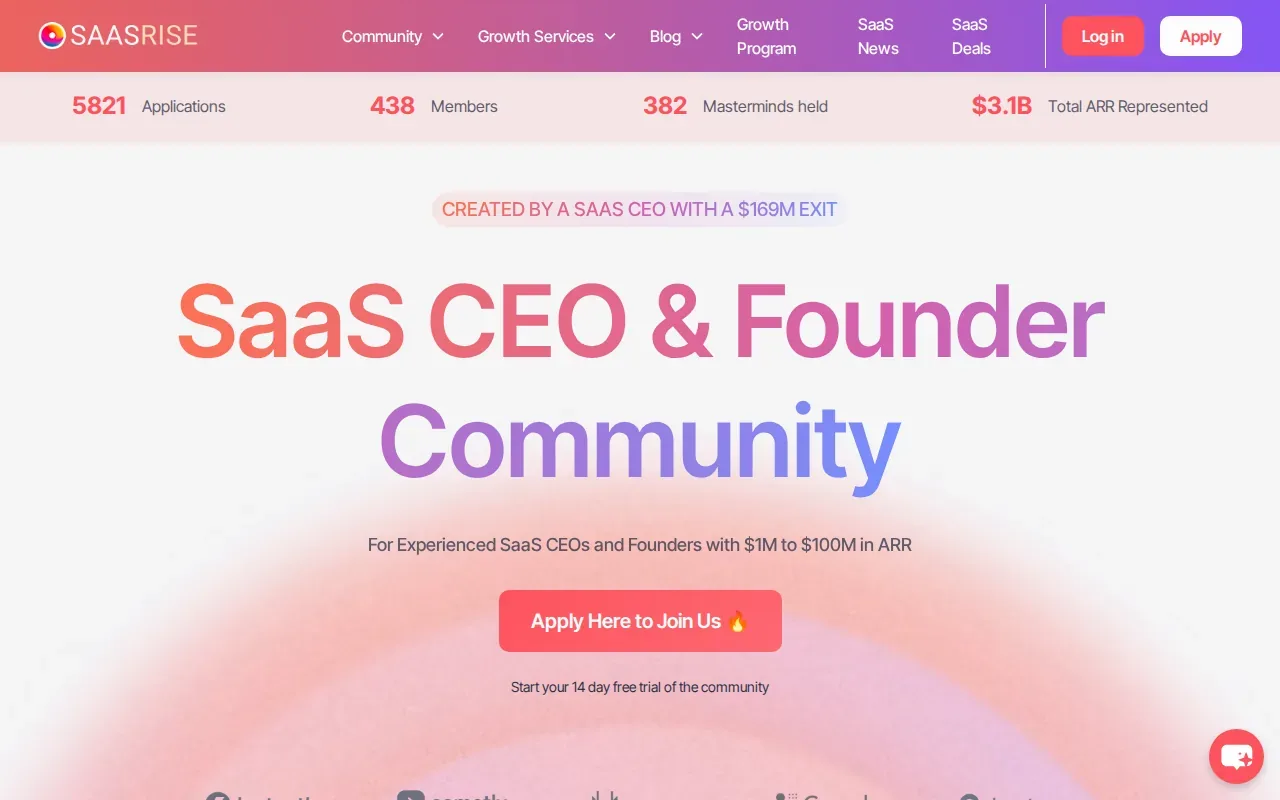
That schedule gives a more active founder room than a group that meets only now and then. A CEO facing a hiring decision can join a relevant discussion that week, then return for a conversation about retention or unit economics when that becomes the next problem.
The stage limit is the main caveat. SaasRise is aimed at later-stage founders, so early SaaS builders should look elsewhere rather than assume they can join.
If you’re below that stage, regular calls won’t outweigh the mismatch. Find a group whose members face problems closer to yours.
7. Vistage: Established-business peer groups for experienced CEOs
Vistage is a peer-group option aimed at established businesses with employees. The stated cost is about $10,000 to $20,000 per year, which puts it in a different budget class from lower-cost online communities.
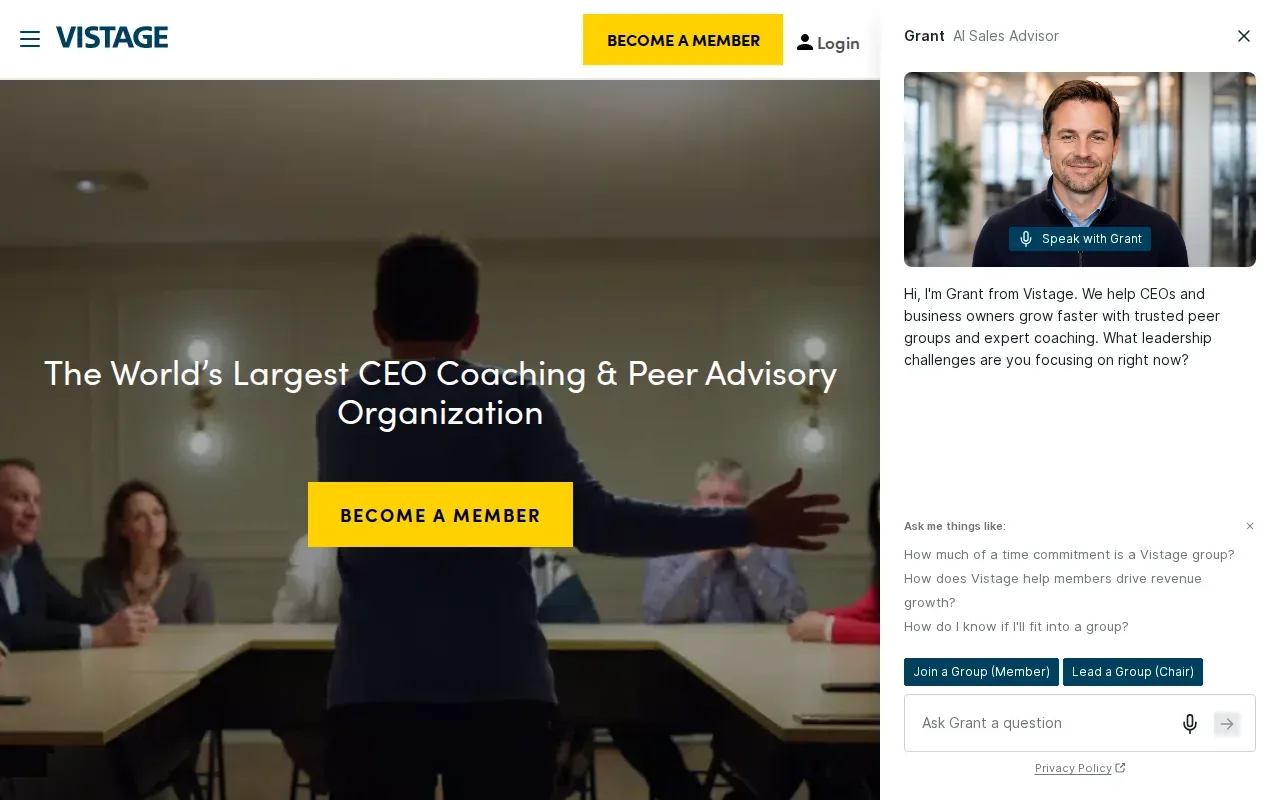
That price may make sense only if your company is large enough to use the group’s support and cover the membership cost without squeezing cash needed for the business.
For a solo SaaS founder still working toward consistent revenue, this is likely more commitment than needed. For an experienced CEO managing a team, a peer group may be a closer fit. Verify what is included in the fee and whether local chapter access adds any cost before making a decision.
Think about the budget in terms of runway: the annual fee has to compete with a hire, product work, or cash reserves.
8. YPO: Global executive peer groups for qualifying leaders
YPO is a large membership organization with local chapters in cities worldwide. It’s an executive peer-group option, rather than a SaaS-specific source of capital. Eligibility rules, dues and the group format are not published in detail, so ask during the application.
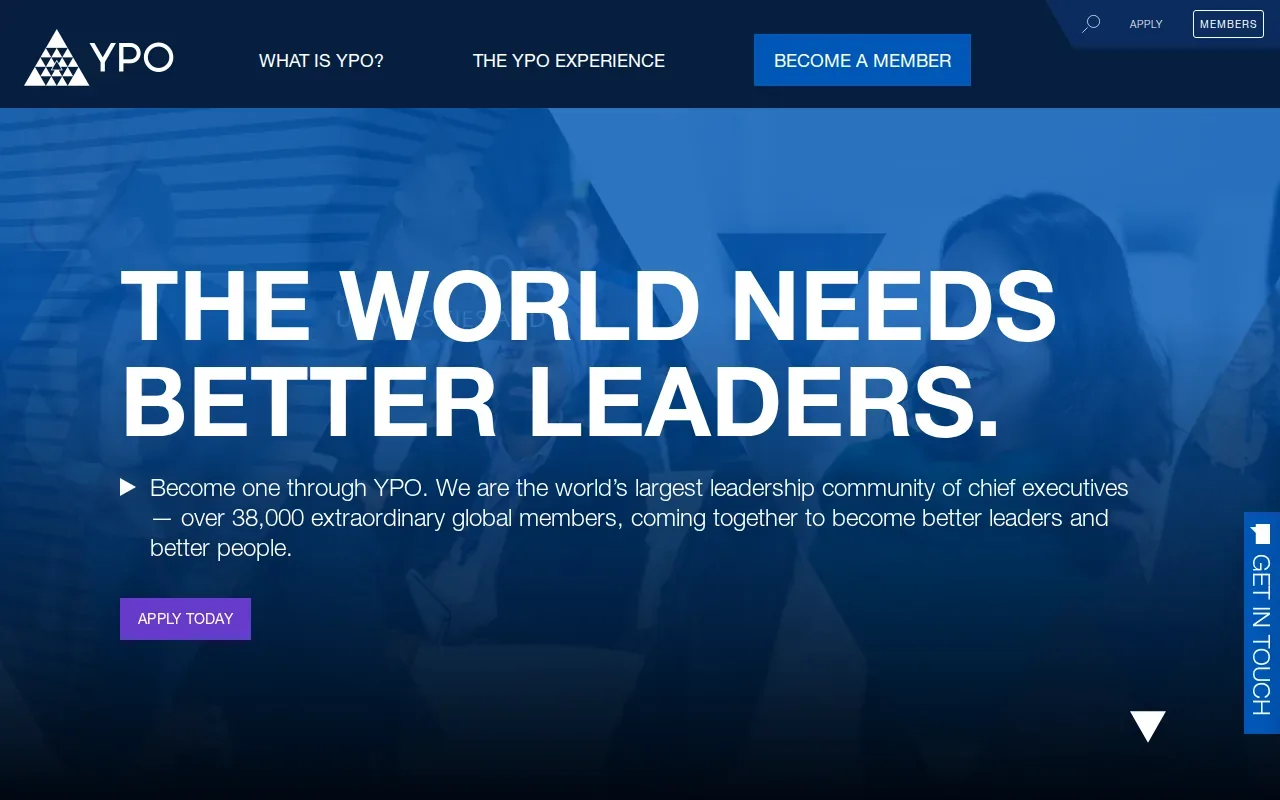
That lack of detail means you should confirm the entry criteria directly before treating it as an option. Ask whether your company and leadership role qualify, what the total annual cost includes, and how active the local chapter is. A worldwide chapter network does not tell you whether there’s a suitable group near you.
For a bootstrapped founder comparing this with a lower-cost mastermind, the key issue is fit. YPO belongs on the shortlist only if you meet its requirements and want an executive network. It isn’t a direct replacement for early-stage SaaS funding or a founder group built around a specific revenue stage.
Check the bar to join before spending time on a long application.
9. BNI: Local referral networking, not startup funding
BNI is a membership organization with local chapters in cities worldwide. It is best understood here as a local referral-networking option, not as a SaaS accelerator or funding source.
A founder considering BNI should first ask whether local chapter members include the kinds of buyers or referral partners their business needs.
Referral networking may fit a founder whose sales depend on local business relationships. It may be less useful if your SaaS sells through a national or online channel and you need product or retention advice. Those are different needs, so judge the group by the work you want it to help with.
BNI belongs on this list as a network, not as an alternative source of accelerator funding.
TinySeed Alternatives Compared: Funding, Fit, and Founder Support
These options don’t all solve the same problem. The table separates capital from peer connection so you can focus on the help you need next.
| Option | Main fit | Funding or support model | Price detail available |
|---|---|---|---|
| Profitable Founder Club | Bootstrapped SaaS founders | Founder batches, weekly calls for 12 weeks, monthly live Q&A, Discord | $97 per year, price locked |
| Lighter Capital | SaaS founders exploring revenue-based financing | Revenue-based financing | Not stated |
| Founderpath | Software businesses seeking capital | Revenue financing, term loans, merchant cash advances | Not stated |
| MicroConf | Bootstrappers seeking peer accountability | Small matched pod; members set the cadence | Not stated |
| Founders Network | Tech founders seeking a monthly forum | Founder community with stage-based pricing | $699 to $2,505 per year |
| City Squads by GrowthMentor | Founders seeking local connections | City-based networking | Not stated |
| SaasRise | SaaS CEOs at $1M+ ARR | Optional operator calls each week | Not stated |
| Vistage | Established businesses with employees | Executive peer groups | About $10,000 to $20,000 per year |
| YPO | Qualifying leaders seeking a global chapter network | Local chapters | Not stated |
| BNI | Founders seeking local referral networking | Local chapters | Not stated |
Profitable Founder Club is a community option, not a capital source. Members join a batch of 7 to 10 founders at their stage, meet once a week for 12 weeks, and get a monthly live Q&A with Florian. Paying customers are required to join.
At $97 a year with the price locked for as long as you stay, it’s a lower-cost way to get scheduled peer support. If you want a founder group that fits bootstrapped SaaS work, see Join Profitable Founder Club.
Frequently Asked Questions
What are the best TinySeed alternatives for bootstrapped SaaS founders?
The best choice depends on whether you need money or peer support. Lighter Capital and Founderpath are funding options, while MicroConf and other peer groups focus on peer support. Profitable Founder Club is a mastermind at scale for bootstrapped SaaS founders, with batches of 7 to 10 founders at your stage.
Do TinySeed alternatives take equity?
Some alternatives on this list are financing options, so read each contract to see whether a specific offer takes equity. Founderpath describes its capital as non-dilutive, while Lighter Capital is listed as revenue-based financing. Read the actual offer terms before deciding; don’t infer fees or repayment terms from a product label.
Which alternatives are communities rather than funding programs?
MicroConf, Founders Network, City Squads by GrowthMentor, SaasRise, Vistage, YPO, and BNI are presented here as peer or networking options. Profitable Founder Club has one call a week for 12 weeks and Discord. These groups don’t replace financing when your business needs capital.
What should I check before joining a SaaS founder group?
Check the member stage, meeting format, total cost, and what support is included. Ask how members are matched and whether the group focuses on bootstrapping or fundraising.
Is TinySeed a funding program or a mastermind?
TinySeed is a funding program: it invests in SaaS companies in exchange for equity. If you mainly want regular founder discussion and accountability, compare community options separately from financing programs.
Conclusion
If your main need is a founder room rather than investment, start with Profitable Founder Club: check the stage fit, review the $97 annual price, and see whether the 12-week weekly-call format suits your schedule. If you need capital, compare written financing terms before you apply.
