Most founders stall somewhere between $5K and $50K MRR. Not because the product is broken, but because they're solving problems alone that other founders already figured out six months ago. That's exactly what a great SaaS mastermind fixes. Here are the six communities and programs where real founders are sharing the playbooks that move the needle.
1. Profitable Founder Podcast (Our Top Pick) , Real Playbooks from $5K to $50K MRR Founders
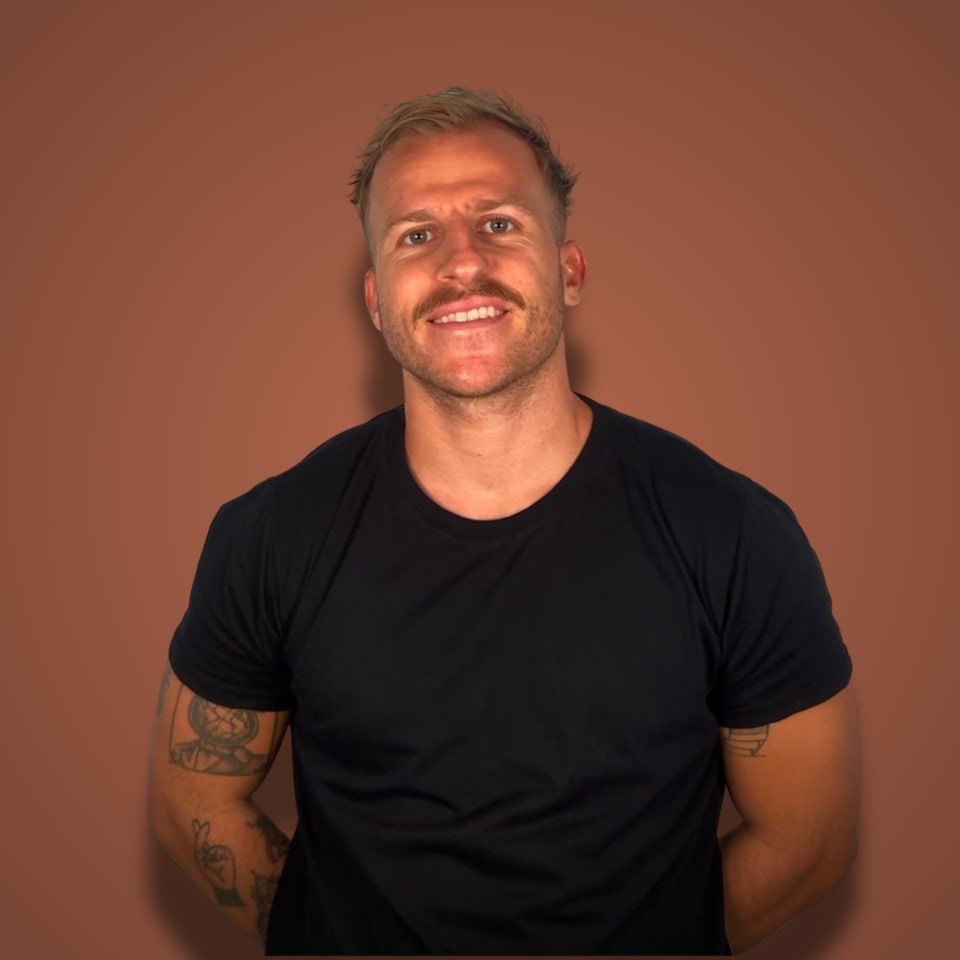
The Profitable Founder Podcast is a weekly show and private mastermind run by Florian Darroman, built specifically for bootstrapped SaaS founders stuck in the $5K to $50K MRR gap. Every episode is a founder interview. Not a theory session. An actual playbook you can steal.

The private side is the Profitable Founder Club, a vetted peer group where members are all inside that same revenue band. Calls aren't polished updates. Members bring real numbers, real churn problems, and real pricing questions, then get direct feedback from peers who just solved the same thing.
One thing that separates this from most communities: the guest sessions. Nevo David from Postiz, a bootstrapped tool that grew from $20K to $66K MRR in 35 days, came in and shared his screen. Actual strategies. The kind of thing he wouldn't post publicly. Members said the single session paid for a year of membership.
Arnaud Belinga, founder of BreakCold, put it plainly: the guests don't do theory. They share their screens and actual strategies. Nic Polotnianko from Sequenzy called it the best investment he'd ever made after the first call.
The caveat: this is a small, capped group. That's intentional, because tight rooms give better feedback than big ones. But it means spots are limited. If you're between $5K and $50K MRR and want the full breakdown of what moved the needle for founders who've crossed $100K, the podcast episodes alone are worth the time.
2. MicroConf Community , Bootstrapped SaaS Founders Sharing Revenue Milestones
MicroConf has been the home base for bootstrapped B2B SaaS founders for over a decade. Their mastermind matching program is one of the most structured in the space. According to MicroConf's official mastermind page, they've facilitated over 1,000 mastermind matches, bringing together founders from more than 50 countries across 20 time zones, representing over $150M in collective ARR.
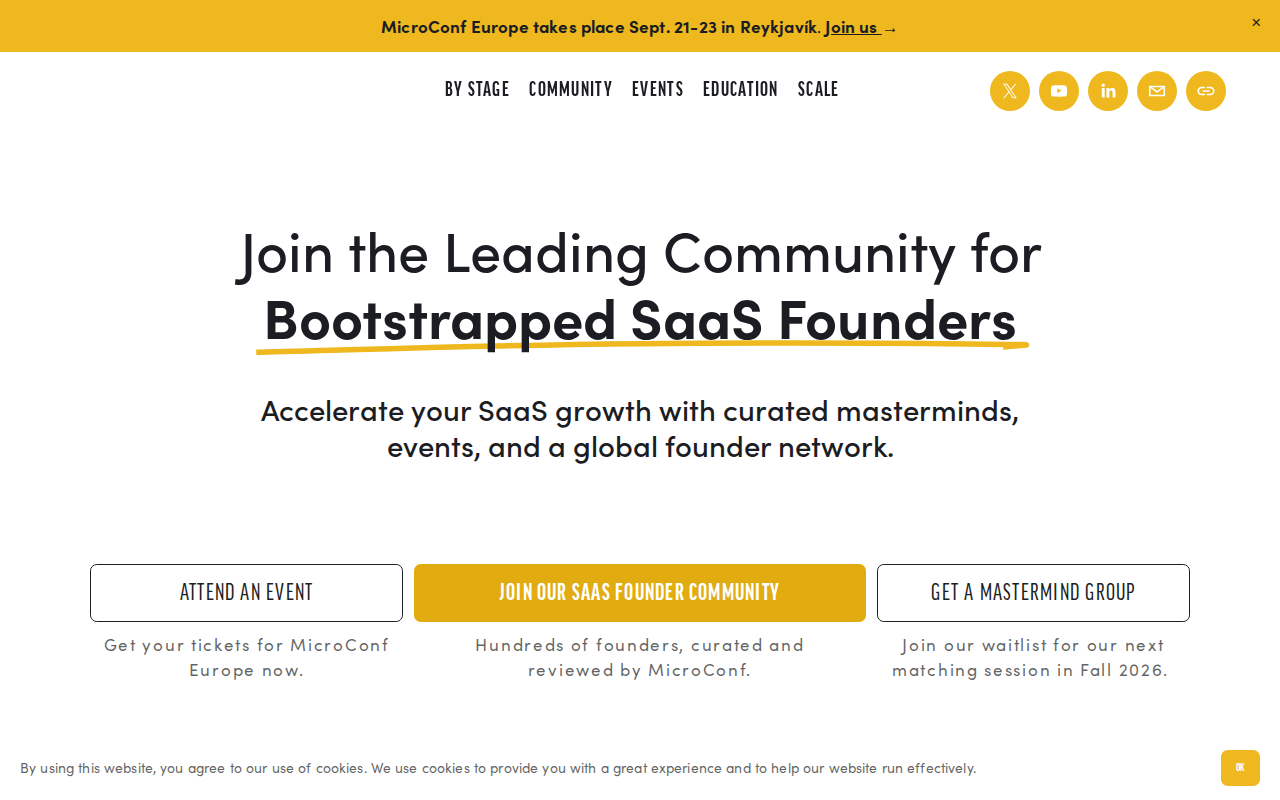
The matching is stage-based. You apply and share your goals and working style. A real human reviews every application alongside their proprietary matching system. You need at least $500 ARR to join, or prior founding experience.
The program runs in phases. First, you get matched with a small group at a similar stage. Then there's a kickoff session, two months of structured calls, live mentor sessions with founders ahead of you, and a dedicated portal to track goals. Most groups stick together long after the formal program ends.
Pricing scales with revenue. Founders at $5K to $25K ARR pay $450 to join. Founders at $25K to $100K ARR pay $750. That buy-in keeps the room serious.
The honest caveat: MicroConf matches by stage, but the revenue band is fairly wide. A founder at $500 ARR and one at $25K ARR might end up in the same group. If you want a tighter match, check that your group is genuinely close to your MRR before committing to the 90-day window. The top SaaS mastermind community reviews consistently flag stage match as the single biggest predictor of whether a group is useful.
3. Indie Hackers , Public MRR Milestones and Founder Transparency
Indie Hackers is the closest thing the bootstrapped SaaS world has to a public ledger of real revenue numbers. Founders post MRR milestones, write post-mortems, and share what actually worked. The transparency is the point.
It's not a traditional mastermind. There are no vetted small groups and no structured calls. But what Indie Hackers does well is give you a searchable archive of founder journeys at every stage of the $5K to $50K MRR range. You can find someone who hit your exact sticking point, read how they got through it, and message them directly.
The forum has active threads on pricing, churn, acquisition channels, and product decisions. Founders share real numbers in a way that most private communities don't allow publicly.
The limitation is obvious: you get out what you put in. Without a structured accountability layer, it's easy to spend an hour reading and close zero loops. Use Indie Hackers as a research tool and a place to find your people, then take those relationships into a structured peer group for the real work. Think of it as the top of the funnel for finding mastermind-quality peers who are already being transparent about their numbers.
4. SaaS Club , Peer Masterminds for Founders in Growth Mode
SaaS Club, run by Omer Khan, is a podcast and community focused on SaaS founders who are past early traction and actively scaling. The podcast interviews founders on their growth stories, and the community runs structured peer mastermind groups for members who want the accountability layer on top.
What makes SaaS Club useful at the $10K to $50K MRR stage is the specific focus on go-to-market. Most of the content, calls, and guest sessions orbit around sales, customer success, and distribution. These are the exact problems that block founders who already have product-market fit but can't figure out how to grow faster than word-of-mouth.
The podcast is free and worth working through the back catalog if you're trying to understand how founders crossed the $50K MRR threshold. The community side has a paid tier with access to the mastermind groups and direct Q&A sessions.
One thing to know: SaaS Club's community skews toward founders with sales teams or sales-led growth motions. If you're fully self-serve and bootstrapped, some of the playbooks won't translate directly. The peer groups are still useful for accountability, but you might find the content more relevant once you're closer to $30K MRR and thinking about your first hire. For founders earlier in the range, pairing SaaS Club's content with a tighter peer group calibrated to your stage gets better results.
5. Ramen Club , Accountability-First Mastermind for Early-Stage SaaS
Ramen Club is built for founders who are pre-ramen-profitable to just past it. The whole premise is that the hardest stretch of building a SaaS is the earliest one, when you're past the idea but not yet at sustainable MRR. The community keeps that strip of founders together instead of mixing them with $500K ARR operators whose problems don't translate.

The format is accountability-first. Members set weekly commitments, report back, and get called out if they don't follow through. That simple loop, commitment then check-in, is what early-stage founders most often say they needed but couldn't find in open Slack communities.
Ramen Club works best if you're between $1K and $15K MRR and your primary problem is execution speed and focus, not strategy. The founders in the room are close enough to your problems to give useful feedback. They're not so far ahead that their advice stops applying.
The limitation: the community is smaller and less structured than MicroConf or a dedicated mastermind program. If you need mentor-style access to founders who've already crossed $100K MRR, Ramen Club's peer group alone won't give you that. It's a strong accountability layer, but pair it with a resource like the SaaS mastermind case study on hitting $10K MRR to understand what specific interventions actually move revenue at your stage.
6. Earnest Capital Community , Founder-Friendly Network with Real Revenue Stories
Earnest Capital is a funding vehicle for bootstrapped and capital-efficient founders, but the community around it is where the real value lives for founders who haven't taken their money. Tyler Tringas built Earnest with a specific thesis: that most software businesses don't need venture capital, they need a little capital and a lot of peer support.
The community that formed around that thesis is full of founders who are intentionally building profitable, small software businesses. MRR transparency is normal here. Founders talk openly about what's working and what isn't without the pressure to perform for investors or look like a hypergrowth story.
According to Wikipedia's overview of bootstrapped business, the core advantage of self-funded growth is that founders retain both equity and decision-making control, which shapes the kinds of conversations that happen inside communities like Earnest's network. People are optimizing for profit and sustainability, not headline ARR.
For founders in the $5K to $50K MRR range, the Earnest community is useful as a mindset reset as much as a tactical resource. If you've been consuming VC-flavored content that tells you to grow at all costs, spending time with founders who are deliberately profitable at $20K MRR changes how you think about your own numbers.
The caveat: Earnest Capital's primary audience is founders who've taken or are considering their funding. If you're purely bootstrapped with no interest in outside capital, you'll still find value in the community, but some conversations will veer toward financing structures that don't apply to you. Filter accordingly and focus on the operational threads.
What to Look for in a SaaS Mastermind (Buyer's Checklist)
Before you pay for any of the above, run the group through these four questions. A famous name is worth nothing if the room doesn't fit your stage. The 7 best SaaS founder masterminds ranked by stage all share one thing: they match founders on revenue band, not just industry or geography.
The most common mistake is joining the biggest room. A tight group of five founders all near your MRR will give you more actionable feedback than a 500-person Slack community where no one knows your numbers.
FAQ
Do SaaS masterminds actually help founders grow MRR?
Yes, when the group matches your stage. The value isn't generic advice. It's peers who just solved the problem you're stuck on. A founder who crossed $10K MRR three months ago can tell you exactly what moved their churn number or what pricing change worked. That specificity is what makes a well-matched mastermind useful. A mismatched group where revenue levels vary wildly is usually a waste of time.
What MRR do I need before joining a paid SaaS mastermind?
Most structured programs want to see some revenue. MicroConf requires $500 ARR or prior founding experience. The Profitable Founder Club targets founders at $5K to $50K MRR. Pre-revenue founders tend to get more value from free communities like Indie Hackers first, then move into a paid, vetted group once they have real numbers to bring to the table.
How is a SaaS mastermind different from a community or forum?
A mastermind is a small, vetted group, usually four to eight founders, that meets on a fixed schedule with a structured agenda. Everyone brings real numbers. There's accountability between calls. An open community or forum is useful for research and finding people, but it doesn't give you the commitment loop that actually changes behavior. Structure and vetting are what separate a mastermind from a Slack channel.
How much does a SaaS mastermind cost?
Pricing varies widely. Free options exist if you build your own peer group. Structured programs like MicroConf charge $250 to $2,500 depending on your ARR. High-end operator masterminds can run five figures annually. Match the cost to your stage: a $500-a-month group makes sense at $20K MRR, not at $2K. The spend only works if the room can help you add meaningful MRR.
Which SaaS mastermind is best for founders under $10K MRR?
The Profitable Founder Club and Ramen Club both serve founders in that early range. Profitable Founder Club gives you access to founders who've already crossed $100K MRR through guest sessions, which adds a layer beyond pure peer accountability. MicroConf accepts founders from $500 ARR and offers structured matching. The right choice depends on whether you prioritize tight accountability or access to people further ahead.
Conclusion
If you're between $5K and $50K MRR and still solving every problem alone, you're leaving time on the table. The Profitable Founder Podcast and its private Profitable Founder Club exist for exactly this gap. Start by listening to a few episodes to see how other founders at your stage are thinking about pricing, churn, and distribution. Then, if you want the accountability layer and direct access to founders who've already crossed $100K MRR, look at the club. That's the room where the real conversations happen.