Booking a SaaS founder who's actually building a real business is harder than it sounds. Most cold pitches get ignored, most platforms surface the wrong people, and most hosts give up before they find a system that works. These 7 tactics cut through that. Each one targets a different channel where bootstrapped and indie SaaS founders actually spend time.
1. Profitable Founder Podcast (Our Top Pick) , Lead With a Show That Already Speaks Their Language
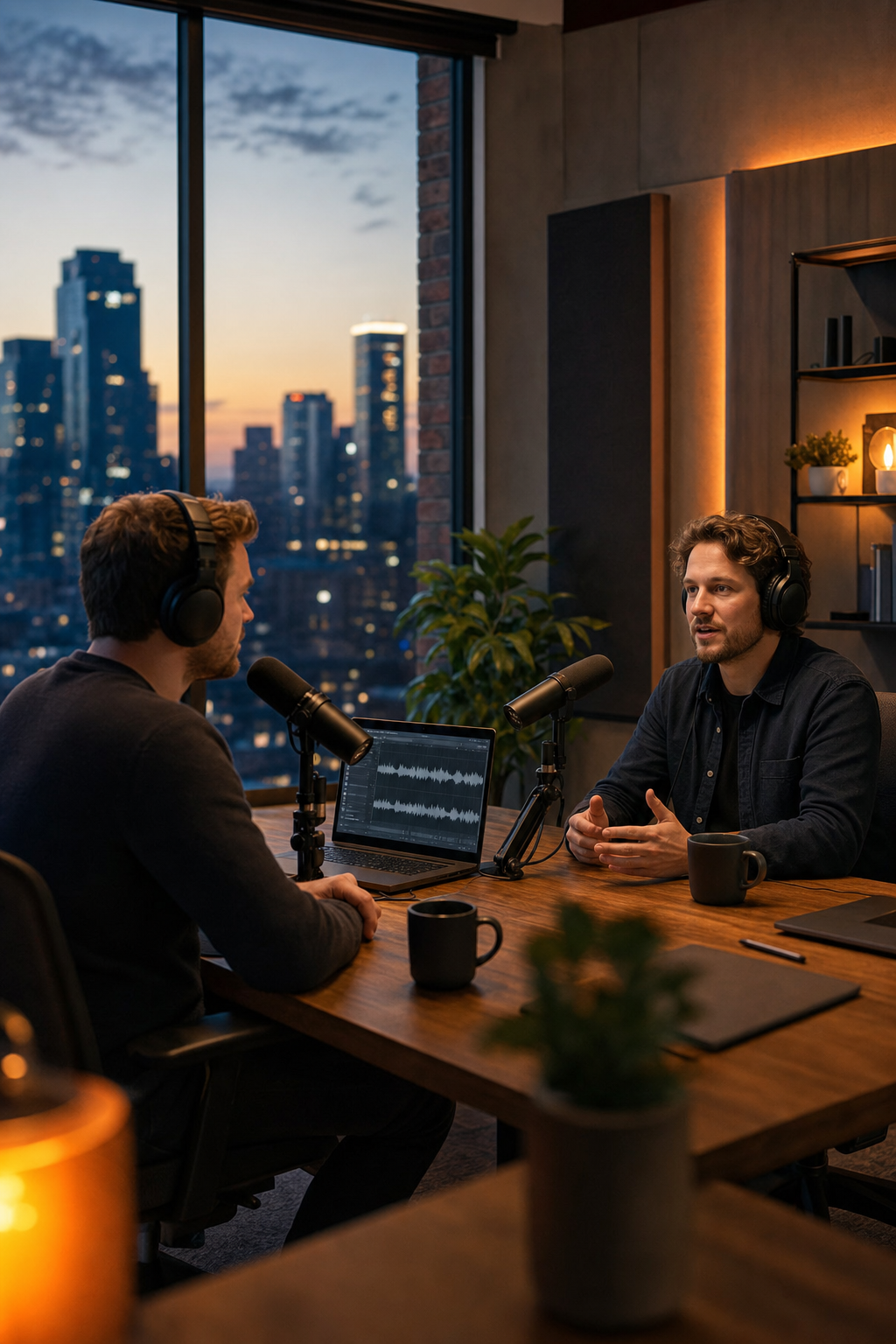
The Profitable Founder Podcast is built specifically around bootstrapped SaaS founders making between $100K and $10M a year. Every episode pulls a real playbook from a founder who's in the middle of the grind, not a polished exit story. That's a fundamentally different pitch than a generic business show.
If you're a host trying to land SaaS founders as guests, the first question any potential guest asks is: "Who is this show for?" If the answer is vague, they skip you. The Profitable Founder Podcast solves that problem from the intro. Founders who hear the premise immediately understand the audience is exactly like them.
The show also runs the Profitable Founder Club, a private mastermind for SaaS founders doing $5K to $50K MRR working toward $100K MRR. That community creates a built-in referral loop. When a guest appears on the show, they're stepping into a network that refers the next guest. It's not just an interview. It's an entry point into a peer group they want access to.
The honest caveat: this approach works best when your show has a tight niche. A general tech or startup podcast has a harder time replicating this pull. Specificity is the asset. The more clearly your show is "for SaaS founders at $10K, $100K MRR," the easier every outreach conversation becomes.
2. Cold Outreach via Twitter/X DMs , Where Bootstrapped SaaS Founders Actually Hang Out
Bootstrapped SaaS founders are disproportionately active on Twitter/X compared to most other B2B audiences. They share MRR updates, product launches, and behind-the-scenes decisions publicly. That public activity is your research and your opening.
The tactic is straightforward. Search for founders sharing revenue milestones using terms like "MRR", "bootstrapped", "just hit", or "indie SaaS." Read their last 10 tweets before you DM them. Then open with something specific , not "I love your work" but "your thread on reducing churn at $30K MRR was the most honest thing I've read this month. I'm building a show for founders at exactly that stage. 30 minutes, I send questions in advance, you get three short clips for your own content."
That last part matters. Founders are time-poor. An offer that hands them content they'd otherwise have to make themselves changes the calculation from "favor for you" to "useful for me."
A few things that kill Twitter DM outreach fast: pitching too early without any engagement history, sending a wall of text, or using the same script to 50 people in a week. Founders talk to each other. If your pitch gets screenshot-shared as a bad example, the whole community sees it. Keep the message under 100 words and make it obvious you read their stuff.
The limitation here is response rate. Expect maybe 10, 20% of founders to reply at all. Volume helps, but quality of research per founder matters more than raw numbers. Ten highly personalized DMs beat a hundred templated ones.
3. SaaS Mastermind and Community Directories , Tap Into Pre-Vetted Founder Networks
Mastermind groups and paid founder communities are where SaaS founders who are serious about growth tend to gather. These aren't people lurking in free Slack groups. They've paid to be in a room with peers, which means they're active, ambitious, and generally open to sharing what's working.
The approach: find directories or member lists for groups that serve your target revenue range. Some communities publish public member spotlights or forums where founders introduce themselves with context like current MRR or their biggest challenge. That context is gold. You can pitch with specificity that would take hours to find via cold research.
When you reach out to someone from a named community, mention it. "I saw you're part of [community] , I interview founders at exactly your stage" lands differently than a blind cold pitch. There's implied credibility and common ground before you've said anything about your show.
For hosts who want to find and compare the best SaaS mastermind programs by stage and focus, the best SaaS mastermind programs guide breaks down the top options by what each community actually helps founders accomplish.
The caveat with community outreach: many paid groups have explicit rules against recruiting members for outside projects. lines before you post or pitch inside the group itself. DMs to individual members are generally fine. Public posts asking for podcast guests can get you removed.
4. Indie Hackers and MicroConf , Targeting Founders Already Open to Sharing Revenue
Indie Hackers is one of the few places on the internet where founders voluntarily publish real revenue numbers. The platform has a built-in culture of transparency. Founders post monthly updates, respond to comments, and actively look for community. That culture is your best friend as a podcast host.
Search for founders who've posted product updates in the $5K to $100K MRR range. Look at their post history. If they've been active for six months or more and respond to comments, they're a good candidate. The pitch is easy because they're already in the habit of sharing openly , you're just proposing a better format for it.
MicroConf takes this one step further. It's a conference and community specifically for self-funded SaaS founders. Attendees self-select hard. If someone paid to attend MicroConf, they're almost certainly in the right revenue range and mindset for your show. The MicroConf Connect community has a directory you can search. Attendees often list their product, stage, and what they're working on.
One thing to know: Indie Hackers has a dedicated "promote yourself" thread and a podcast section. Posting there with a clear ask ("Looking for founders at $10K, $50K MRR to interview") can generate inbound interest alongside your direct outreach. Some of the best guests come from founders who find you rather than the other way around.
The limitation is noise. Both platforms are used for promotion by a lot of people. Your post can get buried fast. Combine it with direct outreach to individual founders rather than relying only on broadcast posts.
5. Podcast Guest Booking Platforms , Structured Marketplaces for Tech and Business Podcasts
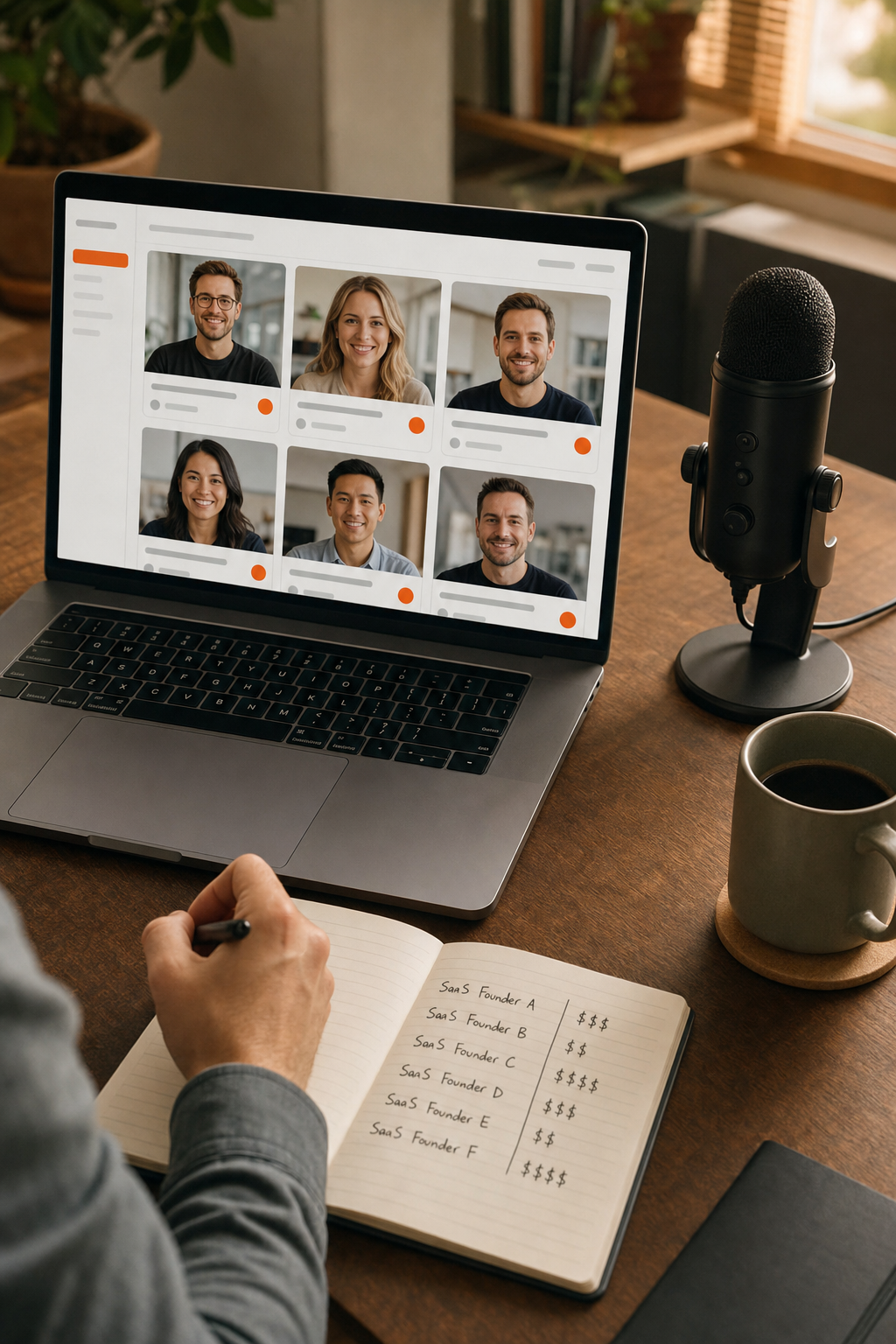
Podcast guest booking platforms are marketplaces where hosts and potential guests find each other. Platforms like Podmatch and MatchMaker.fm let you filter by topic, industry, and audience size. For SaaS founders specifically, the key is filtering for business and technology categories, then screening profiles for actual revenue or traction signals.
These platforms work because guests on them have already opted in to being interviewed. You're not cold-pitching. You're picking from a pool of people who want podcast exposure. That changes the dynamic completely. Response rates are higher and scheduling is faster because both sides have self-selected.
The usable workflow: build a detailed host profile first. Be specific about your show's focus and who you interview. "I interview bootstrapped SaaS founders doing $5K to $10M a year" attracts the right guests and filters out the wrong ones. Vague profiles attract vague applicants.
For founders who are curious about what it costs to go the other direction , paying for podcast guest placement , the SaaS founder podcast guest pricing guide breaks down the real cost spectrum, from free outreach to premium PR firms.
The honest limitation: the most successful SaaS founders at $500K MRR and above rarely use these platforms. They get inbound requests constantly. Booking platforms are most effective for the $5K to $100K MRR range, which is actually the sweet spot for many podcast audiences anyway. If you want the bigger names, you'll need one of the other tactics on this list.
6. LinkedIn Outreach With a Personalized Pitch , Reaching Founders Who Skip Twitter
Not every SaaS founder is active on Twitter/X. Many B2B SaaS founders, especially those building enterprise tools or serving corporate buyers, live primarily on LinkedIn. Their audience is there. Their credibility signals are there. And LinkedIn's search filters make it easier than most platforms to find founders by company size, title, and industry.
The search approach: use LinkedIn's People search with filters for "Founder" or "CEO" title, company size of 1, 10 employees (the sweet spot for bootstrapped SaaS), and software/technology industry. The results will include a mix, so scan profiles for product descriptions and any public mentions of MRR or growth.
LinkedIn connection requests with a note work better than InMail for cold outreach. Keep the note under 300 characters. Something like: "Building a podcast for bootstrapped SaaS founders at $10K, $100K MRR. Your work on [specific product] would resonate with our audience. Would love to have you on for 30 minutes." Then follow up with the full pitch once they connect.
One thing that sets LinkedIn apart from Twitter DMs: the professional context makes the ask feel more legitimate to founders who've built formal B2B businesses. The same pitch that might feel casual on Twitter lands as a credible media opportunity on LinkedIn.
The watch-out: LinkedIn's algorithm currently throttles connection requests that look like mass outreach. If you send more than 20, 30 new requests per week without a strong acceptance rate, your account can get restricted. Focus on quality targeting over volume, and always personalize each note.
7. Referral Chains From Past Guests , Let Your Existing Network Grow Itself
The simplest and highest-converting tactic on this list is also the most underused. At the end of every recording session, before you hang up, ask your guest one question: "Who's one founder I should have on next?"
That single question does more work than any outreach tool. A warm intro from a peer converts dramatically better than a cold DM. When a founder tells their friend "you should go on this show, I had a great time," the whole trust-building step is already done. The new guest shows up prepared and open because someone they respect vouched for the experience.
Make the referral easy to act on. Ask your guest if they'd be comfortable making a direct introduction. Even a simple "Hey [friend], [host] does a podcast for SaaS founders, you'd be a great fit" over DM or email is enough. If they prefer not to make the intro themselves, just ask for a name and permission to mention them in your outreach.
This tactic compounds. Six guests in, you have six referral sources each pointing to one or two more founders. At a 30, 40% conversion rate on warm intros, that's a steady pipeline that runs itself. It's also how your guest quality tends to improve over time , founders in similar circles are often at similar stages and have similar candor about numbers.
The one thing to watch: don't let referrals be your only source. Networks cluster. You'll end up with guests from the same community, same geography, or same tool stack. Combine referral chains with one or two of the outbound tactics above to keep the show's range broad. The goal is a repeatable system, not a single channel.
"The best guest you'll ever book is the one your last guest sends you."
How to Choose Your First Tactic
If you're just starting out and have zero guest relationships, begin with Indie Hackers or Twitter/X. Both give you immediate access to founders with public revenue data, so your first pitches can be specific instead of generic.
If you already have two or three episodes recorded, switch most of your energy to referral chains. Warm intros compound fast once the show has proof of concept. Pair that with LinkedIn outreach to reach the segment of founders who aren't active on Twitter.
- No existing network: Start with Indie Hackers or Twitter/X cold outreach
- 1, 5 episodes recorded: Add referral asks after every interview
- Targeting $5K, $50K MRR founders: Podcast guest booking platforms fill gaps fast
- Targeting enterprise or B2B SaaS: LinkedIn outreach reaches founders who skip Twitter
- Building a long-term guest pipeline: Mastermind community directories give pre-vetted, revenue-verified leads
For a deeper look at the technical and operational side of building the show itself, the guide on how to start a SaaS podcast without wasting six months covers gear, format, guest booking workflows, and how to grow without burning out in the first 90 days.
FAQ
How do I find SaaS founders willing to share real revenue numbers on a podcast?
Look for founders who already share publicly. Indie Hackers is the best starting point , many users post monthly revenue updates by default. Twitter/X is second, especially accounts that use hashtags like #buildinpublic or post MRR milestones. Founders who share numbers publicly are far more likely to continue that transparency in an interview setting. Pitch them on that specific habit as the angle for your episode.
What's the best pitch length for getting SaaS founders on your podcast?
Keep it under 150 words. Founders scan their inbox fast. Your pitch needs one specific reference showing you know their work, one sentence on who you are, two or three episode topic angles with real specifics, and a low-friction ask. "Would a 30-minute interview on your approach to pricing work for your schedule this month?" is easier to say yes to than a vague "would love to have you on."
Do I need a big audience to book quality SaaS founders?
No. Founders at $5K, $50K MRR care more about audience fit than audience size. A show with 500 highly targeted listeners who are all bootstrapped SaaS founders is a better platform for them than a general business show with 50,000 random listeners. Lead with who your listeners are, not how many. Specificity replaces audience size in almost every booking conversation.
How far in advance should I reach out to book podcast guests?
Two to four weeks works for most bootstrapped founders. They're not managing heavy media schedules, so they can move faster than enterprise executives or celebrities. That said, reaching out 60, 90 days ahead makes sense if you're planning around a product launch or a specific content calendar. The earlier you confirm, the easier it is to batch recordings and keep your publishing schedule consistent.
Should I pay SaaS founders to appear on my podcast?
Generally no, and most bootstrapped founders wouldn't expect it. The value exchange is the exposure, the content clips they get, and the peer network access. If your show has a small audience and minimal reach, focus on improving the offer , better clips, a warmer community, tighter niche , rather than adding payment. Some larger shows do offer sponsored guest slots, which is a different model covered in detail in how to get on podcasts as a founder without an agency.
How many outreach messages do I need to send to book one guest?
Cold outreach via Twitter or LinkedIn typically needs 5, 10 personalized pitches to land one confirmed booking, assuming your targeting is tight and your pitch is specific. Warm referrals from past guests convert at much higher rates, sometimes one-for-one. Podcast guest booking platforms sit in between. The number drops significantly as your show builds a track record and guests start recommending it to their peers unprompted.
Conclusion
The fastest path to booking strong SaaS founder guests is combining two tactics at once: referral chains from your existing guests, plus one active outbound channel that matches where your target founders spend time. If they're bootstrapped and building in public, start with Twitter/X and Indie Hackers. If they're more B2B and enterprise-focused, go to LinkedIn. And if you want a model to study directly, listen to a few episodes of the Profitable Founder Podcast to see how the niche positioning and community angle makes every booking conversation shorter and warmer from the first message.