
If you built the product, you may still be the person every sales conversation depends on. These founderled alternatives can add peer advice, learning, or mentoring, but most don’t do the GTM and outbound work of a service provider.
Here are nine founder communities and learning options, plus the Profitable Founder Podcast. I’ll be clear about what each can replace, and what it can’t.
1. Profitable Founder Podcast
Profitable Founder Podcast pairs founder interviews with a paid peer group for bootstrapped SaaS founders. It’s best for builders who want ideas from other operators and a regular place to discuss their own business.
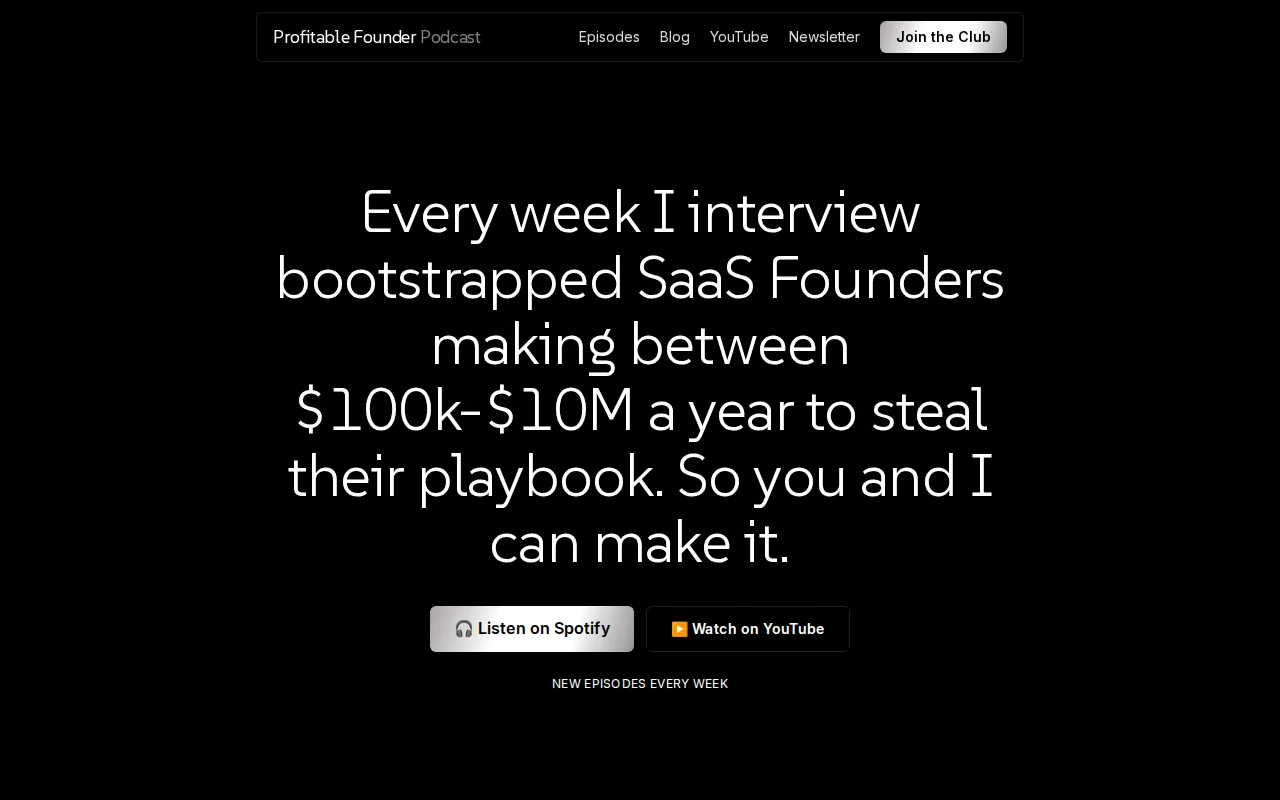
The weekly show interviews bootstrapped SaaS founders making $100K to $10M a year. For closer peer support, Profitable Founder Club puts 7 to 10 founders at a similar stage in a batch. Members get one call a week for 12 weeks, a monthly live Q&A with Florian, and Discord access.
Membership is $97 a year, with the price locked for as long as you stay. Paying customers are required. The weekly calls and live Q&A give the group a clear schedule, which matters when you need to talk through a live pricing or churn problem, not just read another growth post.
This is a learning and peer-support option, not a done-for-you outbound agency. It won’t build prospect lists or run sales sequences for you. If your bottleneck is founder isolation or a lack of structured peer feedback, Join Profitable Founder Club.
2. MicroConf: bootstrapped SaaS peer community
MicroConf is a community for bootstrapped B2B SaaS founders, with events and mastermind programs. It’s a fit if you want to learn alongside other SaaS operators rather than hire someone to run outbound.
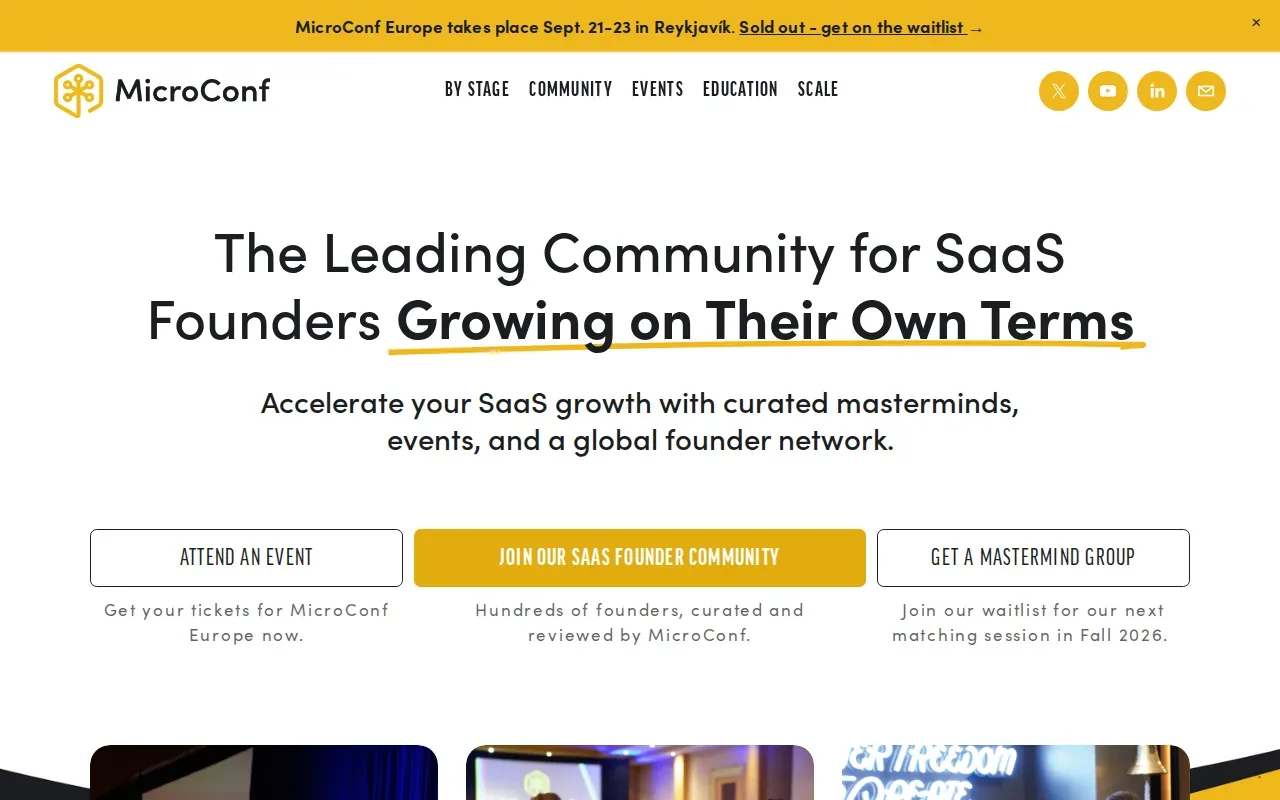
A peer community can help you compare how other founders handle sales, but discussion is different from sales execution. You’ll still own the pipeline, prospect research, and follow-up unless you hire outside help for those tasks.
If you’re weighing peer support against other groups, this comparison of MicroConf alternatives for bootstrapped SaaS founders gives you another way to think about fit.
3. Indie Hackers: free founder-to-founder learning
Indie Hackers is a free platform where independent founders share their journeys. It’s best for bootstrapped builders who want to learn from public founder accounts without paying for a formal program.
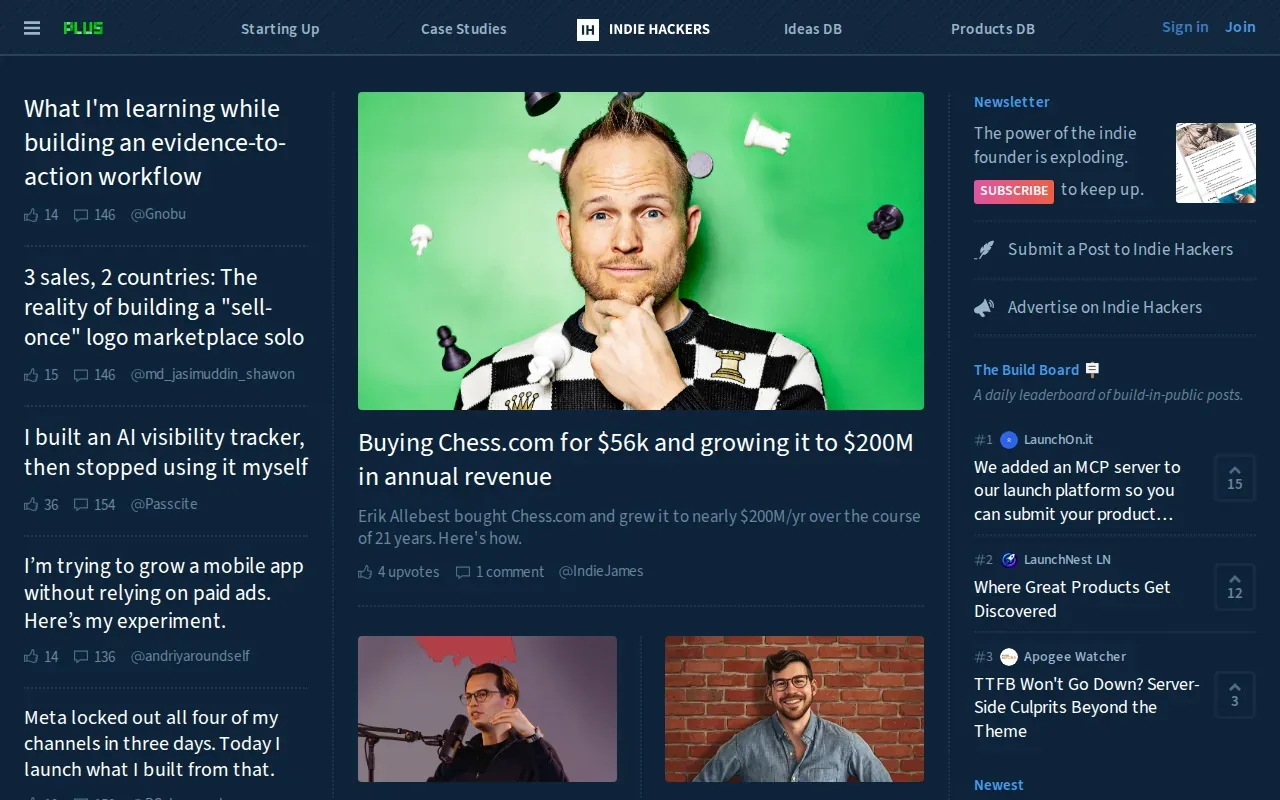
Use it to look for examples tied to your actual problem. If signups are coming in but trials don’t convert, read founder accounts about onboarding or pricing, then check whether the product stage and buyer resemble yours. A story can suggest a test. It can’t tell you the result your own customers will get.
Indie Hackers doesn’t replace outbound support or a sales team. You’ll need to turn what you learn into your own messages, calls, and follow-up. Founders who want another community shortlist can use this list of alternatives to Indie Hackers to compare different kinds of founder support.
4. SaaS Club: SaaS growth education and podcasts
SaaS Club publishes content, podcasts, and resources for SaaS founders. It fits founders who want to study how B2B SaaS businesses grow profitable companies.
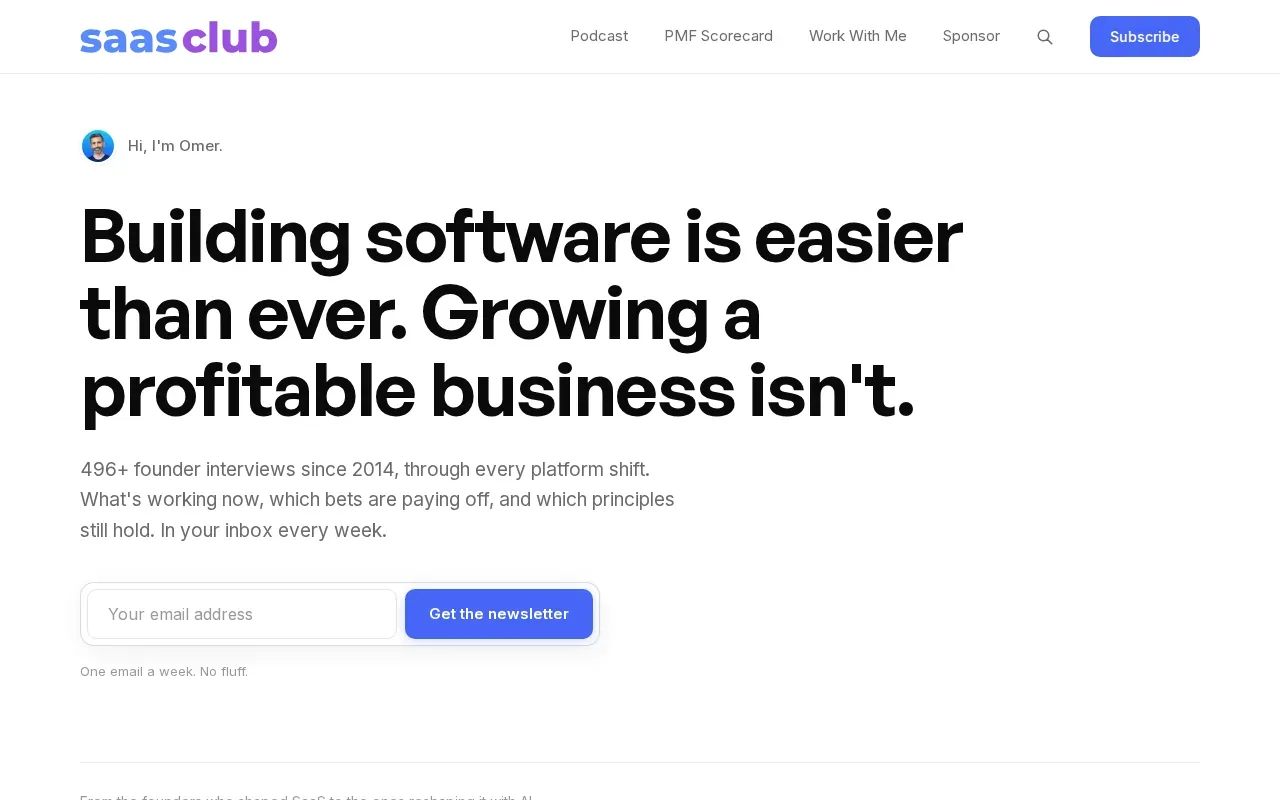
The SaaS Podcast draws lessons and patterns from more than 496 founder interviews. That format is useful when you want to hear how another operator approached a growth problem. Treat each example as a source of questions, not a playbook that will work unchanged in your market.
SaaS Club is an education option. It does not describe itself as running outbound campaigns, providing a sales team or offering scheduled peer calls. If the urgent need is qualified meetings, you’ll need a service that explicitly takes on that work. If you need founder context before making your own call, a podcast may be enough.
5. StartupSauce: private mastermind for SaaS founders
StartupSauce is a private mastermind community for SaaS founders outside Silicon Valley, including funded and bootstrapped founders. It’s best for operators looking for peer discussion rather than a vendor to run GTM.
StartupSauce’s format centers on a private group and bi-weekly mastermind calls. That cadence can give founders a recurring place to raise questions about company growth. It still depends on members bringing useful context and following through after the conversation.
Its private community model differs from open forums, but it doesn’t make the group an outsourced sales or marketing team. Check the current price and confirm the cost and membership terms before deciding. If you need someone to prospect or manage deals, ask directly whether that work is included. Don’t assume a mastermind covers it.
6. Founders Network: paid peer mentorship and warm introductions
Founders Network is a paid peer-mentorship community for tech startup founders, built around warm introductions. It’s a possible fit if you value founder-to-founder advice and introductions more than direct outbound execution.
The group provides peer mentorship, education, and advice for founders from seed stage through exit. That range may help when your questions go beyond early customer acquisition. But broad founder support is not the same as a GTM provider learning your ideal customer profile and running a sales process.
Its paid membership also means you should check the current fee and what access includes before joining. It does not publish a current price or a fixed mentoring schedule. Compare those details with the help you need now, not with the most impressive-sounding member benefits.
7. GrowthMentor: on-demand mentoring and an active Slack
GrowthMentor is a founder community with an active Slack, local City Squads, events, and unlimited calls. It’s best for founders who want access to mentoring and a place to stay in touch between calls.
That structure may help when you have a specific GTM question and want input from a mentor. It differs from hiring a fractional sales leader: mentoring gives you advice, while an operator you hire may take responsibility for building or running parts of the sales system. The exact scope depends on the engagement.
GrowthMentor isn’t automatically a replacement for outsourced outbound. Ask what kind of mentor fits your sales problem and whether their experience matches your buyer and stage. If your need is execution, write down the tasks you expect someone else to own before you compare options.
8. SaaStr: a large content library for scaling SaaS
SaaStr is a large SaaS founder community built around a broad library of content. It’s best for later-stage SaaS founders who want material about scaling a software company.
A content library can help you research a topic before a hiring or growth decision. Set a clear question first, such as whether your pipeline stages reflect real buyer progress. Then look for relevant lessons and compare them with what your team sees in its own deals.
Content doesn’t run your sales process, and SaaStr is not an outbound service. Founders seeking hands-on GTM help should check for a provider with a defined scope of work. SaaStr is better treated as a learning resource than as a substitute for that provider.
9. Founders Today: community and startup discovery
Founders Today is a free, community-driven platform where founders connect, network, and share their startups. It’s open to founders at any stage.
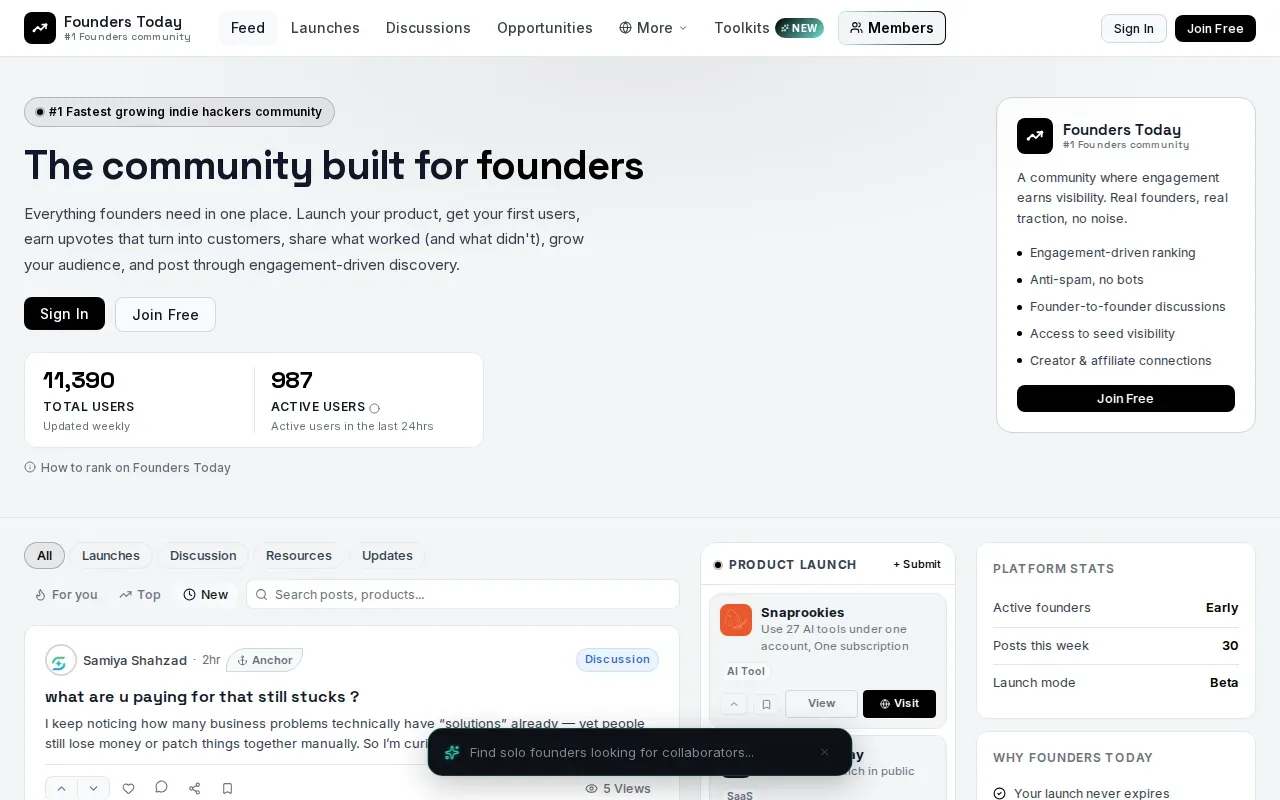
It’s also a startup community and product launch platform built for SaaS founders. That makes it relevant if you want to share what you’re building and connect with other founders. It does not advertise a formal mentoring schedule or GTM service.
So treat it as a place to connect and discover startups, not as a sales team in a box. If you join, bring a clear question or a product update that can start a useful conversation. For repeatable outbound, you’ll still need a defined process or outside execution support.
10. Startup Club: planning tools and an optional founder community
Startup Club combines a free web app for planning and tracking a startup with an optional private founder community. It’s best suited to early solo AI app founders.
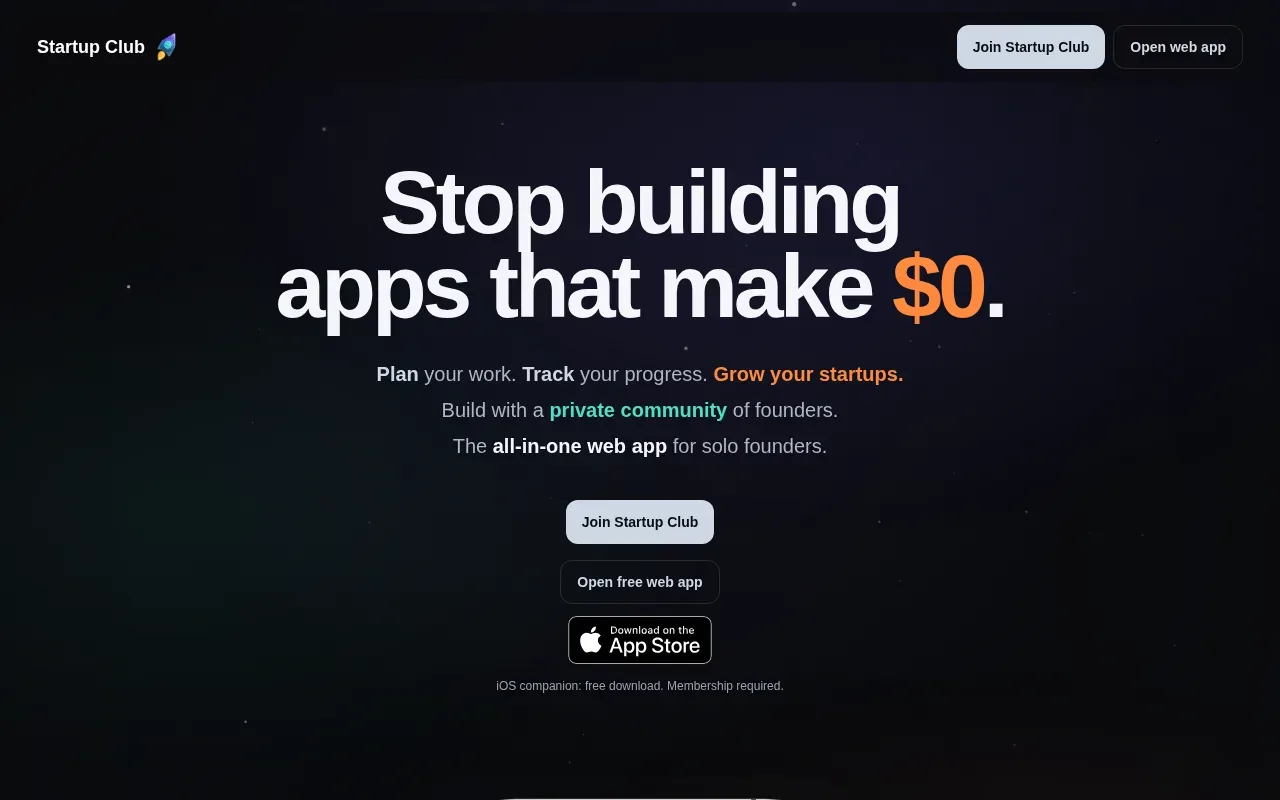
The planning tools can help you keep startup tasks and progress in view. The private community adds founder contact, AI coaching, and access to a members-only iOS companion. Startup Club does not run sales outreach or replace a human GTM operator.
That distinction matters if you’re evaluating founderled alternatives because you need more than a planning aid. A tool can help you keep track of your work; it doesn’t prove demand or take sales calls for you. Pick it for planning and founder community access, not for outbound execution.
Match the alternative to your current founder-led bottleneck
These options mostly serve a different need from a GTM or outbound provider. Before you spend time or money, name the bottleneck you’re trying to remove.
- You need ideas: Start with a podcast or content library, then test one lesson against your own buyer.
- You need peer accountability: Look for a group with a clear meeting rhythm and founders near your stage.
- You need advice on a specific problem: Consider mentoring, and ask how mentors are matched to your question.
- You need outbound done for you: Communities and learning platforms aren’t a direct substitute. Seek a service that states who handles prospecting, messaging, and follow-up.
Founder-led sales can be useful while you learn what buyers respond to. But if every deal, reply, and contract still waits for you, document the steps before handing them off. A sales playbook makes it easier for a new hire or provider to see what has worked and where the process still needs testing.
FAQ
What are the best founderled alternatives for SaaS founders?
The best option depends on whether you need advice, peers, learning, or sales execution. Profitable Founder Podcast is a fit for bootstrapped SaaS founders seeking founder interviews and structured peer support. Options such as mentoring communities serve a different need from an outbound provider. If you need someone to run prospecting, confirm that work is explicitly included.
Do founder communities replace a founder-led GTM agency?
No, a founder community usually doesn’t replace a GTM agency. Communities can provide advice, peer feedback, or connections, but that isn’t the same as having a provider build and run outbound campaigns. When comparing founderled alternatives, ask who owns prospecting and follow-up. If the answer is still you, the option supports your work rather than replacing it.
What’s a good founder community for bootstrapped SaaS?
Profitable Founder Club is designed for bootstrapped SaaS founders with paying customers. Members join a stage-matched batch of 7 to 10 founders, meet weekly for 12 weeks, and get a monthly live Q&A with Florian. MicroConf and Indie Hackers are other community options, but their formats differ, so check their current details before joining.
Should I hire sales help or join a mastermind?
Hire sales help when you need someone to own defined sales tasks; join a mastermind when you want peer input and accountability. A mastermind won’t automatically build your outbound process. Among founderled alternatives, the right choice depends on whether your problem is lack of execution time or lack of clarity. Write down the work you expect to stop doing yourself.
Conclusion
If you want a structured peer group for a bootstrapped SaaS business, start with Profitable Founder Club. Check the schedule and eligibility, then Join Profitable Founder Club if the weekly calls and monthly Q&A match the support you need. For hands-on outbound, choose a provider that clearly owns the execution.
